⌘ K ✕

AI Sales Agent

Qualify, score, and follow up with leads automatically.

AI Customer Support Agent

24/7 autonomous support with deep knowledge retrieval.

Enterprise Knowledge Copilot

Unified AI interface for all company documentation.

AI Workflow Engine

Orchestrate complex business logic with multi-agent flows.

AI Operations Dashboard

Real-time monitoring for your entire AI fleet.

Lead Intelligence System

Deep research and enrichment for every inbound lead.

Finance Review Agent

Automated auditing and expense categorization.

Custom AI Product

Bespoke AI systems built for your specific requirements.
AI Product Studio

Let's Design Your AI Advantage

2 + 8 =

Let's Design Your AI Advantage

6 + 5 =
Last Updated: October 6, 2026

AI SaaS Development Cost: From MVP to Scale in 2026

Nishant Agarwal

15 min read

Quick Summary

Key highlights at a glance.

AI SaaS development cost from MVP to scale in 2026

Quick Summary

Key highlights at a glance.

Almost every founder asks the same question before starting an AI SaaS project: how much will it cost? The answer depends on the product’s features, complexity and technical requirements.

A chatbot demo may take just a week to build, but a production-ready AI product requires much more. It needs to handle customer data, support usage-based billing and meet buyers’ security requirements. These additional needs can significantly increase development costs.

The investment in AI is also growing. Gartner forecasts that worldwide AI spending will reach $2.7 trillion in 2026, a 49.5% increase over 2025. Its forecast also reflects growing investment in AI application development platforms as businesses build applications for their specific needs.

This guide covers AI SaaS development costs in 2026, including budget breakdowns, cost factors, team requirements, ways to reduce expenses and typical development timelines.

Treat these figures as planning estimates, not fixed quotes. Your actual budget will depend on your product’s scope, data, integrations and compliance requirements. 

Key Takeaways

  • Start with an MVP to validate the problem and lower investment risk.
  • AI complexity and data needs affect cost more than the number of screens.
  • Plan recurring AI and cloud costs from day one.
  • Design for security, compliance and scalability early.
  • Invest based on business value, not feature volume.

How Much Does AI SaaS Development Cost in 2026?

AI SaaS development typically costs between $10,000 and $500,000+ in 2026. A prototype that tests a single idea falls at the lower end, while an enterprise platform with advanced features, complex integrations and compliance requirements can cost much more.

Development Stage Typical Budget What You Get Best For
AI Prototype 10K–25K A working AI workflow to test an idea Testing whether AI can solve a specific problem
AI MVP 25K–75K Core features, the main AI workflow and basic SaaS infrastructure Validating demand with real users
Production SaaS 75K–200K A complete product with reliable infrastructure and security Growing a paying customer base
Enterprise AI SaaS 200K–500K+ Advanced features, scalability, compliance and integrations Meeting large organizations’ requirements

Each stage serves a different purpose. A prototype answers, “Can AI perform this task well enough?” An MVP answers, “Will users pay for it?” A production build answers, “Can it handle a growing user base reliably?” An enterprise build answers, “Can it meet the security, compliance and integration requirements of large organizations?”

The biggest cost factor isn’t the number of screens but the complexity of the AI and its integrations. Two products with similar interfaces can have very different budgets if one requires private data retrieval, advanced workflows and detailed audit trails.

How is the Budget Split Across Development Stages?

AI and backend development typically account for the largest share of an AI SaaS budget, around 30–35%. SaaS platform development and DevOps come next, followed by design, discovery and testing.

Phase Share of Budget What Happens Risk If You Rush It
Discovery & Strategy 10–15% Define use cases, audit data and plan the architecture You may build the wrong features
UX/UI Design 15–20% Create user flows, AI interaction patterns and prototypes Users may struggle to understand or trust AI outputs
AI & Backend Development 30–35% Integrate models, develop prompts, build retrieval systems, APIs and business logic AI responses may be unreliable, and the code may become difficult to maintain
SaaS Platform & DevOps 20–25% Set up multi-tenancy, authentication, billing, CI/CD and cloud infrastructure Scaling and maintenance may become more difficult
Testing & Launch 10–15% Test functionality, performance, security and AI output quality Bugs and unreliable AI outputs may reach customers

Here’s how that looks in dollars. On a $120K production build, AI and backend work lands around 36K–42K while discovery lands around 12K–18K.

Many teams try to skip discovery to “save” that 10–15%. It’s usually the most expensive shortcut in the plan. A two-week discovery sprint often removes features that would have cost far more to build and later abandon.

What Factors Drive the Price the Most?

Six factors shape almost every AI SaaS development cost estimate. Understanding them helps you compare vendor quotes and identify cost differences.

1. AI Complexity

A single call to a hosted model with a good prompt costs relatively little to build. Costs rise when you need custom logic, multiple models or extensive testing. Evaluation involves testing AI responses across hundreds of real scenarios to check their accuracy. This process requires additional engineering time.

2. Integrations

Every third-party system adds development work. Developers can connect Stripe with relatively little effort, but integrating a customer’s legacy ERP with inconsistent data requires more work. Poor documentation and strict rate limits can also increase development costs.

3. Data Requirements

The quality of your data directly affects AI output. Your team may need to clean, label, organize and update data before the AI can use it effectively. If your data sits in scattered PDFs and spreadsheets, your developers will also need time to prepare it.

4. User Scale

A product for 200 internal users needs different infrastructure from one serving 200,000 public users. As your user base grows, your team must account for concurrency, caching and database design, which can increase development costs.

5. Security and Compliance

US buyers often ask about security early. Healthcare products must meet HIPAA requirements. Consumer-facing products may need to comply with state laws such as the California Consumer Privacy Act. B2B buyers often request a SOC 2 report before signing. Meeting these requirements adds architecture work, documentation and audit costs.

6. Custom UX and Workflows

Developers can build a basic chat interface quickly, but domain-specific workflows require more time. For example, a contract review screen with clause highlighting or a multi-step approval flow requires additional design and frontend development. These features also help users complete specific tasks more efficiently.

Which AI Features Increase the Cost?

Some AI features require more engineering work than others. The table below covers common features, their cost impact and whether you need them in your MVP.

Feature What It Means Cost Impact Needed at MVP?
AI Agents / Copilots AI that takes multi-step actions, not just answers High Only if it’s your core value
RAG / Knowledge Base AI answers using your own documents Medium Often yes
Multi-Model Orchestration Routing tasks across different LLMs Medium–High Rarely
Real-Time Features Streaming responses and live updates Medium Streaming, yes; the rest later
Advanced Analytics Dashboards, insights and custom reports Medium Basic version only
Billing & Subscriptions Plans, usage tracking and metering Medium Yes, if you charge from day one
Admin & RBAC Role-based access and governance Medium Basic roles only
Enterprise Integrations SSO, APIs, CRM, ERP and data pipelines High Usually no

A few terms need a closer look.

LLMs (large language models) are the AI engines behind tools like ChatGPT. Most SaaS products use them through APIs instead of building their own.

RAG (retrieval-augmented generation) lets AI search your company’s documents before answering questions. It converts text into embeddings, which represent meaning as numbers, and stores them in a vector database to find relevant information quickly. RAG helps SaaS products answer questions using private company data. When a product needs to work with company-specific information, RAG development is one way to build this capability.

AI agents go a step further. They plan tasks, use tools and take actions in other systems. Many teams use MCP (Model Context Protocol) to connect agents with apps and data through a common standard. Developers also need guardrails, logging and human approval steps to control agent actions. These requirements add to development costs, particularly for products with complex workflows. The AI agent development cost also depends on how much autonomy and control the product needs.

Fine-tuning means training an existing model further on your own examples. Most MVPs don’t need it. Good prompts and RAG often meet initial requirements at a lower cost.

MVP vs. Production vs. Scale: What Actually Changes?

The core product remains the same, but its scope, infrastructure and team size grow at each stage. The table below compares the three stages.

Aspect MVP (Validate) Production (Grow) Scale (Enterprise)
Goal Validate demand Retain customers and grow revenue Serve large enterprise customers
Scope Core AI workflow and essential features Complete product with advanced features Enterprise capabilities and deep integrations
Infrastructure Managed services and basic setup Scalable cloud, monitoring and backups Multi-region infrastructure, high availability and disaster recovery
Team Size 3–5 people 6–10 people 10–20+ people
Typical Investment 25K–75K 75K–200K 200K–500K+

At the MVP stage, you can postpone advanced analytics, but you should build authentication, tenant data isolation and a clean data model from the start. Skipping these foundations can lead to costly rework as the product grows.

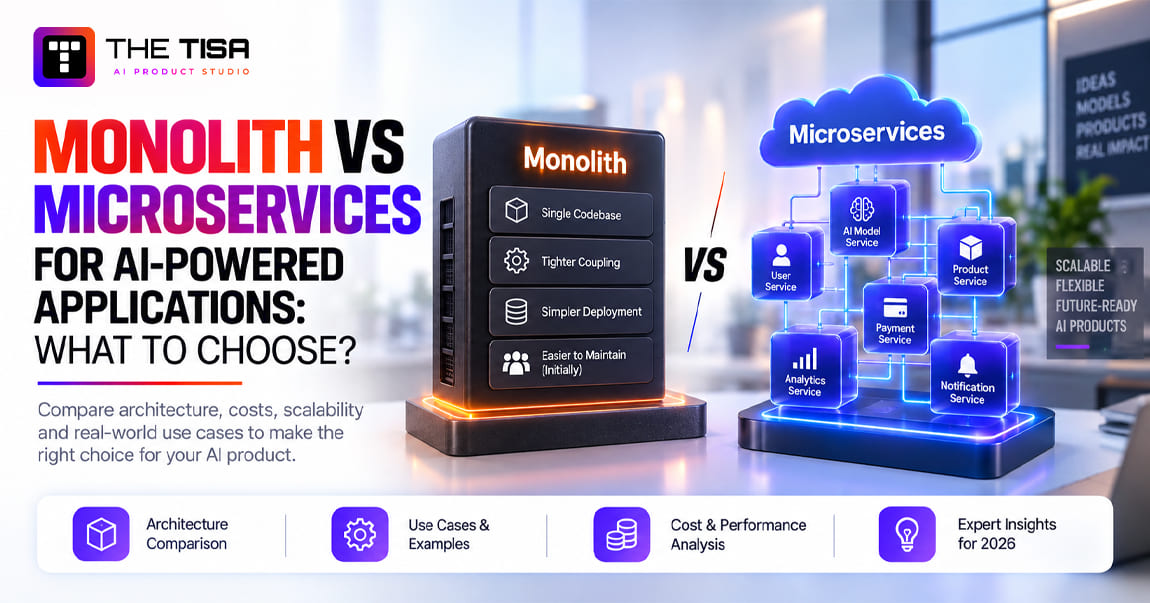
Architecture choices also affect future development costs. Many teams start with a modular monolith and split it into microservices as their needs change. This comparison of microservices vs. monolith for AI applications explains the trade-offs between the two approaches.

What Team Do You Need to Build an AI SaaS Product?

A typical AI SaaS team needs six core roles. These roles remain largely the same as the product grows, but the team expands from 3–5 people at the MVP stage to 10–20+ at enterprise scale.

Role What They Own in an AI Product
Product Manager Product roadmap, AI accuracy targets and decisions about when human review is needed
UI/UX Designer User flows that display sources, allow edits and handle uncertain AI responses
Full-Stack Engineer SaaS application, APIs, usage tracking and tenant data isolation
AI/ML Engineer Prompts, retrieval, model selection and AI quality evaluation
DevOps / Cloud Engineer Infrastructure, CI/CD and monitoring of token costs and model latency
QA Engineer Testing AI outputs that can vary between runs

At the MVP stage, one person can often handle two roles. You also don’t need an ML researcher from the start. Most products use hosted models, so an applied AI engineer who connects these models to real workflows is often enough.

Hiring an entire team in-house takes time and comes with significant costs. PwC’s 2026 Global AI Jobs Barometer found that workers with AI skills earn an average wage premium of 62%. Benefits, recruiting fees and hiring time add to the overall cost.

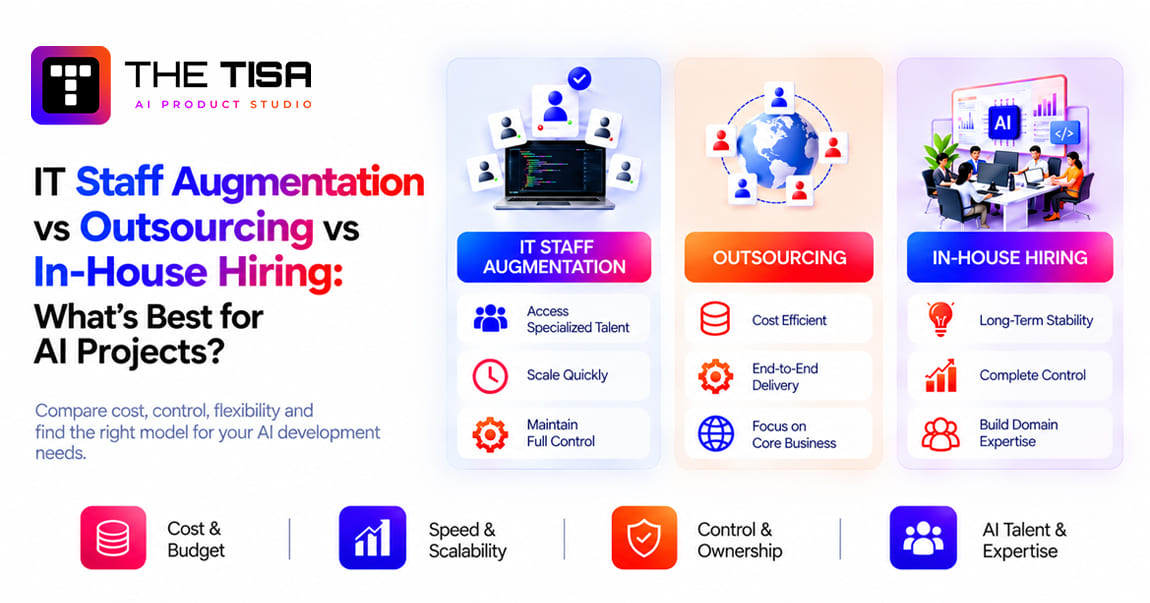
Many US companies use a hybrid approach. They keep product ownership in-house and bring in external engineers to expand development capacity. The choice between staff augmentation, outsourcing and in-house hiring depends on the project’s timeline, budget and existing AI expertise.

What Hidden and Ongoing Costs Should You Plan For?

Launch isn’t the finish line for your budget. AI products have recurring costs beyond traditional SaaS, with model usage adding a significant expense. Many teams underestimate these costs when planning their AI SaaS development budget.

Gartner projects that in 2026, global spending on AI inference will surpass spending on training. Inference means running a model to generate answers. This makes ongoing AI usage a major part of the operating budget.

Plan for these recurring costs:

  • Cloud and infrastructure: Compute, storage and bandwidth. The AWS Pricing Calculator  helps estimate these expenses early.
  • Model inference: Most providers charge per token, based on the amount of text processed. See OpenAI’s API pricing  for details.
  • Vector and database storage: Embeddings, indexes and backups add to storage costs as your data grows.
  • Monitoring and observability: Logs, metrics, alerts and AI quality tracking help you monitor performance.
  • Security and compliance: Annual audits, penetration tests and certifications add to ongoing expenses.
  • Maintenance and updates: Bug fixes, library upgrades and model version changes require regular work.
  • Support and customer success: User onboarding, training and service-level agreements (SLAs) add to support costs.
  • Third-party services: Email, SMS, payment processing and other APIs come with recurring charges.

The key metric is AI cost per active user. If a power user generates $40 in monthly model costs on a $30 plan, you lose $10 on that user before accounting for other expenses. Set pricing tiers and usage limits before launch to keep these costs under control. The FinOps Foundation  provides a framework for managing cloud spending as a shared business responsibility.

How Can You Reduce Costs Without Hurting Quality?

The most effective way to cut costs is to build less, validate sooner and use managed services where they make sense. These seven steps help lower AI SaaS development costs without adding technical debt.

  1. Validate one high-value use case. Solve one real problem first instead of building a broad AI platform.
  2. Start with managed AI APIs. Avoid training models upfront. Hosted models work well for most first versions.
  3. Build a modular architecture. Reusable components make it easier and cheaper to extend or replace parts later.
  4. Prioritize must-have workflows. Focus on essential features and learn from each release.
  5. Measure usage early. Use real data to guide product and cost decisions.
  6. Optimize models after validation. Once you understand your workload, route simple tasks to smaller, cheaper models.
  7. Automate testing and deployment. CI/CD pipelines reduce manual work and catch errors before customers do.

Step six is becoming more important as model costs decline. Stanford’s 2025 AI Index Report found that the cost of running a GPT-3.5-level model dropped more than 280-fold between November 2022 and October 2024. A vendor-neutral architecture helps you take advantage of these changes by making it easier to switch between providers, as explained in our guide to vendor-agnostic AI.

How Long Does It Take to Build an AI SaaS Product?

Most teams take about 15–30 weeks to build a production-ready AI SaaS product. They continue to scale and optimize it after launch. 

Phase Typical Duration Output
Discovery 1–2 weeks Scope, architecture and data plan
Design 2–4 weeks User flows and clickable prototypes
MVP Development 8–16 weeks Working product with core AI workflow
Production Hardening 4–8 weeks Security, performance, monitoring and polish
Scale & Optimization Ongoing Cost tuning, new features and integrations

Three things stretch timelines more than anything else: messy data, slow access to client systems and scope changes after development starts. You can control the third one. A clear discovery phase also helps identify data issues and access requirements before development begins.

When Does an AI Development Partner Make Sense?

A partner makes sense when you need to move faster than hiring allows or lack experience building production AI products. If AI is your core IP and you can quickly hire an experienced in-house team, building internally may make more sense.

When evaluating partners, ask these questions:

  • Can you show a production AI product you built, not just a demo?
  • How do you test AI accuracy before launch?
  • How do you estimate and control inference costs?
  • Who owns the code, prompts and data pipelines?
  • How do you handle HIPAA, SOC 2 and other compliance needs?
  • Who maintains the product after launch?

Vague answers about costs and testing are a warning sign. A good partner explains unit economics as clearly as product features.

Why Choose THE TISA to Build Your AI SaaS Product?

The best software development company for an AI product isn’t necessarily the one with the longest service list. A good AI software development partner  asks the right questions about scope before quoting a price. Poor planning can push AI budgets off track before development even begins.

As an AI-powered software development company, THE TISA starts every project with a short discovery sprint. The team identifies the one workflow worth building first and tests it with real data. Engineers then compare AI models based on accuracy, speed and cost for specific tasks. Flexible architecture also makes it easier to switch models later without rebuilding the product.

Adoption matters as much as technology. Teams rarely adopt AI features that don’t fit their CRM, ERP or internal tools. Source citations and human review steps also help users verify AI-generated results.

Cost control starts with the first release. Usage tracking, model routing and cloud cost monitoring help manage spending. After launch, the team handles model updates, fixes and performance tuning.

THE TISA’s full-stack team handles strategy, development, cloud deployment and QA. For founders and CTOs, this means one point of accountability instead of three vendors to coordinate.

Conclusion

AI SaaS development cost in 2026 depends on your product’s goals, technical requirements and long-term plans. Understanding these factors helps you make informed decisions before development begins.

Look beyond the initial budget and consider how your product will handle growing usage, support new features and adapt to changing business needs. Plan for ongoing maintenance and future improvements to manage costs, maintain product quality and support sustainable growth without adding unnecessary complexity.

Frequently Asked Questions

Q1. Can you build an AI SaaS MVP for under $50,000?
Ans. Yes, if you keep the scope tight. Focus on one core AI workflow, use hosted models through an API and rely on managed cloud services. Skip enterprise features like SSO in the first version. Complex integrations or strict compliance needs can push costs beyond this range.

Q2. How much should you budget monthly after launch?
Ans. Monthly costs depend on usage, not just user count. Include cloud hosting, model API calls, vector storage, monitoring and maintenance in the budget. Track AI costs per active user from the first week to ensure pricing covers heavy users.

Q3. Should you build your own AI model or use an existing one?
Ans. Most SaaS companies can start with existing models through APIs. Build or fine-tune a model only when unique data, strict data residency requirements or high usage volume justify the investment.

Q4. What’s the biggest risk in AI SaaS projects?
Ans. Building before validating the idea creates significant risks. Teams may spend months developing features users don’t need or discover that their data can’t support accurate AI output. A short discovery phase with real data helps identify these issues early.

Q5. How can you compare quotes from different AI development companies?
Ans. Compare quotes that cover the same project scope. Check whether each estimate includes discovery, AI testing, security, DevOps and post-launch support. Ask each company to separate one-time development costs from recurring expenses, as lower quotes may exclude some of these services.

Nishant Agarwal

"Nishant Agarwal is a Full Stack Developer and DevOps professional at THE TISA, with 5+ years of experience in building scalable web applications, backend systems, and cloud-based solutions. He specializes in modern technologies including React, Next.js, Node.js, TypeScript, Docker, Linux, and CI/CD."

Scroll to Top
The TISA
Hi there! 👋
How can we help you today?
now