




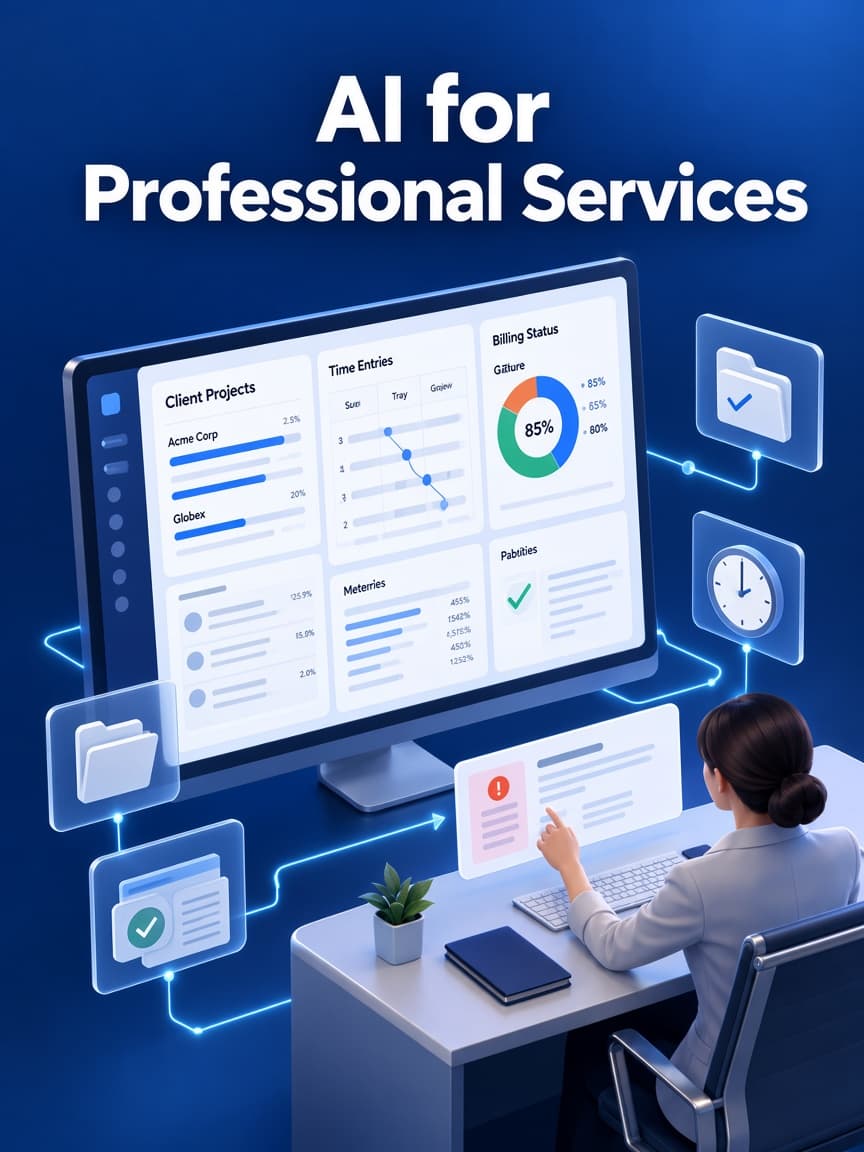


Custom AI Agents for Business Workflows

AI Agent Development

Connect your tools. Coordinate tasks. Get work done.

THE TISA builds custom AI agents that use your business data and connected tools to handle support, sales, research, and operations. From planning to execution, we engineer workflows with clear permissions, human approvals, and measurable performance.

Agent Implementation in Practice

AJOX: From a Spoken Request
to a Verified Desktop Action

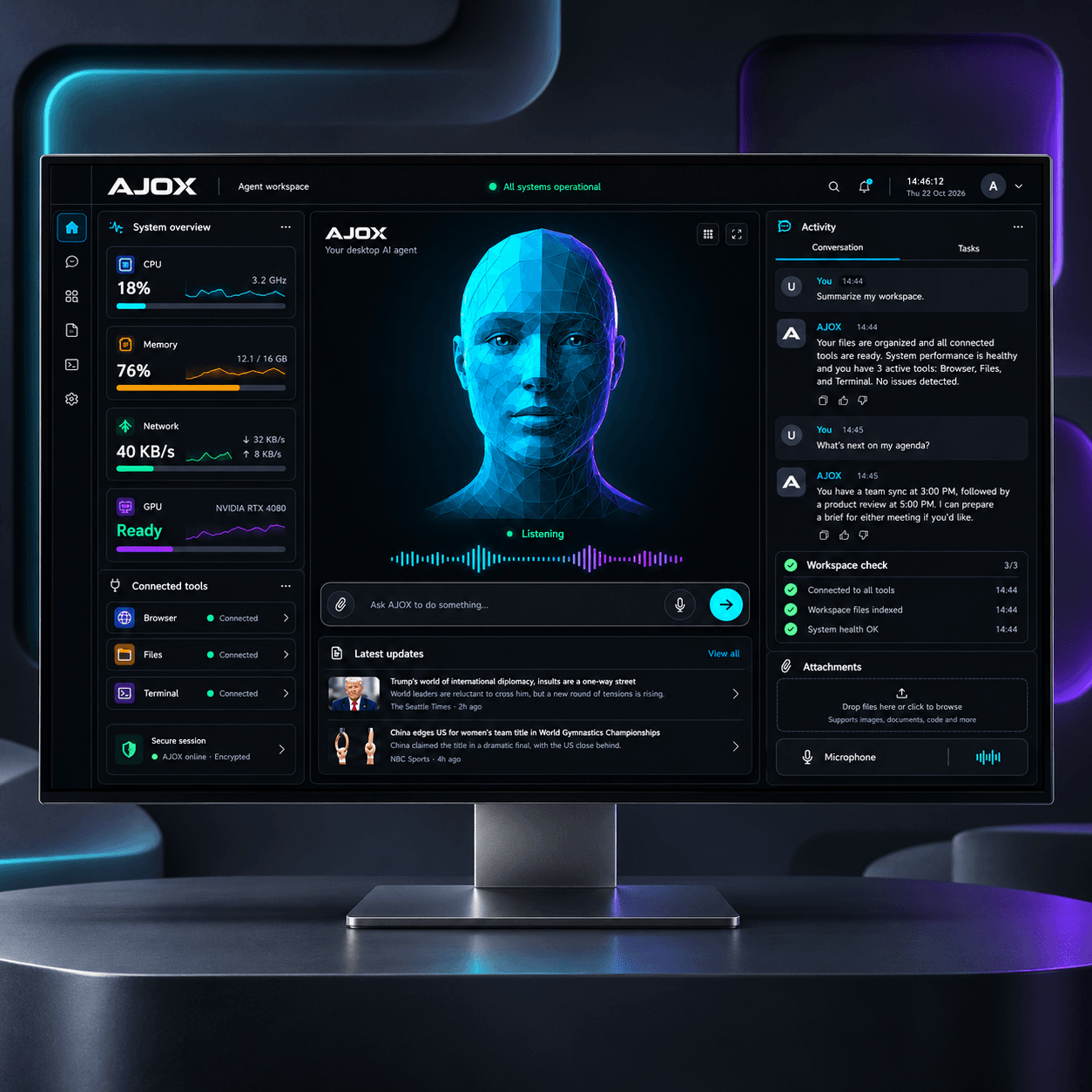
AJOX is THE TISA’s own local-first desktop agent implementation. It works across folders, applications, browser pages, and terminals. It accepts spoken or typed goals, breaks them into steps, and executes supported steps through registered action modules. A task panel shows progress, approval requests, and cancellation controls so users can follow what is happening.

AJOX Logo

AI Desktop Agent

The Problem We Designed Around

Desktop work contains ambiguity. Files may have unexpected names. A browser page may fail to load. A command may return an error. Some actions are straightforward to reverse; others affect external systems or remove information. A useful agent therefore needs more than a plan. It needs a controlled execution path, visible state, and a way to establish whether the requested result actually occurred.

For AJOX, those requirements shaped the architecture before additional capabilities were added.

What We Built

AJOX turns voice or text requests into a structured plan and executes it through registered tools. Users can follow each step, review pending approvals, and cancel the task from one desktop interface.

Sensitive approvals are tied to the task and step. Results are checked before AJOX reports completion; a failed verification remains failed.
View AJOX Case Study
AJOX AI desktop agent interface showing task progress and approval controls

Inside AJOX

From Intent to Verified Execution.

A structured execution pipeline backed by modular engineering, controlled tool access, and outcome verification. Every component has a defined responsibility in the task lifecycle.

01 / Execution

Execution Workflow

From the initial request to a verified result.

STEP 0101

Request

The user provides a spoken or typed goal.

Execution pipeline
STEP 0202

Plan

The planner breaks the goal into structured steps.

Execution pipeline
STEP 0303

Policy check

Each step is matched to a registered action and checked against the applicable policy.

Execution pipeline
STEP 0404

Approval

Sensitive actions pause for approval where required.

Execution pipeline
STEP 0505

Execute

The executor runs the selected action module.

Execution pipeline
STEP 0606

Verify

The system checks available evidence that the action produced the intended result.

Execution pipeline
STEP 0707

Report

The task reports its result, including failures or incomplete steps.

Execution pipeline

02 / Engineering

Engineering Principles

The building blocks behind controlled execution.

01Execution

Registered actions

Desktop, browser, and shell tasks run through a defined action layer.

Engineering foundation

02Control

Approval for each sensitive step

Permission is tied to the specific task and step being approved.

Engineering foundation

03Data

Local-first task state

Memory and task state stay on-device. Live voice uses Gemini Live.

Engineering foundation

03 / System Architecture

Technical Implementation

A modular, local-first architecture for orchestrating tools, managing execution, and validating task outcomes.

A

Technology Stack

AJOX combines a Python-based agent backend, FastAPI service, Next.js interface, and Tauri desktop shell. Gemini Live powers real-time voice interaction, registered tools provide controlled access to supported file, application, browser, and shell operations, and Playwright supports browser automation.

B

Execution & Verification

WebSocket updates expose task progress to the interface. The planner maps requests to registered actions, while unsupported operations are rejected. Policy checks determine whether an action can proceed, requires approval, or must be blocked. The executor runs approved modules, and verification checks the resulting state where supported.

PlanningPolicy checksTool executionWebSocketsVerification

Deployment & Readiness

Release validation

AJOX is designed around local-first task state and memory, but it is not fully offline: real-time voice interaction depends on an external model service. Signed installer validation and broader hardware-based voice testing remain release-validation tasks before broader production-readiness claims can be made.
Our AI Agent Development Services

Our Agentic AI Services
From Scope to Operations

You may need an entirely new agent, a controlled integration inside an existing product, or help making a promising pilot dependable enough for daily use. Our services cover those different starting points.

AI Agent Consulting & Architecture

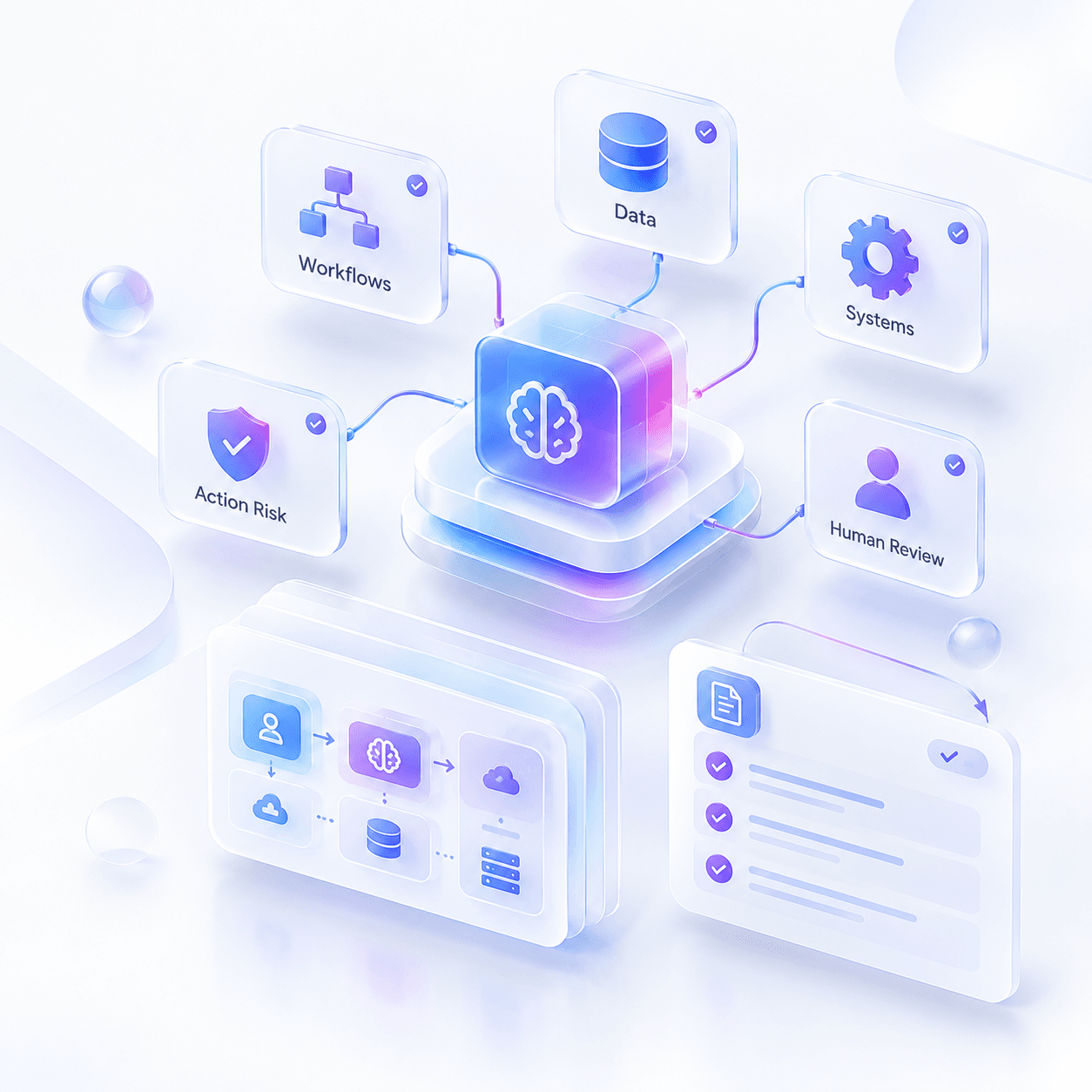
We assess where an agent could make a practical difference and what would prevent it from working reliably. That includes workflow variability, data availability, system access, action risk, and the cost of human review.

The recommendation defines the agent’s responsibilities and limits. We examine which decisions need model judgment, which should remain deterministic, and which belong with a person. Existing tools and platform capabilities are considered before recommending custom development.

Deliverable

A scoped workflow assessment, architecture outline, integration inventory, permission boundaries, and initial evaluation criteria.

If you are deciding where advisory work ends and implementation begins, read AI consulting versus AI development.
AI agent consulting and architecture assessment — THE TISA

Custom AI Agent Development

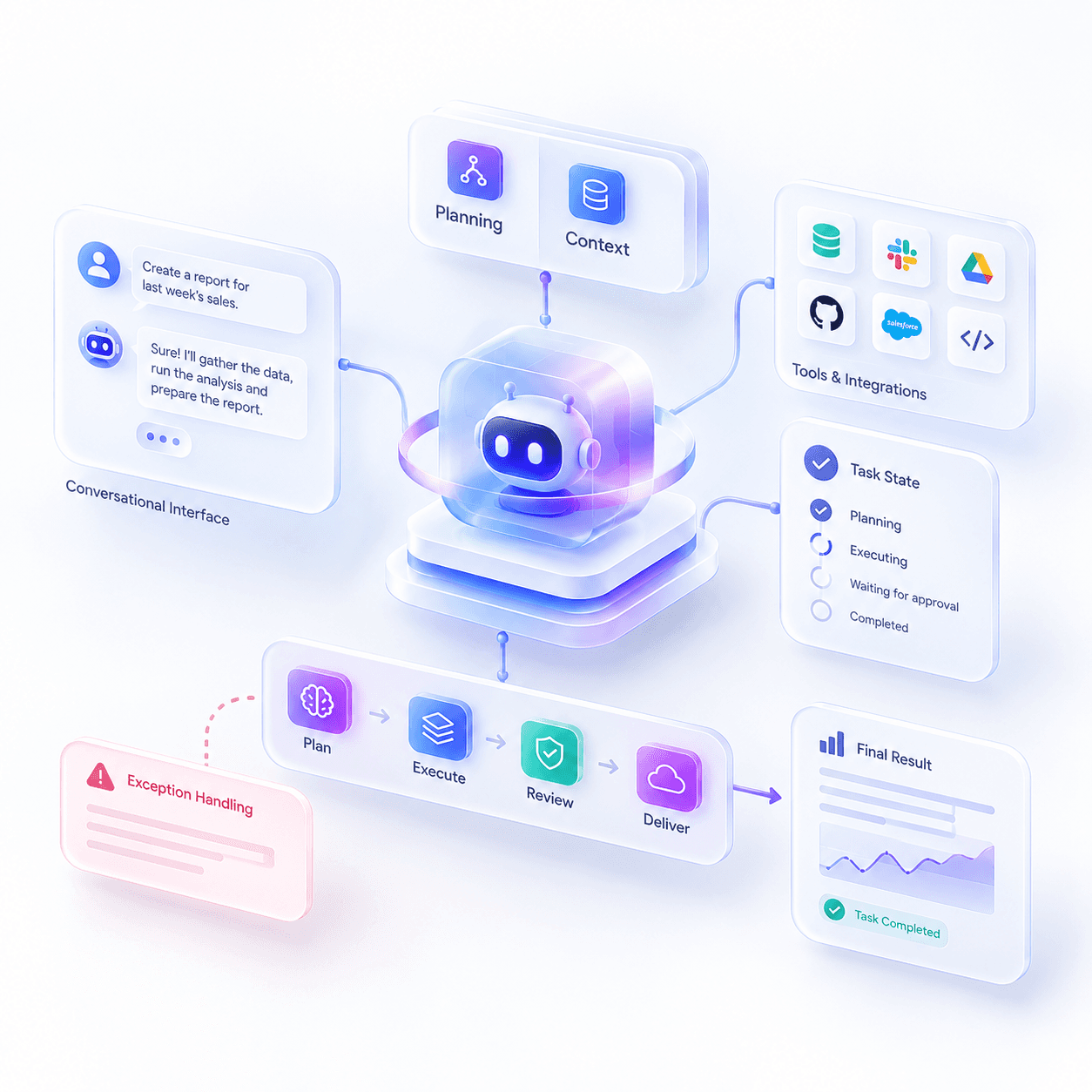
We develop custom AI agents for specific operational responsibilities rather than assigning a model an unrestricted business goal. The implementation connects planning, context, tools, and task state to the application where the work happens.

Depending on scope, this can include a conversational interface, background task execution, approval screens, progress reporting, and exception handling. We define how the agent asks for missing information and what happens when it cannot complete the request.

Deliverable

A working agent with supported actions, defined inputs and outputs, task visibility, and documented completion and escalation behavior.

For agents embedded in a broader product, explore AI SaaS development.
Custom AI agent development for operational workflows — THE TISA

Agent Integration & Tool Development

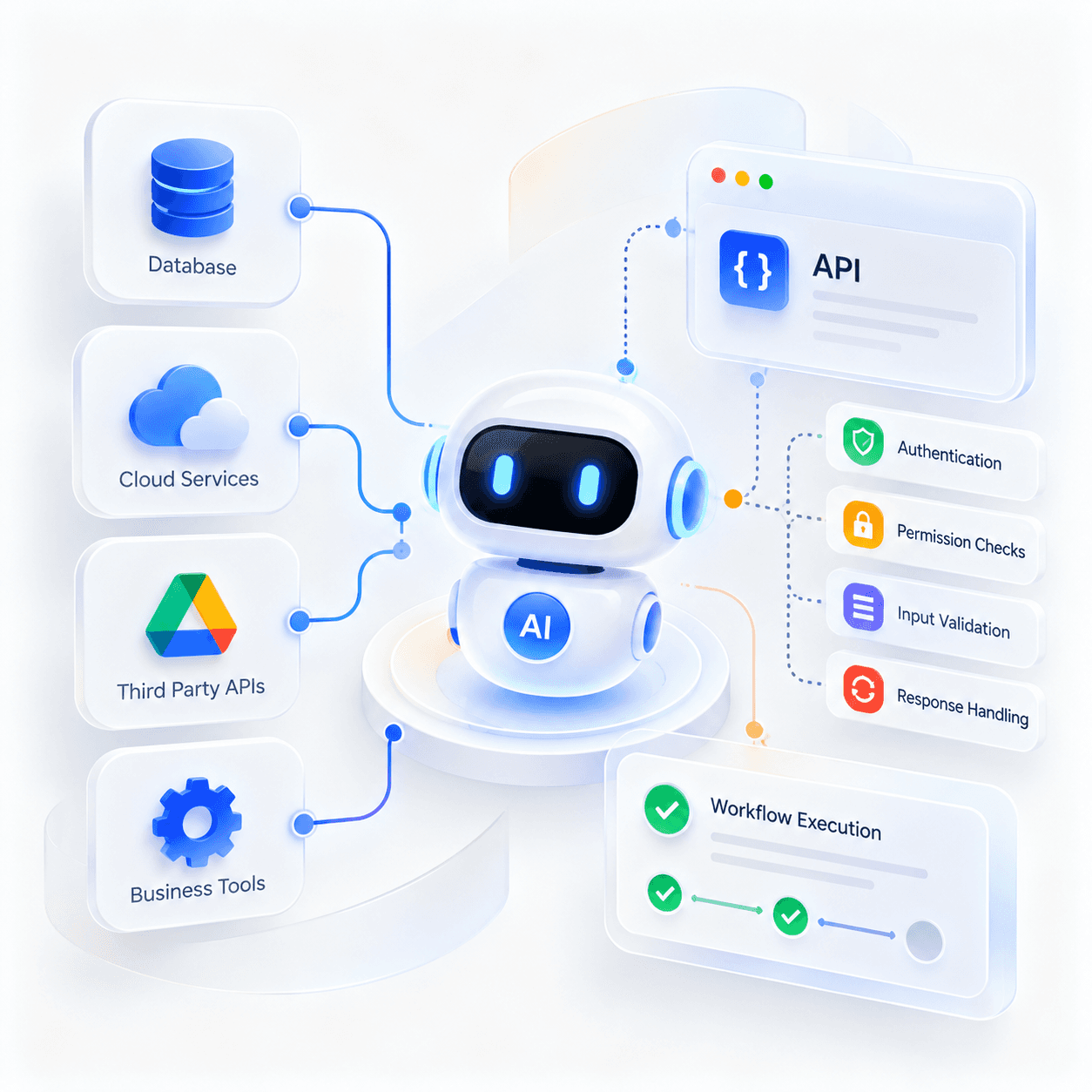
An agent’s access should be expressed through specific, reviewable tools. We build connectors and action modules that expose the operations a workflow needs while keeping authentication and business rules outside model-generated instructions.

Integration work includes input validation, permission checks, response handling, timeouts, and protection against duplicate actions. We also examine what a successful API response actually proves and whether a follow-up check is needed.

Deliverable

Scoped connectors and registered actions with authentication requirements, validated arguments, error behavior, and integration tests.

Our AI integration services cover the wider connection between models, applications, and business systems.
AI agent integration and tool development — THE TISA

Multi-Agent Systems Development

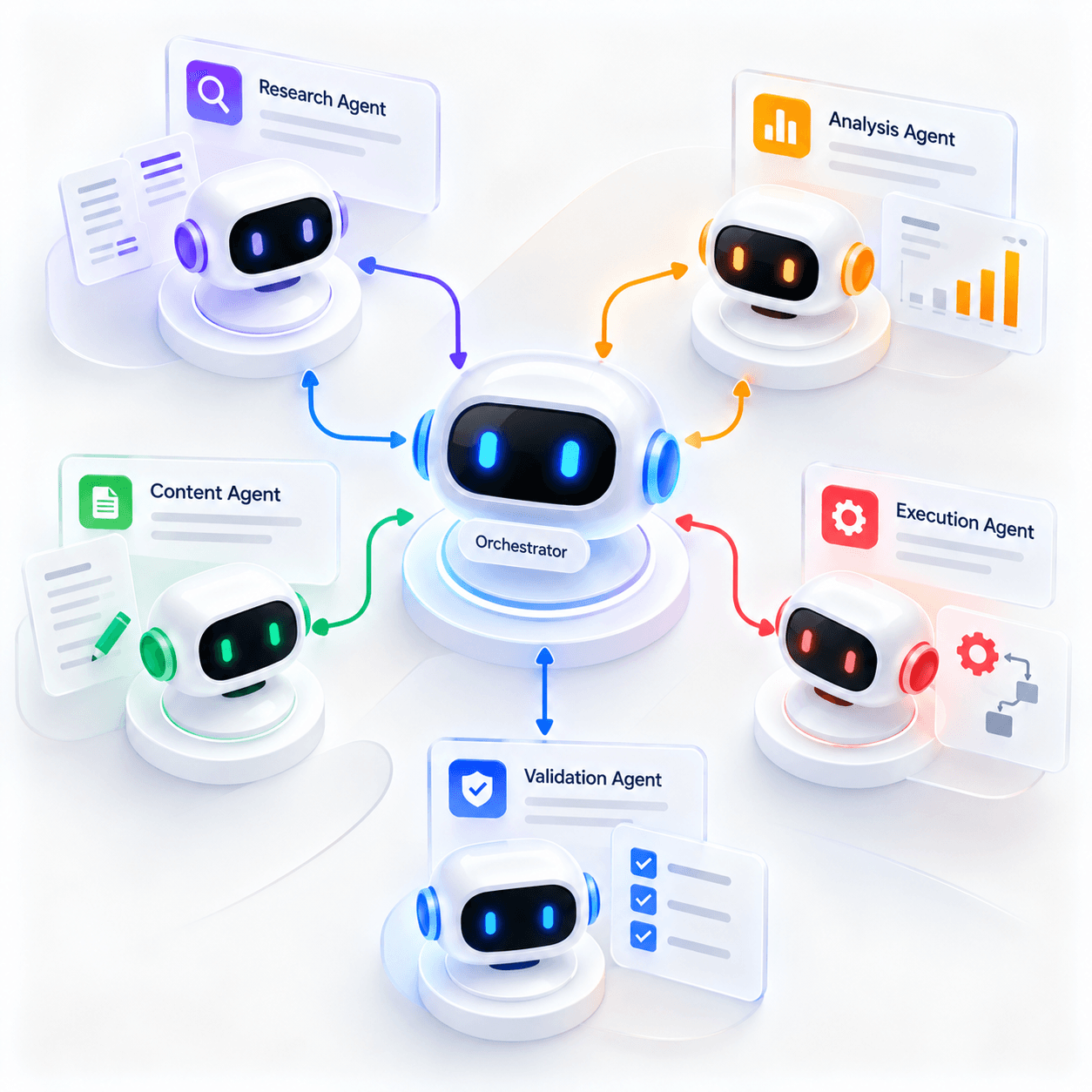
Multiple agents can be useful when a workflow benefits from distinct responsibilities, separate permissions, or independent review. They also introduce coordination overhead, so the architecture needs a clear reason for every additional agent.

We define roles, handoffs, shared state, stopping rules, and responsibility for the final result. A research agent, for example, might gather material while another checks whether a draft meets stated requirements.

Deliverable

An orchestration design with agent responsibilities, context boundaries, handoff contracts, execution limits, and escalation paths.

Explore the tradeoffs in our multi-agent systems guide.

Multi-agent systems development and orchestration — THE TISA

Agent Evaluation & Guardrails

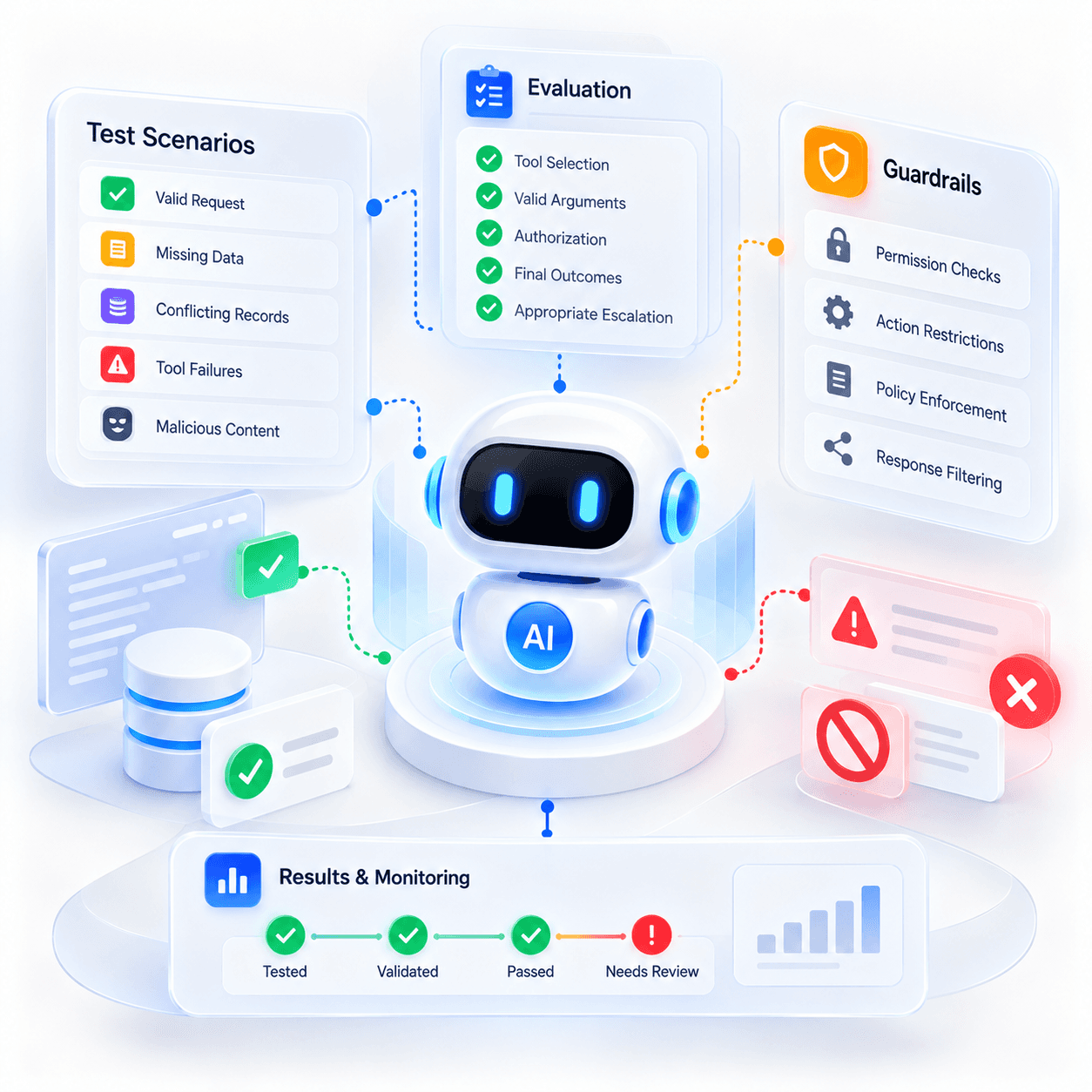
Evaluation asks whether the system completes the intended task under realistic conditions. We structure tests around correct tool selection, valid arguments, authorization, final outcomes, and appropriate escalation.

Guardrails are connected to the action path rather than relying entirely on instructions in a prompt. The evaluation scope can include missing data, conflicting records, tool failures, malicious content, and attempted actions outside the agent’s permissions.

Deliverable

A task-specific evaluation plan, representative scenarios, policy checks, regression cases, and proposed release criteria.

Knowledge-dependent agents can also require retrieval evaluation, covered within our RAG development services.
AI agent evaluation, guardrails, and release criteria — THE TISA

Agent Deployment & Operations

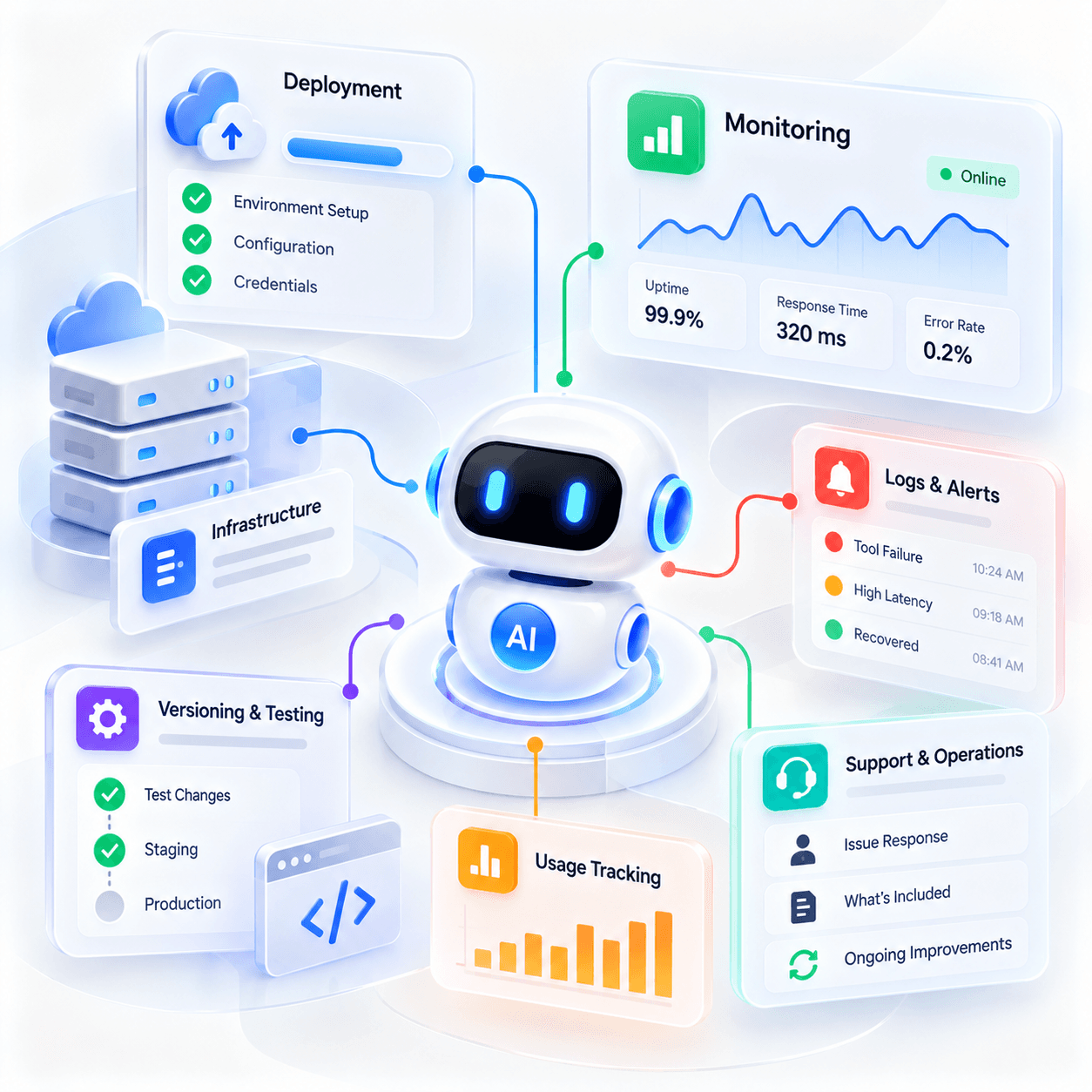
Deployment includes the environment, configuration, credentials, monitoring, and operating responsibilities required to keep an agent available and accountable. A successful demo does not establish those conditions.

We define how failures are surfaced, how usage is tracked, and how changes to models or integrations are tested. Support arrangements should identify who responds, what is included, and which improvements require additional development.

Deliverable

Deployment configuration, operational documentation, execution visibility, recovery guidance, and an agreed maintenance handover.

See our software maintenance and support services for ongoing product support.
AI agent deployment, monitoring, and operations — THE TISA
Business Workflows We Automate

Start With a Task That Has a
Clear Trigger, Boundary, and Completion Condition

AI agents can support workflows that involve interpreting requests, gathering information, selecting permitted actions, and handling exceptions. The right starting point is a frequent task with available data, manageable risk, and a result that can be checked. Each workflow needs defined access, business rules, and an accountable owner.

01 / 08Customer operations

Customer Support and Order Resolution

Help support teams resolve requests by retrieving relevant account information, identifying the customer's issue, and preparing an appropriate response or permitted next step.

When it starts

An authenticated customer asks about an order, subscription, or service.

Connected systems

Support platform, order and account records, and approved service policies.

Business value

Reduce repetitive support work, improve access to relevant customer context, and help teams respond consistently across order and service inquiries.

02 / 08Sales operations

Inbound Lead Research and Routing

Help sales teams process incoming inquiries by reviewing available information, identifying missing details, preparing a concise summary, and suggesting the appropriate next owner.

When it starts

A new inquiry arrives through an approved lead source.

Connected systems

Lead source, CRM, permitted research sources, and assignment rules.

Business value

Help sales teams spend less time organizing incoming inquiries and more time evaluating qualified opportunities and engaging prospective customers.

03 / 08Finance operations

Invoice Intake and Exception Preparation

Assist with invoice intake by extracting relevant fields, comparing available records, and organizing discrepancies for review before financial actions are taken.

When it starts

An invoice enters the designated intake workflow.

Connected systems

Document storage, vendor records, purchase orders, and accounting systems.

Business value

Reduce manual document preparation, make discrepancies easier to identify, and give finance teams a consistent starting point for invoice review.

04 / 08Logistics operations

Shipment Exception Coordination

Bring shipment information together when a delivery is delayed, documentation is missing, or a customer needs an updated status.

When it starts

A shipment delay, missing document, or customer status request is identified.

Connected systems

Shipment records, tracking information, shipping documents, and approved communication tools.

Business value

Give operations teams a consolidated view of shipment exceptions, reduce manual information gathering, and support faster, better-informed coordination.

05 / 08People operations

Employee Onboarding Coordination

Coordinate onboarding tasks by preparing checklists, tracking outstanding requirements, and following up on tasks across approved HR and business systems.

When it starts

An authorized employee reaches an onboarding stage.

Connected systems

HR systems, employee documents, onboarding tasks, and access-request systems.

Business value

Make onboarding progress easier to track, reduce missed follow-ups, and help HR and IT teams coordinate responsibilities across systems.

06 / 08Property operations

Maintenance Request Triage

Help organize property maintenance requests by gathering relevant details, reviewing available history, and preparing a proposed priority or assignment.

When it starts

A tenant or property user submits a maintenance request.

Connected systems

Property records, maintenance history, request categories, and contractor availability.

Business value

Help property teams organize incoming requests, identify missing details earlier, and direct maintenance issues toward the appropriate review or response process.

07 / 08Project operations

Project Planning and Task Preparation

Turn a project brief or requested change into a structured draft plan, with proposed milestones, tasks, dependencies, and assignments for the project team to review.

When it starts

A new project brief or project change is submitted.

Connected systems

Project records, team information, existing tasks, and dependencies.

Business value

Convert unstructured project requests into reviewable plans, improve visibility into dependencies, and reduce the effort required to prepare initial project documentation.

08 / 08Desktop productivity

Desktop Research and File Preparation

Assist with research and file-based tasks by locating permitted materials, gathering information from approved browser sources, and preparing the requested output through supported desktop actions.

When it starts

A user requests research or a file operation involving permitted resources.

Connected systems

Authorized folders, registered desktop actions, browser access, and document tools.

Business value

Reduce repetitive file handling and research preparation while helping users produce organized outputs with a clear record of completed and incomplete work.

Scroll to explore

Choosing your first workflow

Make the task measurable before making it autonomous.

Define the trigger, permitted actions, exceptions, approval requirements, and completion criteria. Then determine whether an AI agent is the right fit for the workflow.

Industry-Specific
AI Agent Solutions

Explore AI agent development services tailored to the workflows and operational requirements of healthcare, financial services, insurance, legal, manufacturing, retail, SaaS, logistics, and other industries. THE TISA designs custom AI agents to interpret requests, use approved tools, coordinate tasks, and connect with existing business systems within defined permissions. Each implementation is scoped around the business outcome, data access, integration requirements, exception handling, human oversight, and measurable acceptance criteria—so autonomy is applied where it is appropriate, not added for its own sake.

  • Develop healthcare AI agents that help authorized teams coordinate administrative workflows, retrieve approved guidance, prepare documentation, and route requests to the right staff. Agents can connect selected healthcare systems through permissioned tools, while keeping clinical decisions and safety-critical actions under qualified human control. Define the agent’s role, permitted data, escalation path, and completion criteria before deployment.

    Care coordinator reviewing a patient intake queue on a tablet in a clinic — THE TISA

    Knowledge sources

    • Scheduling and patient-service systems
    • Approved clinical and administrative knowledge
    • EHR integrations where authorized and in scope
    • Staff task and escalation workflows

    Example applications

    • Coordinate appointment requests and route exceptions
    • Prepare staff responses from approved procedures
    • Create administrative task summaries for human review

    Implementation considerations

    Define PHI access, data retention, permitted model data flows, and audit requirements. Clinical decisions, treatment recommendations, and safety-sensitive actions require the appropriate qualified review and authorization.

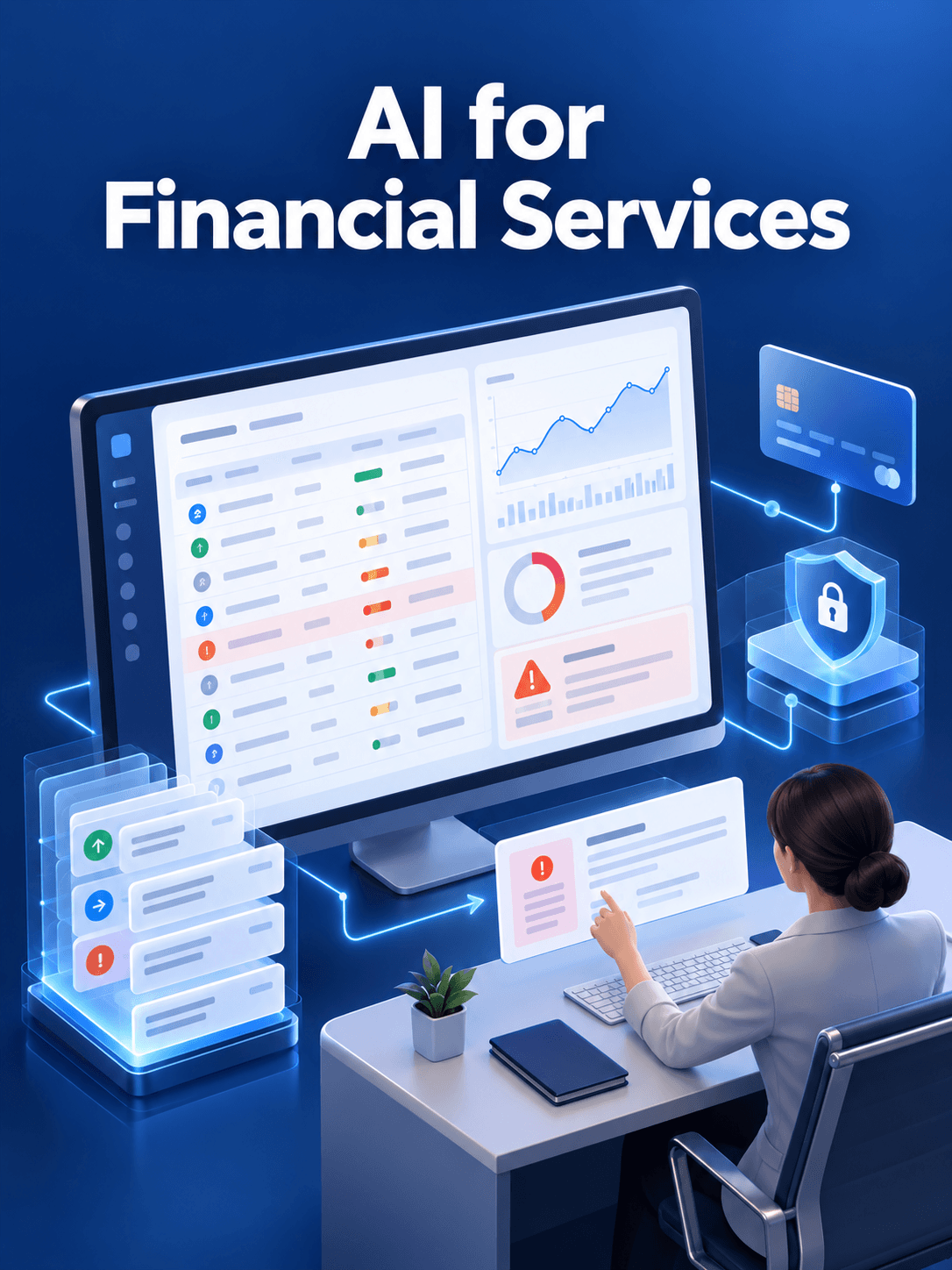
  • Build financial services AI agents for bounded operational tasks such as gathering case information, preparing customer-service responses, checking onboarding requirements, and routing exceptions. Agents can combine model-based interpretation with deterministic rules and authorized system queries. Keep account changes, financial transactions, regulated decisions, and customer communications within explicit permission and approval boundaries.

    Finance operations analyst reviewing payment exceptions on two monitors — THE TISA

    Knowledge sources

    • CRM and customer service platforms
    • Onboarding and verification workflows
    • Approved compliance and product knowledge
    • Authorized account and transaction APIs

    Example applications

    • Prepare onboarding case summaries and identify missing items
    • Route service requests using defined business rules
    • Collect relevant policy references for compliance review

    Implementation considerations

    Apply least-privilege access, transaction limits, audit logging, and approval controls. Verify current account and transaction data against authoritative systems, and keep regulated decisions under the governance required by the organization.

  • Develop AI agents for SaaS and technology companies that assist with technical support, developer workflows, incident triage, and internal operations. Agents can search approved documentation, inspect permitted telemetry or tickets, prepare code or configuration suggestions, and invoke scoped tools when the workflow allows. Keep production changes, deployments, and destructive operations behind testing, authorization, and rollback procedures.

    Product team reviewing a release plan on a large screen — THE TISA

    Knowledge sources

    • Issue tracking and customer support platforms
    • Developer documentation and code repositories
    • Observability and incident management tools
    • CI/CD and cloud APIs where explicitly authorized

    Example applications

    • Summarize support tickets and suggest documented next steps
    • Prepare incident timelines from permitted monitoring data
    • Assist developers with scoped repository and documentation tasks

    Implementation considerations

    Enforce tenant isolation, repository permissions, secret handling, and environment boundaries. Review generated code and require approved tests, deployment permissions, and recovery plans before production changes.

  • Create retail and ecommerce AI agents that support product questions, order-service workflows, returns triage, and merchandising operations. Agents can retrieve approved product information, query live order or inventory systems where authorized, and prepare or execute only the actions allowed by business rules. Separate read-only assistance from refunds, cancellations, price changes, and other consequential account actions.

    Warehouse associate scanning an order for shipment — THE TISA

    Knowledge sources

    • Product catalog and ecommerce platform
    • Order, inventory, and fulfillment APIs
    • Customer service and CRM tools
    • Returns and merchandising workflows

    Example applications

    • Triage order questions and prepare supported responses
    • Collect return details and route exception cases
    • Assist merchandising teams with approved catalog workflows

    Implementation considerations

    Use authoritative systems for live prices, stock, and order status. Validate customer identity, prevent duplicate actions, and require the appropriate approval for refunds, cancellations, and changes to customer or commercial records.

  • Build manufacturing AI agents that help teams coordinate maintenance requests, locate approved procedures, summarize quality issues, and prepare work orders. Agents can combine equipment documentation with authorized maintenance or inventory queries to support the next operational step. Keep machine control, safety interlocks, and other safety-critical operations outside autonomous action unless a separately validated and authorized control design explicitly permits them.

    Production supervisor checking work-order status on a rugged tablet beside a machining line — THE TISA

    Knowledge sources

    • CMMS and maintenance management tools
    • Equipment and engineering documentation
    • Quality management and inspection records
    • Inventory and work-order systems

    Example applications

    • Prepare maintenance work orders from reported issues
    • Summarize inspection findings for quality review
    • Route equipment requests to the responsible team

    Implementation considerations

    Verify asset identity, document revision, and site-specific procedures. Apply role-based permissions and require qualified authorization for work that affects equipment safety, production control, or regulated quality processes.

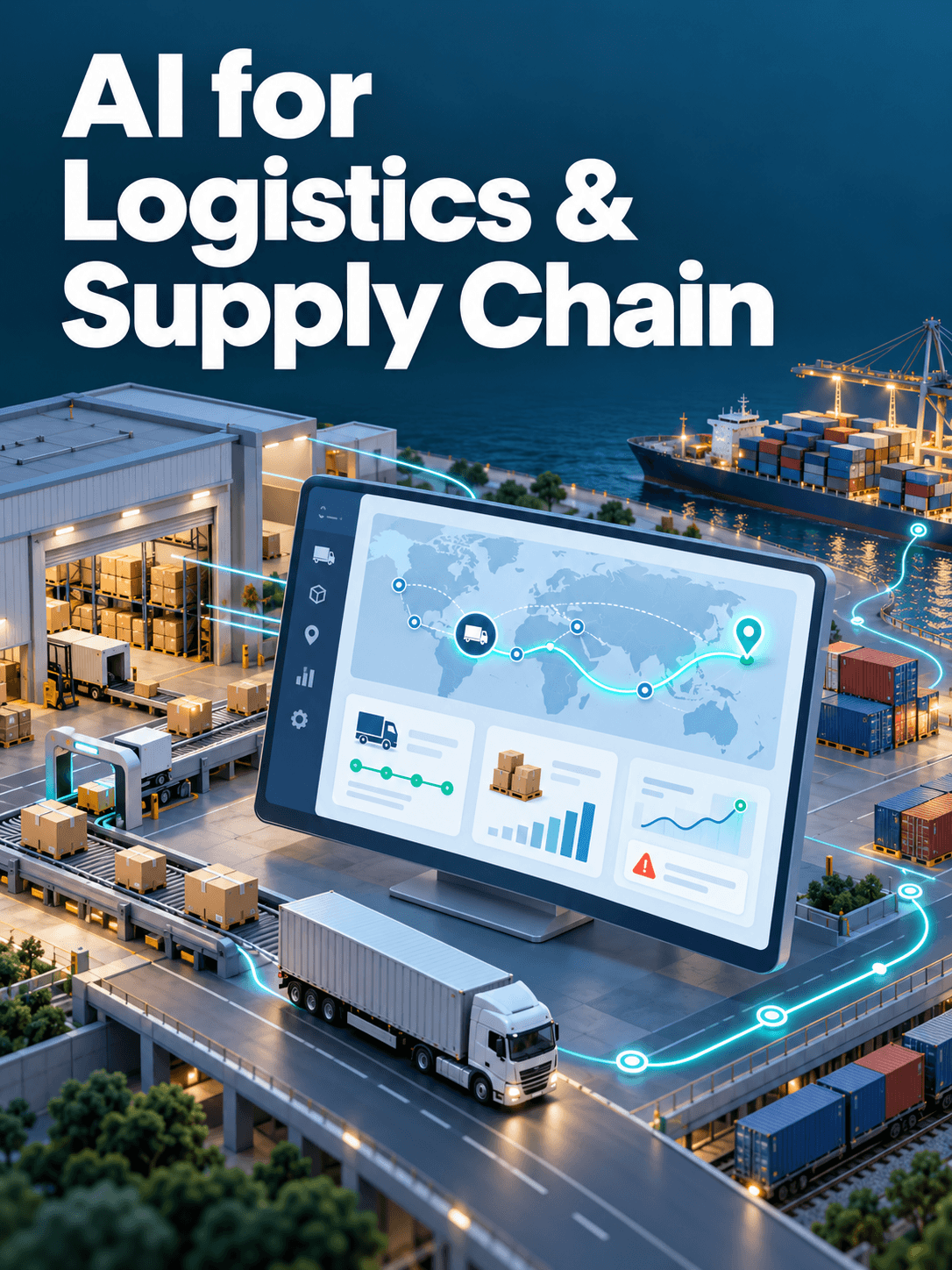
  • Build logistics AI agents that help coordinate shipment exceptions, document collection, vendor communication, and warehouse workflows. Agents can assemble information from authorized shipment, inventory, and transport systems, prepare follow-up actions, and route unresolved issues. Do not let an agent invent delivery estimates or change routes, orders, inventory, or carrier instructions beyond its explicit authority.

    Dispatcher monitoring shipment exceptions on a multi-screen workstation — THE TISA

    Knowledge sources

    • Transportation and warehouse management systems
    • Shipment tracking and inventory APIs
    • Shipping, customs, and vendor documents
    • Customer service and dispatch tools

    Example applications

    • Prepare shipment exception summaries from current records
    • Identify missing shipping documents and route follow-ups
    • Coordinate warehouse tasks and vendor information requests

    Implementation considerations

    Validate shipment identifiers and use current operational data. Apply authorization checks, duplicate-action protection, and approval requirements to routing changes, inventory adjustments, financial commitments, and external instructions.

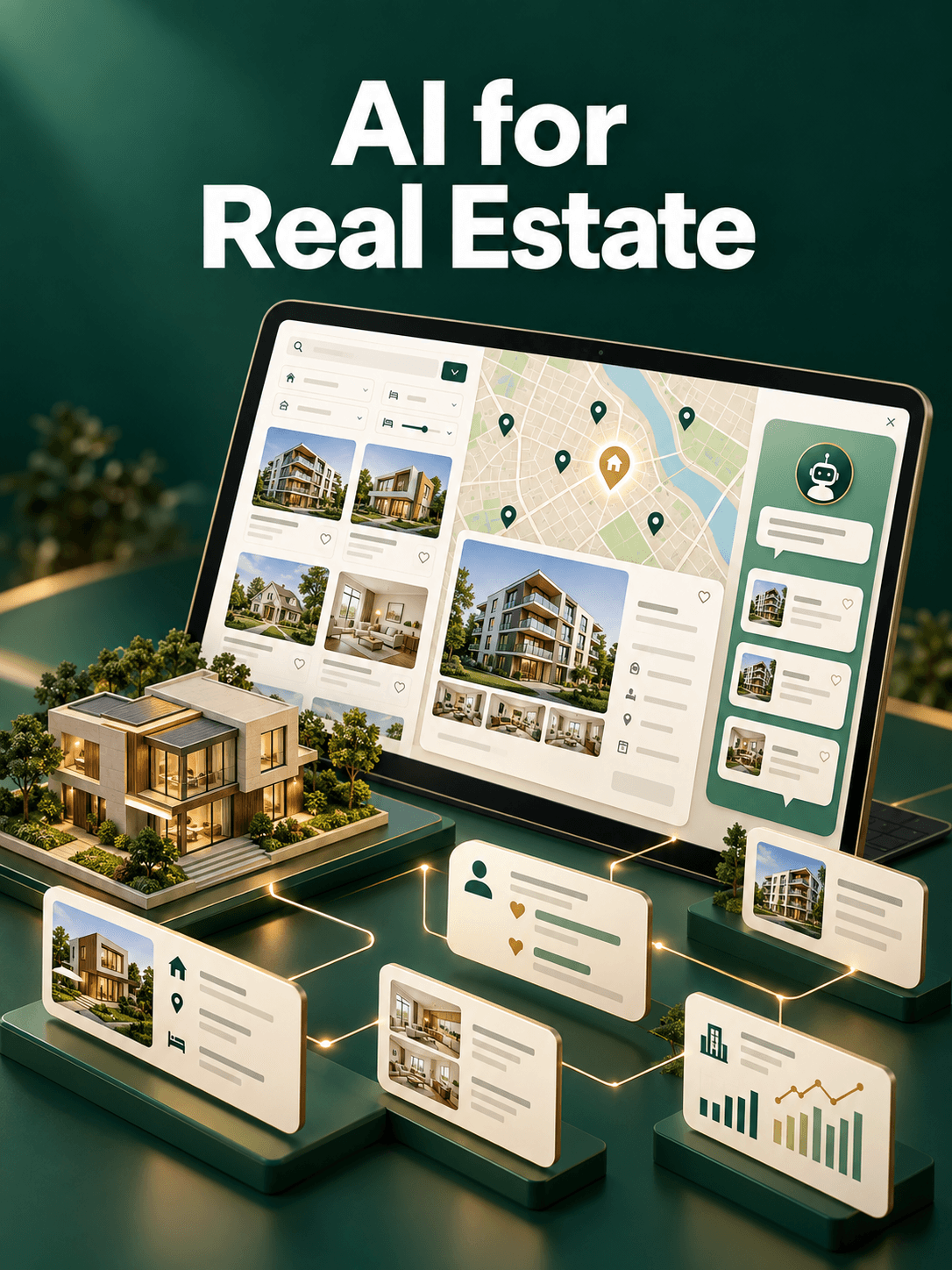
  • Build real estate AI agents that help teams manage property inquiries, prepare listing information, coordinate transaction checklists, and route maintenance requests. Agents can gather approved property data and query connected CRM or property systems for current information. Keep offers, contractual commitments, tenant decisions, and changes to property records subject to the authorization rules defined by the business.

    Property manager reviewing maintenance requests on a tablet in an apartment lobby — THE TISA

    Knowledge sources

    • Property and listing management systems
    • CRM and inquiry channels
    • Transaction and document workflows
    • Maintenance and vendor coordination tools

    Example applications

    • Prepare responses to property inquiries from approved records
    • Coordinate transaction checklists and missing-document follow-up
    • Triage maintenance requests and prepare vendor tasks

    Implementation considerations

    Verify current availability, pricing, and property details against the system of record. Protect tenant and client data, and require review for contractual language, eligibility decisions, and external commitments.

  • Develop education AI agents that support admissions inquiries, student services, faculty administration, and learning operations. Agents can answer from approved institutional materials, organize requests, prepare reminders, and route cases to the appropriate team. Keep student-record access, grading, admissions decisions, and other consequential academic actions within approved policies and human oversight.

    Instructor reviewing student feedback on a laptop in a classroom — THE TISA

    Knowledge sources

    • Student information and learning management systems
    • Admissions and enrollment platforms
    • Institutional policies and course materials
    • Helpdesk and administrative task systems

    Example applications

    • Triage admissions questions and identify missing application items
    • Route student-service requests to the correct department
    • Prepare faculty and administrative task checklists

    Implementation considerations

    Define student-data access, retention, and appropriate-use rules. Verify deadlines and eligibility against current institutional guidance, and preserve human review for academic, admissions, disciplinary, or other high-impact decisions.

  • Develop media and entertainment AI agents for research coordination, content operations, production planning, and asset discovery. Agents can gather approved research, organize production materials, prepare briefs, and route rights or editorial questions to the responsible team. Publishing, distribution, licensing clearance, and other consequential actions should follow the organization’s approval process.

    Video editor reviewing footage and metadata in an edit suite — THE TISA

    Knowledge sources

    • Editorial and research repositories
    • Digital asset and production management tools
    • Rights and licensing records
    • Project planning and content workflows

    Example applications

    • Prepare research briefs with traceable source material
    • Coordinate production checklists and outstanding tasks
    • Gather licensing information for rights-team review

    Implementation considerations

    Respect licensing terms, embargoes, confidentiality, and content ownership. Require editorial and rights review before publication, distribution, or use of material where permissions are uncertain.

  • Create AI agents for public-service teams that help process information requests, organize application documents, route cases, and prepare staff summaries from approved sources. Citizen-facing agents can explain published procedures, while authorized internal agents can support defined administrative workflows. Separate general guidance from eligibility determinations, official decisions, and actions that require a public official’s authorization.

    Caseworker helping a resident complete an online application at a service counter — THE TISA

    Knowledge sources

    • Case and application management systems
    • Approved policies, forms, and service guidance
    • Document and records management platforms
    • Authorized internal workflow tools

    Example applications

    • Check application packets for missing required information
    • Route public inquiries to the appropriate service team
    • Prepare case summaries with links to supporting records

    Implementation considerations

    Assess information classification, accessibility, auditability, retention, and procurement requirements. Preserve due process and human decision-making for individual eligibility, benefits, enforcement, and other consequential determinations.

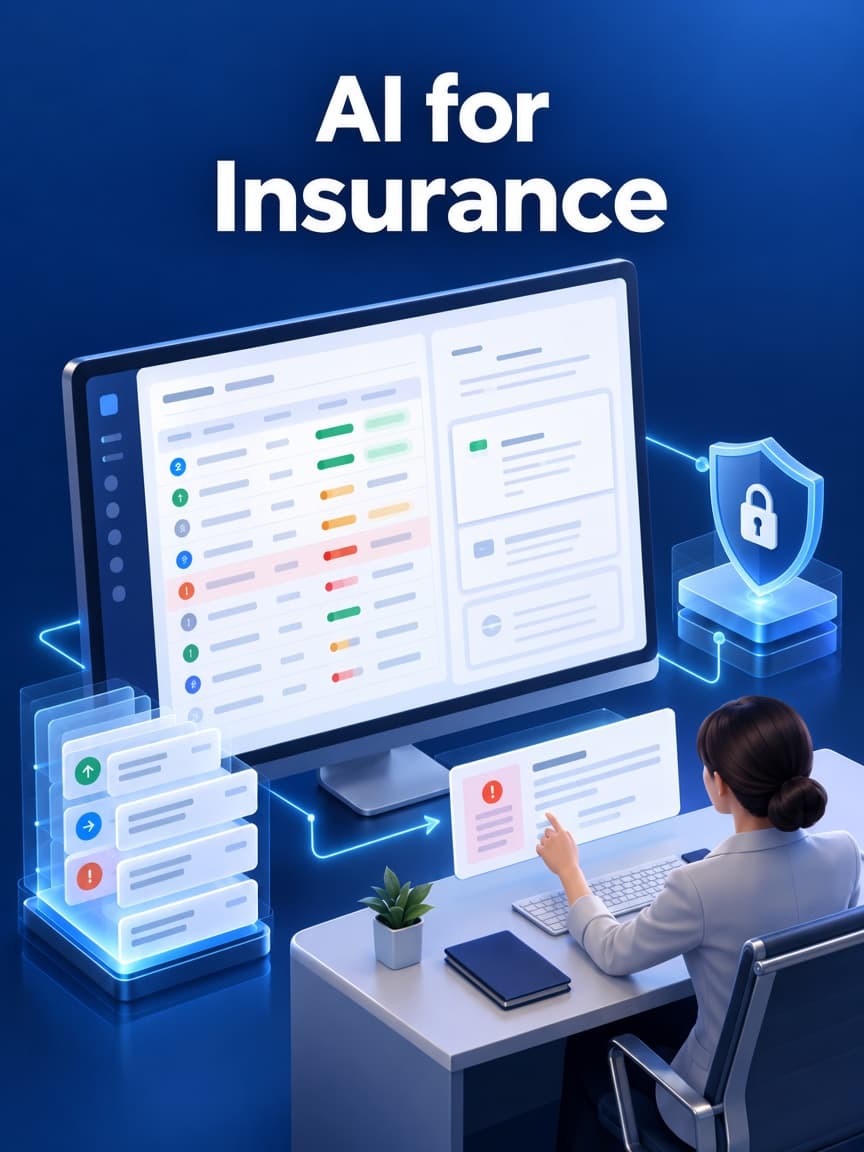
  • Create insurance AI agents that assist with claims intake, document collection, policy research, and case routing. An agent can identify missing information, prepare a structured case summary, and suggest the next permitted step using approved tools and business rules. Coverage determinations, underwriting decisions, claim approvals, and settlement actions must follow the insurer’s authorization and review process.

    Claims adjuster reviewing photos and documents for a property claim — THE TISA

    Knowledge sources

    • Claims and policy administration systems
    • Document management and intake tools
    • Approved underwriting and claims procedures
    • CRM and case management platforms

    Example applications

    • Organize incoming claim documents and flag missing fields
    • Prepare claim summaries with links to supporting records
    • Route cases to the appropriate review queue

    Implementation considerations

    Preserve claim-level permissions, policy versions, and decision records. Keep recommendations distinguishable from approved determinations, and require authorized review for coverage, underwriting, and settlement decisions.

  • Build travel and hospitality AI agents that support guest inquiries, reservation-service workflows, property operations, and travel coordination. Agents can answer from approved policies, query reservation systems for current details, and prepare or execute permitted service actions. Booking changes, refunds, upgrades, and customer commitments must follow defined business rules and confirmation requirements.

    Front desk agent checking in a guest with a tablet in a hotel lobby — THE TISA

    Knowledge sources

    • Property and reservation management systems
    • Booking, rate, and availability APIs
    • Guest service and CRM platforms
    • Housekeeping and operations task tools

    Example applications

    • Answer property questions using approved and current information
    • Triage reservation requests and prepare service actions
    • Coordinate housekeeping or maintenance follow-up tasks

    Implementation considerations

    Apply reservation-level access controls and verify live rates, availability, and booking details. Require confirmation and authorization for cancellations, refunds, reservation changes, and other customer-impacting actions.

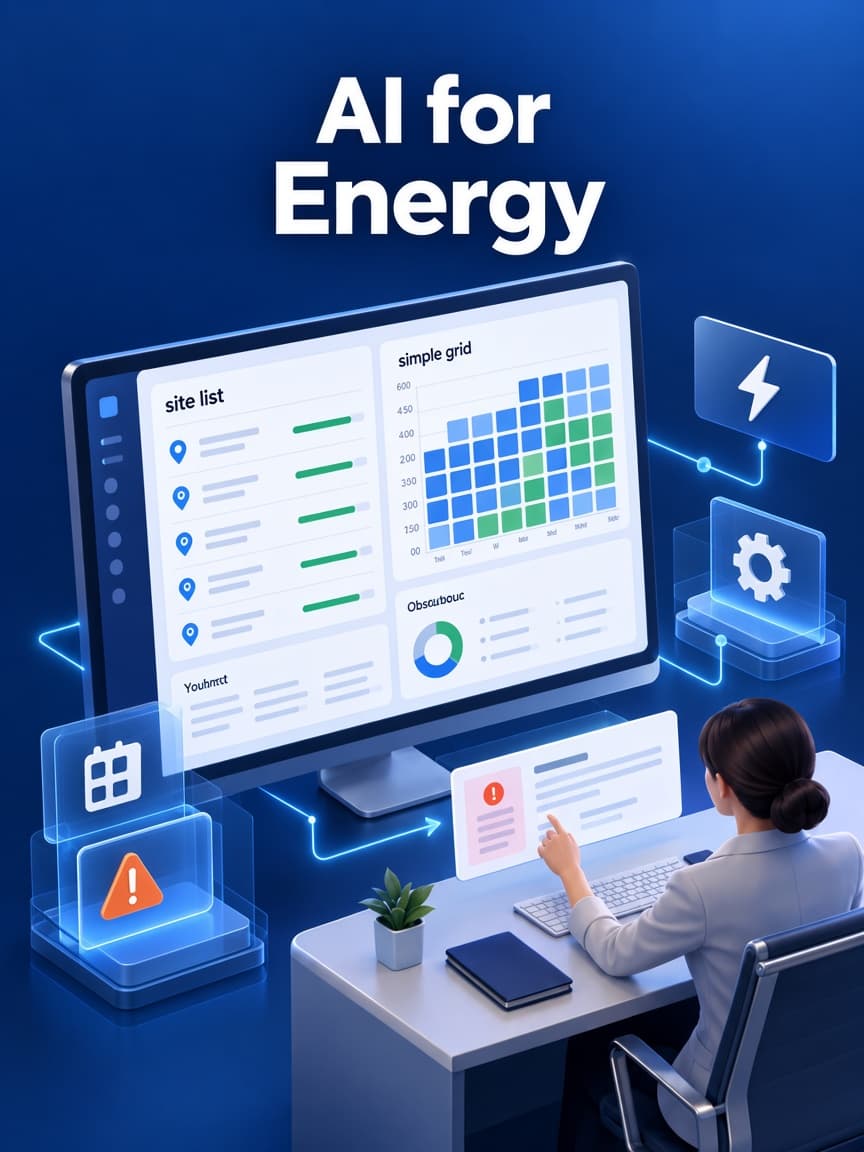
  • Develop energy and utilities AI agents that help staff coordinate inspections, locate approved asset procedures, summarize maintenance issues, and prepare field-service tasks. Agents can retrieve engineering documentation and query authorized maintenance systems to support operational decisions. Keep autonomous workflows separate from critical infrastructure control and safety-critical actions unless a dedicated, validated control framework explicitly authorizes them.

    Field technician inspecting electrical equipment with a rugged tablet — THE TISA

    Knowledge sources

    • Asset and maintenance management systems
    • Engineering and field-service documentation
    • Inspection and work-order platforms
    • Approved safety and operating procedures

    Example applications

    • Prepare maintenance work orders from reported issues
    • Assemble inspection information for qualified staff
    • Route field-service requests using asset and site details

    Implementation considerations

    Verify asset identity, site context, and approved document revisions. Apply strict permissions and qualified review for safety-sensitive work, regulated operations, and any action that could affect critical infrastructure.

  • Create professional services AI agents that support proposal preparation, research, project coordination, and internal knowledge workflows. Agents can retrieve approved credentials and reusable materials, assemble first drafts, track deliverables, and prepare client-work summaries. Keep confidential engagement information separate and require review before external deliverables, commitments, or client communications are sent.

    Project lead reviewing resource plan and milestones with a client on a video call — THE TISA

    Knowledge sources

    • CRM and proposal management platforms
    • Approved credentials and service libraries
    • Project management and delivery tools
    • Engagement documents and internal playbooks

    Example applications

    • Prepare proposal outlines from approved service information
    • Track project actions and assemble status summaries
    • Coordinate document requests and delivery checklists

    Implementation considerations

    Preserve client confidentiality, engagement-level permissions, and reuse rights. Review factual claims and deliverables before external use, and ensure that task ownership and approval responsibilities remain clear.

Architecture & Decision-Making

Use the Simplest Approach That Can Meet the Requirement
Simplest Approach

The starting question is not how many agents a business needs. It is which parts of the workflow require interpretation, which follow stable rules, and which must remain under human control.

Compare the options

Architecture Comparison

Compare suitability, risk, and operating overhead before deciding how much autonomy your workflow needs.

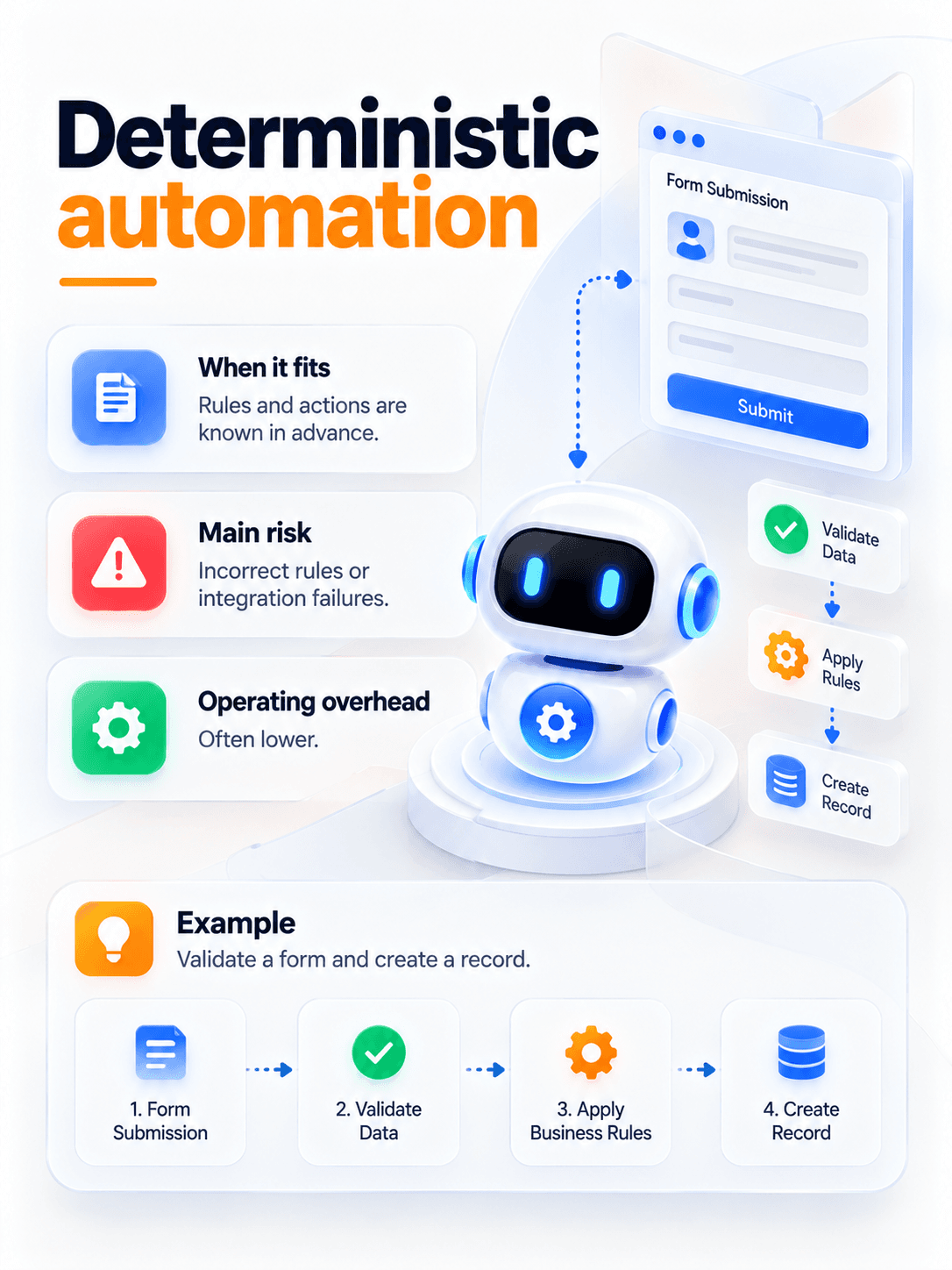
Deterministic automation workflow showing predefined rules, triggers, and actions in a software process

Deterministic automation

When it fits

Rules and actions are known in advance

Main risk

Incorrect rules or integration failures

Operating overhead

Often lower

Example

Validate a form and create a record

Architecture reference: 01

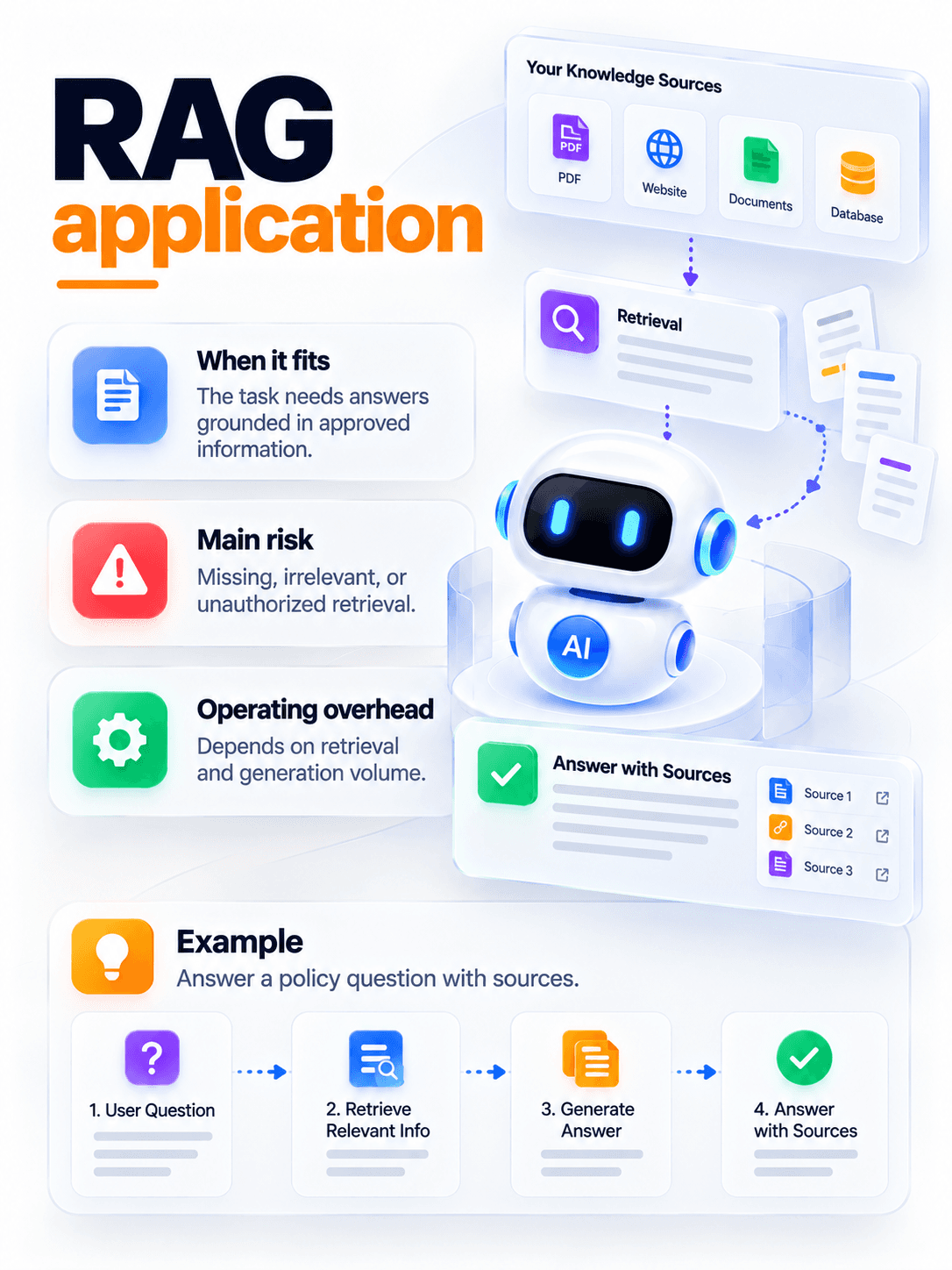
Retrieval-augmented generation (RAG) architecture connecting document retrieval, a knowledge base, and an AI language model

RAG application

When it fits

The task needs answers grounded in approved information

Main risk

Missing, irrelevant, or unauthorized retrieval

Operating overhead

Depends on retrieval and generation volume

Example

Answer a policy question with sources

Architecture reference: 02

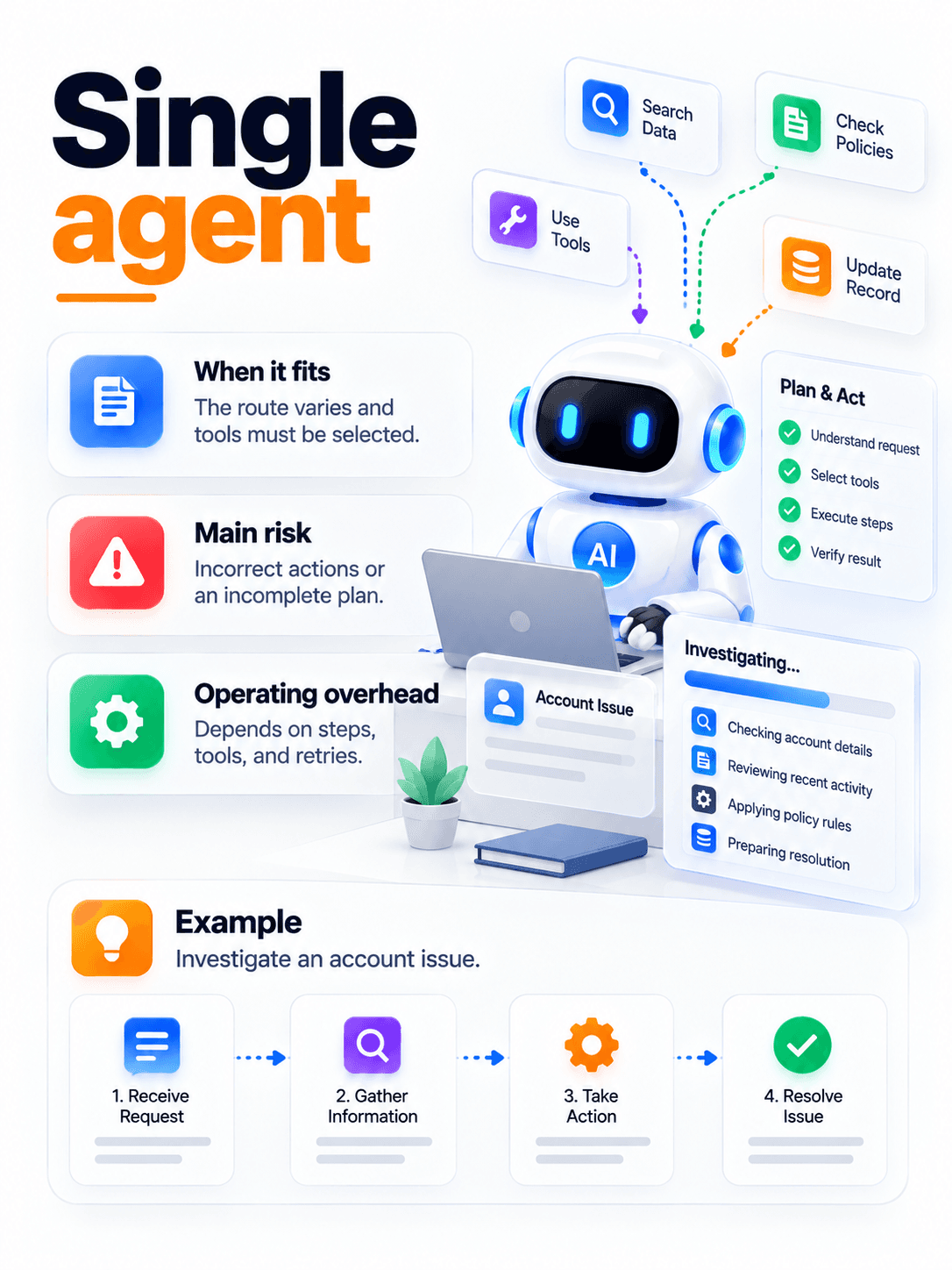
Single AI agent architecture illustrating an autonomous agent selecting tools and executing tasks toward a goal

Single agent

When it fits

The route varies and tools must be selected

Main risk

Incorrect actions or an incomplete plan

Operating overhead

Depends on steps, tools, and retries

Example

Investigate an account issue

Architecture reference: 03

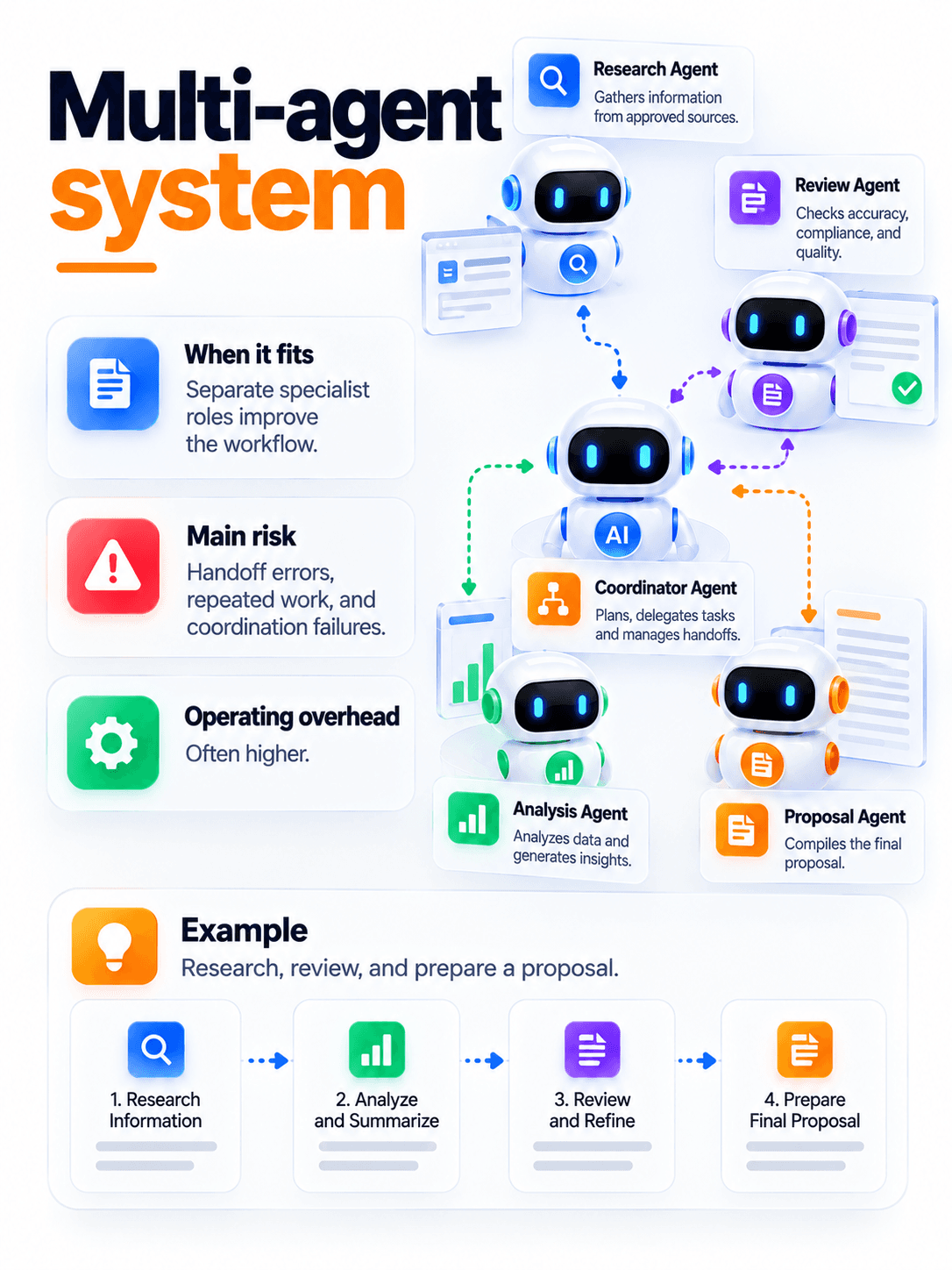
Multi-agent AI architecture showing specialized agents collaborating, coordinating tasks, and sharing results

Multi-agent system

When it fits

Separate specialist roles improve the workflow

Main risk

Handoff errors, repeated work, and coordination failures

Operating overhead

Often higher

Example

Research, review, and prepare a proposal

Architecture reference: 04

Architecture selection

Choose the right architecture for your workflow.

Explore the trade-offs between conventional automation, retrieval-augmented generation, and agent-based systems to identify the right approach for your requirements, risk tolerance, and operational complexity.

Architecture decision guide

Key considerations
DECISION 01

When Conventional Automation Is the Better Choice

Choose rules-based execution when the inputs, conditions, and required actions are predictable. An approved invoice-routing rule does not automatically need a language model. Neither does a reliable nightly data synchronization.

Adding model judgment to a stable process can introduce unnecessary uncertainty, latency, and evaluation work. The better design may be a conventional workflow with a small AI component for interpreting unstructured inputs.

Architecture decision guide01 / 05
DECISION 02

When Retrieval Is Enough

If your team needs to locate information, compare documents, or answer questions from approved sources, a retrieval application may satisfy the requirement.

A knowledge assistant does not need permission to update business records simply because it can explain them.

Our RAG development services address source selection, retrieval, access control, and answer evaluation.

Architecture decision guide02 / 05
DECISION 03

When One Agent Is Appropriate

A single agent can fit a bounded task where the next action depends on information discovered during execution. The available tools should remain limited, and the system needs a clear completion condition.

We define step limits, timeouts, clarification behavior, and escalation rules. These prevent an unsuccessful task from turning into an open-ended sequence of retries.

Architecture decision guide03 / 05
DECISION 04

When Multiple Agents Are Justified

Separate agents should have distinct responsibilities that improve review, specialization, or permission boundaries. More agents are not evidence of a better architecture.

Each handoff needs a defined output, a receiving role, and a rule for resolving disagreement. Shared memory and context also require controls so one agent does not expose information another should not access.

Architecture decision guide04 / 05
DECISION 05

When Not to Build an Agent

Do not proceed when the task lacks a measurable outcome, access cannot be granted safely, the workflow changes without an owner, or human review would exceed the effort being saved.

Our build-versus-buy framework can help assess whether custom development, an existing product, or a smaller automation is the more practical investment.

Architecture decision guide05 / 05
Recommended approach

Start with the problem. Choose the simplest solution.

Define the desired outcome, available data, permitted actions, failure conditions, and human oversight. Then select the architecture that meets those needs without adding unnecessary complexity.

Discuss your architecture
Technology & Architecture

Technologies Behind
Production-Ready AI Agents

We select AI models, orchestration frameworks, data retrieval systems, APIs, and infrastructure based on each agent's responsibilities. Every component supports reliable tool execution, controlled access, business system integration, and measurable performance in production.

  • Foundation Models & LLMs

    We select foundation models based on reasoning quality, task requirements, latency, cost, data handling, and deployment constraints. The right model depends on the workload—not simply its benchmark ranking. Business reasoning, Conversational AI, Document analysis, Structured output generation, Enterprise copilots. Multiple Model providers.

    OpenAI
    Anthropic
    Google Gemini
    Mistral AI
    DeepSeek
    Qwen
    Hugging Face
    Ollama
    Groq
  • Agent Orchestration Frameworks

    Orchestration coordinates model calls, tools, task state, retries, and human approvals. We choose a framework according to workflow complexity, control requirements, and maintainability. Multi-step workflows, Tool calling, Multi-agent coordination, State management, Human approval workflows. Flexible Orchestration patterns.

    LangChain
    LangGraph
    CrewAI
    LlamaIndex
    Google ADK
    OpenAI Agents SDK
    n8n
  • Retrieval-Augmented Generation

    RAG connects AI agents to relevant external knowledge at runtime. We combine document processing, retrieval, access controls, and source-aware responses to ground outputs in approved information. Knowledge-grounded responses, Source-aware answers, Enterprise information retrieval, Access-controlled context. Contextual Knowledge retrieval.

    LlamaIndex
    LangChain
    Elasticsearch
    PostgreSQL
    MongoDB
    Redis
    Supabase
  • Tool Connectivity & APIs

    Agents need controlled access to business tools and external systems. We use API contracts, authentication, permission checks, and protocols such as MCP to connect capabilities safely. Structured tool access, API-based integrations, Reusable connectors, Permission-aware execution. Controlled Tool access.

    REST API
    GraphQL
    OpenAPI
    Postman
    Firebase
    Supabase

    Model Context Protocol

  • Memory & Context Management

    Memory systems maintain relevant conversation history, task state, and permitted user preferences. We define what should be retained, for how long, and when context should be retrieved or discarded. Conversation continuity, Task-state persistence, Context-aware responses, Controlled retention. Scoped Context retention.

    Redis
    PostgreSQL
    MongoDB
    Supabase
  • Vector Search & Data Stores

    Search infrastructure supports semantic retrieval, filtering, indexing, and ranking. We select storage based on data volume, query patterns, access requirements, and operational complexity. Semantic retrieval, Metadata filtering, Document indexing, Context-aware search. Use-case Driven selection.

    PostgreSQL
    Elasticsearch
    MongoDB
    Redis
    Supabase
    Neon
  • Enterprise Applications & Integrations

    We connect agents to existing business applications through supported APIs, webhooks, and approved connectors. Permissions and execution boundaries determine which actions an agent can perform. Connected business workflows, Cross-platform task execution, Existing-system integration, Controlled business actions. API-based System connectivity.

    Salesforce
    Microsoft Dynamics 365
    Microsoft Teams
    Slack
    Google Workspace
    Jira
    Notion
    Linear
    Zapier
    Twilio
  • Cloud & AI Infrastructure

    We deploy AI agent applications using infrastructure suited to their security, availability, scalability, and data-residency requirements. Hosting and model services are selected according to the deployment architecture. Scalable deployments, Environment isolation, Infrastructure monitoring, Deployment flexibility. Cloud-ready Deployment options.

    Amazon Web Services
    Microsoft Azure
    Google Cloud
    Azure OpenAI
    Vertex AI
    Amazon Bedrock
    Docker
    Kubernetes
  • Security & Responsible AI

    Security controls define how agents access data, authenticate users, invoke tools, and handle sensitive operations. We incorporate authorization, validation, logging, and approval requirements into the implementation. Identity and access controls, Protected data access, Auditable agent actions, Operational risk controls. By design Security controls.

    Auth0
    Okta
    Cloudflare
    Sentry
    Datadog
  • Evaluation & Observability

    Production monitoring tracks task outcomes, tool failures, latency, token usage, and operating cost. Evaluation helps teams identify regressions and improve reliability without relying on fluent responses alone. Workflow-level evaluation, Failure tracing, Latency and cost monitoring, Regression detection. End-to-end Workflow visibility.

    OpenTelemetry
    Prometheus
    Grafana
    Sentry
    Datadog
    Langfuse
Enterprise Integrations

Give the Agent Specific Capabilities, Not
Unrestricted Access

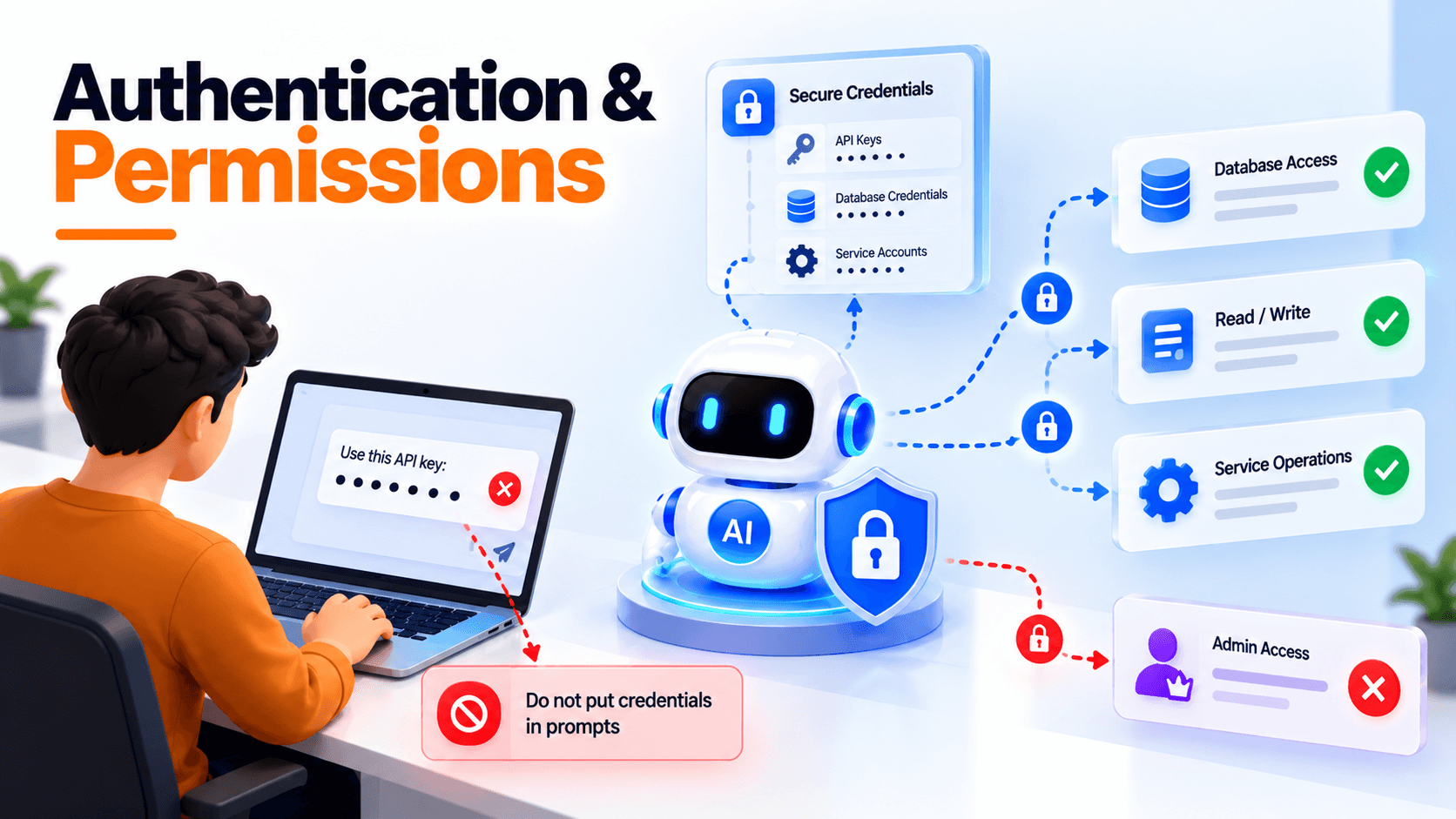
Integration determines what an agent can actually accomplish. A model’s ability to describe an action does not mean it has permission-or a reliable mechanism-to perform it. Every tool needs a defined boundary, We define integrations as bounded operations with known inputs, authorization requirements, expected outputs, and failure states. The application validates a request before it reaches a connected system.

AI agent authentication and permission management for secure enterprise integrations.

Authentication & Permissions

Credentials stay in the application and deployment environment, never in prompts or ordinary conversation context.

Implementation requirements

  • Scope access to required accounts, records, and operations.
  • Separate routine service access from administrative privileges.
  • Preserve the requesting user's authorization boundaries.
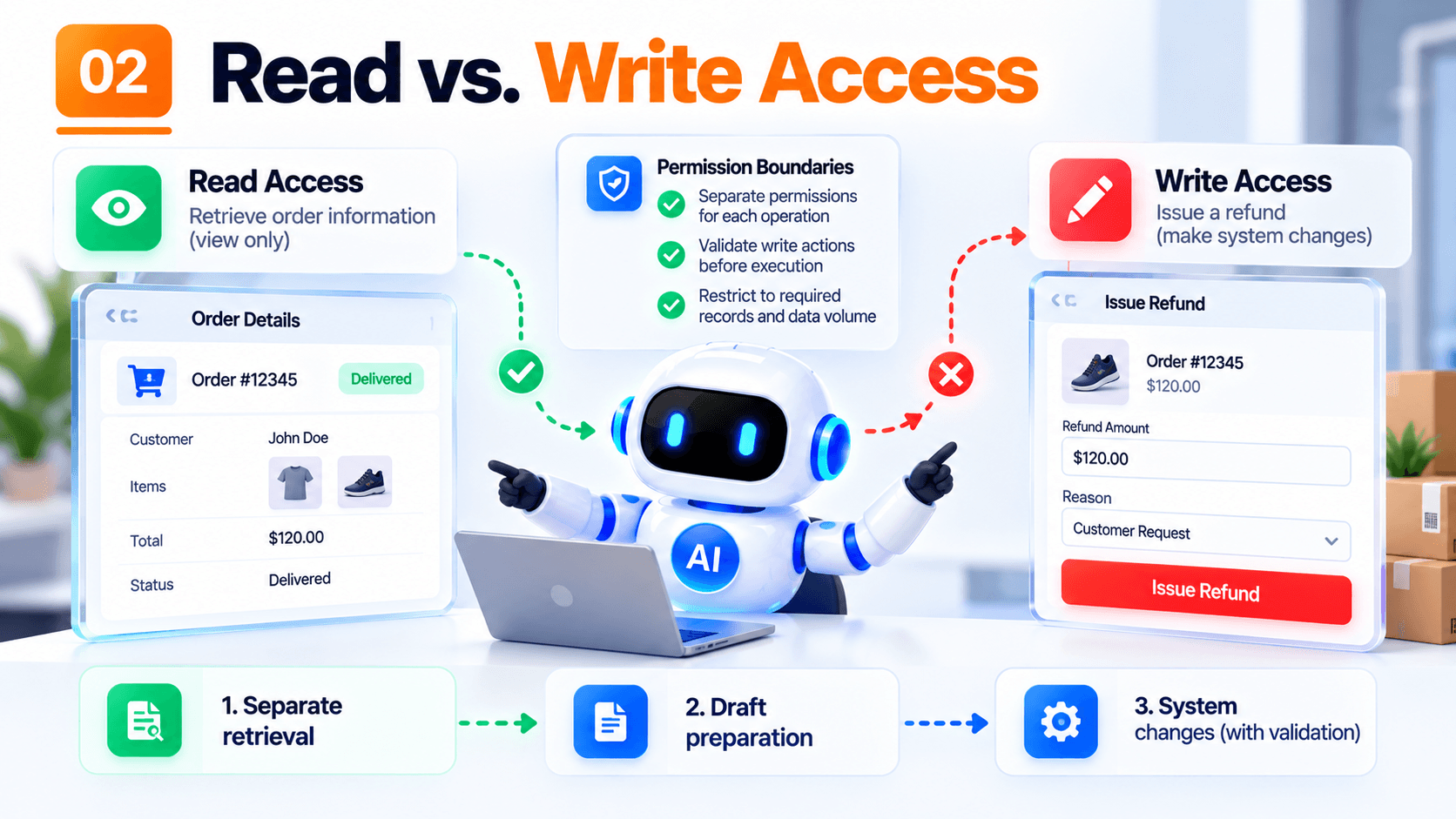
Read and write access controls for AI agents interacting with enterprise databases and systems.

Read vs. Write Access

Retrieving an order and issuing a refund have different consequences. Each operation needs its own permission boundary.

Implementation requirements

  • Separate retrieval, draft preparation, and system changes.
  • Validate consequential write actions before execution.
  • Restrict access to the required records and data volume.
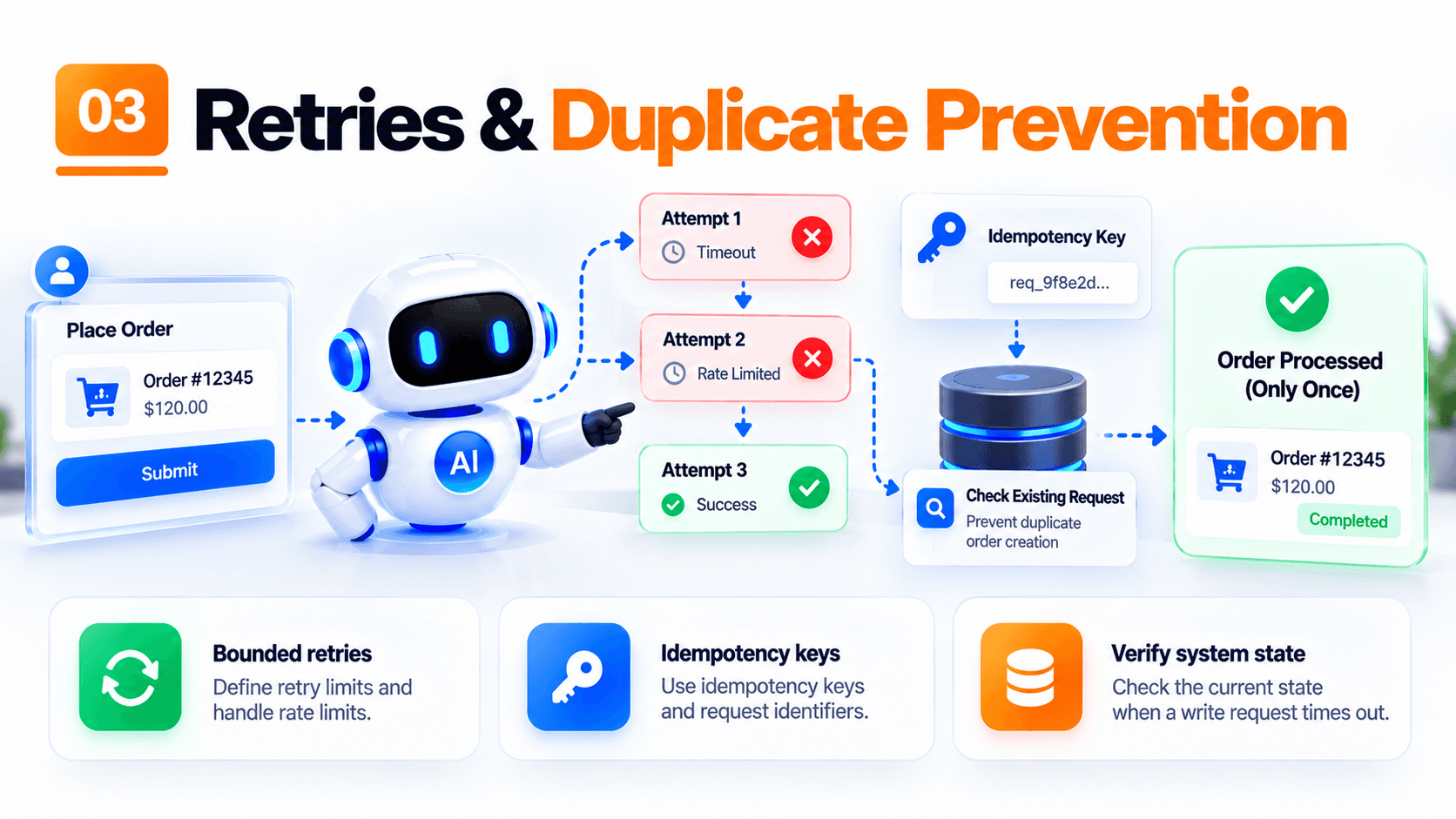
AI agent retry handling and duplicate request prevention in enterprise API integrations.

Retries & Duplicate Prevention

Timeouts, partial responses, and API rate limits need defined recovery behavior rather than indefinite retries.

Implementation requirements

  • Define bounded retries and rate-limit handling.
  • Use idempotency keys and request identifiers where supported.
  • Verify system state when a write request times out.
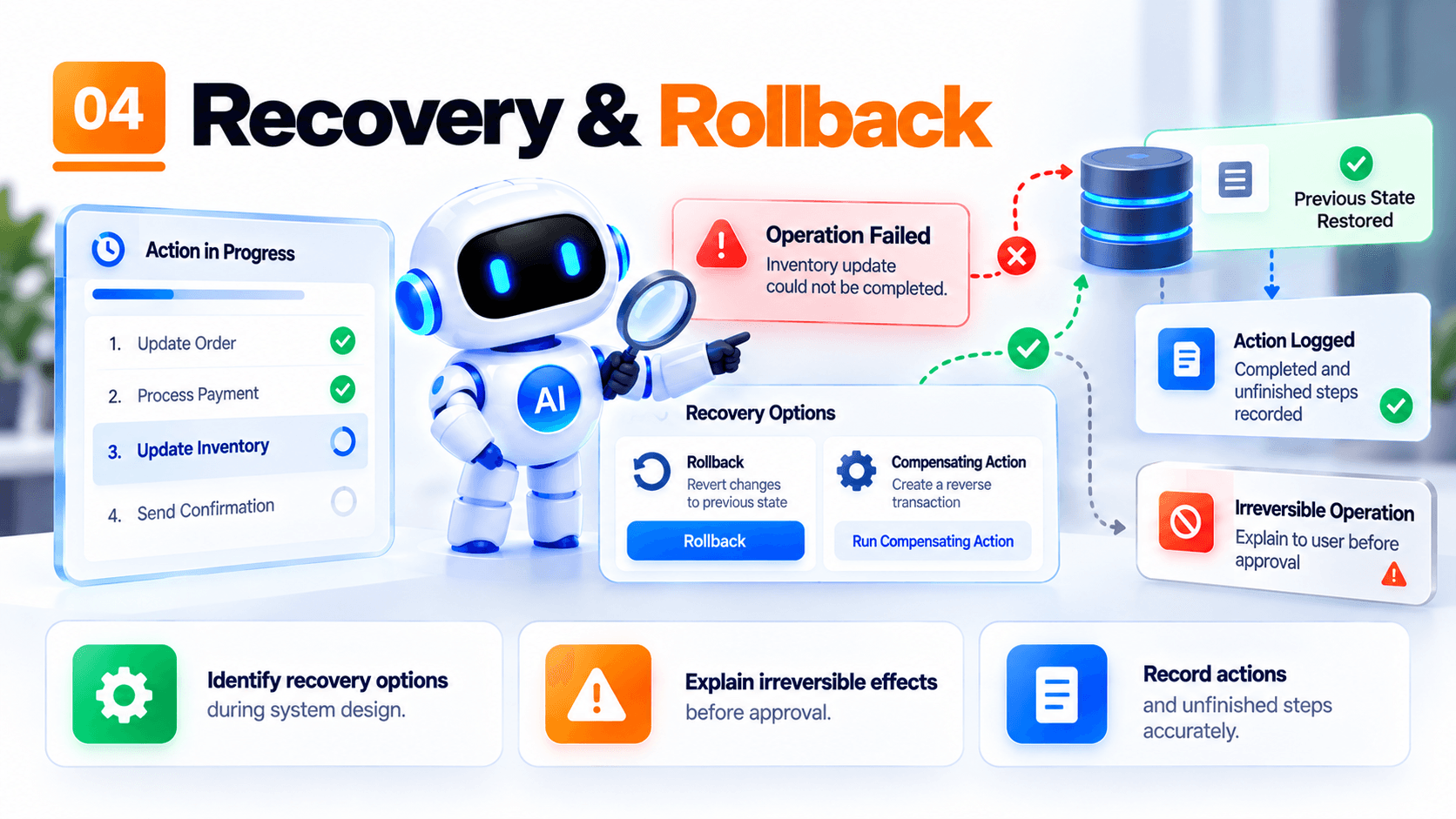
Enterprise AI integration recovery and rollback workflows for handling failed or irreversible operations.

Recovery & Rollback

Some operations can be reversed; others require a compensating action or cannot be reliably recalled.

Implementation requirements

  • Identify recovery options during system design.
  • Explain irreversible effects before approval.
  • Record completed actions and unfinished steps accurately.
Evaluation & Performance

Measure Completed Work,
Not Just Fluent Answers

An agent can sound correct while leaving a task incomplete-or execute the right operation against the wrong record. We evaluate the complete workflow, its safety boundaries, and the cost of producing an acceptable result.

01 / Operational metrics

Metrics that answer real operational questions

Choose measures that explain outcomes, reliability, safety, and operating cost-not just model output.

Outcome-based

Task success

Tasks completed correctly against predefined acceptance criteria.

Key question: Did the workflow achieve its intended result?

Judgment

Appropriate escalation

Cases correctly handed to a person when the agent reaches a defined limit.

Key question: Did the agent recognize when it needed help?

Efficiency

Cost per successful task

Relevant operating expenditure divided by the number of successful tasks.

Key question: What does an acceptable result actually cost?

Response time

End-to-end latency

Elapsed time from the initial request to the completed result.

Key question: Is the workflow fast enough for its users?

Reliability

Tool execution errors

Failed or invalid tool operations classified by their underlying cause.

Key question: Where do integrations or decisions break down?

Safety boundary

Unauthorized actions

Attempts or executions that fall outside the agent's permitted scope.

Key question: Did permission controls hold?

02 / Scenario coverage

Test what happens when the workflow breaks

Happy-path tests are not enough. Evaluate whether the agent detects exceptions, respects boundaries, and reports failures accurately.

Input & data

  • Missing or malformed records
  • Conflicting information across sources
  • Instructions embedded in retrieved documents

Integration failures

  • Expired credentials or insufficient permissions
  • API timeouts and partial responses
  • Interrupted tasks and retry behavior

Security & approvals

  • Attempts to access another user's information
  • Approval linked to the wrong task or record
  • Actions that require human authorization

Score retrieval separately from the final answer

For document-dependent workflows, evaluate whether the system retrieved the relevant evidence separately from whether its final response used that evidence correctly.

03 / Release readiness

Release against risk, not a universal score

01

Define acceptance criteria

Agree on eligible tasks, expected outcomes, unacceptable actions, and scoring evidence before reporting a success rate.

02

Evaluate by risk

Set release thresholds according to the consequences of failure. Draft assistance and financial record updates need different criteria.

03

Review critical failures

Document failed scenarios, remaining limitations, test environments, and the users covered by the evaluation.

04

Run regression tests

Re-evaluate affected workflows when models, prompts, tools, integrations, or permissions change.

04 / Production visibility

Monitor execution without collecting everything

Production monitoring should make task outcomes, integration failures, approvals, and operating costs visible. Instrumentation should fit the deployment environment and avoid retaining sensitive content unnecessarily.

  • Task status and completion evidence
  • Tool failures and classified causes
  • Approval and escalation events
  • Execution time and usage costs
  • Sensitive-data retention boundaries

Evaluation report

Illustrative report structure

No benchmark figures

Scenarios evaluated

Record the test set and eligible task count.

01

Outcome scoring

Document success criteria and evidence.

02

Failure categories

Group errors, unsafe attempts, and escalations.

03

Release recommendation

State what passed, failed, and remains untested.

04

AJOX's supplied design includes task events and verification. Measured benchmark values must be established through testing before they are presented as achieved results.

Security & Human Oversight

Build Controls Into the Path
Between a Request and an Action

The security boundary includes identity, retrieved information, connected tools, infrastructure, and the people approving sensitive work. A prompt alone cannot enforce all of those responsibilities.

The controls selected for your project should reflect what the agent can access and what could happen if it makes a mistake. Our security and data-protection approach explains the wider delivery considerations.

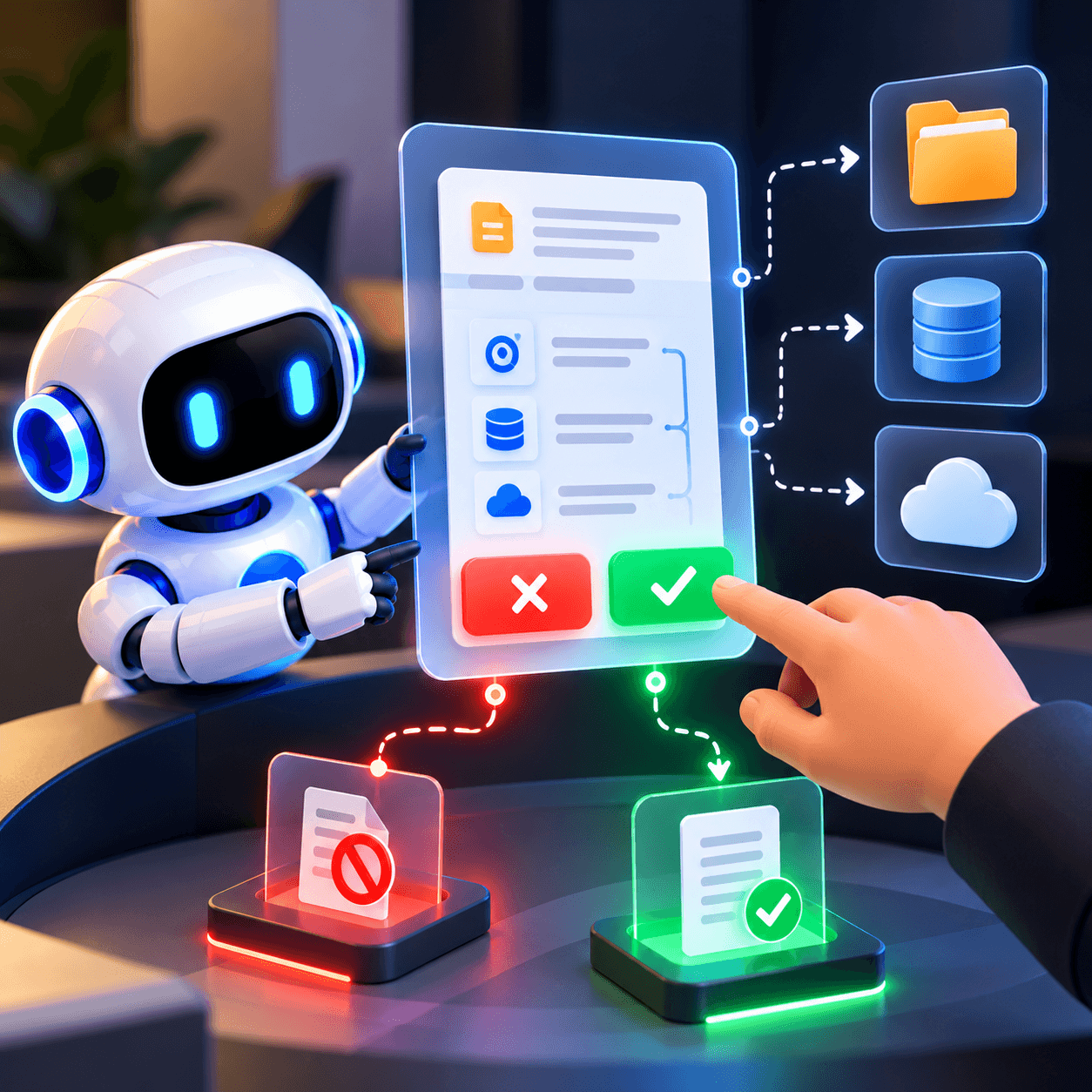
AI agent approval gates for secure action authorization and human oversight

Approval Gates

Approval should describe the action, target, and relevant consequence. A generic “continue” button is insufficient when a task could overwrite files, change a customer record, or send information outside the organization.

Approvals can be tied to a particular task and step, checked for validity, and rejected when the requested action changes. The user should be able to decline or cancel without the agent continuing through an alternative route.

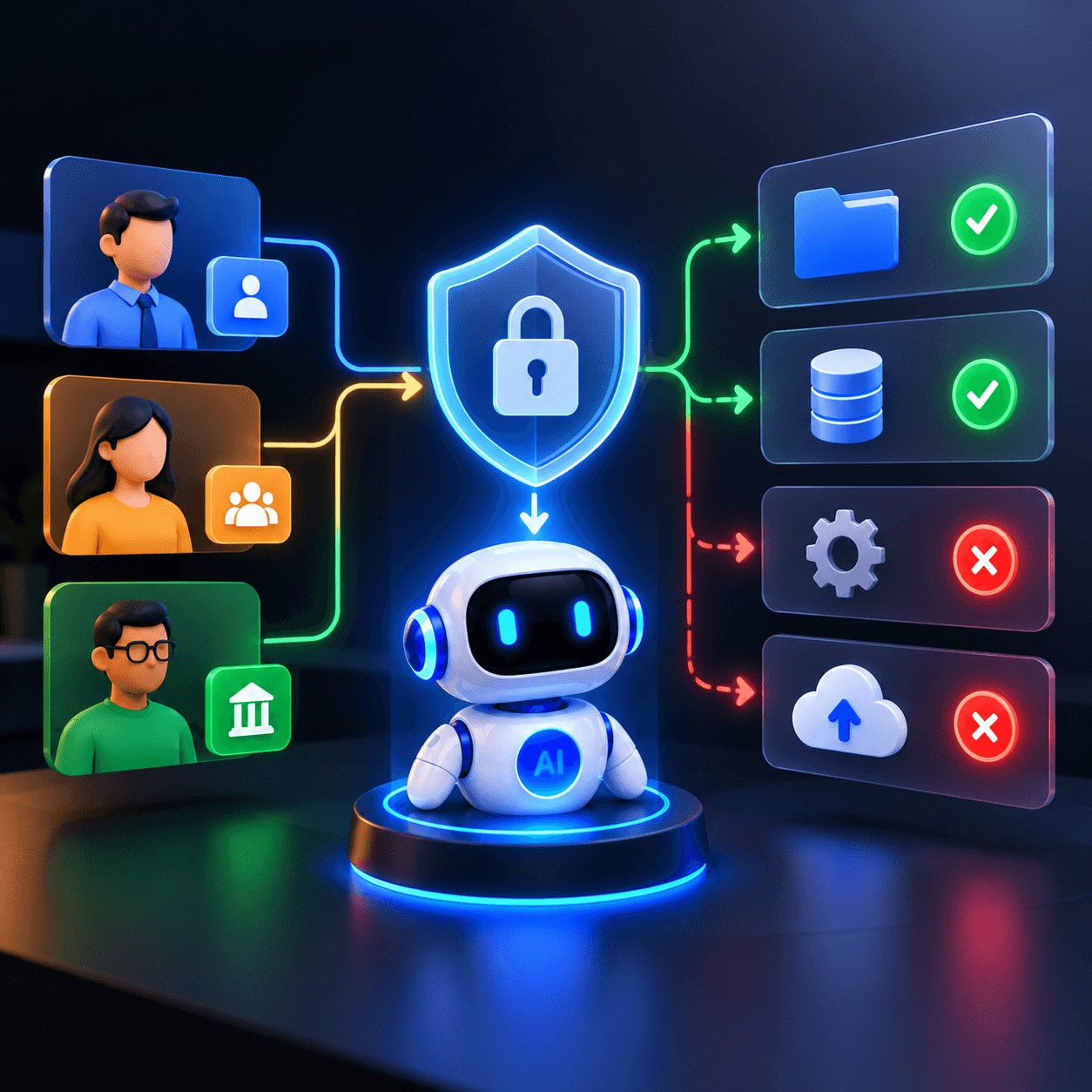
AI agent access control with identity verification and restricted permission management

Access Control

The application checks identity and authorization before returning data or executing a tool. Permissions may differ by user, workspace, department, or business operation.

Tool availability should reflect those permissions. An agent should not receive a privileged action simply because its description sounds useful for completing a goal.

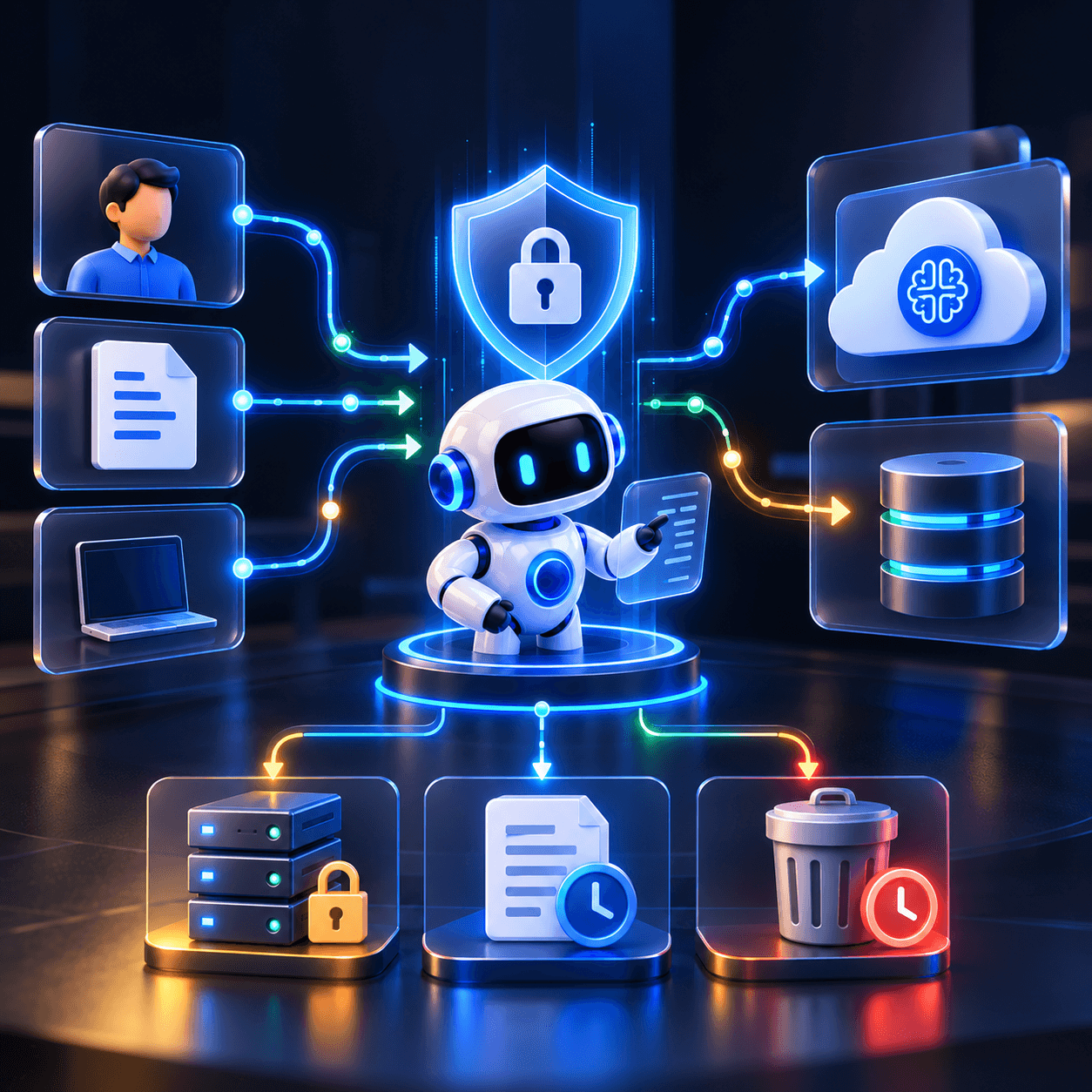
AI agent data handling and security practices for information storage, encryption, and privacy

Data Handling

We map what information enters the system, which components process it, where it is stored, and what reaches an external provider. Retention and logging decisions belong in that map.

Local storage, private networking, and encryption address different concerns. A local-first interface can still call a cloud model, while a private deployment can still depend on external integrations. The design needs to state those dependencies plainly.

AI agent deployment options for cloud infrastructure, private environments, and hybrid systems

Deployment Options

Depending on the requirements, an application can be designed for managed cloud infrastructure, a client-controlled environment, or a hybrid arrangement.

Model availability, network access, identity systems, and operating responsibilities influence what is feasible. A private deployment should not be promised before those dependencies are checked.

AI agent audit records for activity tracking, action verification, and operational security controls

Audit Records and Operational Control

Task records should make it possible to establish what was requested, what was approved, which actions ran, and what result was verified. Sensitive information in logs should be limited according to the project’s retention and access rules.

Operational controls should also define who can disable an action, revoke credentials, pause execution, or investigate an incident.

One Delivery Path, With Reviewable Outputs at Every Stage

A project should advance because the next stage is justified by evidence. Discovery establishes the task; architecture establishes the boundaries; implementation and evaluation establish whether the chosen approach works.

The six stages below describe the agent engagement in practical terms. They sit within the broader phases of THE TISA's software development process, rather than representing a second competing methodology.

Development Process & Deliverables
01

Workflow Discovery and Feasibility

We work with the people performing the task to understand its trigger, inputs, systems, exceptions, and completion criteria. Existing manual effort and review requirements are recorded where available.

Deliverable

A workflow map, feasibility view, assumptions, and a proposed first scope.

Timing

The published broader discovery phase is two to four weeks. A narrow assessment may be scoped separately; it should not be confused with full discovery.

Stage 01
02

Data, Access, and Architecture

We identify the records, documents, identities, and actions needed by the workflow. Access limitations and integration dependencies are resolved before the build plan assumes they are available.

Deliverable

Architecture, data flow, tool inventory, permission model, and deployment assumptions.

Timing

The published data-and-architecture phase is three to six weeks, depending on access and complexity.

Stage 02
03

Prototype and Evaluation Setup

The initial implementation tests the riskiest assumptions: whether the necessary context can be retrieved, tools can complete the required operations, and results can be checked.

Deliverable

A bounded prototype, representative scenarios, and a decision about what should proceed.

Timing

Scheduled within the build phase. A standalone proof of concept requires its own scope and exclusions.

Stage 03
04

Agent and Integration Development

The team implements supported actions, task state, approval flows, user interfaces, and exception handling. Working increments are reviewed against the agreed workflow rather than presentation polish alone.

Deliverable

The implemented workflow, integration behavior, and supporting documentation.

Timing

Prototype, development, and validation sit within the published eight-to-sixteen-week build-and-iterate phase for broader engagements.

Stage 04
05

Validation and Controlled Release

The release candidate is evaluated against the agreed scenarios, permission boundaries, and operational requirements. Remaining limitations are documented.

Deliverable

Evaluation findings, release decision, deployment configuration, and operating guidance.

Timing

Determined by the test scope, defect resolution, and client review requirements within the delivery plan.

Stage 05
06

Operations and Improvement

After release, the team reviews failures, usage, feedback, and changes to connected systems. Improvements are prioritized through an agreed support arrangement.

Deliverable

Monitoring responsibilities, maintenance scope, change procedures, and handover records.

Timing

Ongoing where contracted.

Stage 06
Development Cost & Ongoing Operations

Budget for the Workflow
You Are Building and the System You Will Operate

Two projects described as “an AI agent” can involve very different responsibilities. A prototype that prepares drafts has a different delivery scope from an application that authenticates users, changes business records, and operates across several integrations. The useful estimate defines those differences. It identifies what the agent will do, what it will not do, what needs approval, and what evidence is required before release.

01 / Development investment

Published Planning Estimates

The following bands come from THE TISA’s published cost guide. They are estimated project categories, not fixed fees or a substitute for a scoped quotation.

01

Prototype or proof of concept

Estimated development investment

12,000–35,000

Published timeline

3–6 weeks

02

Production agent for one workflow

Estimated development investment

40,000–120,000

Published timeline

6–12 weeks

03

Production agent with multiple integrations

Estimated development investment

120,000–300,000

Published timeline

3–6 months

04

Enterprise or regulated multi-agent system

Estimated development investment

300,000–800,000+

Published timeline

6–12+ months

These categories describe different engagements. A standalone prototype does not include every stage or control of a full enterprise rollout. Read the AI agent development cost guide for the underlying comparison.

02 / Scope factors

What Changes the Development Scope?

Integration count, action risk, data preparation, identity requirements, and approval responsibilities influence the effort required to build a reliable AI agent.

Workflow and action risk

Integration count is one factor, but action risk is equally important. Retrieving an account record usually requires less control and validation work than changing it.

Technical dependencies

Other dependencies include data preparation, existing API quality, identity requirements, interface complexity, expected traffic, deployment restrictions, and the range of failure scenarios.

Client-side responsibilities

The estimate should also state what your team supplies: system access, business rules, sample records, subject-matter review, and approval decisions.

03 / Operating costs

Recurring Operating Costs

Ongoing costs depend on model usage, infrastructure, retrieval requirements, and the external services needed to run the agent.

Model and speech usage

Costs for AI model inference, speech recognition, text-to-speech, and real-time voice processing.

Data and retrieval

Expenses for database storage, vector search, embeddings, and retrieval infrastructure.

Infrastructure

Costs for cloud hosting, compute resources, monitoring, logging, and application observability.

External services

Third-party API subscriptions, software licenses, integrations, and ongoing vendor support.

04 / Project assumptions

Assumptions and Exclusions

Confirm which costs, services, and responsibilities are included in the project scope before development begins.

Historical data migration
Vendor subscriptions
Infrastructure charges
Security assessments
Additional connectors
Support outside the agreed scope

Start With a Task Worth Validating

The first release should be sized around a task worth validating. Expansion can follow when quality, cost, and adoption justify the next investment.

Get a Scoped AI Agent Roadmap
AI Development Case Studies

Real Software,
Built for Real-World Challenges

Explore how THE TISA approaches real-world business challenges through AI-powered products, intelligent automation, SaaS platforms, and custom software engineering. Discover the solutions built, technical decisions made, and capabilities delivered across different projects.

Why THE TISA

Evaluate the Team Through Its
Engineering Decisions and Delivery Evidence

Choosing an AI agent development company means choosing who will be responsible when a model response becomes an application action. The decision should rest on relevant work, clear responsibilities, and a reviewable delivery approach.

Application Engineering Around the Model

An agent needs interfaces, authentication, integrations, background execution, state management, and operational support. Those components determine whether a capability can become useful software.

THE TISA’s work includes agent implementation and broader application development. AJOX illustrates the connection between a model, registered actions, approval controls, and verification. Clove offers a related product example of AI-assisted planning connected to application rules.

Named Responsibility

Your engagement should identify the people responsible for architecture, AI behavior, integrations, quality assurance, and delivery coordination.

Published technical material identifies Anuj Kumawat as an AI/ML Engineer and Nishant Agarwal as a Full Stack Developer. The staffing proposal should confirm who is assigned to your project and what each person owns; a published name is not a promise of individual availability.

Ownership Defined Before Work Begins

Your agreement should state the treatment of custom code, credentials, infrastructure accounts, documentation, third-party components, and reusable libraries.

The objective is a handover your organization can operate. That means the appropriate repository access, deployment information, configuration inventory, and documented dependencies—not simply a link to the finished interface.

Support With an Explicit Scope

Maintenance should identify supported environments, covered incidents, update responsibilities, and the process for new features.

An agent’s behavior can change when a model, API, policy, or business workflow changes. Support arrangements should account for those dependencies without implying unlimited changes or an uncontracted response guarantee.

What Clients Say About
Working With THE TISA

Hear from the people who worked with THE TISA and explore their experience building digital products.

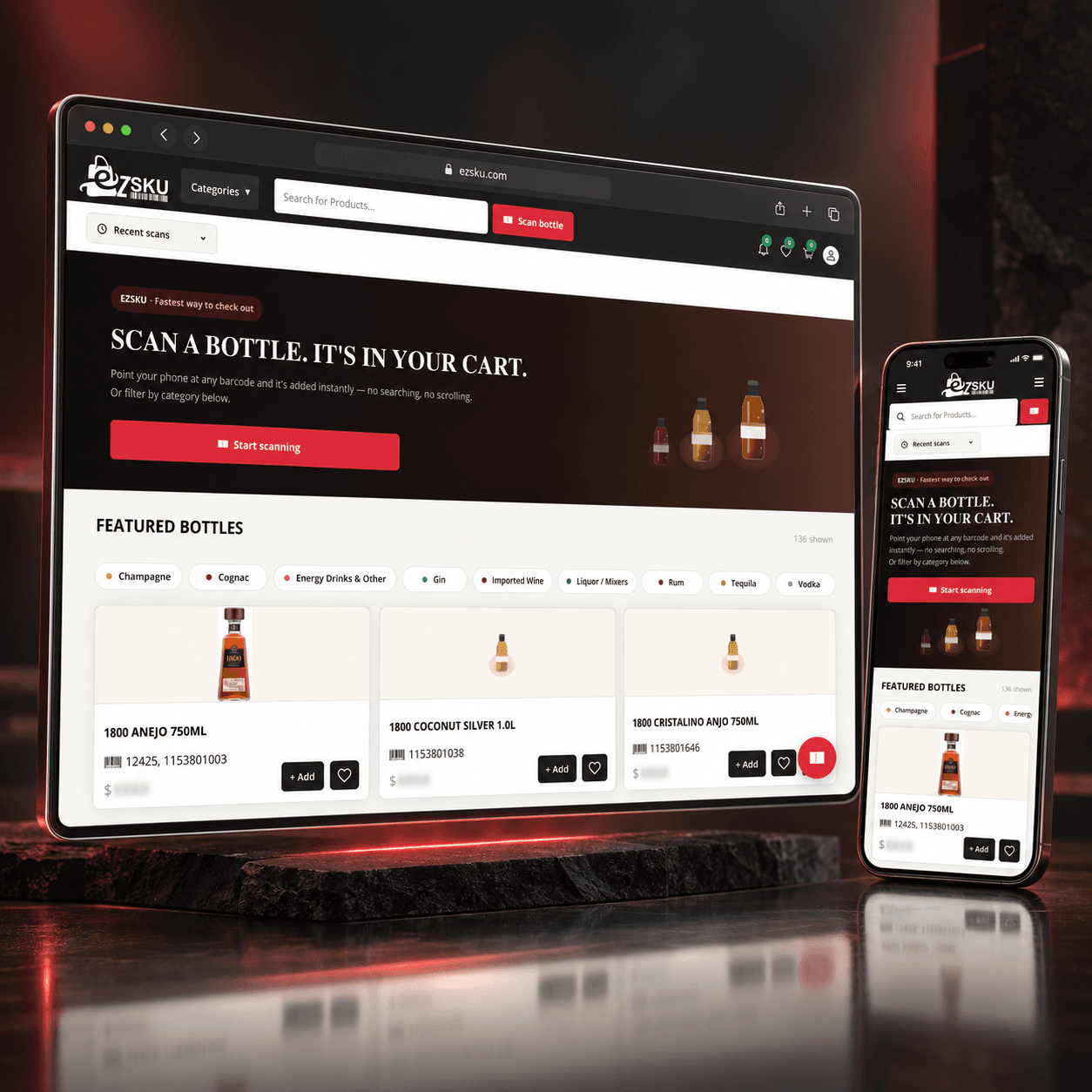
EZSKU Client Story

“THE TISA helped us build a reliable e-commerce operations platform with clean workflows, strong delivery, and a product foundation ready to scale.”

Sam Patel

Founder · EZSKU

01 / 05

Questions Business Leaders Ask
Before Investing in AI Integration

Choosing an AI integration partner is a strategic business decision. Throughout our discovery sessions with founders, CEOs, CTOs, and enterprise teams, we consistently hear similar questions about cost, security, implementation, ROI, and long-term scalability. The answers below address the concerns we encounter most often and reflect the broader discussions happening across executive communities, developer forums, and AI practitioners.

We start with a specific task: what triggers it, which systems it touches, how often it occurs, and what successful completion means. If stable rules can handle it, an agent may add unnecessary complexity. If the task requires interpretation and controlled tool selection, an agent may fit. Our architecture comparison and build-versus-buy guide explain the alternatives.

Your cost depends on the workflow, integrations, write permissions, deployment requirements, and validation scope. The pricing section gives published planning estimates, with separate categories for prototypes and production systems. Your quotation should define deliverables, assumptions, exclusions, and recurring charges. Use the cost guide to compare scope, then assess the actual proposal rather than the lowest headline number.

Your timeline depends on how much must be built and what access is available. A bounded proof of concept is different from an enterprise deployment with several integrations and approval workflows. The published development process and pricing references describe different engagement sizes; neither replaces your project schedule. Before work begins, you should receive milestones, dependencies, review responsibilities, and release criteria through the development plan.

Potentially, provided the system offers an appropriate API, supported integration route, or permitted automation interface. We assess authentication, permissions, available operations, rate limits, and testing access before confirming scope. An application name alone does not establish integration feasibility. Our AI integration services cover those dependencies and the controls needed around read and write operations.

Your project needs a data-flow map showing what is accessed, where it is processed, which providers receive it, and how long relevant records are retained. Controls can include scoped access, environment separation, secrets management, and minimized logging. Deployment and provider choices affect the result. Review our security approach, then confirm the specific requirements and responsibilities in your project documentation.

Yes. The workflow can pause before defined actions such as external messages, record changes, file deletion, or system-level operations. Approval should identify the target and consequence and be checked against the action actually being executed. It should not silently authorize unrelated steps. AJOX’s implementation uses task-specific and step-specific approval as part of its execution design, alongside policy decisions and verification.

That depends on how your organization redesigns the work; software cannot promise a staffing outcome. A practical starting point is reducing repetitive steps while keeping people responsible for judgment, exceptions, and sensitive decisions. Evaluation should include review effort and adoption, not only automated task counts. Our workflow automation services address processes where people and software share responsibilities.

Those terms should be explicit in your agreement. Custom deliverables, background intellectual property, open-source dependencies, data rights, and third-party licenses may have different treatment. Provider accounts and infrastructure ownership should also be established before release. Your handover should identify the access and documentation needed to operate the system, rather than relying on a general statement that everything is automatically included.

Only when separate agent responsibilities produce a meaningful benefit. A single agent with well-defined tools may be easier to evaluate and operate. Multiple agents introduce handoffs, shared-state decisions, additional model calls, and more failure paths. We assess that overhead against the task. Read the multi-agent architecture guide before assuming that a larger agent count means a better system.

The implementation should detect the failure, retain an accurate task status, and follow a defined recovery or escalation path. Some operations can be retried safely; others need a read-back check or human review to avoid duplicates. Irreversible actions require particular care before execution. The system should explain what already happened and what remains incomplete rather than turning every exception into a generic success message.

Yes. A pilot can focus on one workflow, a limited user group, and a restricted set of actions. It still needs success criteria, permission boundaries, and an owner for exceptions. The purpose is to test the important assumptions before extending access or scope. Your next phase should depend on the pilot’s quality, operating cost, review burden, and usefulness to the people doing the work.

Bring a description of the workflow, the systems involved, typical volume, common exceptions, and any restrictions on data or actions. A sanitized example is more useful than a broad request to automate an entire department. You do not need to choose a model first. Submit the information through Get in Touch, and identify any confidentiality requirements before sharing sensitive material.

Bring One Workflow. Leave With a Clearer Implementation Decision.

Tell us what your team does manually today and where the process becomes slow, repetitive, or difficult to coordinate.You do not need a complete specification. A clear example of the work, the systems involved, and the decisions requiring review gives us a practical starting point.

Each project is counted once. These groups add up to 50. 19 are published as case studies.

12AI Integrations
10Workflow Automation
8AI Agents
6Web Platforms
5Mobile Apps
5SaaS Products
4Generative AI
30+Team

Share your scope

Tell us about the workflow or product. A solutions architect replies within one business day.

5 + 6 =