
Shipment status scattered across carrier portals
01Teams log into multiple carrier sites and email for updates, so nobody has a complete, current picture of loads in transit.
We build shipment visibility, carrier integration and exception management software that pulls events from TMS, carriers and warehouses into one timeline, so your team acts on delays before customers call.
Freight operators, 3PLs, distributors and supply-chain technology teams









THE OPERATIONAL GAP
Most logistics projects fail at integration, not features. These are the breakdowns we look for first.
Teams log into multiple carrier sites and email for updates, so nobody has a complete, current picture of loads in transit.
Delays and missed pickups are discovered when a customer calls, leaving no time to re-route, re-book or warn them.
PODs, BOLs and accessorial documents arrive as photos and PDFs and must be matched to loads before invoicing, delaying cash.
PO, BOL, PRO and container numbers differ by partner, so events can't be reliably attached to the right shipment.
Teams log into multiple carrier sites and email for updates, so nobody has a complete, current picture of loads in transit.
Delays and missed pickups are discovered when a customer calls, leaving no time to re-route, re-book or warn them.
PODs, BOLs and accessorial documents arrive as photos and PDFs and must be matched to loads before invoicing, delaying cash.
PO, BOL, PRO and container numbers differ by partner, so events can't be reliably attached to the right shipment.
WHAT WE BUILD
We connect the systems you already rely on and build the visibility and exception layer above them.
01
A single timeline per shipment combining TMS, carrier, telematics and warehouse events, with customer-facing tracking.
02
Load building, tendering, carrier assignment and appointment scheduling that complement or extend your TMS.
03
API, EDI and file integrations with carriers, 3PLs and WMS platforms, with monitoring for missing or late messages.
04
Exception queues with owners and SLAs, plus POD capture and document matching that speeds up billing.
01
A single timeline per shipment combining TMS, carrier, telematics and warehouse events, with customer-facing tracking.
02
Load building, tendering, carrier assignment and appointment scheduling that complement or extend your TMS.
03
API, EDI and file integrations with carriers, 3PLs and WMS platforms, with monitoring for missing or late messages.
04
Exception queues with owners and SLAs, plus POD capture and document matching that speeds up billing.
WORKFLOW EXAMPLE
An example shipment flow. Milestones, SLAs and escalation rules are set with your operations team.
InputConfirmed customer order from ERP or OMS
OutputLoad with stops, references, appointment windows and service level
01InputLoad tender via API, EDI 204 or portal
OutputAccepted assignment with carrier references stored
02InputCarrier API, EDI 214, ELD or telematics updates
OutputNormalized milestones attached to the right shipment
03InputMilestones compared with plan and SLAs
OutputException with severity, owner and suggested action
Review required
04InputAssigned exception
OutputCustomer update, recorded resolution and accessorial or claim data
05SYSTEM DESIGN
A reference design built around a normalized event history, so every partner's data means the same thing.
ERP and order service -> TMS, carrier and EDI connectors -> Normalized milestone event store -> Rules, SLA and ETA computation -> Customer and dispatch dashboards
01
Supplies confirmed orders, customer references and service commitments.
02
Exchange tenders and status messages over APIs, EDI (204, 990, 214, 210) or files, with monitoring for missing messages.
03
Stores every event with source, time and reference mapping, de-duplicated and replayable.
04
Compares actual milestones against plan, calculates estimated arrival and raises exceptions.
05
Gives dispatchers exception queues and customers scoped tracking views.
Technology
These tools are already in published projects with a similar shape of work. The set for your release is confirmed once the interfaces and review points are known.
DESIGN TRADE-OFFS
Partner capability, not preference, drives most integration choices in logistics.
Large carriers offer APIs or EDI; smaller ones may only support portals or email. Supporting the right mix determines coverage and maintenance cost.
Survey your carrier base by volume and supported interfaces.
Predicted arrival times need clean historical event data; without it, schedule-based estimates are more honest. Both should be clearly labeled as estimates.
Back-test ETA logic on at least several months of your shipment history.
Partner events arrive late and out of order. Status definitions must say what 'delivered' means and which source wins when they disagree.
Document status semantics and source precedence with operations.
Large carriers offer APIs or EDI; smaller ones may only support portals or email. Supporting the right mix determines coverage and maintenance cost.
Survey your carrier base by volume and supported interfaces.
Predicted arrival times need clean historical event data; without it, schedule-based estimates are more honest. Both should be clearly labeled as estimates.
Back-test ETA logic on at least several months of your shipment history.
Partner events arrive late and out of order. Status definitions must say what 'delivered' means and which source wins when they disagree.
Document status semantics and source precedence with operations.
SECURITY & COMPLIANCE
Logistics platforms share data across many companies, so access boundaries and message integrity matter.
ETA accuracy depends on the quality and timeliness of partner events; we evaluate accuracy on historical data rather than guarantee it.
Customers, carriers and vendors see only the shipments and fields they are party to.
Inbound messages are authenticated and checked for duplicates and replays before they change shipment status.
Every status override, exception resolution and charge is recorded with user, time and reason.
PODs, BOLs and photos are stored with integrity checks and retained according to your contract and claims requirements.
DELIVERY APPROACH
We start with your highest-volume lane or carrier and expand as integrations prove reliable.
01
Document milestones, reference numbers and which partner sends what.
Signed milestone and identifier map covering top carriers and customers.
02
Integrate the highest-volume carrier or TMS feed end to end.
Live feed attaching events to shipments with match-rate reporting.
03
Define SLAs, severity and routing for each exception type.
Exception queue working with owners, escalation and customer notification templates.
04
Replay historical data and simulate partner outages.
Test results for out-of-order, duplicate and missing message handling.
05
Onboard further carriers and 3PLs with feed-health monitoring.
Partner onboarding checklist, feed monitoring and support ownership signed off.
Published work
Each card is a published project. The industry on the card is the one that work was built for.
Transport and Logistics
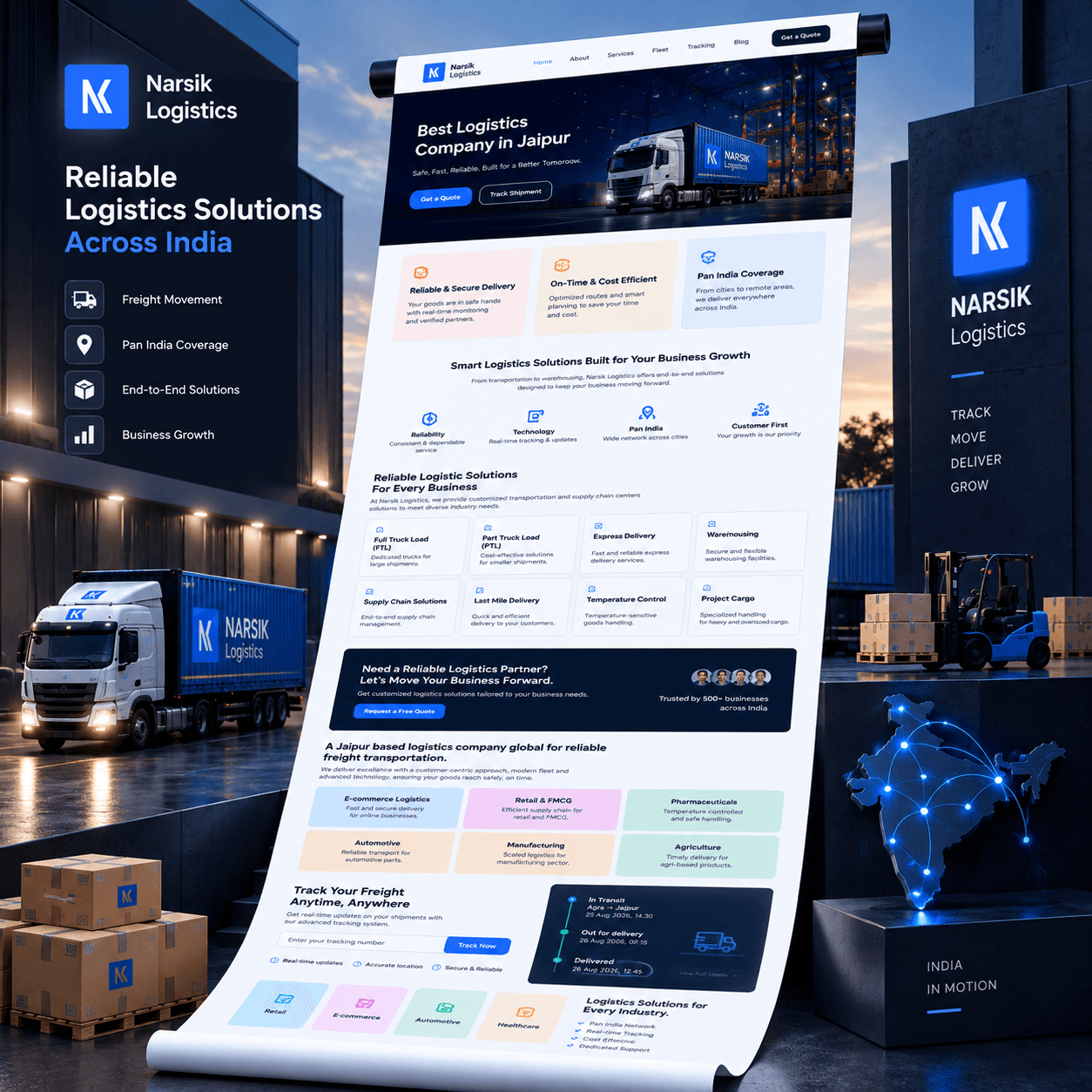
Before building the platform, we identified the main issues in customer communication and shipment handling.
Read the project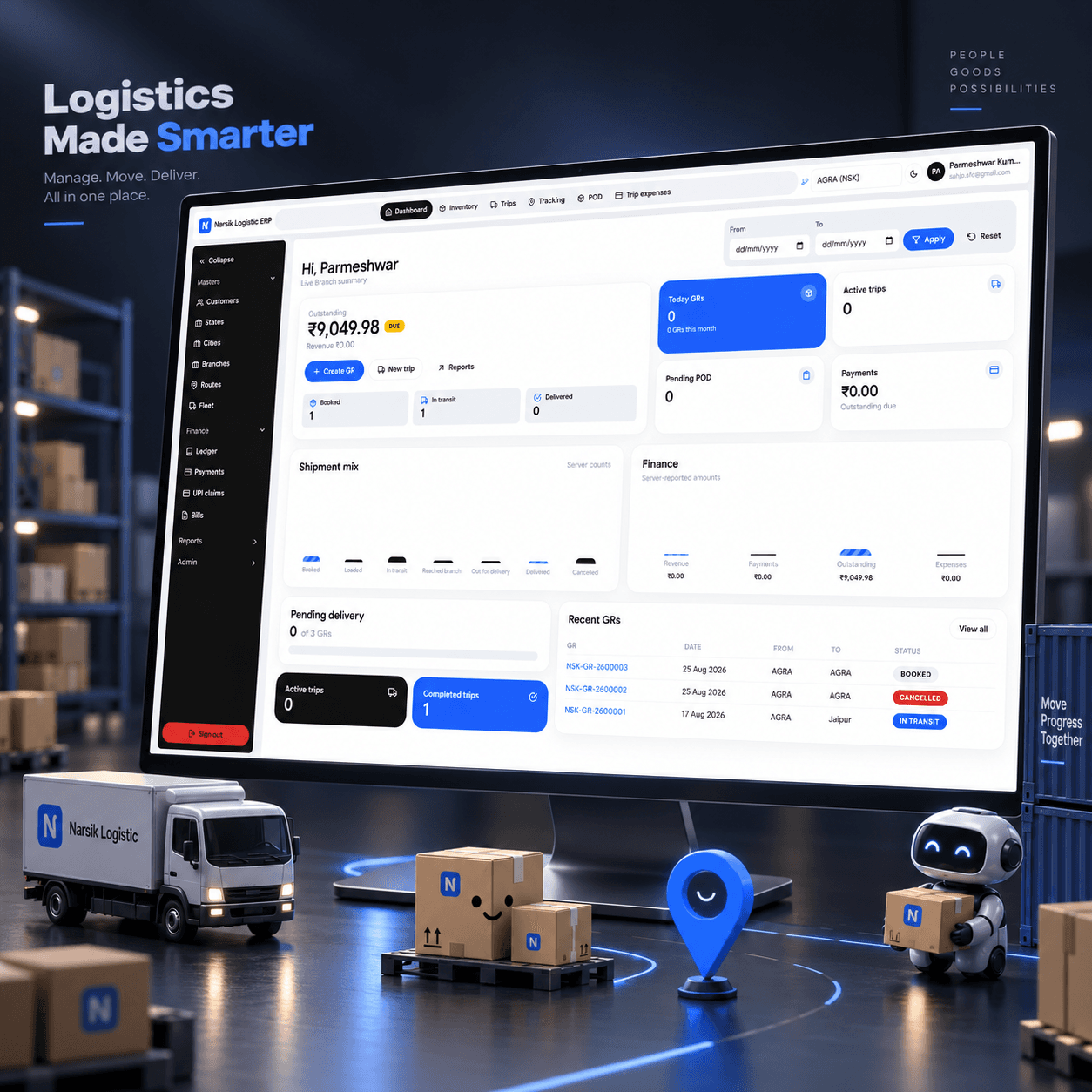
Transport and Logistics
PTL logistics involves several activities that need to stay connected.
Read the project
Logistics, Transportation and Mobility
Logistics services were spread across different platforms.
Read the projectFrom the journal
Recent notes from the team. Pieces that match this industry are shown first.
PROJECT PLANNING
Your carrier list and a sample of recent shipments are the best starting point.
Which TMS, WMS and ERP systems are in use, and which owns shipment status?
Which carriers and 3PLs handle most of your volume, and how do they send updates?
Which reference numbers do partners use, and how are they linked today?
Which exceptions cost you most: late delivery, detention, damage or billing disputes?
What would make the first release a success, such as earlier exception detection or faster invoicing?
Carrier and 3PL API/EDI credentials
TMS and ERP access
Historical shipment and event data
Operations exception owners
Carrier and 3PL API/EDI credentials
TMS and ERP access
Historical shipment and event data
Operations exception owners
Yes. We support carrier APIs, EDI transactions such as 204, 214 and 210, telematics feeds and visibility providers, and normalize them into one shipment timeline. Carriers that only offer portals can be handled through visibility networks or structured manual updates.
We define expected milestones for each shipment, alert when one doesn't arrive in time, and fall back to secondary sources such as telematics or visibility providers. Late events are applied in the correct order without overwriting newer status.
Largely. Drivers capture PODs in a mobile app or carriers send them electronically; documents are matched to shipments by reference numbers and OCR, and only mismatches go to staff before invoicing.
We start from scheduled transit times and live location, then add historical lane performance where you have enough data. Predicted times are labeled as estimates and their accuracy is measured against actual arrivals.
Usually not. Most visibility and exception problems can be solved with integrations and a layer above your TMS, which is faster and less disruptive than replacement.
You own the application and the shipment records it stores. Carriers and warehouse systems remain under your accounts. We record which identifier is used when the same shipment appears in more than one system.
Yes. The first release usually sits in front of the systems they already use and takes one handoff, such as booking or exception handling, instead of replacing the TMS on day one.
One lane or one customer type, one set of status events, and a queue for the events that arrive late or not at all. Broader carrier coverage follows after that path is stable.
Carrier and warehouse credentials stay in a secrets store your team controls. They are not placed in the application code or in a shared document.
Share your systems and carrier mix. We'll propose a first integration and the exceptions it would catch.
Tell us how the work runs today, which systems already hold the data, and what a useful first release would change. We use that to judge scope before anyone writes a proposal.
The form goes to a solutions architect at THE TISA. You get a direct reply on fit, approach, and what we would need from your team.
Tell us about the workflow or product. A solutions architect replies within one business day.


