8,500
Transport and Logistics
NARSIK LOGISTICS
B2B Freight Booking and Shipment Management Platform
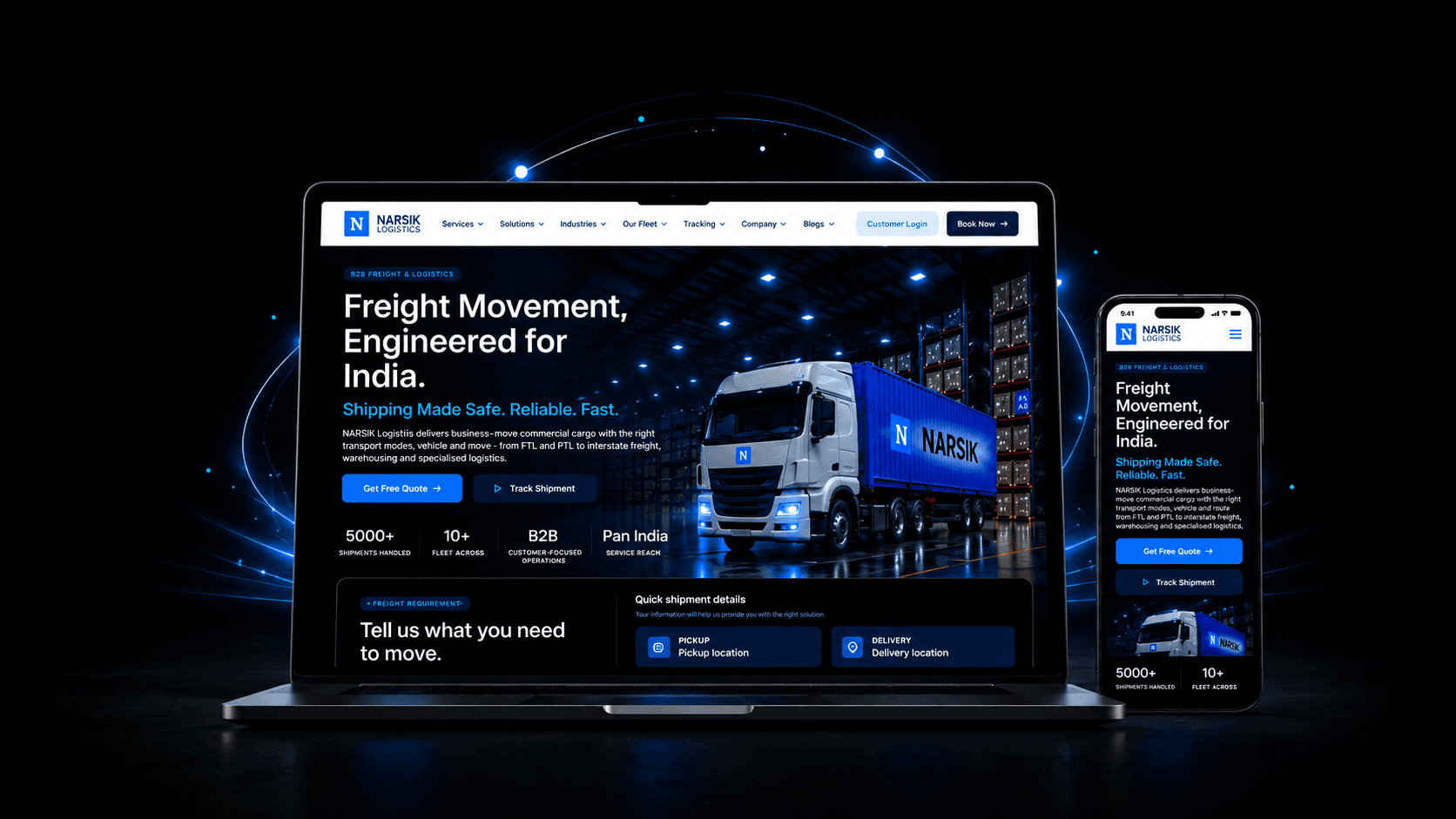
Narsik Logistics is a B2B transport and logistics platform developed for a Jaipur-based freight company. It allows customers to explore logistics services, request freight quotations, book transportation, track shipments, and view consignment details.
IndiaMarket
45 DaysTimeline
2 DevelopersProject Team
Transport and LogisticsIndustry
Executive Summary
Narsik Logistics
- Client
- Parmeshwar Kumawat
- Market
- India
- Industry
- Transport and Logistics
- Timeline
- 45 Days
- Team
- Project Team - 2 Developers
- Services
- AI SaaS Development, Custom Software Development, AI Workflow Automation
- Technology
- Next.js, Tailwind CSS, PostgreSQL, Modular Web Architecture
- Primary Outcome
- 8,500 Monthly Website Visitors
Verified project metrics
Project Outcomes
The platform helps more businesses find Narsik Logistics and understand its services, routes, and transport options. Clear service and location pages make it easier for customers to choose the right option and share complete requirements. This helps the company receive better enquiries, improve its online presence, and connect with more business customers.
Project Overview
Narsik Logistics is a B2B transport and logistics platform developed for a Jaipur-based freight company. It allows customers to explore logistics services, request freight quotations, book transportation, track shipments, and view consignment details.
The platform supports Full Truck Load, Part Truck Load, cold-chain transportation, warehousing, container transport, project cargo, interstate freight, e-commerce fulfillment, and last-mile delivery.
It serves manufacturers, distributors, retailers, e-commerce brands, and other organisations across Rajasthan and major Indian transport routes.
What We Built
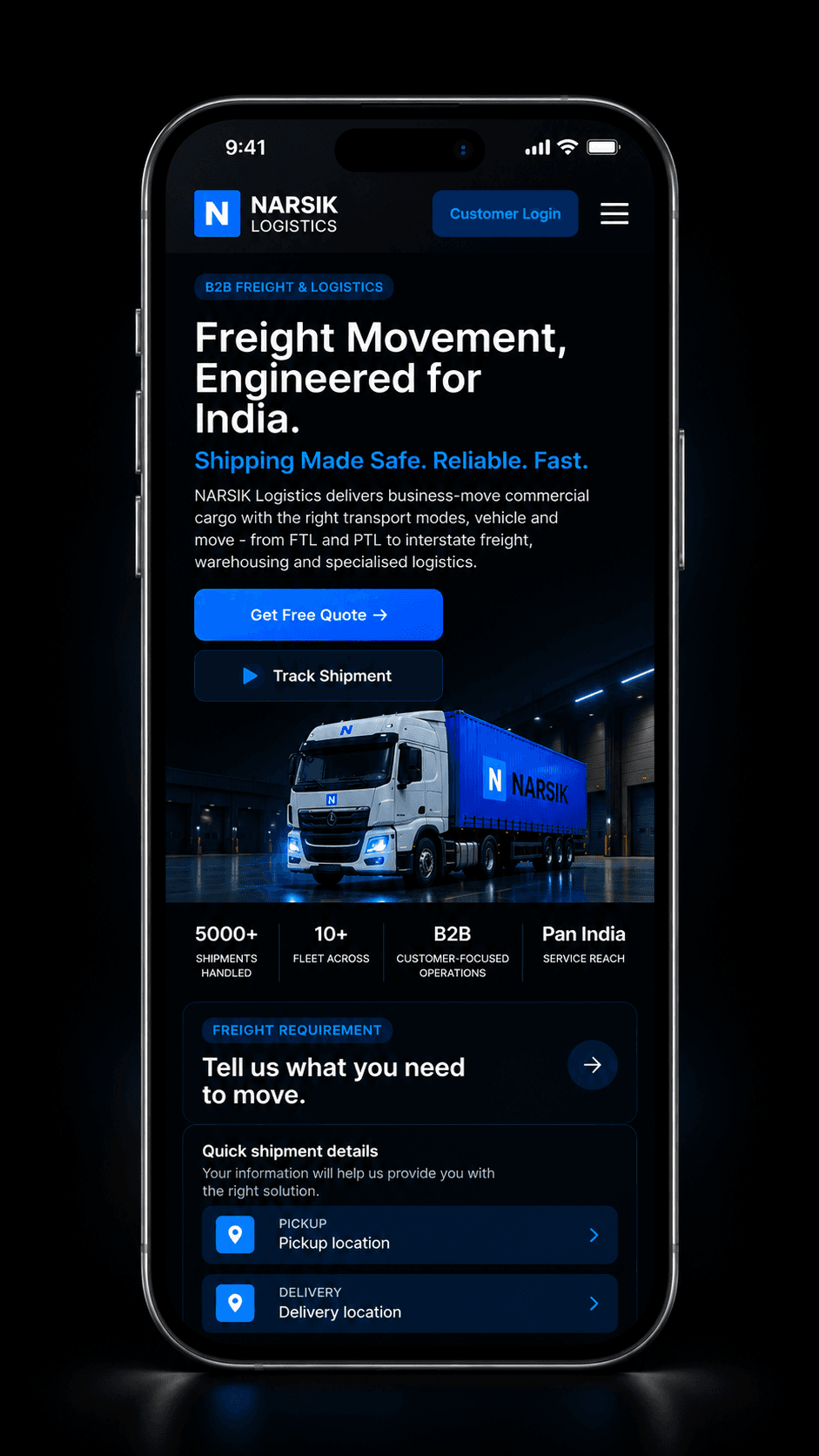
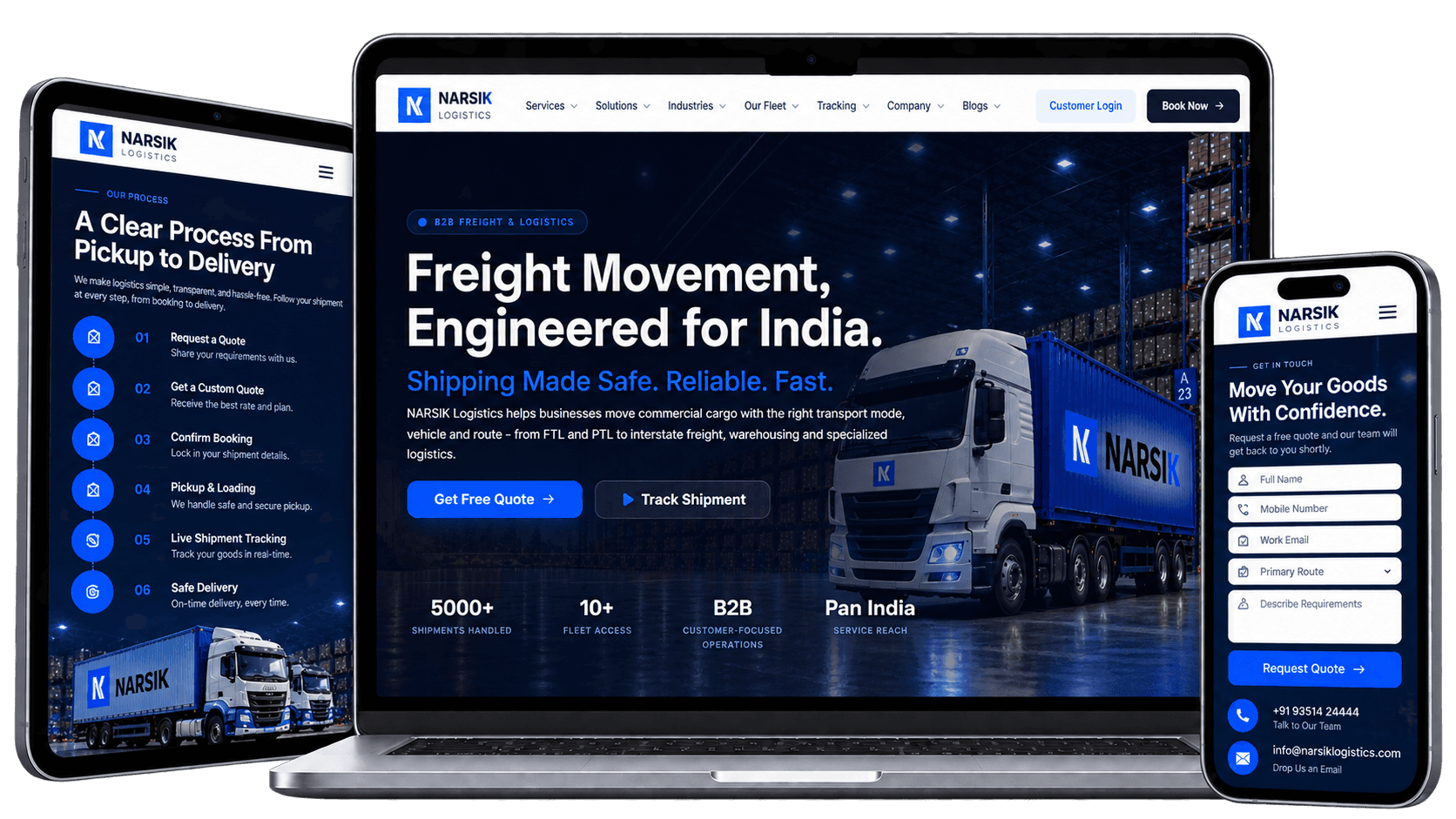
We built a B2B logistics platform with booking, quotation, shipment tracking, and OTP-based customer access. The work included responsive interfaces, backend features, PostgreSQL setup, API connections, and a clear system for managing customer and shipment workflows.
Client Background
Parmeshwar Kumawat works in the transport and logistics industry. His company provides freight transportation, cargo handling, warehousing, and distribution services across India. He needed a digital platform where customers could explore services, submit cargo requirements, request quotations, book transportation, and track shipments.
Project Scope
The project included the following key areas:
- Requirement planning
- Customer journey planning
- UI/UX design
- Responsive frontend development
- PostgreSQL database setup
- Freight booking system
- Shipment tracking
- Quotation and enquiry forms
- OTP-based customer access
- Service, fleet, and location pages
- SEO, performance, and security improvements
- Testing and deployment
Target Audience
Narsik Logistics is mainly designed for:
- Manufacturers
- Distributors
- Retail businesses
- E-commerce and D2C brands
- Healthcare and pharmaceutical suppliers
- Agriculture and food businesses
- Industrial and machinery companies
Objectives
The main objectives were to:
- 01Build one platform for logistics services
- 02Present transport options clearly
- 03Collect customer and cargo requirements
- 04Simplify freight booking
- 05Provide shipment tracking
- 06Prepare customised freight quotations
- 07Give customers access to consignment details
- 08Present fleet capacity and cargo suitability
- 09Improve visibility across major Indian cities
- 10Reduce dependency on phone calls
- 11Make future services and routes easier to add
Business Challenge
Before building the platform, we identified the main issues in customer communication and shipment handling.
- 01Customers often relied on calls to ask about services, prices, cargo requirements, and shipment updates.
- 02Different cargo types needed different vehicles, documents, and handling methods. Basic enquiry forms could not collect all the required details.
- 03The company also needed a better way to present its services, fleet, industries, and routes.
- 04The main challenge was to manage the complete customer and shipment process in one place.
Our Solution
We built a B2B logistics platform to make customer enquiries and shipment handling easier.
- Customers can view services, share cargo details, and request pricing online instead of depending only on calls.
- The booking form collects route, cargo, and handling details in simple steps, so the team gets all the required information.
- Customers can also track shipments and check consignment, payment, and Proof of Delivery details through OTP login.
- Separate service, fleet, industry, and route pages make the company’s offerings easier to understand.
Before → After
Before
Customers relied on calls for service information.
After
They could explore transport services online.
Before
Freight requirements were shared manually.
After
Customers could submit booking details through structured forms.
Before
Shipment updates required regular follow-ups.
After
Shipment tracking provided clear status updates.
Before
Consignment details were difficult to access.
After
OTP login gave customers direct access to shipment records.
Before
Fleet information was not clearly organised.
After
Vehicles were presented by capacity and cargo use.
Before
Transport services were difficult to compare.
After
Separate pages explained each service clearly.
Before
Route visibility was limited.
After
City and route pages improved service reach.
Before
Customer support had limited options.
After
Phone, email, forms, tracking, and portal support became available.
Delivery ownership
THE TISA's Role
Product Strategy
Discovery
UX/UI Design
Backend Engineering
Frontend Engineering
Integrations
QA
Key Features
The main features of the platform are:
03Freight Booking
01
Freight Booking
- Multi-step booking form
- Pickup, delivery, cargo, and service details
- Pickup date and handling instructions
Development Process
We studied the company’s transport services, cargo categories, customers, fleet capacity, operating routes, quotation process, and shipment workflow. We also identified the information customers need before requesting a quote or booking transportation.
Technical Challenges
Technology Stack

Next.js

Tailwind CSS

PostgreSQL

Modular Web Architecture

Responsive Web Platform
Design Decisions
The design focused on clear service discovery and simple customer actions. Important decisions included:
- Clear transport service categories
- Step-based booking forms
- Visible quotation and booking buttons
- Simple shipment tracking
- Fleet details based on cargo needs
- Separate industry and location pages
- Mobile-friendly forms and layouts
- Consistent buttons and page structure
- Clear loading, success, and error messages
SEO Work
The SEO work focused on improving the website’s visibility for logistics services, industries, cities, and transport routes. The main areas included:
- SEO-friendly URLs and page structure
- Page titles and meta descriptions
- Service and industry keywords
- City and route landing pages
- Detailed service and blog content
- Internal linking
- Image alt text
- FAQ structured data
- XML sitemap and robots.txt
- Canonical URLs and Open Graph tags
- Mobile SEO checks
Performance Optimization
To keep the platform fast across devices, the work included:
- Next.js page optimisation
- Image optimisation and lazy loading
- Reduced unnecessary scripts
- Faster page navigation
- PostgreSQL indexing
- Optimised database queries
- Pagination for large records
- Caching for stable content
- Mobile performance testing
- Reduced layout shifts
Security
To secure customer, booking, shipment, and payment information, the following measures were added:
- Secure OTP login
- Protected customer pages
- Input validation
- Request sanitisation
- Rate limiting
- Protected environment variables
- Secure PostgreSQL access
- Encrypted database connections
- HTTPS encryption
- Controlled payment access
- Controlled POD access
- Safe error handling
Architecture Diagram
Results
For Business Customers
- 01Businesses can explore services, request quotations, choose the right freight option, book transportation, track shipments, and view delivery details more easily.
For the Client
- 01The client gets a connected logistics system that improves service visibility, brings in more enquiries, supports online bookings, and makes customer communication easier.
Project Showcase
Visual Identity
NARSIK Logistics visual identity
NNarsik Logistics
InterAa
Narsik Logistics
Color
- #155EEF01Primary Blue21 94 239
- #03091F02Dark Navy3 9 31
- #101A3203Deep Blue16 26 50
- #FFFFFF04White255 255 255
- #F7F9FC05Off White247 249 252
- #E5EAF206Light Gray229 234 242
- #8494AF07Muted Blue Gray132 148 175
Type
- 01 · Primary4 weights
Inter
ABCDEFGHIJKLMNOPQRSTUVWXYZ
abcdefghijklmnopqrstuvwxyz
0123456789- Bold
- Semibold
- Medium
- Regular
Client Testimonial
Earlier, most customer enquiries and shipment updates were handled through calls. The TISA team understood our working process and created a platform where customers can share cargo details and check shipment updates online. It has made the process clearer and easier for both our customers and our team.
Parmeshwar Kumawat
Future Scalability
Narsik Logistics can support future features such as:
- 01
Driver and customer mobile apps
- 02
Operations dashboard
- 03
Automatic vehicle assignment
- 04
Digital invoices
- 05
Automatic freight pricing
- 06
WhatsApp, SMS, and email updates
- 07
Warehouse and inventory management
- 08
Business analytics and shipment reports
Lessons Learned
Here are the key lessons we learned while building Narsik Logistics:
- 01
Freight forms should be divided into simple steps
- 02
Cargo details should be collected before quotation
- 03
Shipment tracking stages should remain simple
- 04
Fleet information should match cargo requirements
- 05
Customer data needs controlled access
- 06
SEO structure should be planned from the beginning
- 07
Future services and routes should be easy to add
Conclusion
Narsik Logistics brings the company’s main transport services into one online platform. It helps the business present its services clearly, manage customer requests, and keep important shipment information organised. The platform can also support more routes, services, and business needs in the future.


Building Something Similar?
Talk with THE TISA about the architecture, timeline, team, and technology required for your project.