
Scopes and change requests buried in email
01Agreed scope and later changes live in email threads, so delivery teams overrun and finance can't bill for the extra work.
We build client portals, resource planning and time-to-invoice workflows that connect your CRM, PSA and accounting systems, so scope, effort and billing stay aligned from proposal to payment.
Consultancies, accounting firms, agencies and specialist service organizations









THE OPERATIONAL GAP
Services firms lose margin in small, repeated gaps between sales, delivery and finance.
Agreed scope and later changes live in email threads, so delivery teams overrun and finance can't bill for the extra work.
Plans in spreadsheets don't reflect actual time or leave, leading to burnout on some teams and idle time on others.
Time entries, expenses and invoices are checked by hand across systems before every billing cycle.
Clients ask for status by email and approvals are scattered, slowing sign-off and payment.
Agreed scope and later changes live in email threads, so delivery teams overrun and finance can't bill for the extra work.
Plans in spreadsheets don't reflect actual time or leave, leading to burnout on some teams and idle time on others.
Time entries, expenses and invoices are checked by hand across systems before every billing cycle.
Clients ask for status by email and approvals are scattered, slowing sign-off and payment.
WHAT WE BUILD
We connect your existing CRM, PSA and accounting tools and build the workflows they handle poorly.
01
Shared milestones, deliverables, approvals and status for clients, linked to your internal project records.
02
Skills, availability and allocation across projects, updated from actual time entries.
03
Time and expense capture, approval and invoice preparation for fixed-fee, time-and-materials and retainer work.
04
Proposal templates, approvals and engagement documents connected to the resulting project.
01
Shared milestones, deliverables, approvals and status for clients, linked to your internal project records.
02
Skills, availability and allocation across projects, updated from actual time entries.
03
Time and expense capture, approval and invoice preparation for fixed-fee, time-and-materials and retainer work.
04
Proposal templates, approvals and engagement documents connected to the resulting project.
WORKFLOW EXAMPLE
An example delivery flow. Billing rules, approval limits and client visibility are agreed with your partners and finance team.
InputSigned proposal or statement of work
OutputProject with scope, budget, rates and billing type
01InputApproved scope and resource availability
OutputMilestones, tasks and allocated team members
02InputTime entries, expenses and deliverable uploads
OutputApproved time and deliverables against milestones
03InputScope change raised by team or client
OutputClient- and partner-approved change with budget impact recorded
Review required
04InputApproved time, milestones and changes
OutputInvoice in your accounting system and client status report
05SYSTEM DESIGN
A reference design that connects sales, delivery and finance data around one project record.
CRM and proposal store -> Project and resource service -> Timesheet and approval workflow -> Billing and accounting connector -> Client reporting portal
01
Holds opportunities, proposals and signed engagements that create projects.
02
Manages projects, milestones, skills and allocations.
03
Captures time and expenses and routes them for approval by project and role.
04
Sends approved invoice data to your accounting system and receives payment status.
05
Shows clients milestones, deliverables, approvals and invoices for their projects only.
Technology
These tools are already in published projects with a similar shape of work. The set for your release is confirmed once the interfaces and review points are known.
DESIGN TRADE-OFFS
Most firms already own several tools, so the question is usually what to integrate versus build.
Replacing a PSA is disruptive; integrating and extending it is often faster. Custom builds make sense when your delivery model doesn't fit standard tools.
List current PSA limitations and check whether they're configurable.
AI can draft proposals and statements of work from templates and past work, but pricing and commitments need partner approval.
Define review and sign-off rules before enabling drafting.
Each model needs different tracking: fixed fee needs milestone and margin tracking, time-and-materials needs rate and approval controls.
Map every billing model you use and how revenue is recognized.
Replacing a PSA is disruptive; integrating and extending it is often faster. Custom builds make sense when your delivery model doesn't fit standard tools.
List current PSA limitations and check whether they're configurable.
AI can draft proposals and statements of work from templates and past work, but pricing and commitments need partner approval.
Define review and sign-off rules before enabling drafting.
Each model needs different tracking: fixed fee needs milestone and margin tracking, time-and-materials needs rate and approval controls.
Map every billing model you use and how revenue is recognized.
SECURITY & COMPLIANCE
Firms hold confidential client information and must show how fees were calculated.
Commercial terms, professional duties and confidentiality obligations vary by contract and discipline, for example for accounting firms under AICPA standards. Automated drafting is not professional advice.
Each client sees only their own projects, documents and invoices, and staff access follows project assignment.
Every scope, rate and change approval is versioned and linked to the project.
Rate overrides, write-offs and invoice approvals are limited to authorized roles with logged reasons.
Engagement documents are retained per policy, and sensitive files are restricted by role.
DELIVERY APPROACH
We start with one practice or billing model, then expand across the firm.
01
Trace how a won deal becomes a project and an invoice today.
Signed process map with handoff gaps and system owners.
02
Model projects, milestones, rates, changes and billing types.
Approved data model and billing rules for the pilot practice.
03
Deliver scope approval through invoicing for one practice.
Working workflow producing invoices from approved time and milestones.
04
Test change requests, write-offs and accounting sync.
Reconciliation results showing invoices match approved time and changes.
05
Go live with utilization and margin reporting.
Reporting owners, monitoring and support procedures signed off.
Published work
Each card is a published project. The industry on the card is the one that work was built for.

SaaS, Project Management and Business Productivity
We developed a complete project management and team collaboration SaaS with frontend, backend, REST APIs and a structured database.
Read the project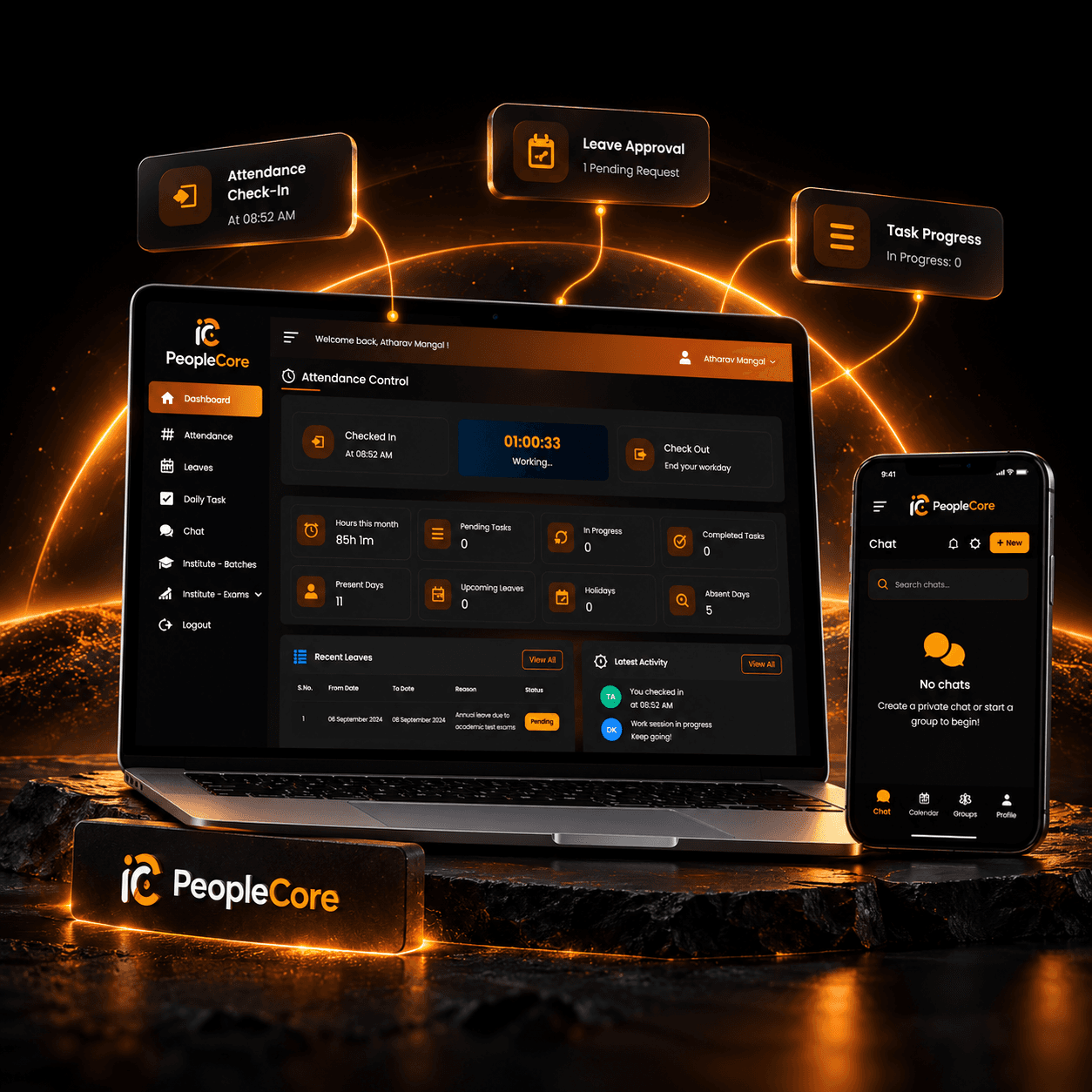
Workforce Management and Education Technology
Before development, we looked at the main problems employees and mentors faced in their daily work.
Read the projectFrom the journal
Recent notes from the team. Pieces that match this industry are shown first.
PROJECT PLANNING
Your current CRM, PSA and accounting setup answers most of these.
Which CRM, PSA, time tracking and accounting systems do you use?
Which billing models do you offer, and how are changes approved?
How is resource planning done today, and who owns it?
What should clients be able to see and approve online?
Which outcome matters most: utilization, billing speed, write-offs or client satisfaction?
CRM, PSA and accounting API access
Sample projects and invoices
Finance and delivery owners
Client portal requirements
CRM, PSA and accounting API access
Sample projects and invoices
Finance and delivery owners
Client portal requirements
Yes, through their APIs. Won deals create projects, approved work produces invoices in your accounting system and payment status flows back, without retyping.
Changes are raised in the system with budget and timeline impact, approved by the client and responsible partner, and linked to the project, so they are delivered and billed correctly.
Yes, from your templates, rates and past engagements. Drafts go to partners for review, and pricing and commitments are never sent without approval.
Yes. A client portal shows milestones and deliverables, records approvals with who and when, and can trigger invoicing for milestone-based billing.
Only if your delivery or billing model can't be supported by configuration and integration. We compare the cost and disruption of each option before recommending replacement.
You own the software and the client records it stores. CRM and accounting systems remain under your vendor accounts. We document which system is the source for a client, a project, and an invoice.
Yes. A client user sees the projects and files you publish to them. Staff see the clients their role allows, not the whole firm by default.
One firm workflow: proposal approval, time to invoice, or a client delivery that needs a sign-off. Replacing the PSA is a later choice.
A change is a record with the request, the person who approved it, and what it does to the timeline or fee. It is not only a comment in a chat thread.
Share your tools and billing models. We'll scope a first workflow that shortens time from work to invoice.
Tell us how the work runs today, which systems already hold the data, and what a useful first release would change. We use that to judge scope before anyone writes a proposal.
The form goes to a solutions architect at THE TISA. You get a direct reply on fit, approach, and what we would need from your team.
Tell us about the workflow or product. A solutions architect replies within one business day.

