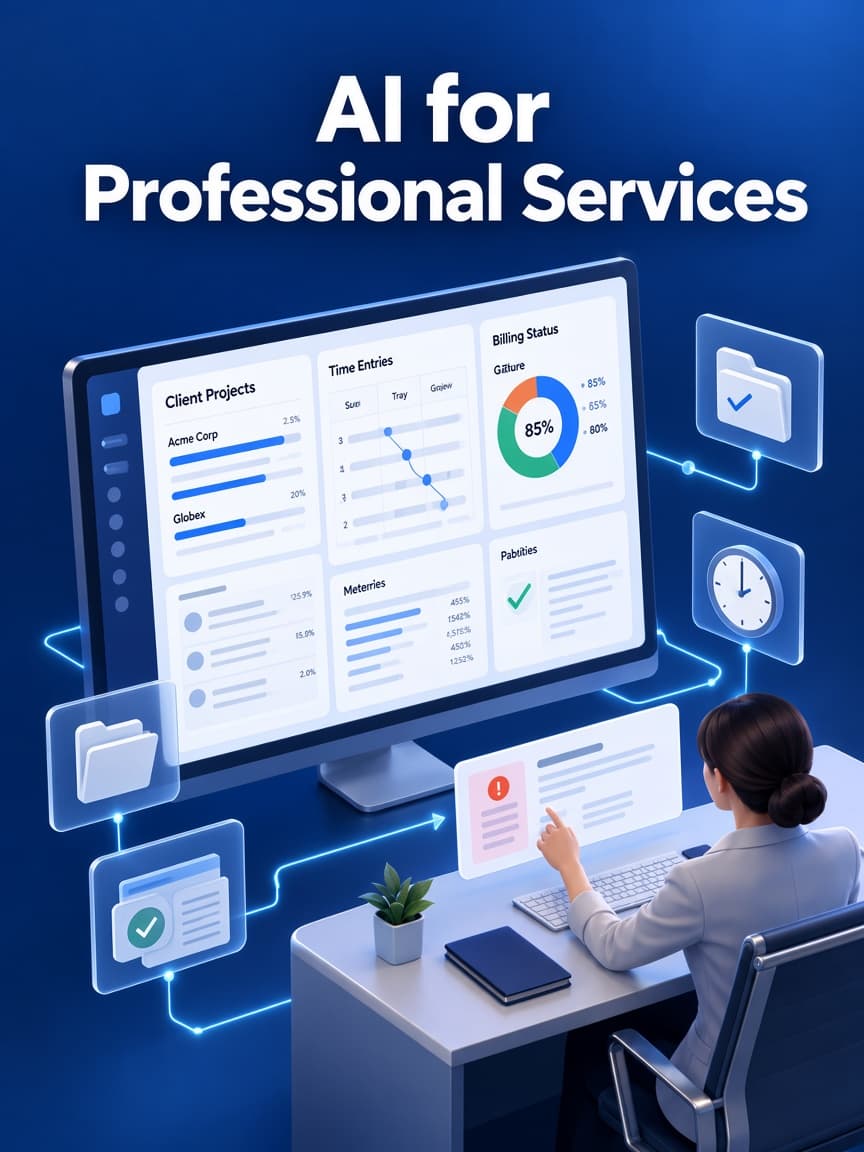










Enterprise AI IntegrationBuilt for scale

AI Integration Servicesfor Modern Businesses

THE TISA is an AI integration company helping startups, mid-market businesses, and enterprises connect artificial intelligence with the software they already use. Our AI integration services bring large language models (LLMs), Generative AI, AI agents, and intelligent automation into existing CRM, ERP, SaaS platforms, APIs, and internal business applications. From AI model integration and enterprise data connectivity to secure application workflows, we design and implement solutions around your existing architecture, access permissions, and operational requirements - without unnecessarily replacing your current technology stack. Each integration is planned around system compatibility, data security, measurable acceptance criteria, and production readiness.

  • Google review — THE TISA
  • Clutch review — THE TISA
  • GoodFirms review — THE TISA
  • G2 review — THE TISA

Top Rated

CampusFlow AI integration case study — THE TISAEZSKU AI integration case study — THE TISAGroup Hotel Index AI integration case study — THE TISALockYantra AI integration case study — THE TISANarsik Logistics AI integration case study — THE TISAOpsPilot AI integration case study — THE TISARatiwal AI integration case study — THE TISASpeakify AI integration case study — THE TISA

What Are AI Integration Services
and Why They Matter in 2026?

Your existing software may already manage customer records, transactions, documents, and permissions effectively. AI integration becomes useful when users need an additional capability within that environment, such as summarizing information, extracting fields, or receiving contextual recommendations. Before implementation, we assess whether the application exposes suitable APIs, whether the required data is accessible, and whether the proposed feature can meet your performance and security requirements. Where integration is feasible, we introduce the capability through defined interfaces and a staged rollout. Where platform limitations require changes, we identify those dependencies before development begins.

01

Business Systems

Existing enterprise applications

  • CRMSalesforce
  • ERPSAP
  • HRMSWorkday
  • CMSWordPress
  • FinanceOracle
  • SupportServiceNow
02

Integration Layer

Secure APIs and connectors

Connectivity

  • REST APIs
  • GraphQL
  • Webhooks
  • SDKs
  • Enterprise Connectors

Integration

  • Authentication
  • Data Exchange
  • System Access
03

AI Intelligence

Models, context and orchestration

AI Models

  • GPT
  • Claude
  • Gemini
  • Llama

Intelligence Capabilities

  • AI Agents
  • Generative AI
  • RAG
  • Semantic Search
  • AI Copilots
  • Workflow Automation
  • Large Language Models

Processing Flow

Business ContextOrchestrationAI Action

04

Business Outcomes

Measurable operational value

  • Faster Decisions
  • Automated Processes
  • Customer Experience
  • Employee Productivity
  • Lower Operating Costs
  • Scalable Operations

Connect existing systemsAdd intelligenceAutomate outcomes

What Does an AI Integration Company Actually Do?

An AI integration company connects artificial intelligence capabilities with the applications, data sources, and operational workflows an organization already depends on. The work goes beyond connecting a model API. It involves understanding how business systems exchange information, defining which data an AI feature can access, implementing the required connectors, and validating how generated outputs interact with existing application logic.

Depending on the business requirements, AI integration may involve:

  • AI model integration: Connecting OpenAI, Anthropic, Google Gemini, or self-hosted models to existing applications through authenticated APIs.
  • Enterprise application integration: Connecting AI capabilities with CRM, ERP, HRMS, customer support, finance, and operational platforms. Related delivery is covered under Custom software development.
  • Enterprise data integration: Making approved business records, documents, databases, and knowledge sources available to AI through controlled retrieval and data pipelines.
  • Workflow integration: Embedding AI-generated recommendations, summaries, document extraction, and approved actions into existing business processes. Related delivery is covered under AI workflow automation.
  • AI security and governance: Applying identity verification, permission boundaries, validation, audit logging, and monitoring to AI-assisted operations.

The objective is to make AI useful within the systems employees already understand, while maintaining control over business data, application behavior, and operational decisions.
AI Integration vs. Traditional Software Integration

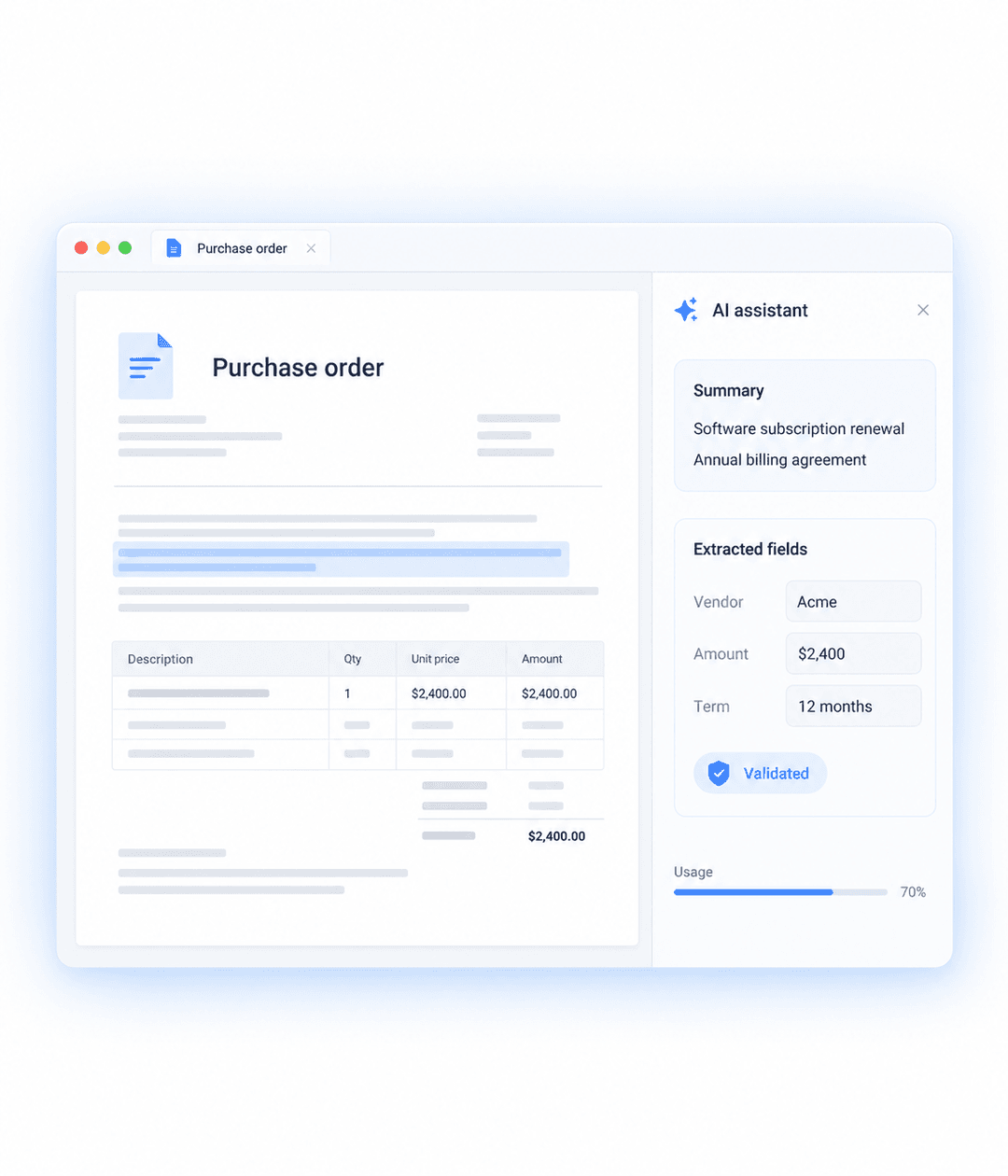
Traditional software integration primarily connects applications through predefined data exchanges and business rules. AI integration adds model inference, contextual retrieval, generated outputs, and sometimes tool-based actions to those connections. This introduces additional requirements for output validation, model monitoring, data permissions, and human review.

THE TISA evaluates both integration approaches to determine where AI adds measurable value and where conventional software logic remains the more reliable solution.

How Enterprise AI Integration Architecture Works

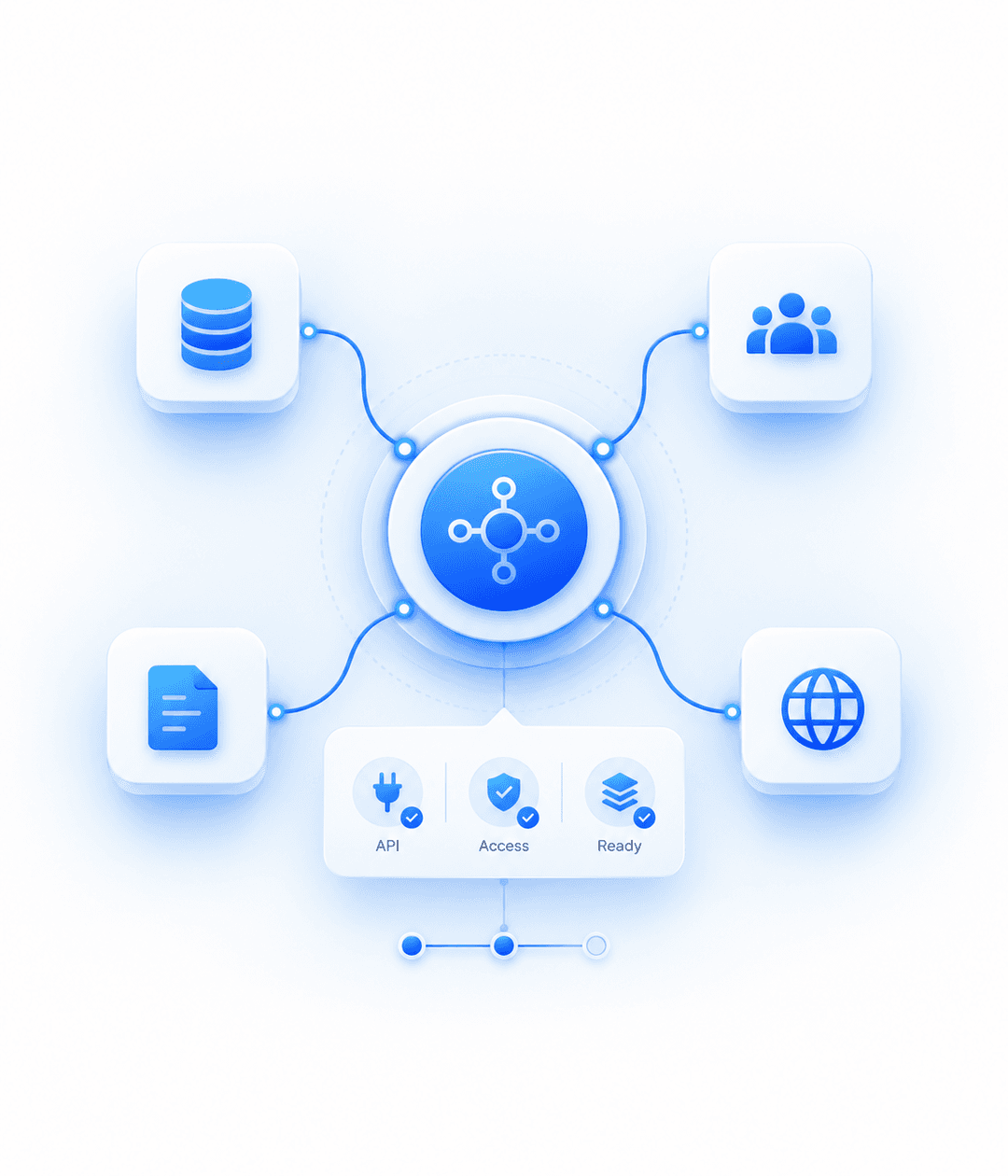
Enterprise AI integration architecture defines how business applications, data sources, AI models, and automated workflows communicate within a controlled technology environment. Instead of allowing AI tools to access every connected system directly, the architecture uses defined APIs, authentication mechanisms, data mappings, and application-level permissions to control each interaction.

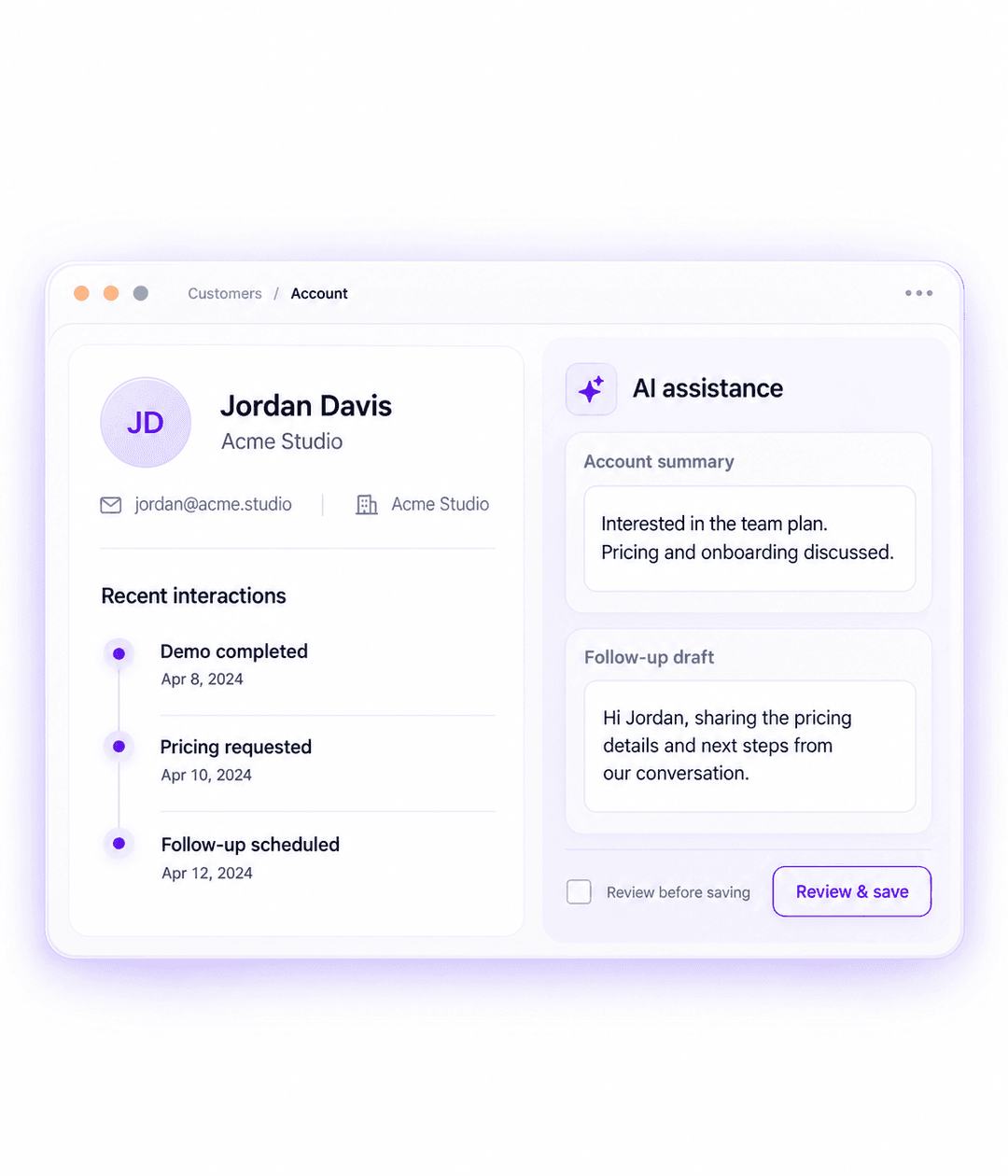
For example, a CRM integration may retrieve an authorized customer record, provide relevant context to an LLM, validate the generated summary, and return the result to the CRM interface for employee review. An ERP integration may follow a similar process for inventory information, purchase records, or financial documents while requiring approval before sensitive records are modified.

This integration architecture helps organizations introduce AI capabilities without bypassing existing business rules, security controls, or application ownership.

Enterprise AI Integration
Services We Offer

We integrate AI capabilities into existing applications and enterprise platforms, from initial compatibility assessment to deployment and support. The scope depends on your systems, available interfaces, data requirements, and the feature your users need.

Integration assessment and planning

AI Integration Consulting & Strategy

An AI integration company starts by assessing your current applications, APIs, data access, and deployment requirements before committing to implementation. We define which systems exchange information, which data an AI feature can access, the integration scope, platform constraints, and a rollout plan.

Key Deliverables

  • System and API compatibility assessment
  • Data access and permission requirements
  • Integration architecture and scope
  • Technical dependencies and risk assessment
  • Phased rollout and acceptance criteria

AI features inside existing applications

AI and GPT Integration Services

Connect GPT, Claude, Gemini, and other language models to existing applications, portals, and internal tools. We implement the API connections, response validation, failure handling, and usage controls needed to support features such as summarization, drafting, and document extraction. Product-level model work continues through generative AI development.

Integration Scope

  • Model API connections
  • Application context and request mapping
  • Structured response validation
  • Timeout and fallback handling
  • Usage limits and cost monitoring
  • Embedded AI feature integration

Platforms & Technologies

  • GPT
  • Claude
  • Gemini
  • Llama
  • Mistral
  • DeepSeek

AI assistance within your CRM

AI CRM Integration Services

Integrate AI features with Salesforce, HubSpot, Microsoft Dynamics, Zoho CRM, and custom CRM systems. Connect approved customer and account data to record summaries, communication drafts, and contextual recommendations, with permission checks and confirmation for sensitive updates.

Integration Scope

  • CRM API connections and field mapping
  • Customer and account context retrieval
  • Embedded summaries and drafting assistance
  • Role-based record access
  • Validated updates with user confirmation
  • Activity logging and synchronization

Platforms & Technologies

  • Salesforce
  • HubSpot
  • Microsoft Dynamics
  • Zoho CRM
  • Custom CRM

Controlled access to ERP data

AI ERP Integration Services

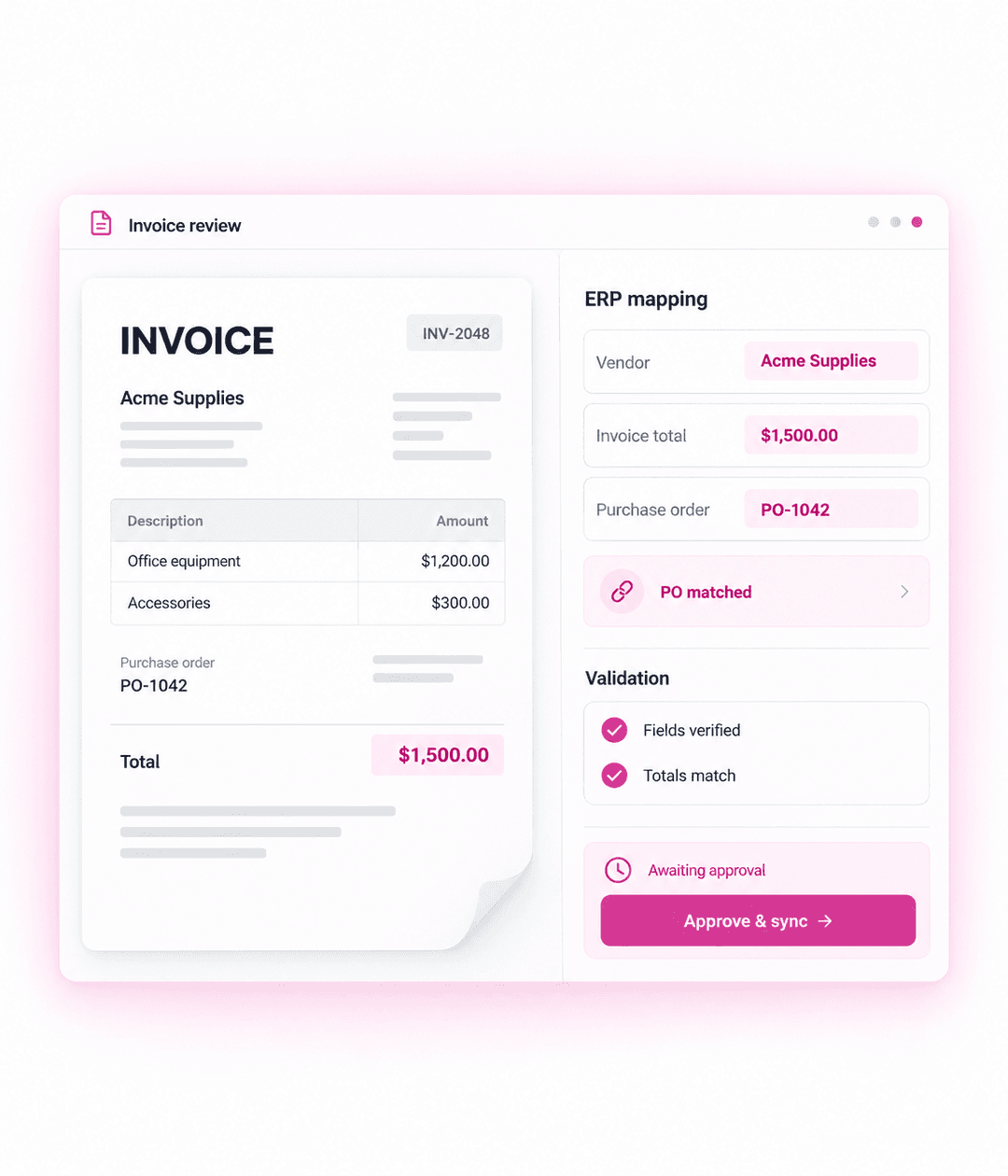
Connect AI capabilities with selected records and interfaces in SAP, Oracle, Microsoft Dynamics, NetSuite, and Odoo. We assess supported APIs, business rules, and access requirements to enable operational summaries, document extraction, and assisted queries, with validation before changes reach ERP records.

Integration Scope

  • ERP interface and compatibility assessment
  • Business-object and field mapping
  • Scoped access to operational records
  • Document extraction into validated fields
  • Approval controls for record changes
  • Exception logging and reconciliation

Platforms & Technologies

  • SAP
  • Oracle
  • Microsoft Dynamics
  • NetSuite
  • Odoo

Reliable application connectivity

AI API & Third-Party Platform Integration

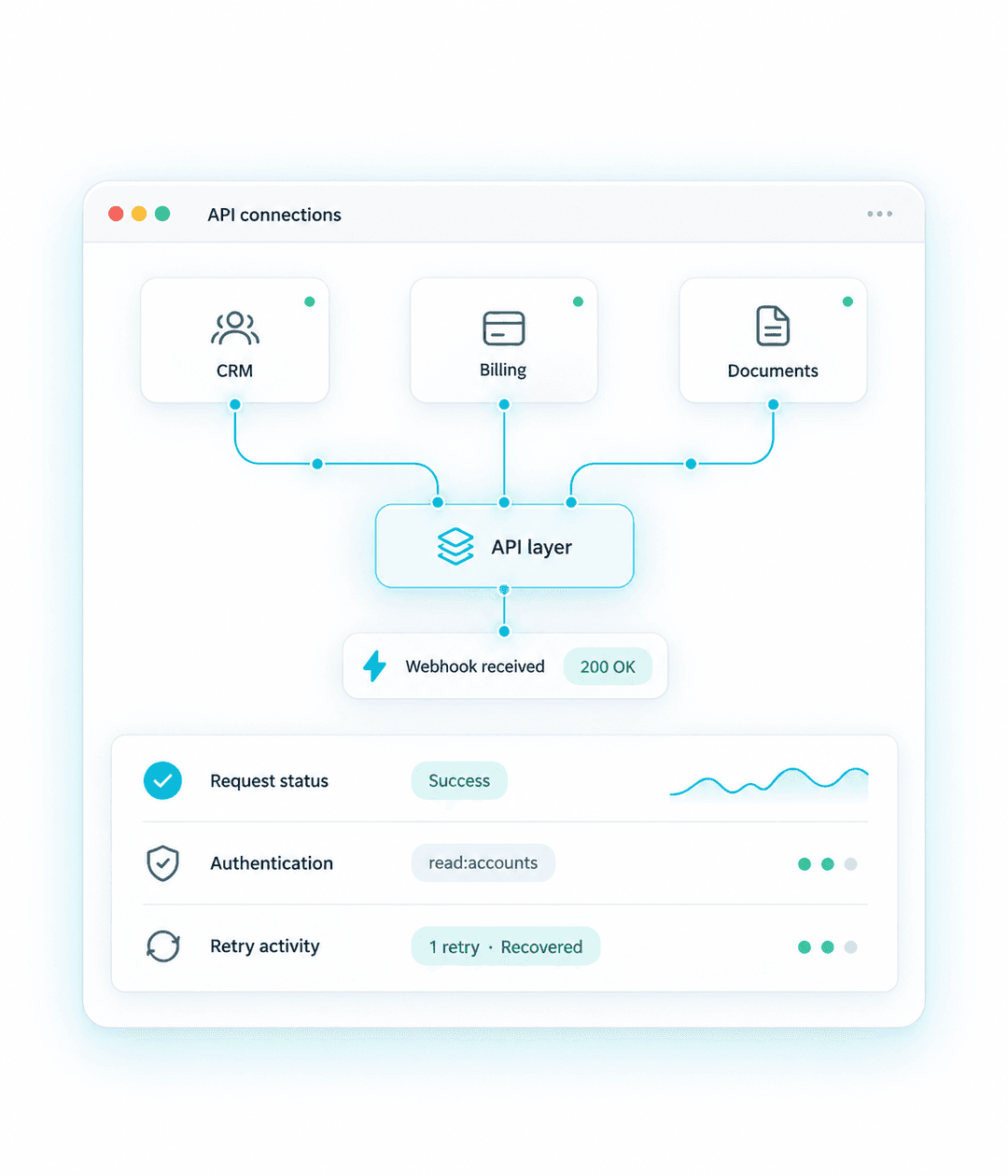
Build API connections between AI services and your existing business platforms. We handle authentication, data mapping, webhooks, rate limits, and retries so information can move through defined interfaces with validation and traceable errors.

Integration Scope

  • REST and GraphQL API adapters
  • OAuth and scoped credential configuration
  • Request and response data mapping
  • Webhook validation and event handling
  • Rate limits, retries, and duplicate prevention
  • Integration testing and connection monitoring

AI connections within your cloud environment

Cloud AI Integration Services

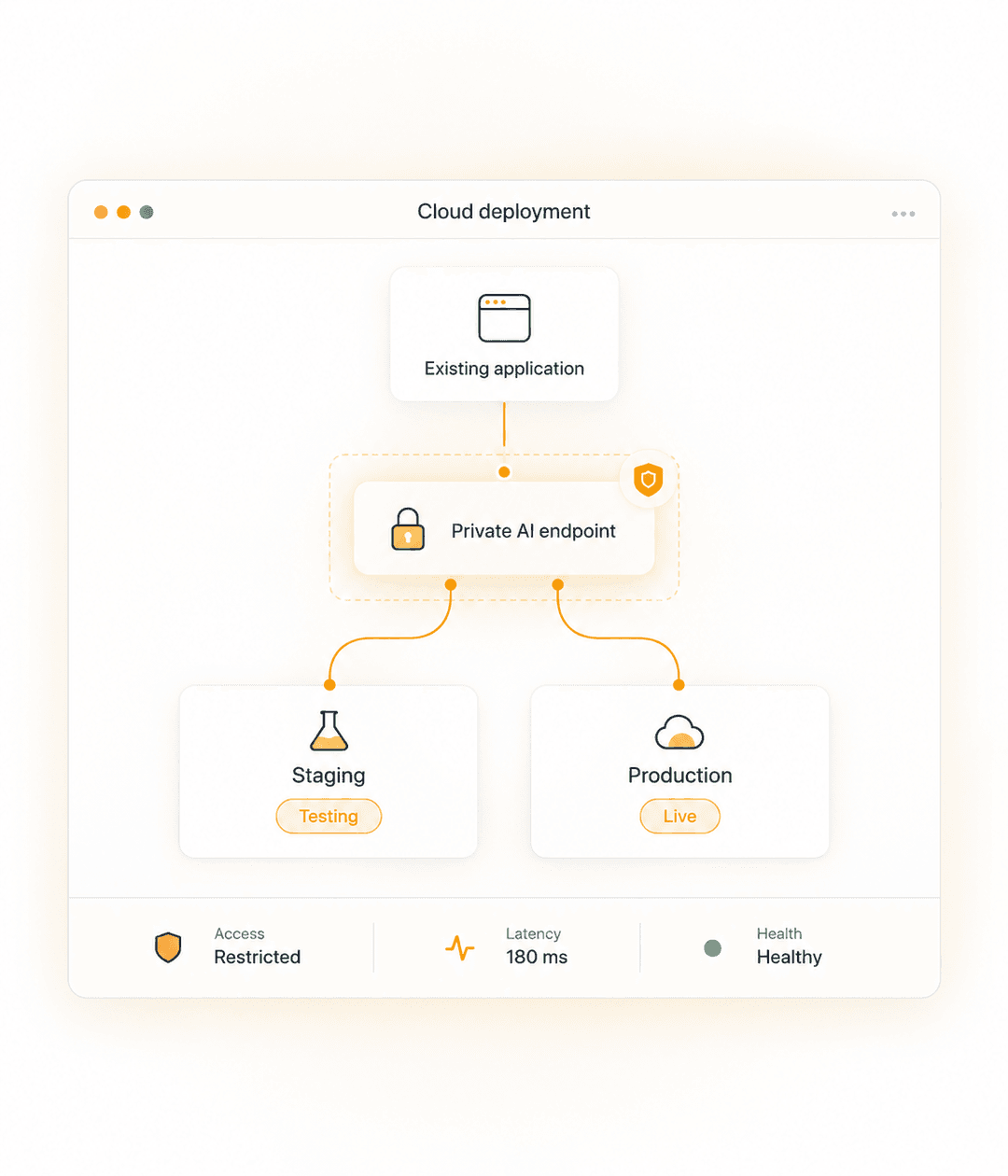
Connect existing applications with managed or privately deployed AI services across AWS, Microsoft Azure, Google Cloud, and hybrid environments. We configure endpoints, credentials, network access, and monitoring around your application's deployment and data-handling requirements.

Integration Scope

  • AI service endpoint configuration
  • Network access and connectivity controls
  • Secrets and credential management
  • Development and production environment separation
  • Service health and usage monitoring
  • Release, rollback, and handover documentation

Platforms & Technologies

  • Microsoft Azure
  • AWS
  • Google Cloud
  • Hybrid Cloud

Models connected to existing software

Large Language Model (LLM) Integration Services

Integrate large language models into your existing software, enterprise applications, and internal business workflows. THE TISA implements LLM integration services that connect models such as OpenAI GPT, Anthropic Claude, Google Gemini, and open-source alternatives with your application data, business logic, and user interfaces. We design model connections around your use case, context requirements, response formats, security policies, and operating costs. This includes selecting suitable models, configuring API access, managing conversation context, validating structured outputs, and implementing fallback mechanisms for reliable application behavior.

Integration Scope

  • OpenAI, Anthropic, and Google Gemini API integration
  • Self-hosted and open-source LLM connectivity
  • Structured output and function-calling integration
  • Prompt and context management
  • Model routing and fallback configuration
  • Token usage, latency, and cost monitoring

Common Applications

  • Enterprise AI assistants and copilots
  • Document summarization and extraction
  • Conversational business applications
  • Intelligent customer support
  • Internal knowledge assistance

Agents connected to approved tools

AI Agent Integration Services

Connect AI agents with the business applications, APIs, databases, and operational tools required to complete defined tasks. Our AI agent integration services bring agent capabilities into existing enterprise workflows, allowing agents to retrieve approved information, invoke authorized tools, prepare actions, and coordinate multi-step processes. THE TISA designs agent integrations around explicit tool permissions, authentication, execution boundaries, and human approval requirements. Agent product engineering is covered under AI agent development.

Integration Scope

  • AI agent connectivity with CRM and ERP platforms
  • Function calling and external tool integration
  • Multi-agent workflow orchestration
  • Enterprise API and database connectivity
  • Permission-scoped tool execution
  • Human-in-the-loop approval workflows
  • Agent activity monitoring and audit logging

Common Applications

  • AI sales and customer support agents
  • Internal operations assistants
  • Document processing agents
  • Enterprise research assistants
  • Multi-step business workflow agents

Retrieval grounded in approved knowledge

RAG & Enterprise Knowledge Integration Services

Connect enterprise knowledge sources with retrieval-augmented generation (RAG) systems to make business information accessible through context-aware AI applications. THE TISA builds RAG integration solutions that connect approved documents, databases, internal knowledge repositories, and application records with language models through controlled retrieval pipelines. Implementation covers document ingestion, content extraction, chunking, embedding generation, vector search, metadata filtering, retrieval evaluation, and model integration. Building the retrieval system itself is covered under RAG development services.

Integration Scope

  • Enterprise document and knowledge source integration
  • RAG pipeline and data ingestion development
  • Vector database integration
  • Embedding generation and semantic search
  • Metadata filtering and access-aware retrieval
  • LLM and retrieval orchestration
  • Source attribution and retrieval evaluation

Common Applications

  • Enterprise knowledge assistants
  • Internal document search
  • Policy and procedure retrieval
  • Customer support knowledge systems
  • Document-based AI copilots

Supported Technologies

  • PostgreSQL with pgvector
  • Pinecone
  • Qdrant
  • Weaviate
  • Elasticsearch
  • Redis
  • LangChain
  • LlamaIndex

Our AI Integration Methodology

AI Integration Journey

A practical delivery process for adding AI capabilities to existing business software-from assessing compatibility to deploying and maintaining the integration.

Each stage defines its scope, technical dependencies, and deliverables. Acceptance criteria guide testing, while a staged rollout helps your team evaluate the feature before expanding access.

Defined before development

Required connections, data permissions, success measures, and ownership of deployment and support.

  1. Compatibility Assessment

    Review existing applications, supported APIs, data availability, permissions, and technical constraints.

    Deliverable: Feasibility assessment and integration scope

  2. Integration Architecture

    Define system connections, authentication, data mappings, deployment requirements, and acceptance criteria.

    Deliverable: Architecture and implementation plan

  3. Implementation

    Build API adapters and application features with response validation, usage controls, and failure handling.

    Deliverable: Working integration in a test environment

  4. Testing & Verification

    Verify access controls, data mappings, output quality, response times, retries, and recovery behavior.

    Deliverable: Test results against agreed acceptance criteria

  5. Staged Deployment

    Release to an agreed user group with production monitoring, user guidance, and a documented rollback plan.

    Deliverable: Production release and operational handover

  6. Support & Maintenance

    Monitor errors, adoption, and operating costs. Test platform and model updates before expanding or changing the integration.

    Deliverable: Maintenance documentation and improvement priorities

Our Enterprise AI Integration Implementation Approach

Every AI integration project begins with an assessment of the systems, interfaces, data, and business processes involved. Our implementation approach identifies the dependencies between existing applications and the proposed AI capabilities before development begins.

During integration, we establish secure API connections, configure model access, map application data, implement validation logic, and test the complete workflow against agreed requirements. Production deployment includes environment configuration, access controls, error monitoring, and a defined release and rollback process.

For ongoing AI integration maintenance, we review model changes, API compatibility, system performance, usage costs, and application behavior to help keep the integration reliable as your business systems evolve.

Enterprise AI Technology
Ecosystem

We combine leading AI models, frameworks, vector databases, cloud platforms, automation tools, enterprise applications, and modern integration technologies.

  • Large Language Models

    Foundation models we connect to your applications for reasoning, generation, summarization, and multimodal features.

    GPT
    Claude
    Gemini
    Llama
    Mistral
    DeepSeek
  • AI Frameworks

    Orchestration frameworks for tool calling, memory, retrieval, and multi-step agent workflows.

    LangChain
    LangGraph
    LlamaIndex
    CrewAI
    Hugging Face
    OpenAI Agents SDK
  • Vector & Data Stores

    Vector search, databases, and caching layers for semantic search, retrieval, and grounding AI in your business data.

    pgvector
    Redis
    Elasticsearch
    MongoDB
    Supabase
    Neo4j
  • Cloud Platforms

    Cloud infrastructure and managed AI services for hosting, scaling, and securing AI workloads alongside your existing environment.

    Microsoft Azure
    AWS
    Google Cloud
    Azure OpenAI
    Vertex AI
    Amazon Bedrock
  • Enterprise Applications

    CRM, ERP, and collaboration platforms we connect AI into, so insights and actions reach the tools your teams already use.

    Salesforce
    Oracle
    Microsoft Dynamics
    Slack
    Jira
    Notion
  • Automation Platforms

    Workflow automation and messaging platforms that trigger AI actions across systems.

    Make
    n8n
    Zapier
    RabbitMQ
  • Integration Technologies

    APIs, documentation, testing, and real-time tooling that connect AI capabilities to your existing systems.

    REST APIs
    GraphQL
    Swagger
    Postman
    Socket.io
    Node.js

Our AI integration technology stack is selected according to the applications, data infrastructure, deployment environment, and business requirements of each project. We work across commercial and open-source AI models, orchestration frameworks, vector databases, enterprise APIs, cloud platforms, and workflow technologies.

Rather than choosing tools based on popularity alone, we evaluate model compatibility, integration complexity, data access requirements, response latency, operational costs, and long-term maintainability. This allows us to design custom AI integration solutions that fit into existing technology environments instead of introducing unnecessary platform dependencies.

Business Outcomes Powered by
AI Integration

Our AI integration services add useful capabilities to the CRM, ERP, support platforms, and internal applications your team already uses. Help employees work with less manual entry, relevant context, and AI assistance inside familiar tools.

01

Less Switching Between Applications

Bring summaries, drafting, and record assistance into existing application screens through authenticated APIs. Employees can complete selected tasks without copying information into separate AI tools.

  • Fewer application switches
  • Less manual copying
  • Assistance in familiar screens
  • Task completion time tracked
02

Less Manual Data Entry

Map extracted document information to application fields, validate proposed values, and let users review changes before saving. Track corrections to evaluate extraction quality.

  • Validated field mappings
  • Review before record updates
  • Traceable changes
  • Manual entry and corrections tracked
03

Relevant Context Where Decisions Happen

Connect AI features to approved application records using scoped permissions. Present account summaries and operational context where employees work, reducing manual information gathering.

  • Permission-aware record access
  • Context within existing applications
  • Less information gathering
  • Output acceptance measured
04

Faster Response Preparation

Embed account summaries and drafting assistance in CRM and support platforms. Employees review suggestions alongside customer records before sending, with preparation time and edits measured.

  • Customer context alongside drafts
  • Consistent response formats
  • Human review before sending
  • Preparation time and edits tracked
05

Clearer AI Operating Costs

Monitor model usage and integration activity to understand cost per completed task. Include retries, human review, and corrections when comparing operating expenses with time saved.

  • Visibility into model usage
  • Configurable usage limits
  • Cost per completed task
  • Review and retry costs included
06

More Value From Existing Software

Add AI features through supported APIs and extensions, with testing, failure handling, and staged deployment. Evaluate adoption and reliability before expanding access.

  • Existing interfaces reused
  • Deployment and recovery tested
  • Errors and response times monitored
  • Rollout guided by adoption data

Measured against your baseline

Compare task time, accepted outputs, adoption, and operating costs before and after deployment-including human review and corrections.

The value of enterprise AI integration is measured by how effectively AI capabilities improve existing business operations. We evaluate integrations against practical indicators such as task completion time, manual processing effort, accepted AI outputs, application adoption, system reliability, and operating cost.

For example, an AI-powered CRM integration can reduce the time employees spend preparing customer summaries, while an ERP integration can help teams extract and review information from operational documents. These outcomes should be measured against the organization's existing baseline rather than assumed from the use of AI alone.

AI Integration Solutions
for Every Industry

Our enterprise AI integration services connect AI models and features with the business applications your industry already relies on. From CRM and ERP integration to document management, customer support, and operational platforms, we help bring summarization, document extraction, and contextual assistance into existing software. Each industry presents different integration requirements: healthcare applications may depend on supported EHR interfaces, logistics platforms on shipment events, and SaaS products on tenant-specific permissions. Our AI integration consulting assesses API compatibility, data availability, authentication, and platform constraints before defining the implementation scope. We then plan data mappings, output validation, error handling, and deployment around the selected use case, with acceptance criteria to evaluate reliability and business impact.

  • Healthcare AI Integration Solutions connect AI assistance to patient administration and documentation applications through supported EHR interfaces. Keep patient context, permitted data access, and staff review tied to the selected task.

    Relevant systems: EHR interfaces, Patient portals, Scheduling systems.

    • Extract intake details into reviewable fields
    • Summarize appointment and administration records

    Integration requirements: Assess supported interfaces, including FHIR resources where available, patient authorization, and sensitive-data handling.

    Explore Healthcare & Life Sciences

THE TISA delivers industry-focused AI integration solutions that connect intelligent capabilities with the software and operational platforms businesses already depend on. Each implementation is designed around the data structures, application interfaces, security requirements, and workflows of the specific industry.

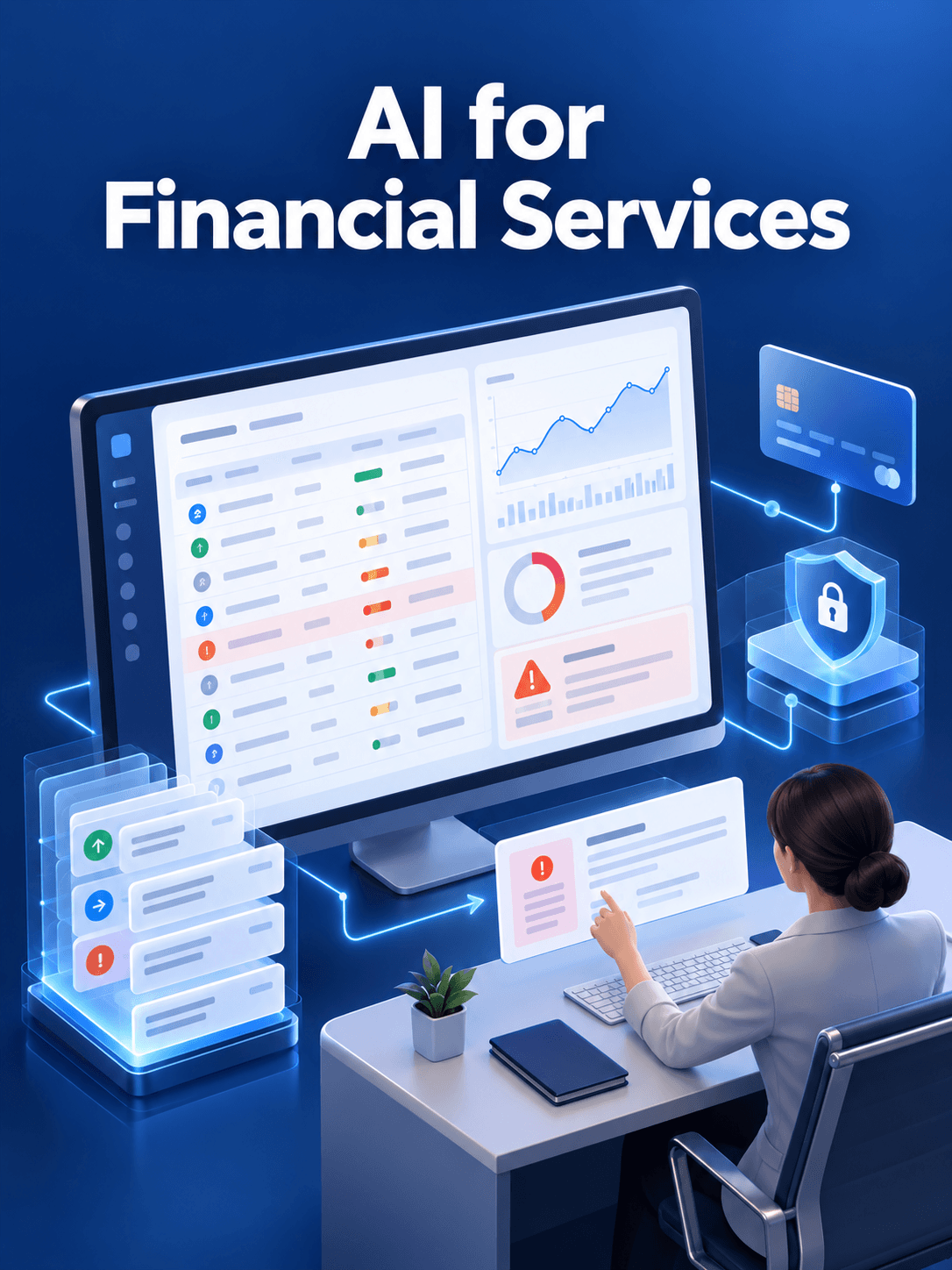
From AI solutions for healthcare application connectivity and AI solutions for financial services document processing to logistics system integration and SaaS product intelligence, our approach focuses on embedding AI into existing business operations while maintaining appropriate access controls, validation, and human oversight.

AI Platforms & Enterprise Systems
We Integrate

Your business has already invested in enterprise software, cloud platforms, CRMs, ERPs, collaboration tools, databases, and custom applications. The next stage of digital transformation is not replacing these systems, it's making them intelligent. At THE TISA, we help organizations unlock greater value from their existing technology investments by integrating advanced AI capabilities directly into the platforms they rely on every day. Whether you're deploying enterprise copilots, AI agents, intelligent automation, or predictive analytics, our AI and GPT integration services ensure every platform communicates seamlessly, shares knowledge securely, and supports faster, data-driven decisions. From AI CRM Integration services for customer engagement to retail AI vision systems integration for smart retail operations, we design scalable AI ecosystems that evolve with your business. Explore the perfect AI solutions for integrating your systems so they can communicate, function, and grow. Our integration-first approach eliminates data silos, streamlines workflows, and creates a unified enterprise where AI enhances every department without disrupting existing operations.
Enterprise Intelligence

Large Language Models

Bring enterprise-grade intelligence into your software with leading AI models selected around performance, privacy, cost, and business requirements.

Supported Models

  • OpenAI GPT
  • Anthropic Claude
  • Google Gemini
  • Meta Llama
  • Mistral AI
  • DeepSeek
  • Qwen
  • Hugging Face

Common Use Cases

  • AI Copilots
  • Enterprise Search
  • AI Assistants
  • Document Intelligence
  • Content Generation
  • Customer Support

Agent Orchestration

AI Frameworks & Agent Orchestration

Build scalable AI applications that coordinate agents, enterprise tools, workflows, context, memory, and organizational knowledge.

Technologies

  • LangChain
  • LangGraph
  • CrewAI
  • LlamaIndex
  • OpenAI Agents SDK
  • LangSmith
  • Langfuse
  • Ollama

Capabilities

  • Multi-Agent Systems
  • AI Workflow Automation
  • Tool Calling
  • Context Management
  • Enterprise Orchestration

Customer Intelligence

CRM Platforms

Transform customer relationship systems into intelligent sales, service, forecasting, and engagement platforms.

Platforms

  • Salesforce
  • Microsoft Dynamics 365
  • Oracle
  • Twilio
  • Slack

AI Capabilities

  • Lead Scoring
  • Sales Forecasting
  • AI Sales Assistant
  • Customer Insights
  • Personalized Communication
  • Opportunity Prediction

Enterprise Operations

ERP & Enterprise Applications

Connect AI with planning, finance, inventory, procurement, forecasting, and operational decision-making systems.

Platforms

  • Oracle ERP
  • Microsoft Dynamics
  • Snowflake
  • Stripe
  • Jira

AI Capabilities

  • Demand Forecasting
  • Procurement Automation
  • Financial Intelligence
  • Inventory Optimization
  • Operational Analytics

AI Infrastructure

Cloud & AI Infrastructure

Deploy secure, scalable, observable AI workloads across enterprise-grade cloud and container environments.

Platforms

  • Microsoft Azure AI
  • Amazon Web Services
  • Google Cloud Platform
  • DigitalOcean
  • Red Hat OpenShift
  • Cloudflare

Infrastructure Services

  • Kubernetes
  • Docker
  • Serverless AI
  • CI/CD Pipelines
  • Auto Scaling
  • AI Monitoring

Enterprise Knowledge

Knowledge & Document Systems

Allow AI to securely retrieve, understand, summarize, and reason across business documents and internal knowledge.

Platforms

  • Microsoft SharePoint
  • Google Drive
  • Notion
  • Confluence
  • OneDrive
  • Slack

AI Features

  • Enterprise Search
  • Document Summarization
  • Semantic Search
  • Knowledge Assistants
  • RAG Implementation

Customer Experience

Customer Service Platforms

Improve response quality, reduce handling time, and provide support teams with context-aware AI assistance.

Platforms

  • Salesforce Service Cloud
  • Jira Service Management
  • Microsoft Dynamics 365
  • Twilio
  • Slack

AI Features

  • AI Support Agents
  • Ticket Classification
  • Response Suggestions
  • Knowledge Retrieval
  • Conversation Summaries

Retail Intelligence

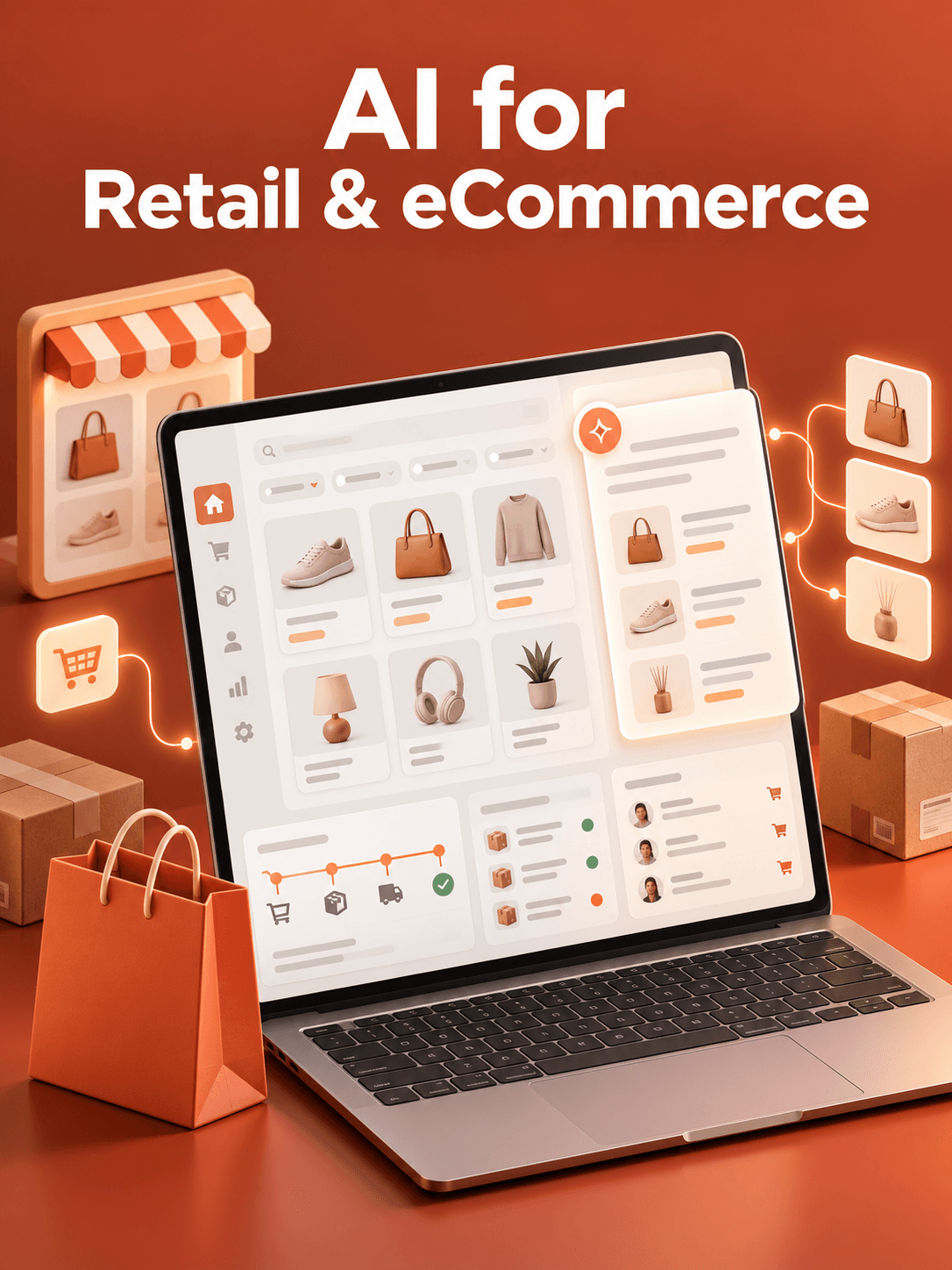
Retail & Commerce Platforms

Deliver personalized commerce experiences with predictive analytics, visual intelligence, and smarter merchandising.

Platforms

  • WooCommerce
  • Salesforce Commerce Cloud
  • PrestaShop
  • Shopware
  • Stripe

AI Features

  • Product Recommendations
  • Inventory Intelligence
  • Visual Product Recognition
  • Shelf Monitoring
  • Customer Behavior Analytics
  • Smart Merchandising

Data Intelligence

Data Platforms & Vector Databases

Build AI applications capable of retrieving, remembering, and reasoning across structured and unstructured enterprise data.

Databases & Vector Stores

  • PostgreSQL
  • MySQL
  • MongoDB
  • Redis
  • Elasticsearch
  • Supabase
  • Neo4j
  • ClickHouse
  • Snowflake

AI Features

  • Semantic Search
  • RAG
  • Knowledge Retrieval
  • AI Memory
  • Intelligent Recommendations

Connected Enterprise

APIs & Integration Technologies

Connect AI across internal systems, external applications, real-time events, enterprise services, and custom software.

Technologies

  • REST APIs
  • GraphQL
  • OAuth 2.0
  • Auth0
  • Okta
  • RabbitMQ
  • Swagger
  • Postman

AI Capabilities

  • Real-Time Data Exchange
  • Workflow Automation
  • Cross-Platform Communication
  • Event-Driven AI
  • Process Orchestration

AI Integration with Existing Enterprise Systems

Many organizations have years of investment in enterprise software, custom applications, databases, and operational platforms. Replacing these systems simply to introduce artificial intelligence can create unnecessary migration costs, operational disruption, and implementation risk.

THE TISA approaches enterprise AI integration by connecting new AI capabilities with supported interfaces in your existing technology environment. Depending on platform compatibility and available access, this may involve direct API integration, middleware, custom connectors, event-driven communication, or controlled data pipelines.

CRM and Customer Relationship Management Integration

Integrate AI capabilities with Salesforce, HubSpot, Microsoft Dynamics 365, Zoho CRM, and custom customer relationship management platforms. Use authorized customer and account information to support lead analysis, record summaries, communication drafting, and sales assistance.

ERP and Enterprise Resource Planning Integration

Connect AI with SAP, Oracle, Microsoft Dynamics, NetSuite, Odoo, and other supported ERP environments. Integration use cases may include operational document extraction, inventory insights, procurement assistance, reporting, and validated access to business records.

Legacy Application AI Integration

Extend existing applications with AI capabilities through available APIs, application extensions, database interfaces, or custom integration services. Where legacy platforms lack modern interfaces, we assess available integration options and define an appropriate connectivity layer before implementation.

SaaS and Custom Software Integration

Embed AI features directly into existing SaaS products, internal dashboards, web applications, and mobile platforms. Integrations can support tenant-aware data retrieval, contextual assistance, document intelligence, and AI-enabled product workflows. Product builds of this kind are part of AI SaaS development.

API, Middleware and Data Integration

Connect AI models and business applications through REST APIs, GraphQL, webhooks, message queues, and middleware. Implement authentication, request validation, event handling, retries, data mapping, and monitoring to support reliable communication between connected systems.

Cloud and Hybrid Environment Integration

Connect enterprise applications with AI services deployed through AWS, Microsoft Azure, Google Cloud, and hybrid infrastructure. Account for network access, credentials, data processing requirements, deployment environments, and application monitoring.

AI integration case studies

AI Integration
Case Studies

See how THE TISA integrated OpenAI into working business platforms, from an enterprise administration portal to a project management SaaS that drafts plans for managers to review and approve.

OpsPilot - AI-Powered Admin Portal Case Study | THE TISA

01EdTech / Education Administration

OpsPilot - AI-Powered Admin Portal

Enterprise Institute Management and Administration Platform

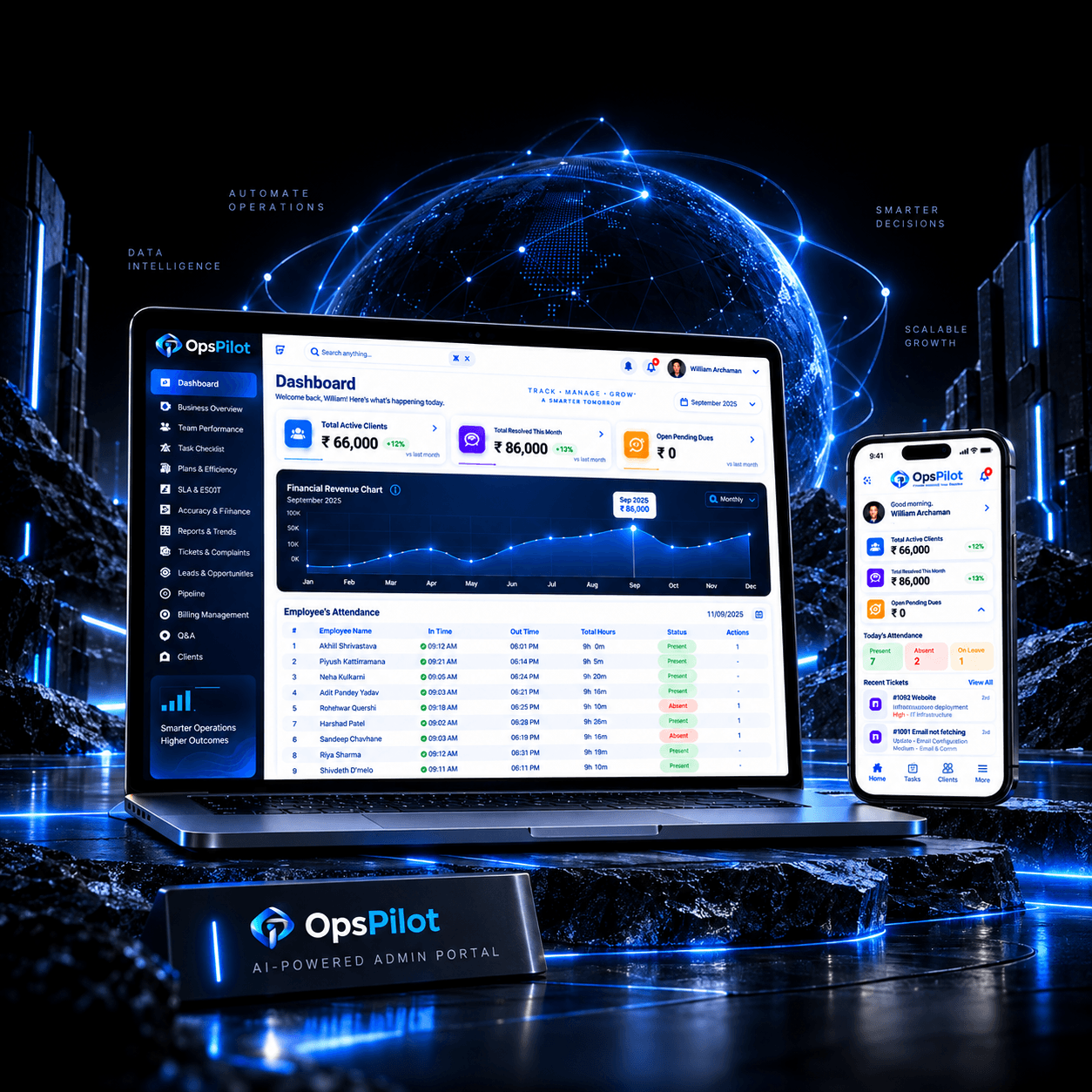
OpsPilot is an AI-powered enterprise administration system developed to manage the academic, operational, employee, and financial activities of a large educational institute.

Monthly Active Users
2,850
Student Records Managed
6,400+
Read more about the OpsPilot case study
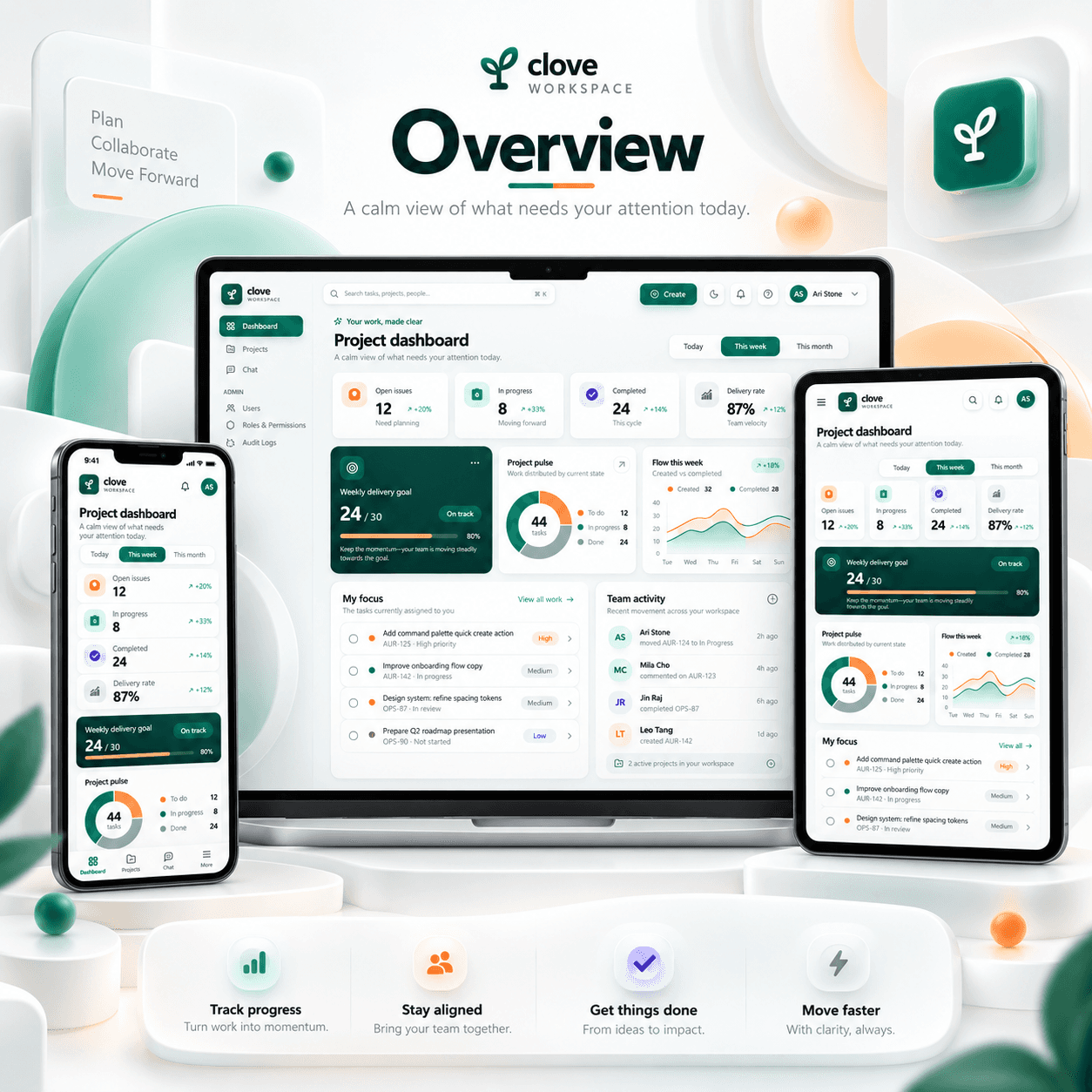
Clove AI project management SaaS case study by THE TISA

02SaaS, Project Management and Business Productivity

Clove

AI Project Management Platform That Plans, Staffs and Schedules Work

Clove is a project management and team collaboration SaaS for US startups, agencies and software teams. Built by THE TISA in four months, it uses the OpenAI API to turn a project brief into milestones, sprints, deadlines, a proposed team and assigned tasks that a manager reviews and approves.

Monthly Active Users
1,850
Active Workspaces
126
Read more about the Clove case study

Enterprise AI Integration for an Administration Platform

THE TISA integrated OpenAI-powered functionality into OpsPilot, an enterprise administration platform managing academic, operational, employee, and financial activities.

The integration brings AI-generated reporting and summarization capabilities into an existing application environment, allowing authorized users to work with relevant operational information through the platform.

Integration capabilities

  • OpenAI API integration with existing application workflows.
  • Contextual report summarization.
  • Application-level access and data handling.
  • AI functionality embedded within an enterprise administration platform.

Integration objective: Make AI-assisted reporting available within existing administrative workflows without requiring users to move operational information into a separate AI application.

AI integration case studies: OpsPilot

OpenAI Integration for an AI Project Management SaaS

THE TISA developed Clove, an AI-powered project management platform that uses OpenAI API integration to transform project briefs into structured planning suggestions.

The integration connects user-provided project information with AI-generated milestones, sprints, deadlines, proposed team allocations, and assigned tasks. Generated plans are presented for manager review and approval before becoming part of the project workflow.

Integration capabilities

  • OpenAI API connectivity.
  • Project context preparation.
  • AI-generated milestone and sprint planning.
  • Structured output handling.
  • Manager review and approval workflows.
  • Integration of generated recommendations into project management features.

Integration objective: Embed generative AI into an existing SaaS product experience rather than relying on a separate conversational AI tool.

AI integration case studies: Clove

AI Integration Costs
& Investment Planning

AI integration costs depend on the systems involved, available APIs, data preparation, and deployment requirements. Separate implementation expenses from ongoing model, infrastructure, and support costs when planning your budget.

Systems & Interfaces

Number of applications, API availability, authentication, and custom connector requirements.

Data & Validation

Record quality, document formats, field mapping, and output verification requirements.

Access & Deployment

Permission boundaries, hosting environments, release controls, and security review.

Usage & Support

Request volume, model consumption, monitoring, maintenance, and platform updates.

One-time implementation

Upfront
  • Technical assessment and integration design
  • Connector and application development
  • Testing, deployment, and handover

Ongoing operation

Recurring
  • Model API usage or inference hosting
  • Infrastructure, storage, and monitoring
  • Maintenance, evaluation, and support

For a project estimate, share your existing applications, target feature, expected usage, and deployment requirements.

Request an integration assessment

What Affects the Cost of Enterprise AI Integration?

The cost of an AI integration project depends on the complexity of the existing technology environment and the functionality being introduced. A straightforward LLM API connection to an existing application has different requirements from a multi-system enterprise AI integration involving CRM, ERP, internal databases, custom connectors, and agent-based workflows.

The main cost factors include:

  • Application and API complexity: The number of systems, supported interfaces, authentication methods, and custom connector requirements.
  • AI model integration: Model selection, API usage, orchestration, inference requirements, and fallback configurations.
  • Data and RAG infrastructure: Document processing, data preparation, embeddings, vector databases, retrieval pipelines, and access controls.
  • Workflow and agent complexity: Number of integrated tools, business rules, execution steps, and approval requirements.
  • Security and governance: Identity management, permission boundaries, audit logging, encryption, and compliance requirements.
  • Deployment and maintenance: Cloud infrastructure, monitoring, model updates, API changes, and ongoing technical support.

A reliable AI integration estimate should separate initial engineering and implementation costs from recurring model, infrastructure, and maintenance expenses. THE TISA assesses these requirements before defining the project scope and implementation roadmap.

Enterprise AI Security
& Integration Governance

Connecting AI to existing business applications introduces questions about data access, external service requests, and changes to enterprise records. Our AI integration approach defines authentication, permissions, data handling, output validation, and operational monitoring around the connected systems and your security requirements.

Identity & Access Management

Protect enterprise AI systems through secure authentication and authorization mechanisms.

  • Role-Based Access Control
  • Multi-Factor Authentication
  • Single Sign-On
  • Least Privilege Access
  • Identity Federation
  • Session Management

Business ValueOnly authorized users can access AI systems, reducing insider threats and unauthorized data exposure.

Enterprise Data Protection

Protect sensitive business and customer information throughout the complete AI lifecycle.

  • End-to-End Encryption
  • Encryption at Rest
  • Encryption in Transit
  • Secure Data Storage
  • Data Tokenization
  • Secure Key Management

Business ValueEnterprise data remains protected while AI processes, analyzes, and generates business insights.

Secure API & System Integration

Authenticate, monitor, and protect every connection between AI platforms and enterprise applications.

  • Secure REST APIs
  • OAuth 2.0
  • OpenID Connect
  • API Gateway Protection
  • Rate Limiting
  • API Monitoring

Business ValueEnable secure communication between enterprise systems without compromising business continuity.

Responsible AI Governance

Keep AI-assisted decisions transparent, explainable, accountable, and aligned with organizational policies.

  • Human-in-the-Loop Validation
  • AI Decision Transparency
  • Explainable AI
  • Prompt Governance
  • AI Usage Policies
  • Ethical AI Controls

Business ValueMaintain control over AI-driven decisions while strengthening trust among employees, customers, and regulators.

Continuous Monitoring & Threat Detection

Continuously inspect AI systems for vulnerabilities, unusual activity, misuse, and performance issues.

  • Security Event Monitoring
  • AI Performance Monitoring
  • Threat Detection
  • Audit Logging
  • Usage Analytics
  • Incident Response

Business ValueIdentify risks early and maintain reliable AI operations across your organization.

Compliance & Risk Management

Design AI integrations around regulatory requirements, internal controls, and industry-specific obligations.

  • GDPR Readiness
  • CCPA Support
  • HIPAA-Aware Architecture
  • SOC 2 Alignment
  • ISO 27001 Best Practices
  • AI Audit Documentation

Business ValueReduce regulatory exposure while strengthening customer confidence and enterprise governance.

Security References & Technology Support

Relevant frameworks and customer control requirements inform integration design, documentation, and security review.

  • ISO/IEC 27001

    Security management reference

  • SOC 2

    Customer control requirements

  • NIST AI RMF

    AI risk management reference

  • OWASP LLM Top 10

    Application risk reference

  • Zero Trust

    Access design principles

  • Encryption

    Platform-specific configuration

Authentication & Identity

Connect with your existing identity controls

Select authentication methods and permission scopes around your applications, users, and deployment environment.

  • OAuth 2.0
  • OpenID Connect
  • Multi-Factor Authentication
  • Single Sign-On
  • Role-Based Access Control

Privacy & Governance

Document how application data is handled

Define what data is accessed, where it is processed, and which operational records your team needs to review.

  • Data-flow documentation
  • Retention requirements
  • Data residency requirements
  • Access review records
  • Audit logging

Enterprise security

Keep AI connected.
Keep access controlled.

Explore how we approach application access, sensitive data, integration monitoring, and human oversight when connecting AI with business systems.

  • Defined permissions
  • Data protection
  • Operational visibility
Explore our security approach

Security Controls for Enterprise AI Integration

Secure enterprise AI integration requires more than encrypting API requests or selecting a trusted AI model. Each integration must define which systems the AI capability can access, what information it can retrieve, and which actions it is permitted to perform.

THE TISA designs AI integrations around application-level authorization, scoped credentials, controlled data access, and validation of AI-generated outputs. Where an AI agent can interact with business systems, tool permissions and execution boundaries should be defined independently for each action.

Our integration approach can include:

  • Role-based and least-privilege access controls.
  • Scoped API credentials and authentication.
  • Data encryption in transit and at rest.
  • Permission-aware enterprise knowledge retrieval.
  • Input validation and structured output checks.
  • Human approval for sensitive business operations.
  • AI execution logs and application audit trails.
  • Model usage, error, and performance monitoring.

The specific controls depend on the connected platforms, data sensitivity, deployment environment, and applicable regulatory requirements. Security and governance are considered throughout architecture, development, testing, and production deployment. Read how this is applied on Enterprise AI security.

Why Choose THE TISA
as Your AI Integration Partner

Choosing an AI integration partner means understanding what will be delivered, how it will be accepted, and who will maintain it. Our engagements define application compatibility, implementation responsibilities, release criteria, and handover requirements so your team can make informed decisions from assessment through ongoing support.

  • Compatibility Before Commitment

    We assess supported APIs, application extensions, data access, and platform restrictions before agreeing on the AI integration scope. Technical dependencies are identified early so your team can evaluate feasibility.

    What your team receives

    Documented scope, dependencies, and exclusions

  • Clear Implementation Ownership

    Your team knows who is responsible for application changes, credentials, environment access, and release approvals. Responsibilities across THE TISA, your internal team, and platform providers are agreed during planning.

    What your team receives

    Named responsibilities and review checkpoints

  • Acceptance Criteria You Can Verify

    We agree on expected outputs, permitted actions, and failure behavior for the selected feature. Your reviewers can assess the integration against defined examples and requirements before approving production access.

    What your team receives

    Agreed test cases and acceptance records

  • Controlled Production Releases

    Deployment planning accounts for existing application dependencies and user access. Staging checks, an initial rollout group, and a rollback procedure help your team review the feature before extending availability.

    What your team receives

    Release plan and rollback responsibilities

  • Maintainable Integration Handover

    We document connection logic, configuration, and operational procedures so your technical team can understand the implementation. Code delivery, repository access, and handover requirements are defined in the engagement.

    What your team receives

    Integration documentation and technical handover

  • Defined Support After Launch

    Support arrangements specify how connection failures, API changes, and model updates will be handled. Maintenance coverage, escalation contacts, and changes outside the original scope are agreed explicitly.

    What your team receives

    Support scope and escalation process

Get to know the team behind your integration.

Explore our engineering approach and how we work with client teams across AI software development engagements.

Why work with THE TISA

THE TISA combines AI engineering, custom software development, enterprise application connectivity, and production deployment within one engineering-led delivery approach. We work with existing business applications and technology teams to identify practical AI opportunities, assess system compatibility, and implement integrations that align with operational requirements.

Whether your organization needs LLM integration, AI-powered CRM and ERP capabilities, enterprise knowledge retrieval, or AI agents connected to internal applications, we focus on delivering maintainable solutions with defined scope, controlled access, and measurable acceptance criteria.

What Clients Say About
Working With THE TISA

Hear from the people who worked with THE TISA and explore their experience building digital products.

EZSKU Client Story

“THE TISA demonstrated excellent project management, clear communication, and a highly professional approach throughout our collaboration. They delivered the project on time and exceeded our expectations with outstanding results. We used in-person meetings, virtual meetings, and email or messaging apps to communicate with THE TISA.”

Parmeshwar Kumawat

Founder & CEO · NARSIK Logistics

01 / 05
  • “THE TISA demonstrated excellent project management, clear communication, and a highly professional approach throughout our collaboration. They delivered the project on time and exceeded our expectations with outstanding results. We used in-person meetings, virtual meetings, and email or messaging apps to communicate with THE TISA.” Parmeshwar Kumawat, Founder & CEO, NARSIK Logistics. Clutch LinkedIn Case study
  • “THE TISA helped us build a reliable e-commerce operations platform with clean workflows, strong delivery, and a product foundation ready to scale.” Sam Patel, Founder, EZSKU. Clutch LinkedIn Case study
  • “The student portal gave us a structured platform to manage learning, operations, reporting, and AI-powered student support from one system.” Albert Joe, Product Owner, Education Technology Platform. Clutch LinkedIn Case study
  • “THE TISA delivered a scalable hotel platform with strong architecture, complex backend logic, and a performance-focused execution process.” Luke Thompson, Founder, Group Hotel Index. Clutch LinkedIn Case study
  • “The platform helped us shape a modern multilingual learning experience with a clear product structure and dependable technical execution.” Abdul Aziz Sudais, Director, Global Language Center. Clutch LinkedIn Case study

Questions Business Leaders Ask
Before Investing in AI Integration

Choosing an AI integration partner is a strategic business decision. Throughout our discovery sessions with founders, CEOs, CTOs, and enterprise teams, we consistently hear similar questions about cost, security, implementation, ROI, and long-term scalability. The answers below address the concerns we encounter most often and reflect the broader discussions happening across executive communities, developer forums, and AI practitioners.

AI integration services connect artificial intelligence with your existing software, such as CRM, ERP, HR, customer support platforms, databases, and business applications. Instead of replacing your systems, we make them smarter by adding automation, intelligent decision-making, and AI-powered experiences. The full service set is on AI software development services.

A custom AI application is developed from scratch. AI integration enhances the systems you already use by embedding AI capabilities into your current workflows, reducing cost, implementation time, and operational disruption. New products are covered under AI application development.

No. Our goal is to automate repetitive and time-consuming work so your employees can focus on strategic decisions, customer relationships, and high-value activities. Human expertise remains essential for business growth. That approach is how we deliver AI workflow automation.

We usually recommend starting with processes that consume the most time and generate measurable business value, including:

Customer support Sales operations Document processing Knowledge management Internal workflows Reporting and analytics

These areas typically deliver the fastest ROI. See related case studies.

Yes. We integrate AI with platforms including Salesforce, Microsoft Dynamics, HubSpot, SAP, Oracle, ServiceNow, Microsoft 365, Google Workspace, custom applications, APIs, databases, and many other enterprise systems. Custom product work can continue through software development.

Yes. Security is built into every project through encrypted data transmission, role-based access controls, secure APIs, audit logging, governance policies, and enterprise security best practices. Your data ownership always remains with your organization. Read the controls on security.

Before development begins, we define clear KPIs such as:

Reduced manual work Faster customer response times Higher employee productivity Lower operational costs Faster decision-making Increased revenue opportunities

These metrics help demonstrate measurable business value after deployment. The measurement steps are part of our development process.

We work with the most suitable models for your business, including OpenAI GPT, Anthropic Claude, Google Gemini, Meta Llama, Mistral, DeepSeek, and other enterprise-grade AI technologies. Model selection depends on your use case, privacy requirements, performance expectations, and budget. Model-backed products are built through generative AI development.

We combine business consulting, enterprise architecture, AI engineering, system integration, security, deployment, and long-term optimization under one team. Our focus is not simply implementing AI—it is helping your organization achieve measurable business outcomes through secure, scalable, and future-ready AI integration. Get in touch or read why teams choose THE TISA.

An AI integration company connects artificial intelligence models, agents, and intelligent capabilities with existing business applications, enterprise systems, and data sources. This includes AI API integration, LLM integration, CRM and ERP connectivity, RAG implementation, workflow integration, security configuration, and production deployment. THE TISA assesses your current systems and business requirements to determine the most appropriate integration approach.

Yes. We integrate large language models such as OpenAI GPT, Anthropic Claude, Google Gemini, and compatible open-source models with existing applications through supported APIs and integration frameworks. Depending on your requirements, implementation can include structured outputs, context management, function calling, model routing, response validation, and usage monitoring.

Yes, provided the legacy environment exposes suitable interfaces or an alternative integration approach can be established. Depending on the platform, AI integration may use existing APIs, database interfaces, middleware, custom connectors, or application extensions. We first assess system compatibility, security requirements, data access, and technical constraints before recommending an implementation.

LLM integration connects a large language model to an application so it can generate responses, summarize information, or perform other language-based tasks. RAG integration adds a retrieval layer that allows the model to use relevant information from approved business documents, databases, and knowledge sources when generating responses. The two approaches can be combined to build enterprise assistants grounded in an organization's own information.


Yes. AI agents can be connected with supported CRM, ERP, internal APIs, databases, and business applications to retrieve approved information and perform defined tasks. The integration should include scoped permissions, authentication, input and output validation, execution boundaries, and human approval where required. THE TISA designs agent connectivity around the operations each agent is explicitly authorized to perform.

The implementation timeline depends on the number of systems involved, API availability, data preparation, integration complexity, security requirements, and testing scope. A focused API or LLM integration may require considerably less engineering effort than a multi-system enterprise integration involving custom connectors, RAG pipelines, or AI agents. THE TISA defines a project-specific timeline after assessing the technical environment and implementation requirements.

Request an AI Integration Assessment

Every successful AI transformation begins with a conversation.

Whether you're exploring AI for the first time, modernizing legacy software, integrating Generative AI into existing applications, or building enterprise AI agents, our team is here to help you identify the highest-value opportunities.

Book a free AI consultation with our specialists and discover how intelligent AI integration can improve productivity, automate repetitive workflows, enhance customer experiences, and accelerate business growth. Contact our AI integration team.

Each project is counted once. These groups add up to 50. 19 are published as case studies.

12AI Integrations
10Workflow Automation
8AI Agents
6Web Platforms
5Mobile Apps
5SaaS Products
4Generative AI
30+Team

Share your scope

Tell us about the workflow or product. A solutions architect replies within one business day.

5 + 9 =