Production-Ready Delivery
- 50+ AI agents deployed to production
- 15+ years combined AI engineering leadership
- 100+ enterprise projects completed
AI Software|Automation|Intelligence
We design and build intelligent software systems that automate complex workflows, connect your business intelligence, and turn emerging technology into measurable outcomes.
Top-rated on major review platforms
Our clients run operations teams, support desks and product organisations where downtime costs money. That shapes how we work. We plan releases around your business calendar, not ours. We document handover so your engineers can maintain what we ship. We keep the model layer swappable so a vendor price change or a deprecation notice does not become a rebuild. Some clients bring us in as the whole engineering team. Others place our engineers inside an existing one. The logos below represent companies that have taken a system we built into production. Where a client asked us not to publish their name, we left them off rather than blurring a logo and hoping nobody looks closely.
Trusted by leading businesses


THE TISA works across two connected pillars and most engagements need both. Our AI team builds agents, retrieval systems and automation that plug into software you already run. Our product engineering team builds and maintains the platforms underneath. We scope them together so the AI layer and the application layer share one architecture instead of two that drift apart in year two. That matters more than it sounds. The most common reason an AI feature gets shelved is not model quality. It is that the surrounding application cannot support the data access, the audit trail or the permission model the feature needs. Use the tabs below to see the full service list under each pillar. Each one links to a page covering scope, stack, delivery timeline and the questions we ask before quoting.
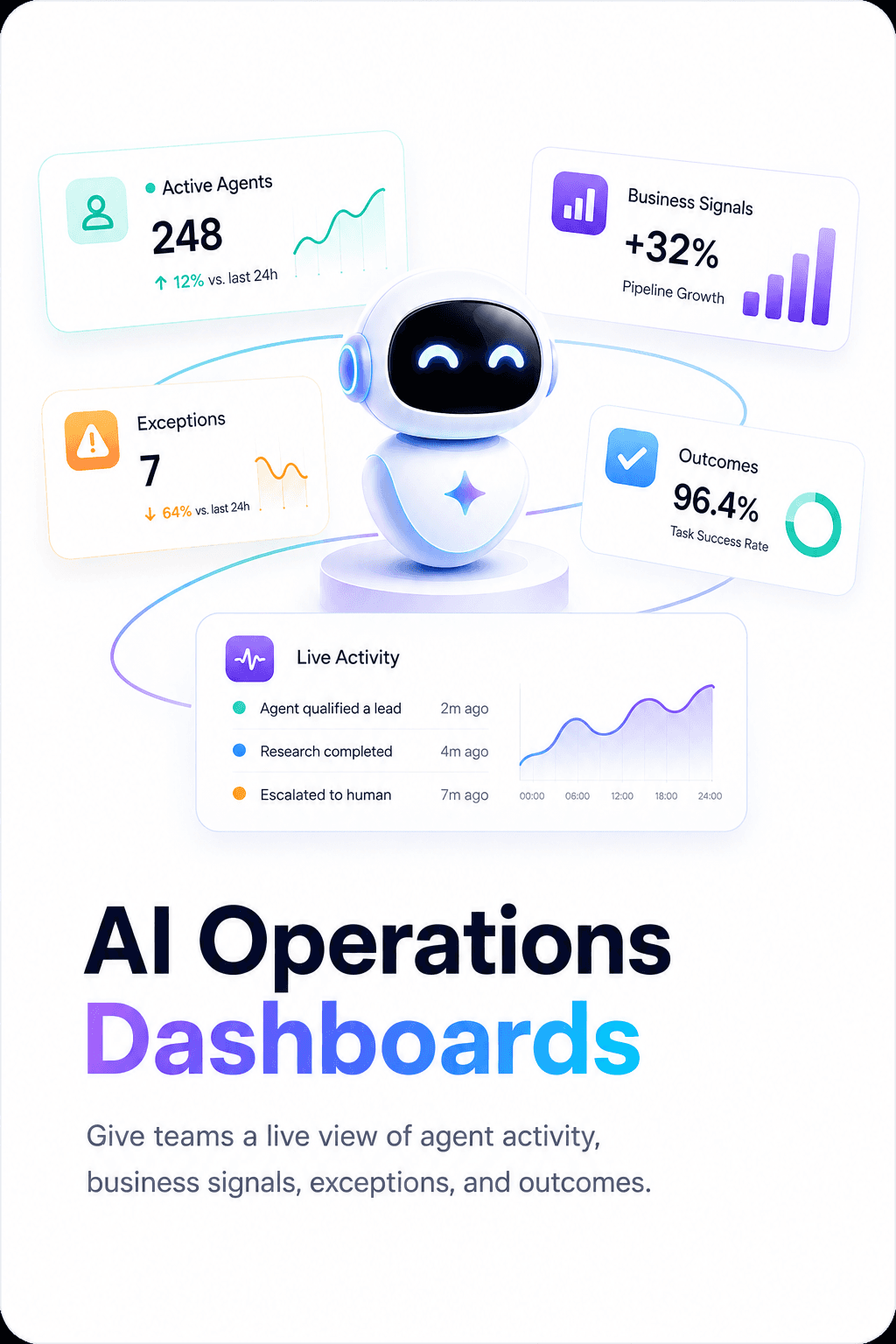
Build production-ready AI agents that automate complex enterprise workflows with tool use, guardrails, and measurable outcomes.
Build custom LLM applications, copilots, and RAG-powered systems grounded in your business data, from strategy to production.
Integrate AI models, automation, and analytics into your existing tools and systems without rebuilding your entire technology stack.
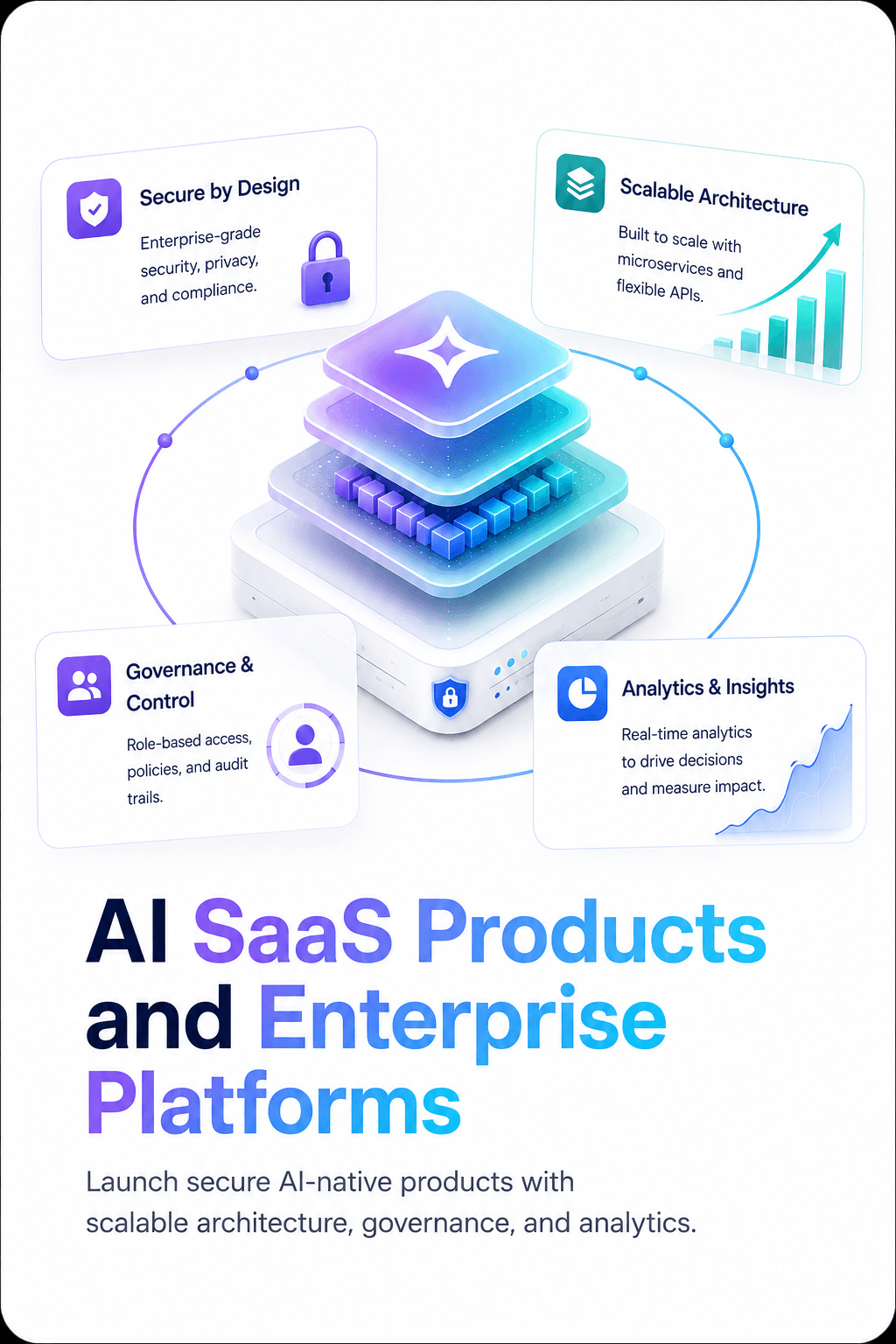
Design, build, and scale AI-powered SaaS products with multi-tenant architecture, billing, authentication, and growth-ready infrastructure.
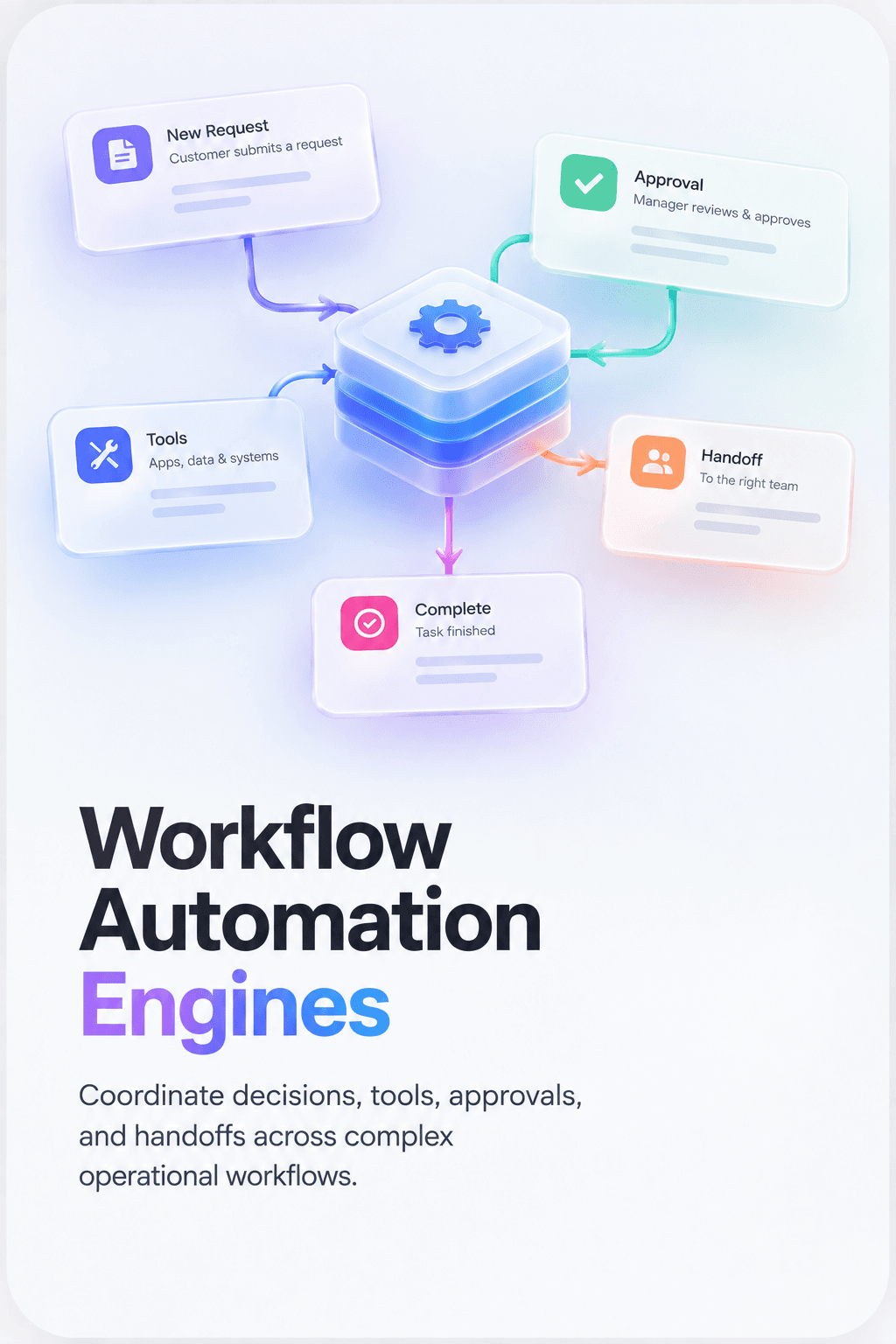
Automate complex business operations by orchestrating AI-driven decisions, tools, approvals, and handoffs across production workflows.
Identify high-value AI opportunities, define the right architecture, and build a practical roadmap that connects AI investments to measurable business outcomes.
Companies come to THE TISA at one of three moments. They have run an AI pilot that impressed everyone in the room and then went nowhere. They have a product that works but cannot take another feature without a rewrite. Or they need AI capability and cannot hire the team fast enough to build it. We are structured for all three. Our engineers work in your codebase, your sprint cadence and your review process rather than delivering a black box six weeks later. We write the architecture down before we build so you can challenge it. We benchmark models against your data instead of defaulting to whichever vendor we signed with. And we hand over documentation good enough that you could replace us. Most clients do not, but they could.
Every engagement at THE TISA starts with the workflow, not the model. We sit with the people doing the work and map what they actually do, including the exceptions that never made it into the process document. Those exceptions are usually where the project succeeds or fails. From there we choose the models, the retrieval approach and the integration pattern, and we write the architecture down before anyone writes code. You get to disagree with it while changing it is still cheap. We build, then evaluate against a scored dataset assembled from your real cases, so you see accuracy, latency and cost per task before go-live rather than after. Deployment happens behind approval gates. After launch we monitor output quality and spend, and we tune both as volume grows.
01
Workflow gap
Business goal
Success metric
02
Process mapping
User needs
System scope
03
Use case planning
ROI path
Guardrails
04
Model fit
Speed & cost
Privacy needs
05
APIs
Documents
Vector search
06
Prompt logic
Evaluation
Fine tuning
07
Product UI
Backend APIs
Dashboards
08
Quality checks
Edge cases
Security
09
Cloud release
Monitoring
Team handoff
10
Usage data
Prompt tuning
New workflows
Explore what each AI capability does, where it fits, and the type of system we build.
Coordinate multi-step work
Where it fits
Tasks move between people, tools, and systems.
What we build
Agents with tool access, approvals, and exception handling.
Process visual information
Where it fits
Images or documents need repeated manual inspection.
What we build
Image analysis, document extraction, and visual checks.
Understand text at scale
Where it fits
Teams handle large volumes of messages or documents.
What we build
Classification, intent detection, and summarization.
Support better planning
Where it fits
Teams need to identify demand, trends, or risk.
What we build
Forecasting models, risk signals, and reporting.
Handle common conversations
Where it fits
Support or sales questions arrive throughout the day.
What we build
Assistants with routing, escalation, and human handoff.
Make company knowledge accessible
Where it fits
Information is spread across documents and systems.
What we build
Search and answers grounded in approved sources.
Streamline business workflows
Where it fits
Routine work involves repeated steps across tools.
What we build
Connected workflows with checks and human approvals.
Personalize experiences
Where it fits
Users need more relevant products or content.
What we build
Recommendations based on behavior and available data.
An AI agent is software that takes a goal, breaks it into steps and completes them using your tools. That is the whole idea. It reads context from your systems, decides the next action, calls the tool that performs it and checks the result before moving on. When something unexpected happens it re-plans instead of failing. Traditional automation cannot do that. A rule-based script follows a fixed path and stops the moment reality deviates from it, which is why so much RPA needs constant maintenance. The difference matters commercially, not just technically. Rule-based systems handle the 80% of cases you anticipated. Agents handle the remaining 20% that currently lands on a person's desk, and that 20% is usually where the cost sits.
Services describe how we work. This is what lands in production. A support agent that reads the ticket, pulls account history and drafts a reply for review. An internal copilot that answers policy questions with a citation to the source document. A pricing engine that reconciles three systems overnight and flags what does not match. A customer-facing assistant inside your product with usage metering and per-tenant cost limits. A data pipeline that turns unstructured contracts into queryable records. Each one is a working system with monitoring, a rollback path and documentation. None of them are demos. If we cannot describe what a system will do in a sentence like the ones above, it is not scoped tightly enough to build.
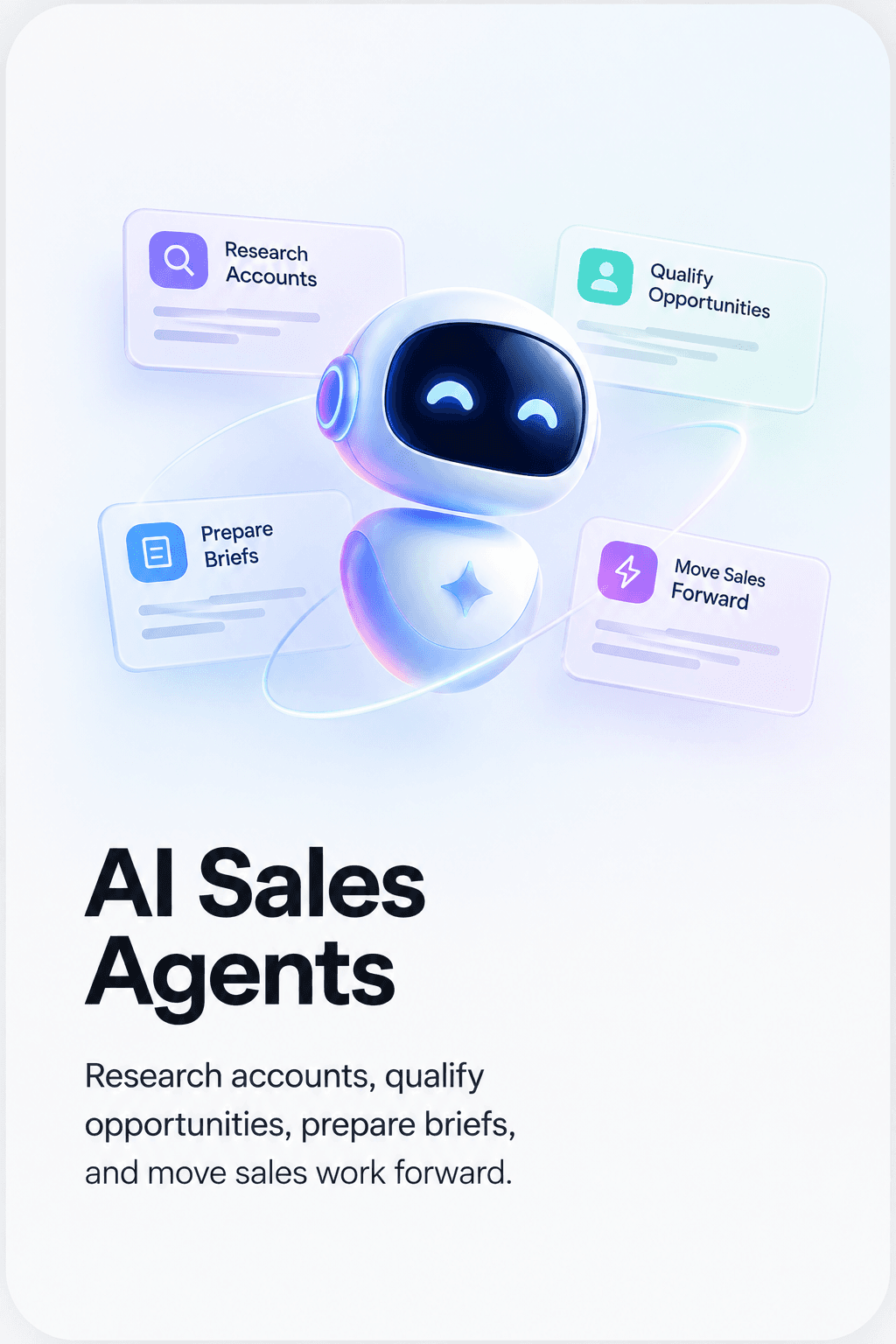
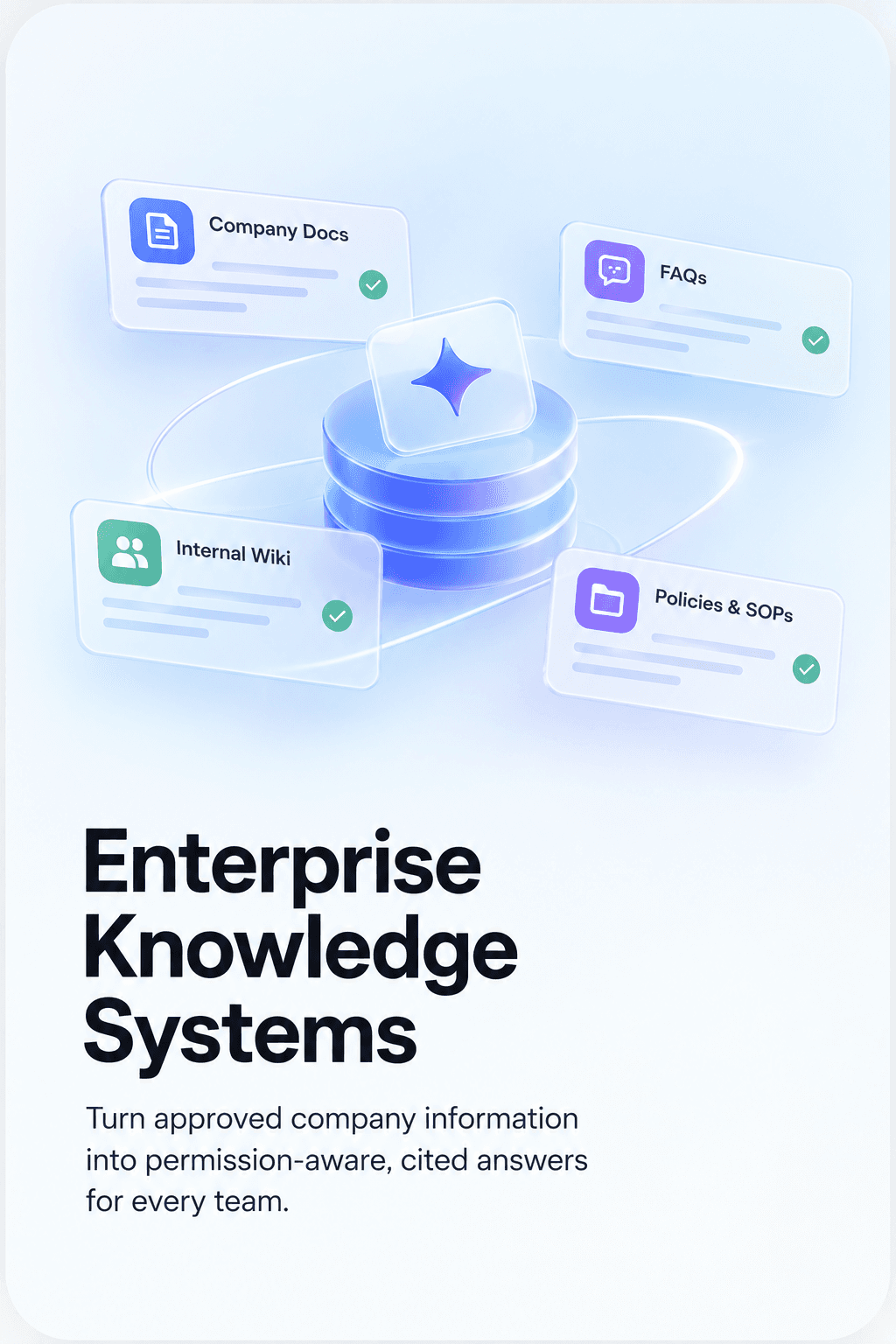
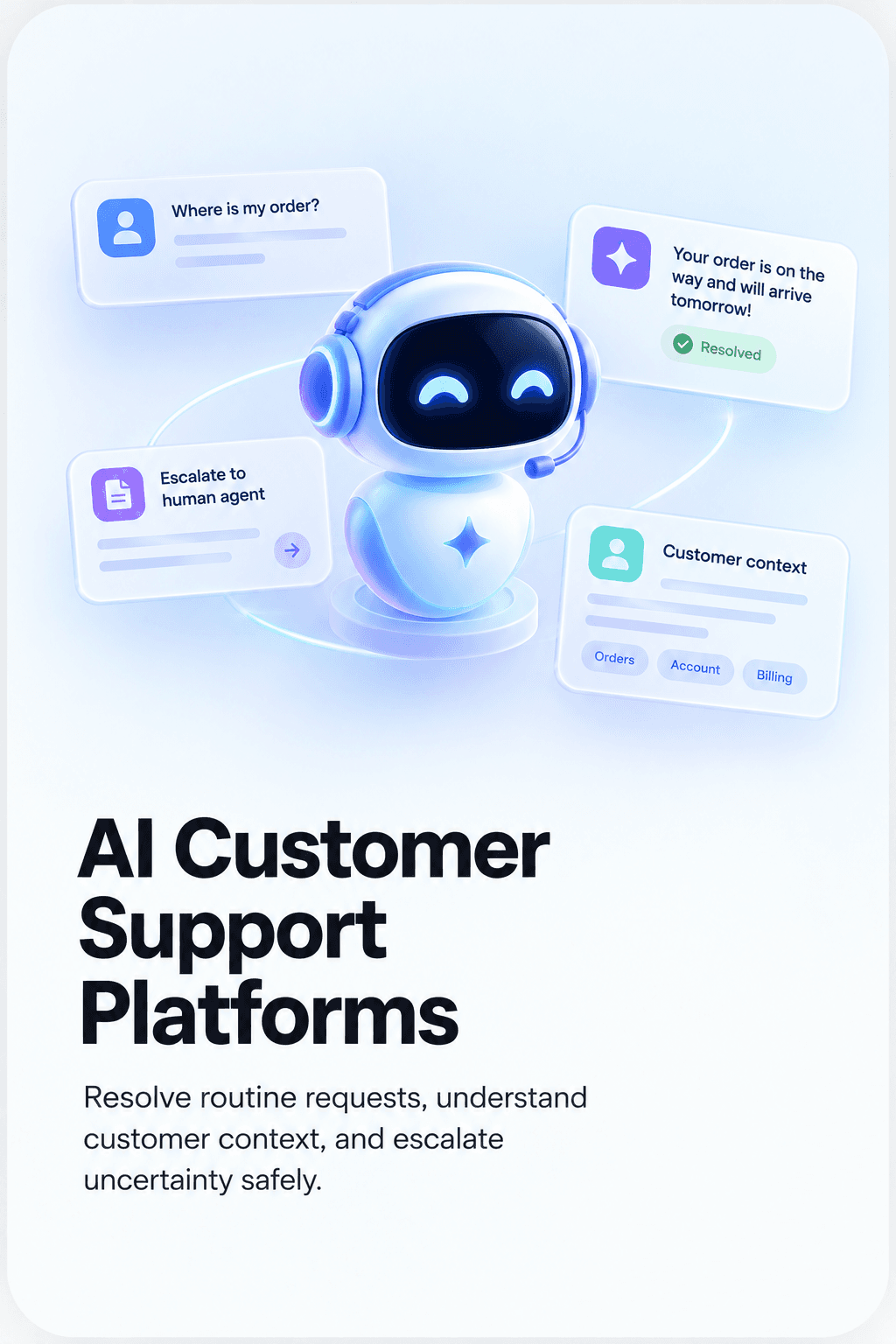
A demo needs a model and a prompt. A production system needs eight more layers, and most of the engineering effort goes into those. Retrieval has to return the right passage from a corpus that grows weekly. The orchestration layer has to handle a tool call that times out. Permissions have to resolve per requesting user, not per application. Evaluation has to run against a scored dataset that gets updated when the business changes. Observability has to tell you which model version produced a bad answer three weeks ago. Guardrails have to catch an output before it reaches a customer. Cost controls have to stop one runaway loop from spending a month of budget overnight. Explore the layers below to see how our engineers assemble them and which decisions we make differently depending on your data and latency requirements.
You don't have time to manage reports. You need insights. Our AI systems think like your best employee - except they work 24/7, never get tired, and learn from every decision.Automate workflows.Predict outcomes.Scale impact.
Deploy AI that handles your tasks automatically without you micromanaging every step.Your AI makes smart decisions on its own.It learns and improves from every task it completes.Your business runs smarter and more efficiently.Your team focuses on strategy instead of repetitive work that slows them down.
Your business has repetitive work that costs too much time and too much money. We analyze exactly where you are losing efficiency and money.Then we design a custom automation strategy that works for your business.We architect a plan to automate your workflows using AI technology.After implementation, our clients see forty- five percent improvement in efficiency.
Your business has workflows that require constant human attention. Sales, marketing, operations, and HR teams all need their systems to work together smoothly.Right now they operate separately and create manual handoffs.We connect all these systems into one intelligent flow.Our AI engine automatically passes work between departments without manual intervention.
Finding good sales leads is hard. Your sales team wastes time on leads that will never buy. We solve this with AI lead generation. Our system automatically finds people interested in your product. Then it scores each lead to show who is most likely to buy. Next, it qualifies leads to make sure they are real prospects. Finally, it routes the best leads directly to your sales team.
Your business runs on old manual processes that cause errors and slow everything down. People do things by hand that should be automated. This costs you money in mistakes and wasted time. We transform these manual processes using AI automation. Our AI robots handle repetitive work automatically. They work twenty-four hours a day without making mistakes. They process work faster than humans ever could. The result is powerful.
Your customers contact you through email, chat, and phone. Your support team handles each inquiry manually.This is slow and costly.When your team is busy,customers wait.When they are offline, customers cannot get help.We solve this with AI customer support agents.Our AI understands your business and your customers perfectly.It answers questions instantly across all channels.It handles email, chat, and phone automatically.Our AI learns from your knowledge base and improves continuously.The result is powerful.
Your business runs on multiple systems that do not talk to each other. Your CRM stores customer data.Your ERP tracks operations.Your legacy systems hold historical data.None of these systems communicate.This creates a broken data picture.Decisions get made on incomplete information.We solve this with AI integration services.We connect all your systems seamlessly.Your CRM, ERP,legacy databases, and new systems all talk to each other automatically.
We build across sectors but we go deepest where workflows are document-heavy and the compliance requirements are real. Those environments punish generic AI. A support agent in healthcare needs different permission handling than one in ecommerce. A document system in financial services needs an audit trail that survives an examiner asking what happened on a specific date eleven months ago. We start from those constraints rather than adapting a template afterwards. Below are the areas where our team holds the most delivery history, with the systems we have built in each. If your sector is not listed, that does not mean we cannot help. It means we will be honest about the learning curve.
We develop patient support flows, appointment automation, internal knowledge tools, and operational dashboards for healthcare teams.
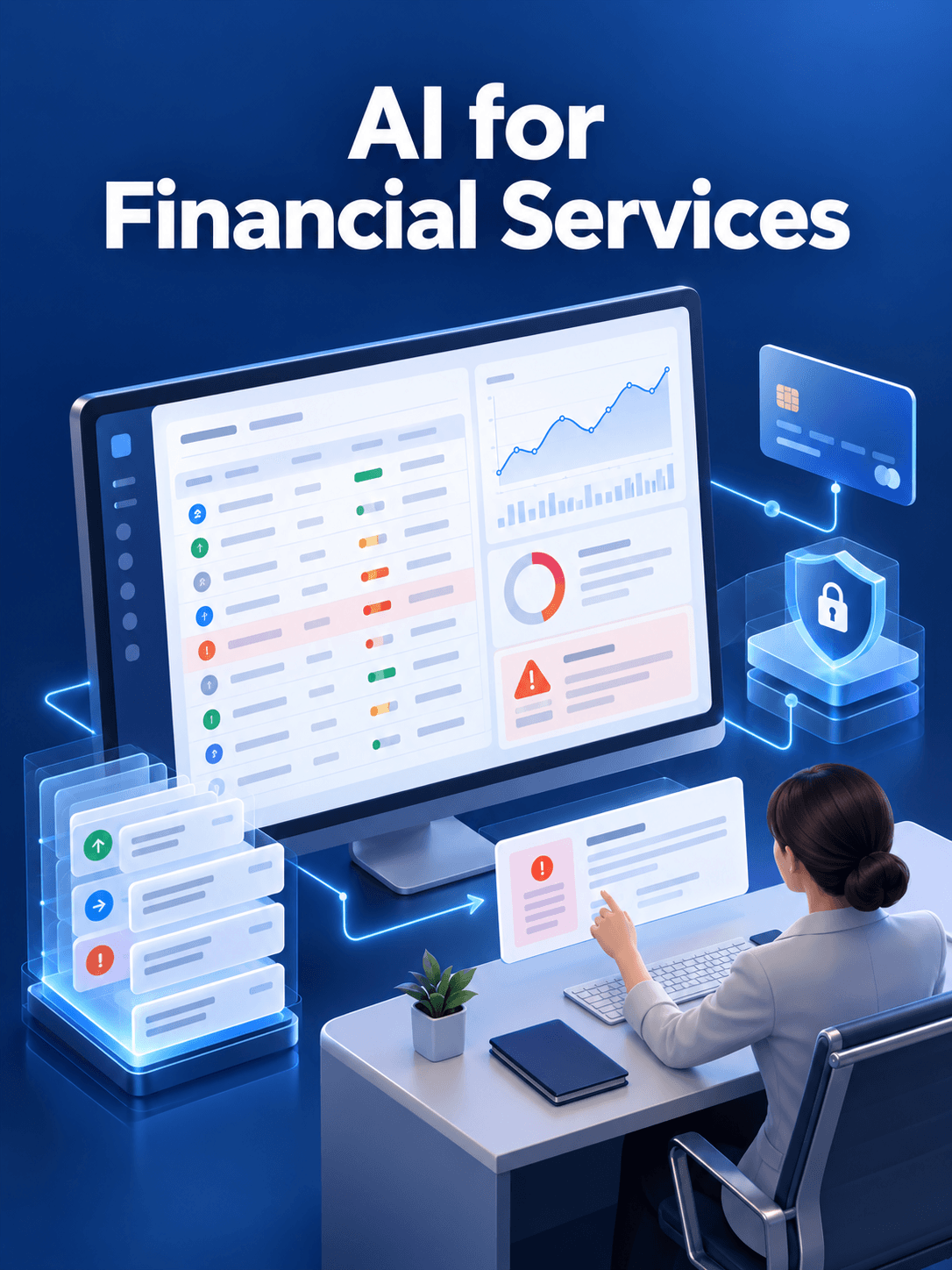
Explore IndustryWe build document intelligence, KYC workflows, reporting automation, risk review copilots, and secure financial dashboards.
Explore IndustryWe build AI features, product copilots, workflow automation, usage intelligence, and scalable platform modules for software businesses.
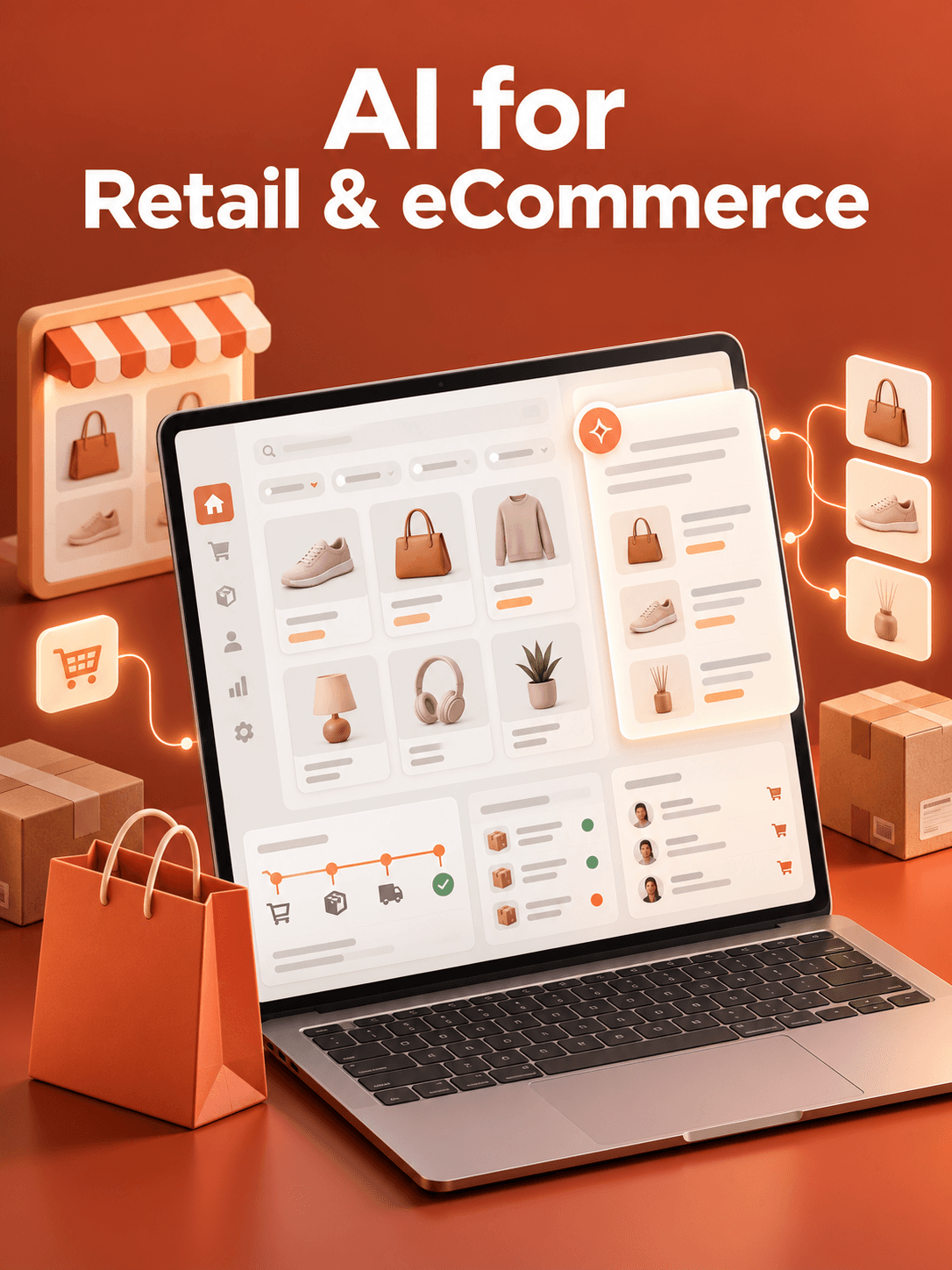
Explore IndustryWe develop recommendation systems, catalog operations, fulfillment workflows, and customer-growth tools for retail and ecommerce teams.
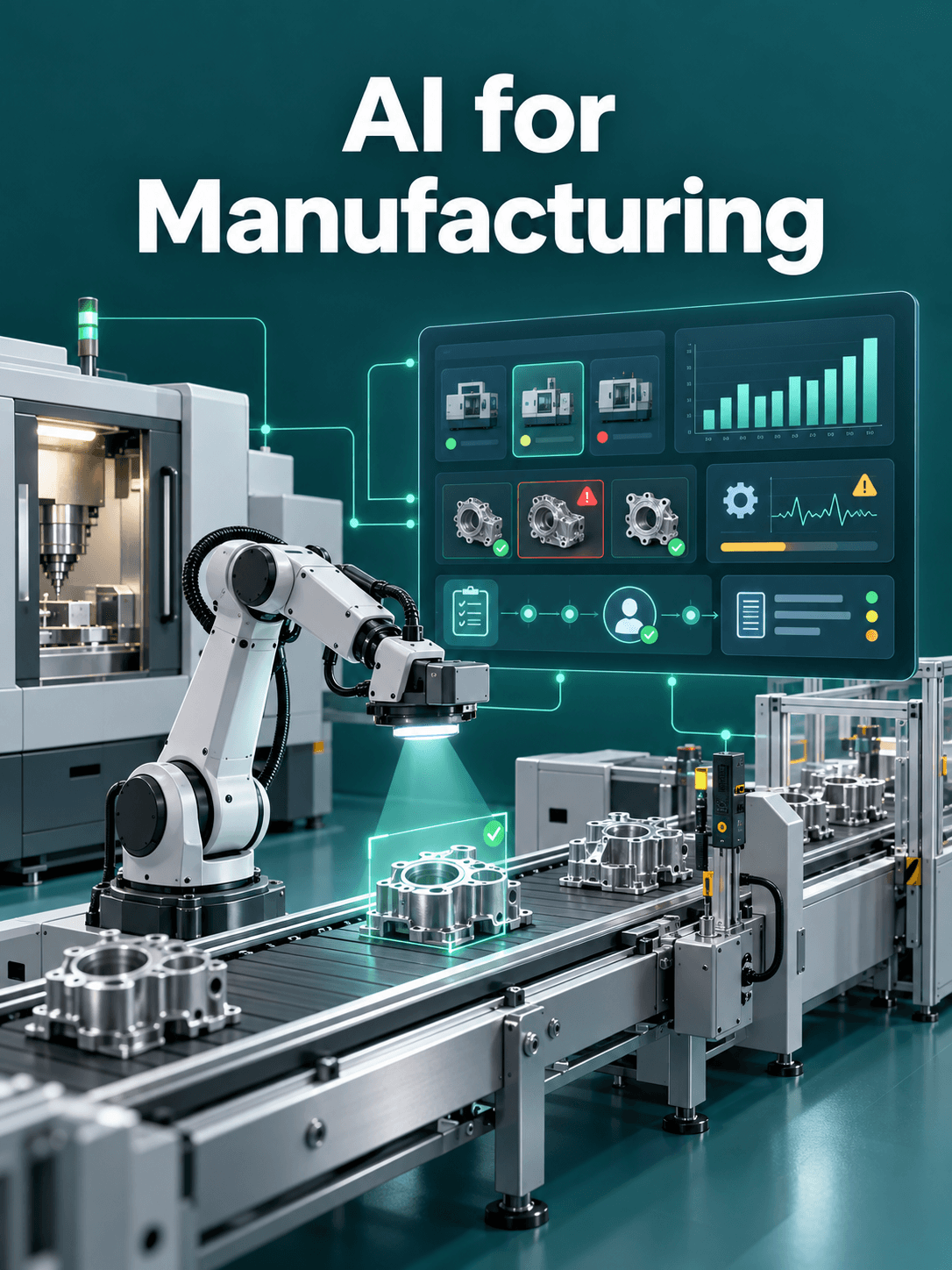
Explore IndustryWe build production dashboards, predictive maintenance workflows, quality control systems, inventory intelligence, and factory operations tools.
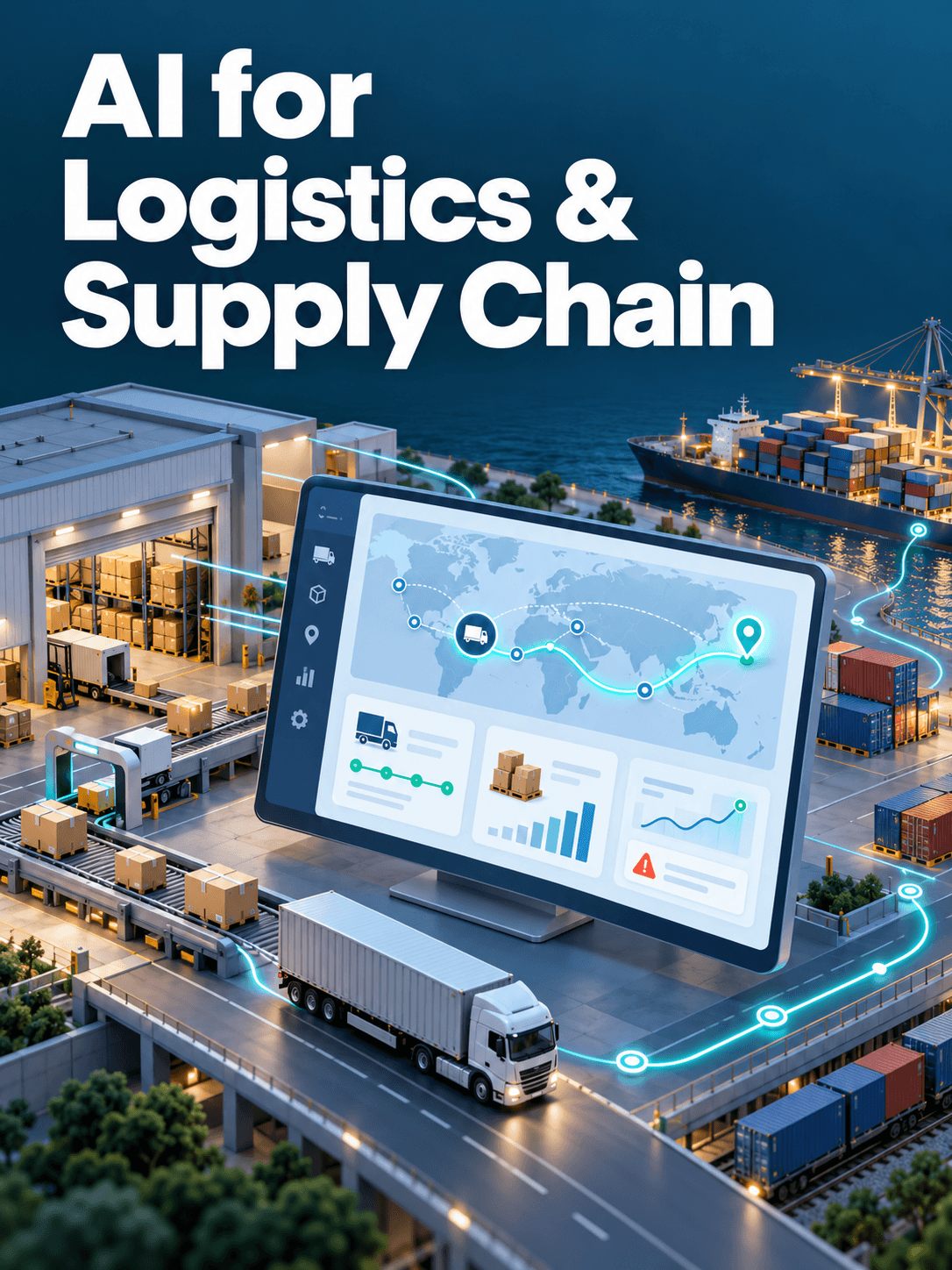
Explore IndustryWe build dispatch automation, route intelligence, shipment dashboards, fleet workflows, and exception handling systems.
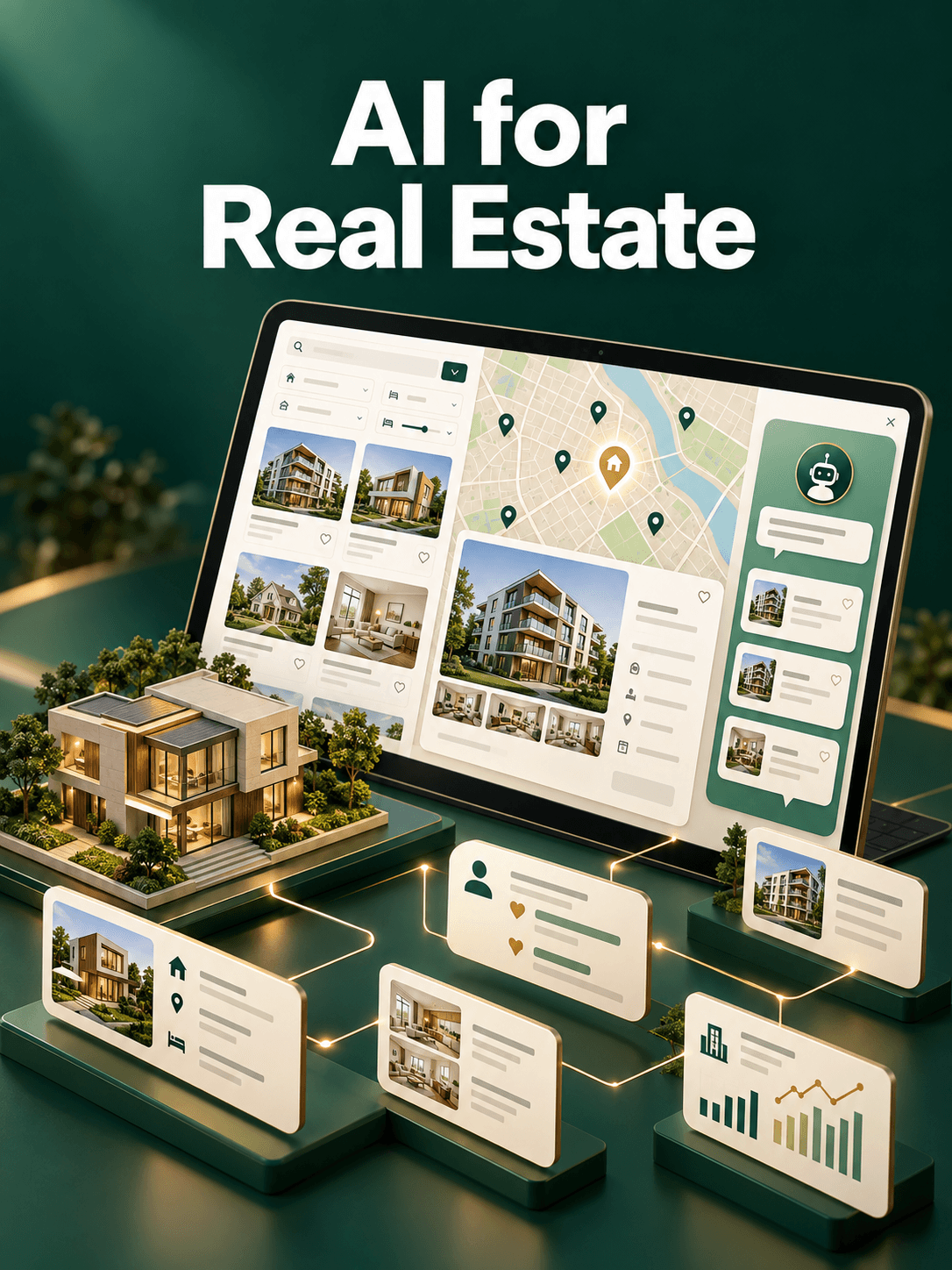
Explore IndustryWe create lead qualification systems, property recommendation engines, CRM automation, listing workflows, and owner or tenant portals.
Explore IndustryWe create citizen portals, case workflow systems, public knowledge assistants, and secure data dashboards for government operations.
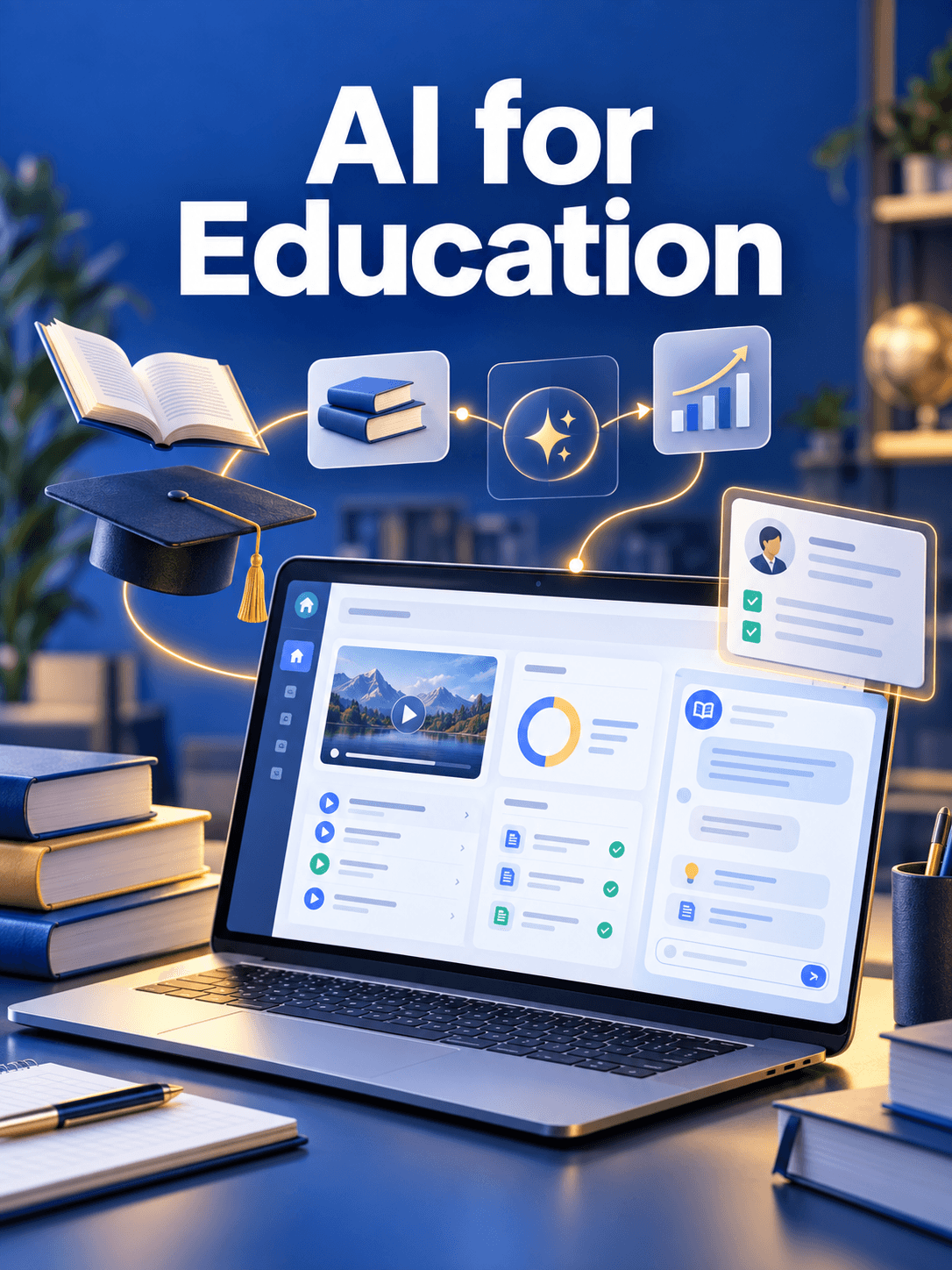
Explore IndustryWe build learning assistants, assessment support, content workflows, and practice experiences for schools, universities, and training teams.
Explore IndustryWe build catalog intelligence, content operations, audience assistants, and production workflows for media and entertainment teams.
Explore IndustryWe develop patient support flows, appointment automation, internal knowledge tools, and operational dashboards for healthcare teams.

We do not commit to one model vendor and we advise clients not to either. Accuracy, latency and price move every quarter, and the right choice changes per use case. A classification task that runs ten thousand times a day has different economics than a reasoning task that runs forty times. Our engineers benchmark options against your data before selecting, and we design the model layer so it can be swapped without touching the application around it. That decision has saved clients real money when a provider raised prices or deprecated an endpoint on ninety days notice. The stack below is what we work in most often, grouped by what each layer does rather than displayed as a wall of logos.
Foundation models for reasoning, generation, multimodal experiences, and intelligent product features.
Frameworks for tool calling, memory, reasoning chains, orchestration, and multi-step agent workflows.
Modern product interfaces for SaaS platforms, AI dashboards, portals, and enterprise applications.
Secure backend systems for product logic, APIs, integrations, automation engines, and business workflows.
Databases, retrieval layers, vector search, and memory systems for reliable AI-powered products.
Cloud infrastructure, deployment, scaling, CI/CD, monitoring, and production operations.
A clear look at where manual work, rule-based automation, and AI-native systems fit.
Approach 01
People-led processes
How it works
People review information and complete each step manually.
Best for
Infrequent work or decisions that need human judgment.
When things change
The team adapts the process directly.
Main consideration
Time, staffing, and consistency.
Approach 02
Rule-based workflows
How it works
Software follows predefined rules and steps.
Best for
Repeatable tasks with predictable inputs.
When things change
Rules and integrations may need updating.
Main consideration
Maintenance and unexpected edge cases.
Approach 03
AI with human oversight
How it works
AI interprets inputs, uses connected tools, and routes exceptions.
Best for
Variable inputs and complex, repeatable workflows.
When things change
It can handle variation within defined limits.
Main consideration
Accuracy, safeguards, monitoring, and cost.
In practice: One workflow can combine fixed rules, AI assistance, and human approval where each works best.
Explore AI, SaaS, web, mobile, and custom software products designed and engineered by THE TISA.
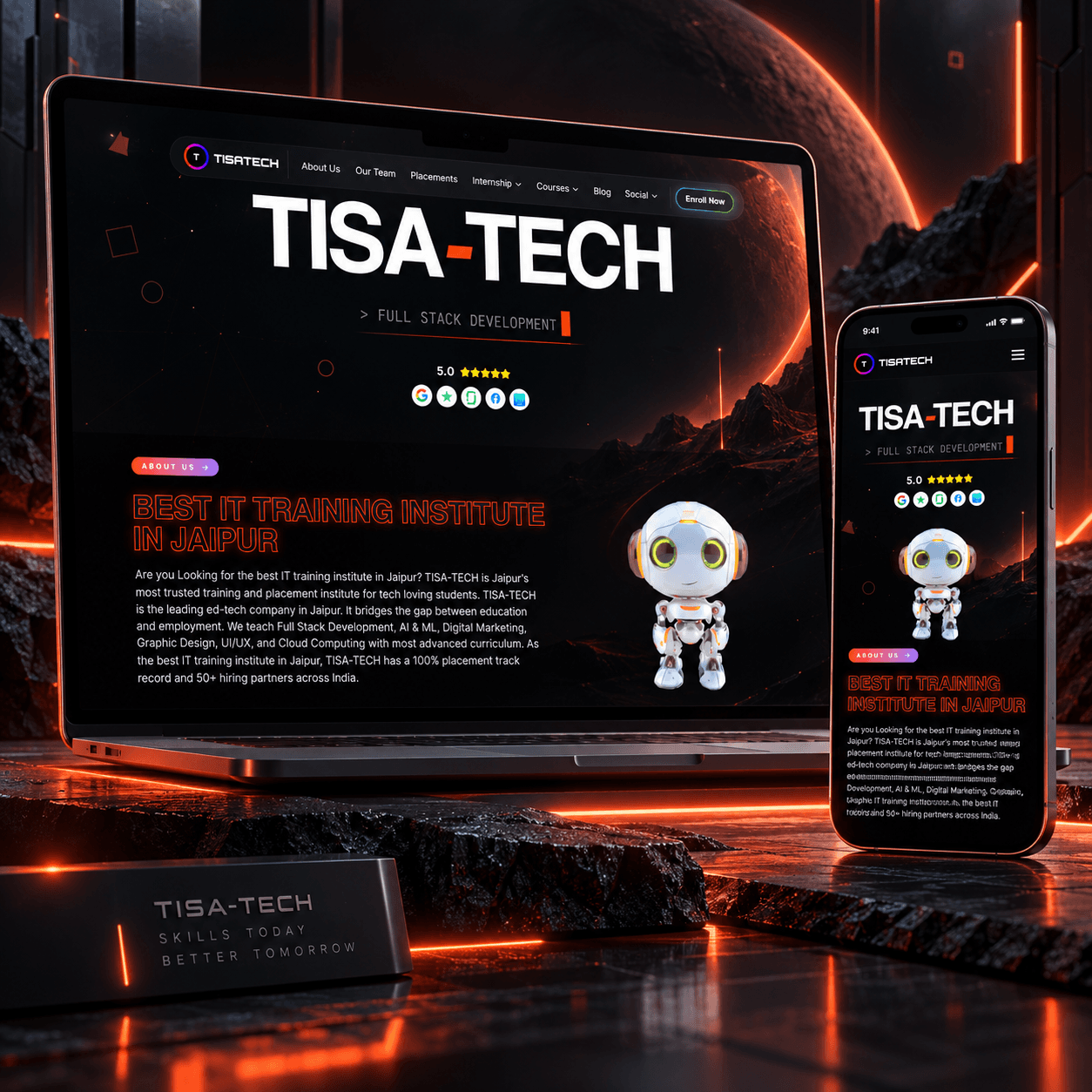
Hear from the people who worked with THE TISA and explore their experience building digital products.
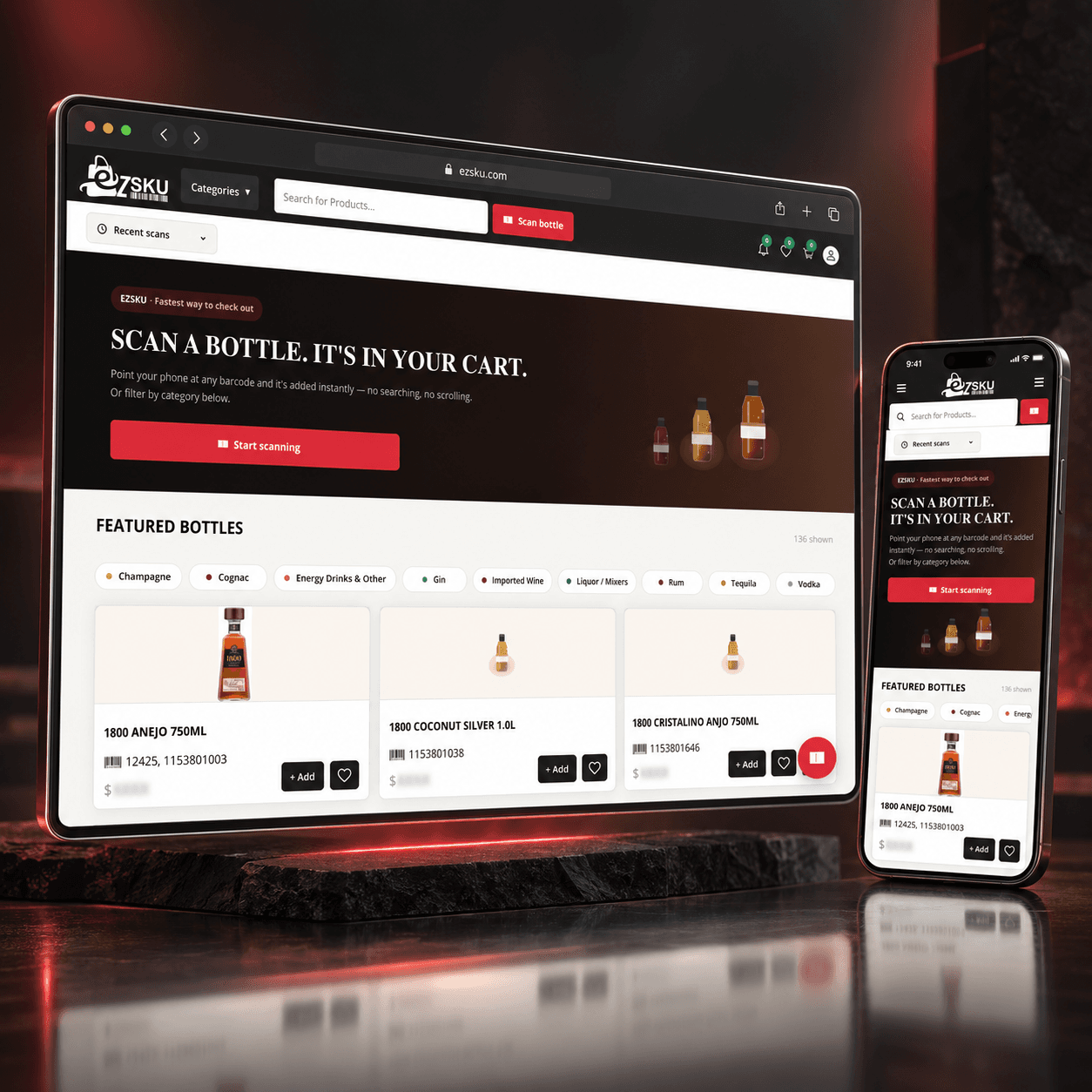
EZSKU Client Story
THE TISA helped us build a reliable e-commerce operations platform with clean workflows, strong delivery, and a product foundation ready to scale. Sam Patel, Founder, EZSKU
The student portal gave us a structured platform to manage learning, operations, reporting, and AI-powered student support from one system. Albert Joe, Product Owner, Education Technology Platform
THE TISA delivered a scalable hotel platform with strong architecture, complex backend logic, and a performance-focused execution process. Luke Thompson, Founder, Group Hotel Index
The platform helped us shape a modern multilingual learning experience with a clear product structure and dependable technical execution. Abdul Aziz Sudais, Director, Global Language Center
The control center improved logistics visibility and gave our team a better way to manage fleet, operations, and daily business decisions. Parmeshwar Sharma, Operations Head, Logistics Control Center
We list recognition where an independent body assessed the work and published the result. Each entry names the issuing organisation, the category and the year, and links to the public record so you can verify it without taking our word for anything. We have left off directory placements that came with an invoice attached. Those are advertising and labelling them as awards would be dishonest. If a badge appears on this page it means an external party evaluated something we built or how we delivered it. Where a listing reflects client reviews rather than a judged award, we say so rather than blurring the distinction.
Verified Platforms
Awards & Recognition

Clutch
GoodFirms
DesignRush
TechBehemoths
TopDevelopers
SelectedFirms
Our team writes about the decisions behind the systems we build rather than about AI in general. How we pick between models when latency matters more than accuracy. What breaks when an agent gets access to a production database. Why most retrieval implementations return the wrong passage and what fixes it. The posts are written by the engineers doing the work, not by a content team paraphrasing them, which is why they occasionally contradict what we published six months ago. The field moves. Three recent pieces sit below and the full archive is worth a look if you are evaluating an approach before committing to it.
Explore clear, practical answers about custom AI software, automation, CRM and ERP integrations, project costs, implementation timelines, and expected business outcomes.
Off-the-shelf AI tools work well for common tasks and quick deployment. Custom AI software gives your business greater flexibility and long-term value. THE TISA builds AI solutions around your workflows and integrates them with your existing systems. As an experienced AI software development company we create software that grows with your business instead of limiting it. See our AI software development services.
Every AI project delivers different results based on your goals and implementation strategy. Most businesses reduce operating costs, improve productivity and create better customer experiences. THE TISA focuses on measurable business outcomes instead of simply delivering AI features. As an AI-driven software development company we build solutions that create lasting business value. Review measured outcomes in our case studies.
The cost depends on your project scope, technical complexity and business requirements. Data quality, integrations and security also influence the investment. THE TISA evaluates your goals before recommending the right approach. As an experienced AI engineering company we provide transparent estimates that align with your budget and expected business outcomes. Get in touch for a scoped estimate.
We integrate AI into your existing applications through secure APIs, custom modules and cloud-native services. We analyze your workflows before we design the integration strategy. THE TISA delivers AI software development services that fit naturally into your existing technology stack. We create secure scalable solutions without disrupting your daily operations. Details are on AI integration services.
Yes. AI connects with most modern CRM, ERP and business platforms through secure integrations. It automates repetitive work, improves forecasting and delivers valuable business insights. THE TISA works as your AI software solutions company to build integrations that strengthen your existing systems and help your teams work more efficiently. That work is part of AI workflow automation.
We reduce AI infrastructure costs by selecting efficient AI models and scalable cloud architecture. We optimize resource usage and eliminate unnecessary computing expenses. THE TISA builds AI systems that maintain high performance while controlling long-term operating costs. As an AI-driven software development company we design every solution with scalability and cost efficiency in mind. Product platforms are covered under AI SaaS development.
We begin by identifying repetitive tasks that create the greatest business impact. We map your workflows and implement AI in carefully planned phases. This approach reduces disruption and supports faster adoption across your organization. THE TISA combines product engineering with AI expertise to deliver practical solutions that improve efficiency and accelerate business growth. As a trusted AI engineering company we help organizations move from manual processes to intelligent AI-powered operations with confidence. The sequence is on our development process.
Timelines depend on scope, data readiness, integrations and how many approval gates your workflow needs. A focused AI feature over a clean API can launch in weeks. A multi-system AI agent with evaluation and compliance controls usually takes longer. THE TISA maps the path during discovery and shares a clear delivery plan before build starts. As an experienced AI software development company we set milestones around production readiness, not demos. Agent timelines are outlined in AI agent development.
After launch we monitor performance, refine workflows, strengthen integrations and plan the next improvements based on real usage. You get documentation and handover so your team can operate the system with confidence. THE TISA also offers ongoing support for accuracy, latency and cost tuning as volume grows. As an AI-driven software development company we stay accountable after go-live, not only through the first release. See why teams choose THE TISA.
Yes. Work product created for your engagement belongs to you under the contract. Your data remains yours, and we do not train public models on proprietary content without explicit approval. THE TISA builds custom AI software with clear ownership terms so you keep control of the application, integrations and business logic we deliver. As a trusted AI engineering company we protect your IP while shipping production-ready systems. Data handling is described in our privacy policy and security practices.
Tell us what the team still does by hand. We look at the process, the systems already in place, and whether software or an agent should take any of it over.
The first conversation maps what has to work in production, what can wait, and what your current tools already cover. You leave with a scope, an approach, and what we need from your side.
Send the form. A solutions architect at THE TISA replies with the next step, including when the problem does not need a new build.
Tell us about the workflow or product. A solutions architect replies within one business day.
Enterprise AI & Product Engineering Partner