
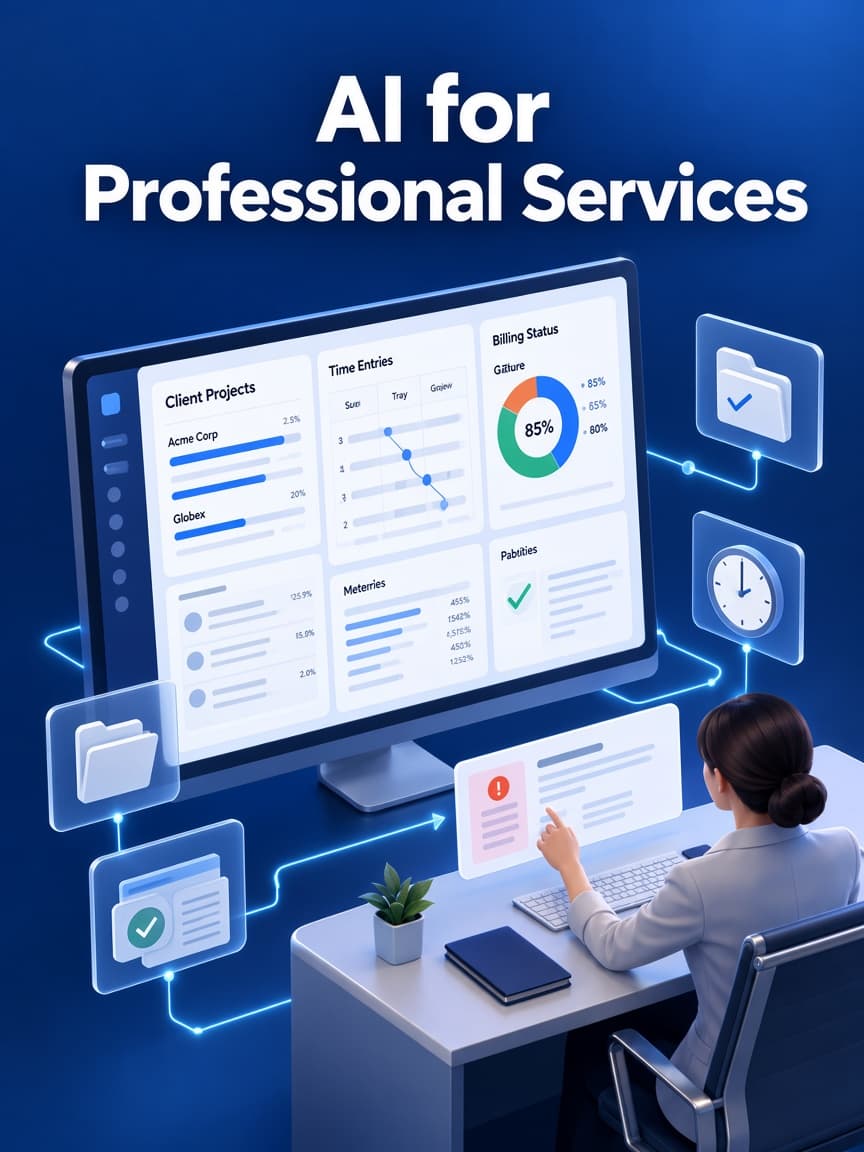

AI SAAS PRODUCT DEVELOPMENT

AI SaaS Development CompanyBuilding Intelligent SaaS Products

THE TISA is an AI SaaS development company helping startups, scale-ups, and enterprises transform business ideas into intelligent, scalable software products. We provide end-to-end AI SaaS development services, from product discovery and SaaS MVP development to custom AI software engineering, multi-tenant SaaS architecture, LLM integration, Retrieval-Augmented Generation (RAG), and AI agent development. Our team builds secure, cloud-ready SaaS applications that combine intelligent capabilities with reliable software architecture, helping businesses automate workflows, improve operations, and bring AI-powered products to market.

ENGINEERING EXPERIENCE

AI SaaS Development Requires
More Than Connecting an AI Model

Building an AI-powered SaaS product involves much more than integrating an API or adding a chatbot to an existing application. A production-ready product needs a reliable software foundation, carefully designed data architecture, secure user access, scalable infrastructure, and AI capabilities that work within defined business processes. At THE TISA, we approach AI SaaS development as a complete product engineering discipline. We consider how users interact with the application, how customer data is isolated, how AI models access information, how costs are monitored, and how the platform behaves as usage increases.

  • Product engineering

    Turning business requirements into functional SaaS products with clear user journeys and product architecture.

  • SaaS architecture

    Designing multi-tenant applications, APIs, databases, permissions, and subscription-based platform foundations.

  • AI engineering

    Integrating LLMs, RAG pipelines, AI agents, semantic search, and task-specific AI capabilities.

  • Cloud engineering

    Building deployment-ready applications with scalable infrastructure, monitoring, and reliable backend services.

  • Security engineering

    Considering tenant isolation, access control, data protection, and AI-specific risks throughout development.

WHAT WE BUILD

Custom AI SaaS Product Development
for Real Business Requirements

AI SaaS products change how businesses deliver services, manage information, support customers, and make operational decisions. THE TISA develops custom AI SaaS applications around the workflows, data requirements, users, and business models of each product.

01 / 08

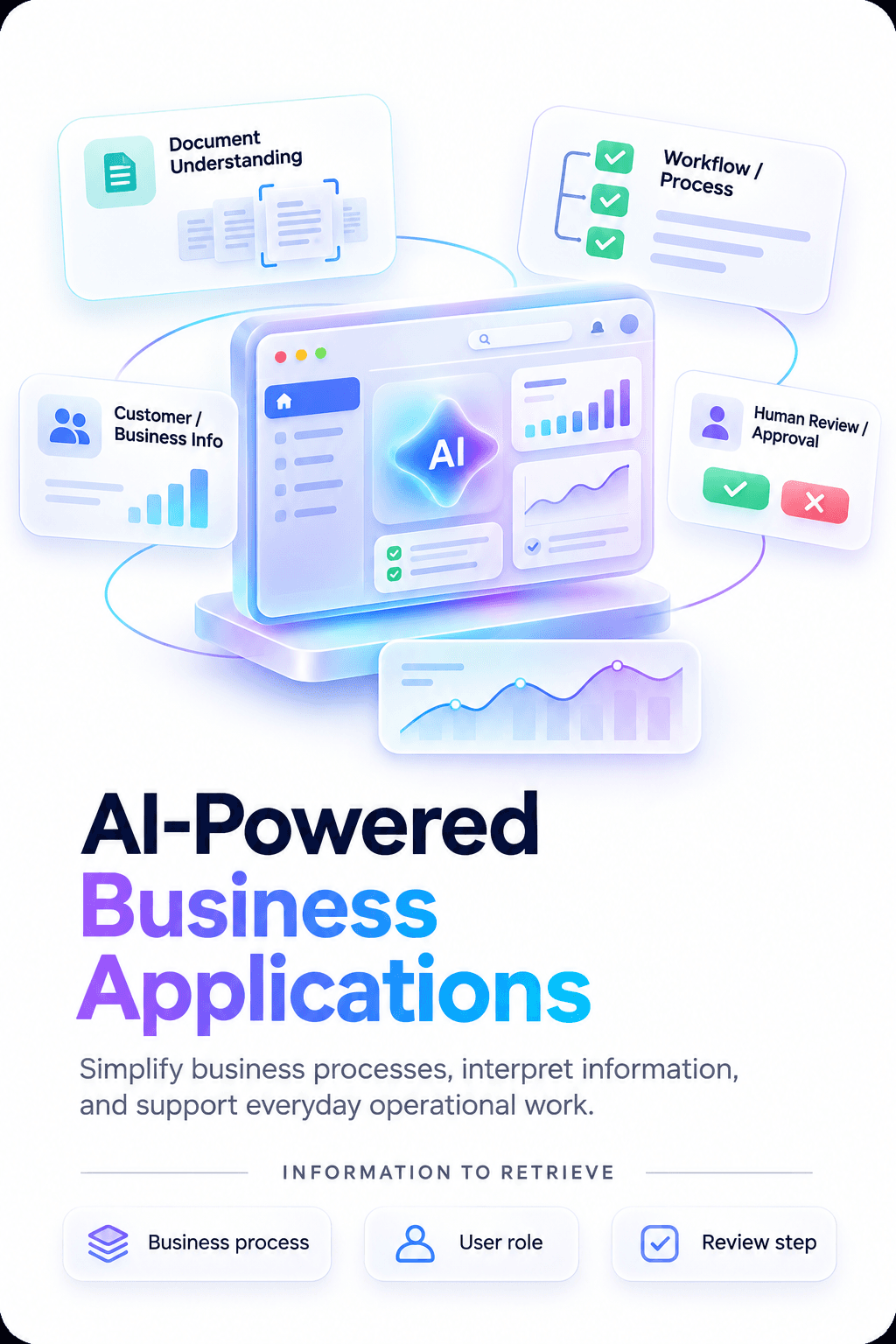
AI-Powered Business Applications

Everyday operational work

Applications that use AI to simplify business processes, interpret information, and assist users with everyday operational tasks.

Information to retrieve

  • Defined business process
  • User role
  • Review step

Implementation consideration

The AI feature has to solve a defined problem. Adding a model without a workflow does not make the product useful.
02 / 08

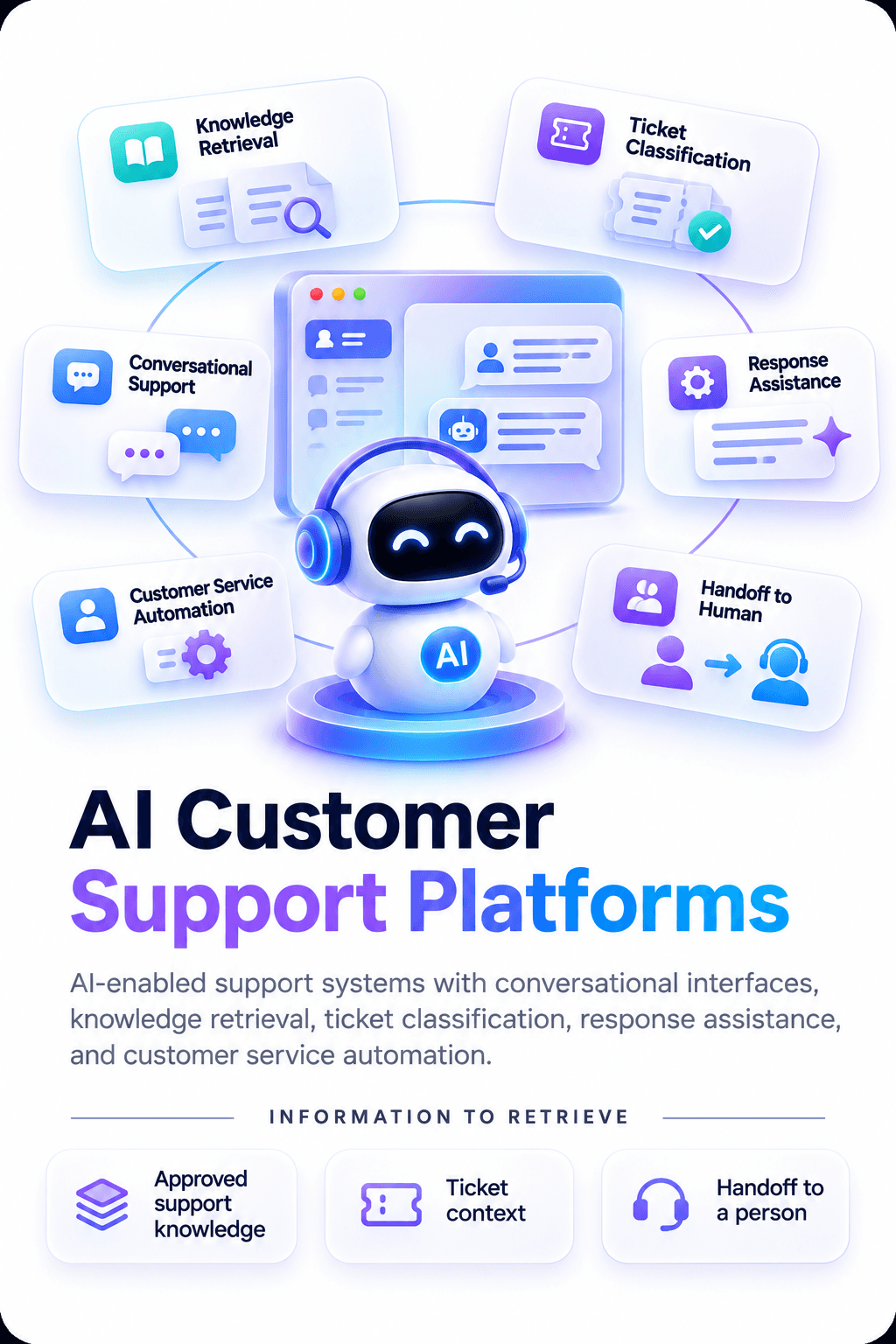
AI Customer Support Platforms

Support systems with retrieval

AI-enabled support systems with conversational interfaces, knowledge retrieval, ticket classification, response assistance, and customer service automation.

Information to retrieve

  • Approved support knowledge
  • Ticket context
  • Handoff to a person

Implementation consideration

Support answers should stay inside the knowledge the product is allowed to use.

03 / 08

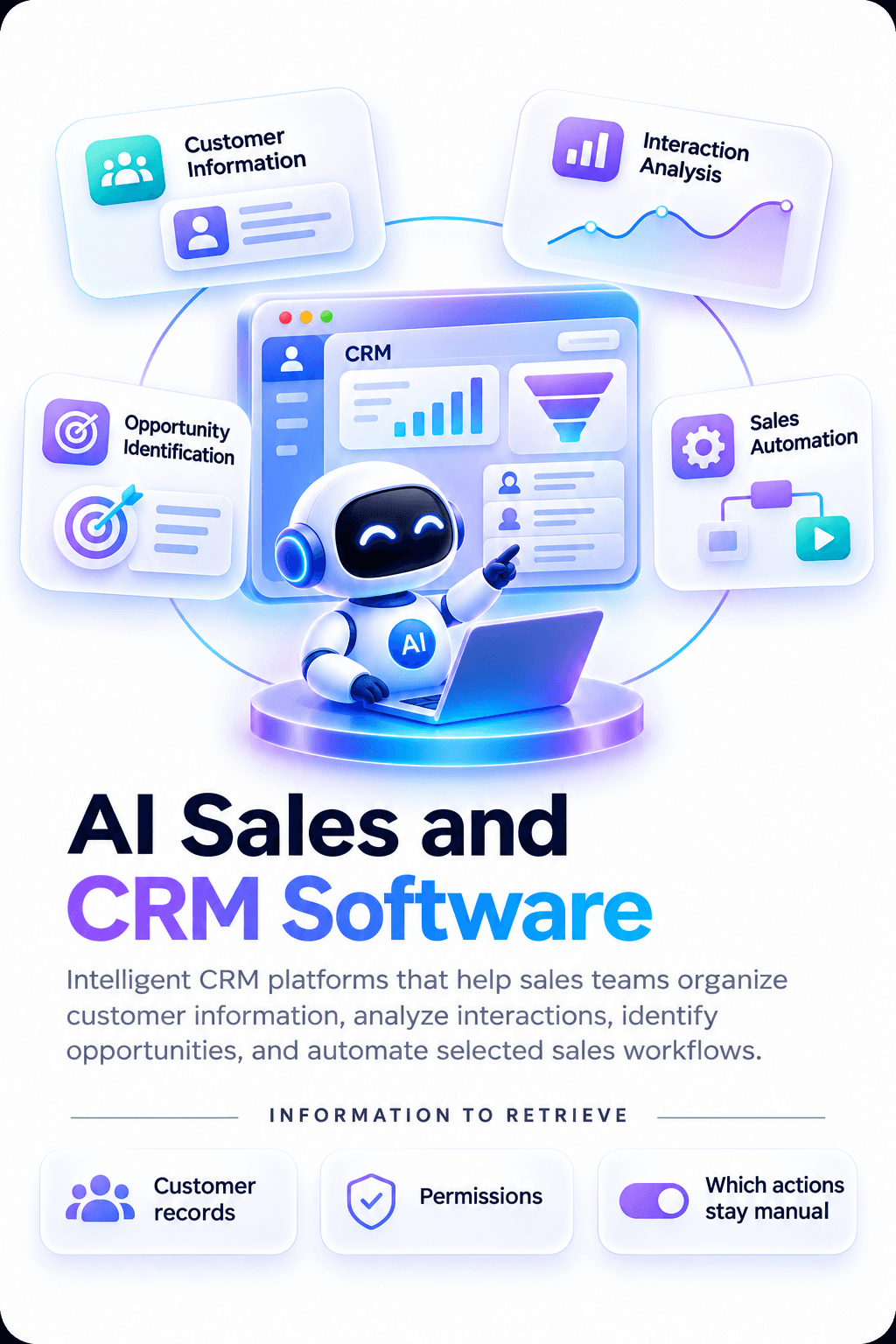
AI Sales and CRM Software

Customer information and selected automation

Intelligent CRM platforms that help sales teams organize customer information, analyze interactions, identify opportunities, and automate selected sales workflows.

Information to retrieve

  • Customer records
  • Permissions
  • Which actions stay manual

Implementation consideration

Automation is limited to the workflows the product is designed to run.

04 / 08

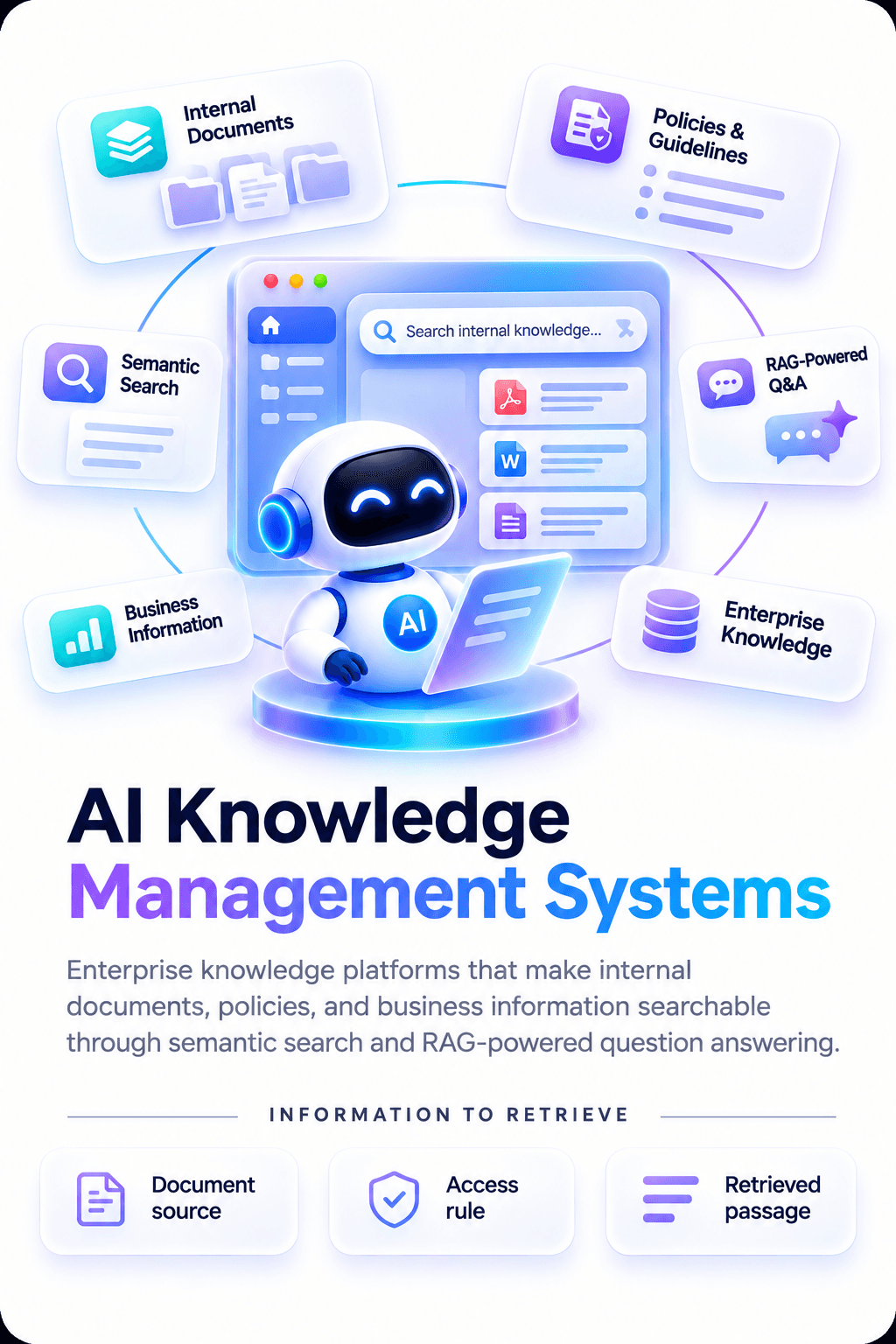
AI Knowledge Management Systems

Search over internal information

Enterprise knowledge platforms that make internal documents, policies, and business information searchable through semantic search and RAG-powered question answering.

Information to retrieve

  • Document source
  • Access rule
  • Retrieved passage

Implementation consideration

Retrieval is scoped to the documents a user is allowed to see.

05 / 08

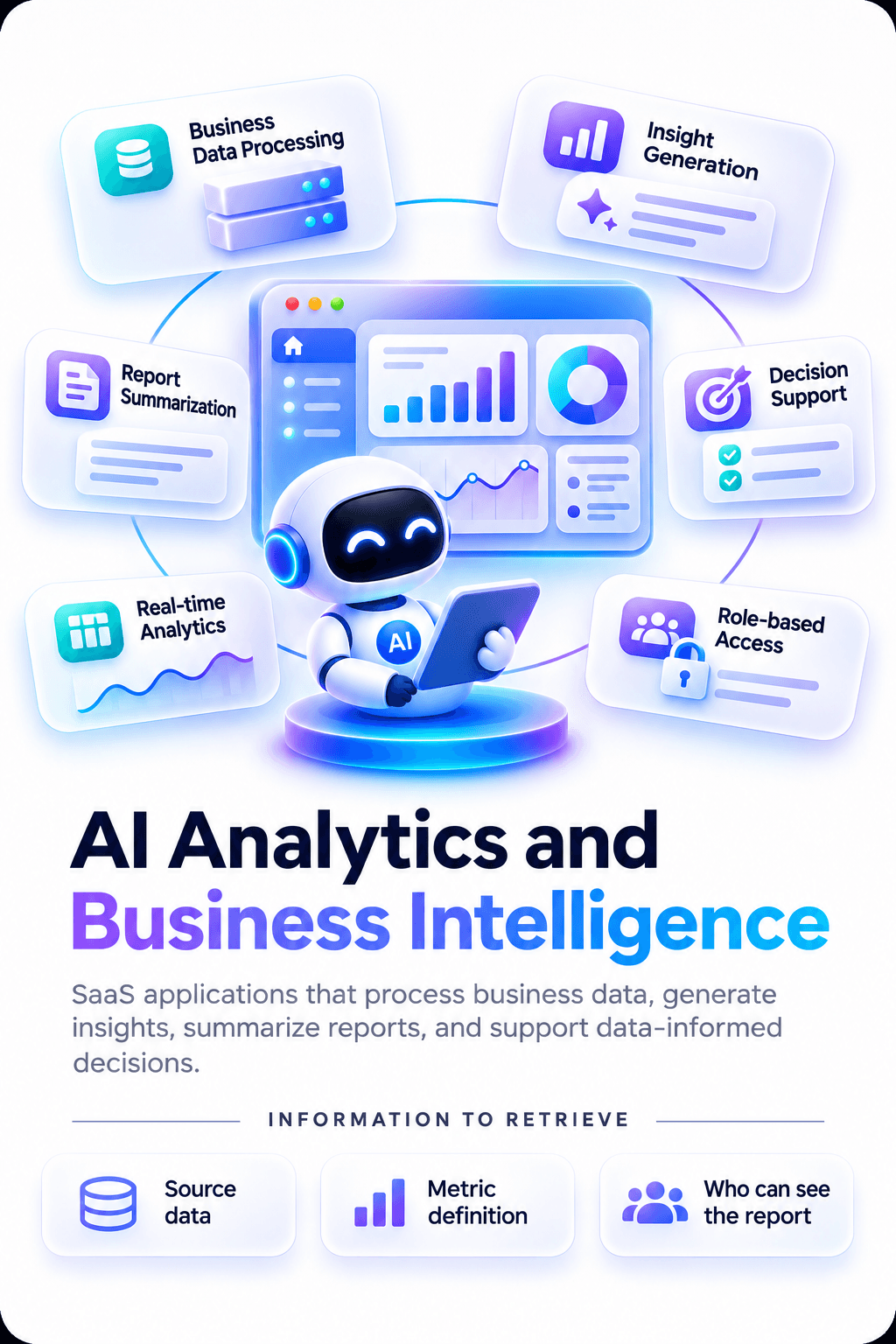
AI Analytics and Business Intelligence

Reports and data-informed decisions

SaaS applications that process business data, generate insights, summarize reports, and support data-informed decisions.

Information to retrieve

  • Source data
  • Metric definition
  • Who can see the report

Implementation consideration

Summaries follow the data the product is given. They are not a substitute for the underlying report.

06 / 08

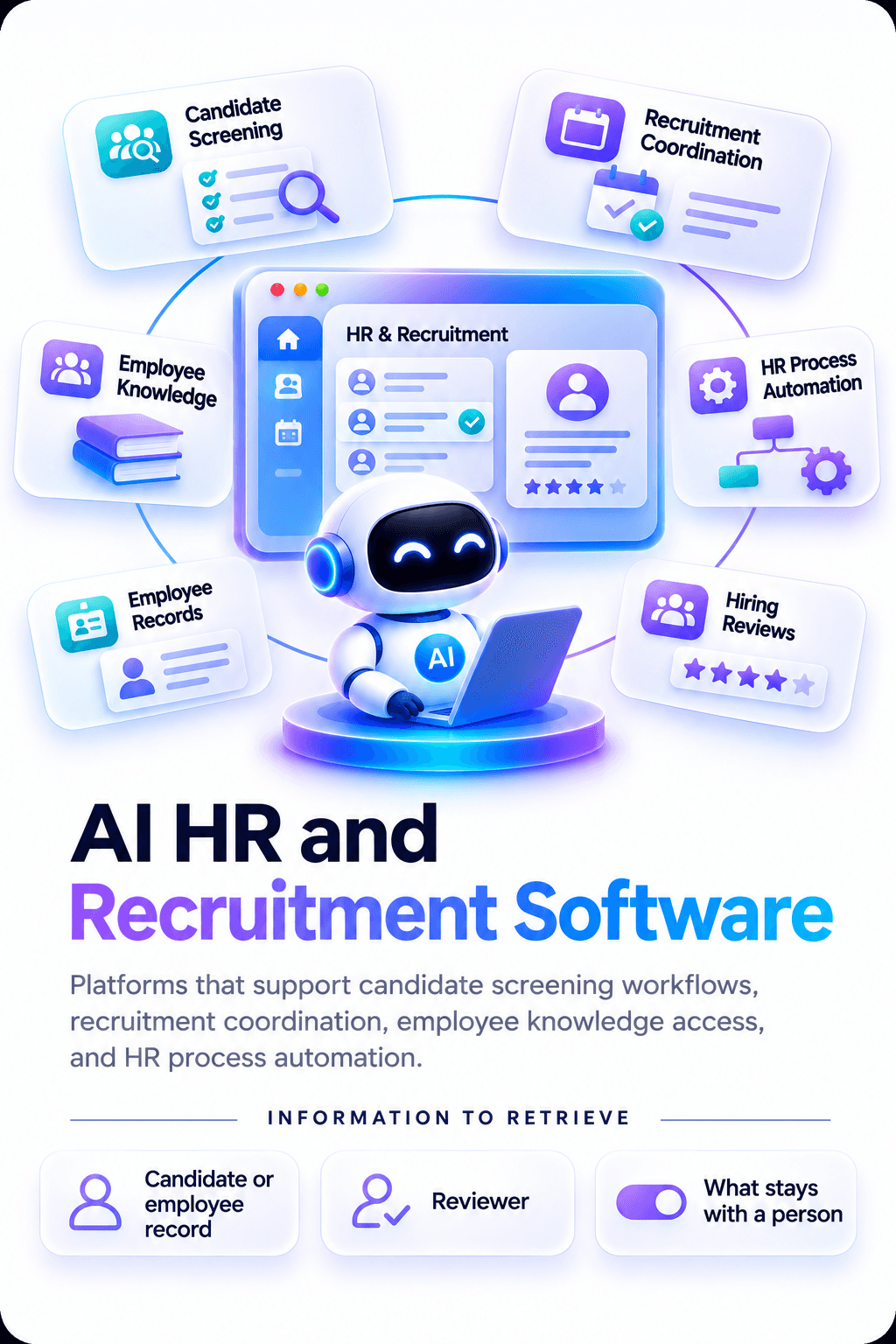
AI HR and Recruitment Software

Recruitment and employee knowledge

Platforms that support candidate screening workflows, recruitment coordination, employee knowledge access, and HR process automation.

Information to retrieve

  • Candidate or employee record
  • Reviewer
  • What stays with a person

Implementation consideration

Screening support is a workflow aid. Hiring decisions stay with the people responsible for them.

07 / 08

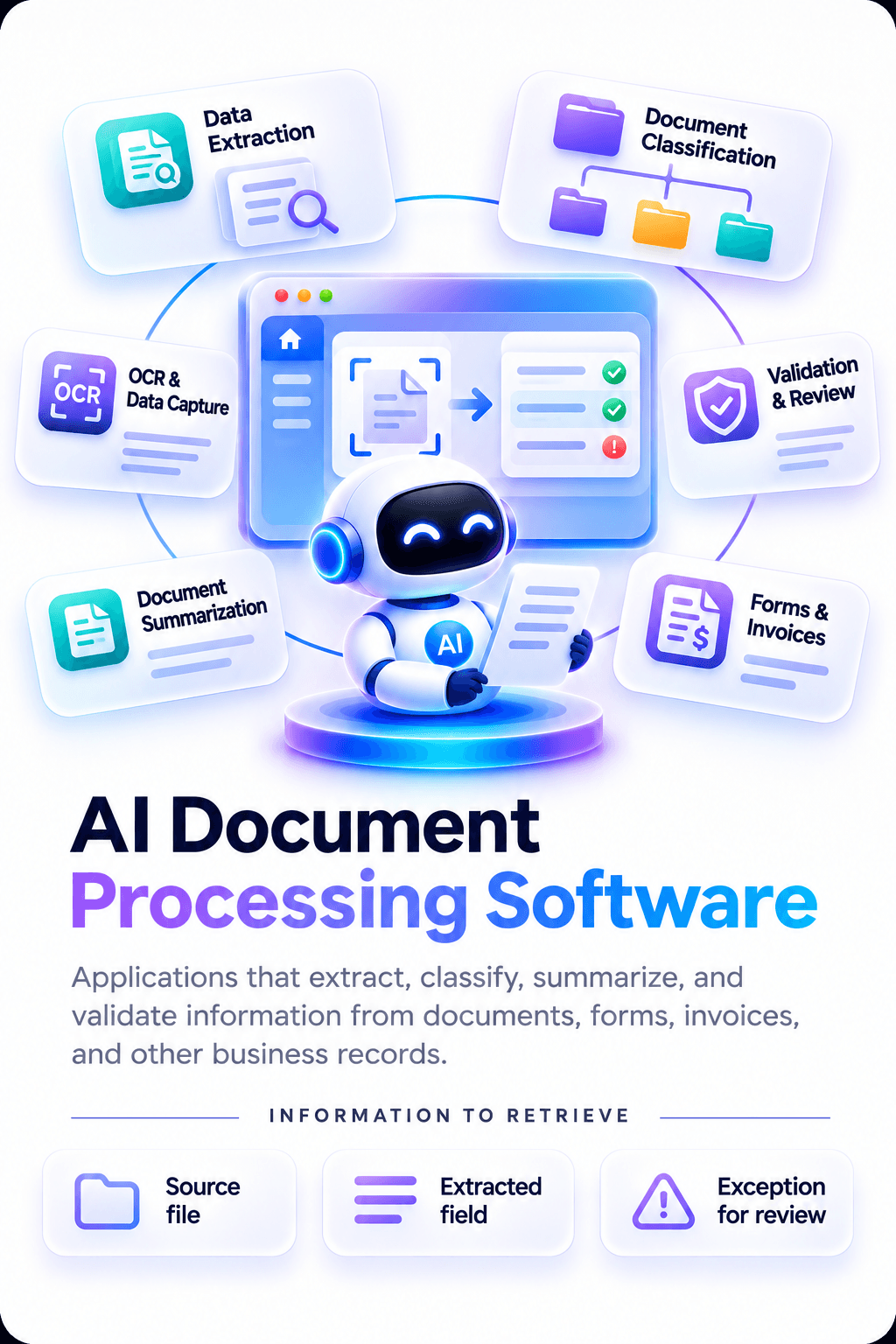
AI Document Processing Software

Extract, classify, and validate records

Applications that extract, classify, summarize, and validate information from documents, forms, invoices, and other business records.

Information to retrieve

  • Source file
  • Extracted field
  • Exception for review

Implementation consideration

Extracted values need a check against the document before they are treated as records.

08 / 08

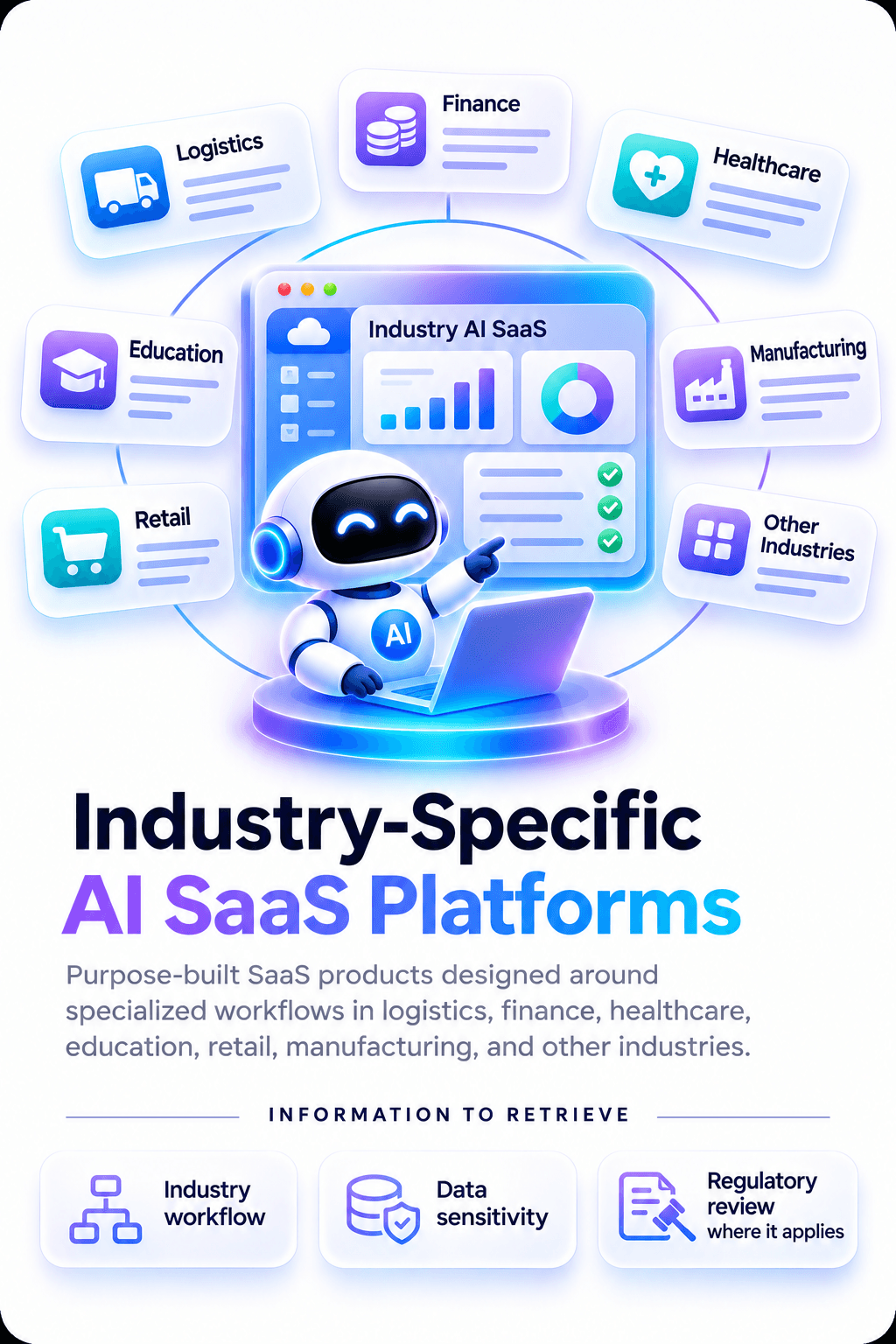
Industry-Specific AI SaaS Platforms

Specialized operational workflows

Purpose-built SaaS products designed around specialized workflows in logistics, finance, healthcare, education, retail, manufacturing, and other industries.

Information to retrieve

  • Industry workflow
  • Data sensitivity
  • Regulatory review where it applies

Implementation consideration

The product follows the industry’s workflow and constraints. A generic assistant is not reused as the whole product.

Platforms shown are examples. Connector availability, API access, permissions, and synchronization requirements are assessed for each project.

OUR DEVELOPMENT SERVICES

End-to-End
AI SaaS Development Services

Whether you are validating a new SaaS idea, developing an AI-powered MVP, or upgrading an existing application, THE TISA provides software engineering services across the product lifecycle.

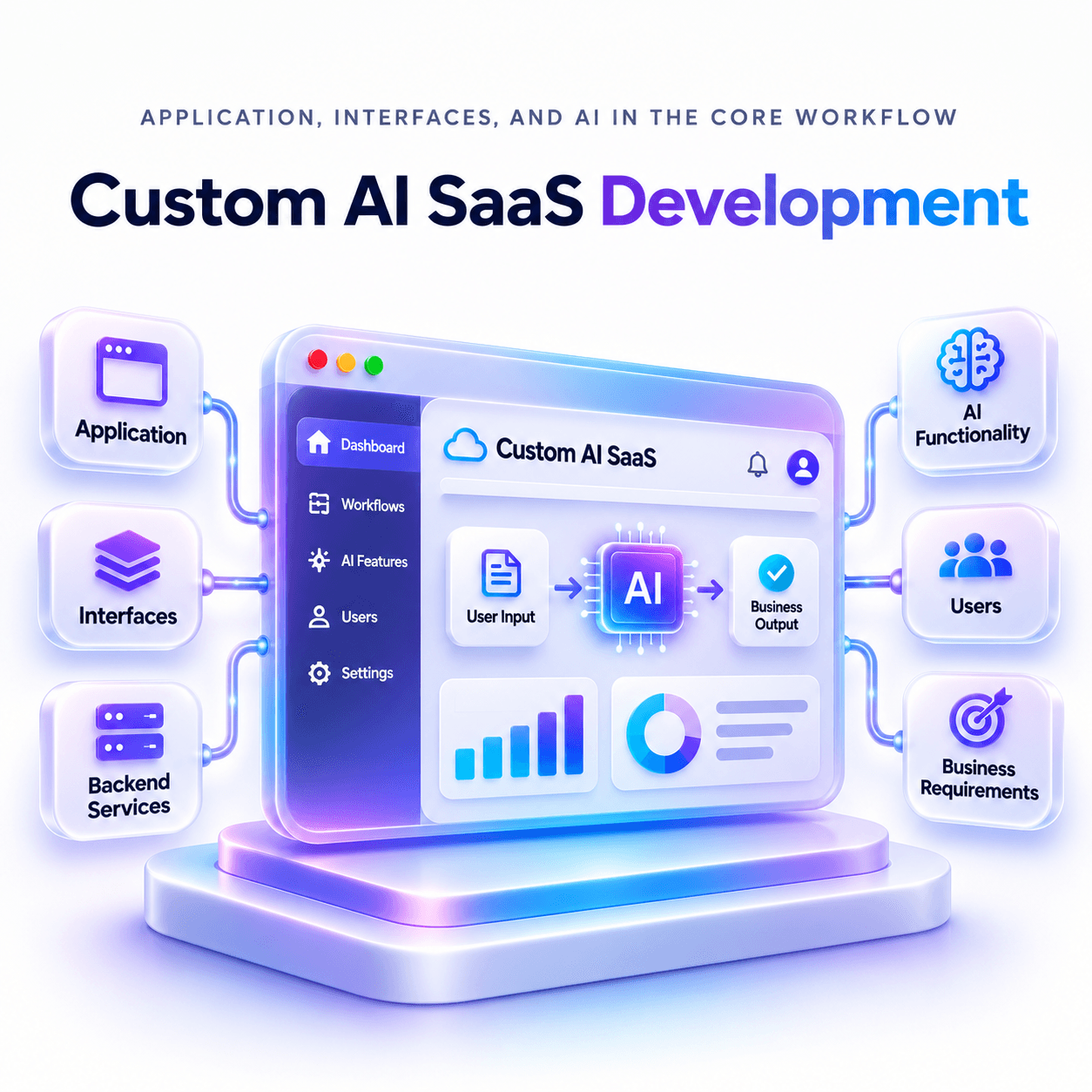
Application, interfaces, and AI in the core workflow

Custom AI SaaS Development

We develop custom SaaS applications with AI capabilities integrated into the product’s core workflows. The application architecture, interfaces, backend services, and AI functionality are designed around the intended users and business requirements.

What this engagement covers

  • Application architecture around the intended users
  • Interfaces and backend services
  • AI functionality inside the core workflow
  • Business requirements translated into product scope
Custom AI SaaS development — THE TISA

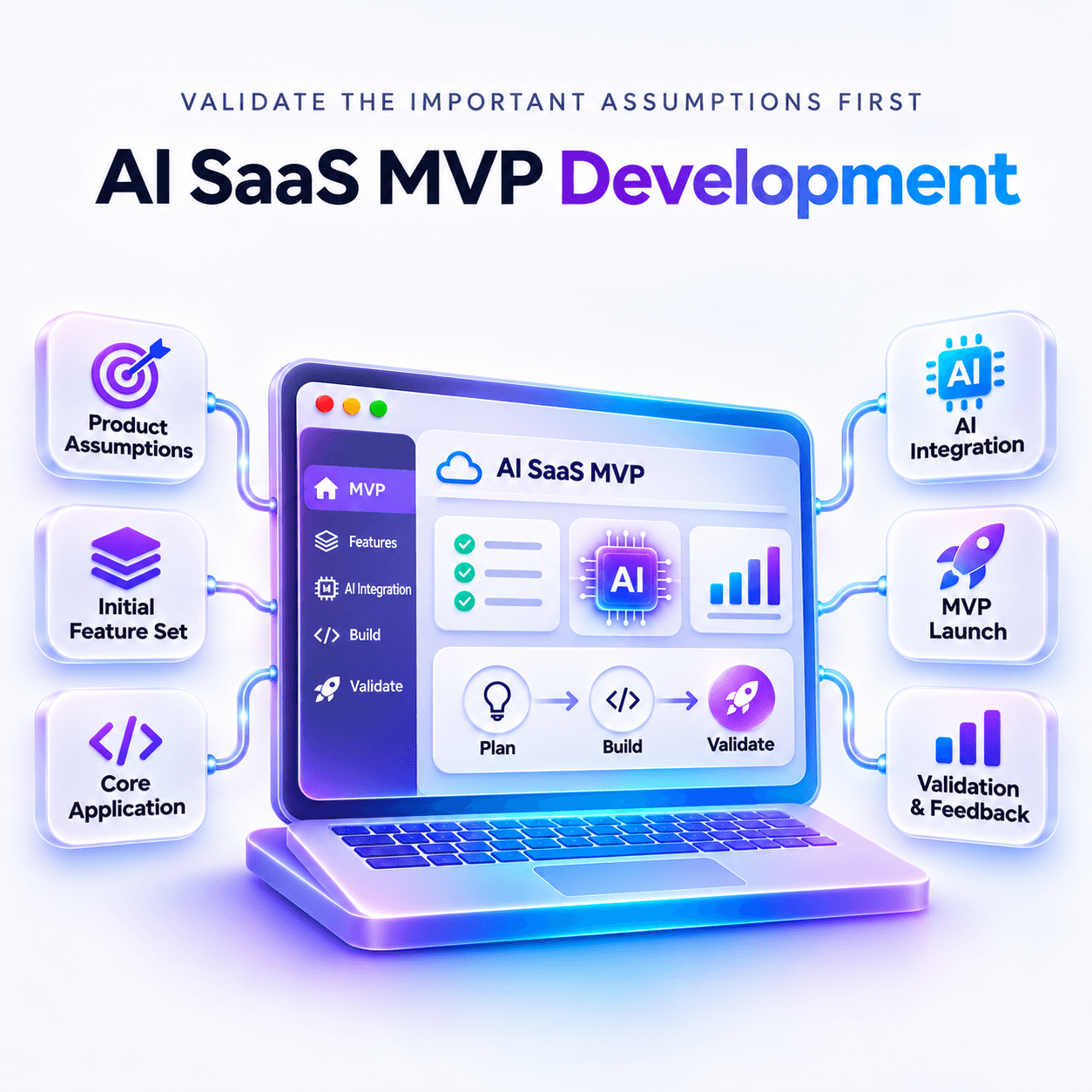
Validate the important assumptions first

AI SaaS MVP Development

An MVP should validate the most important product assumptions without introducing unnecessary complexity. We help startups define an initial feature set, build the core application, integrate relevant AI functionality, and prepare the product for real-user testing.

MVP scope

  • Initial feature set
  • Core application
  • Relevant AI functionality
  • Preparation for real-user testing
AI SaaS MVP development — THE TISA

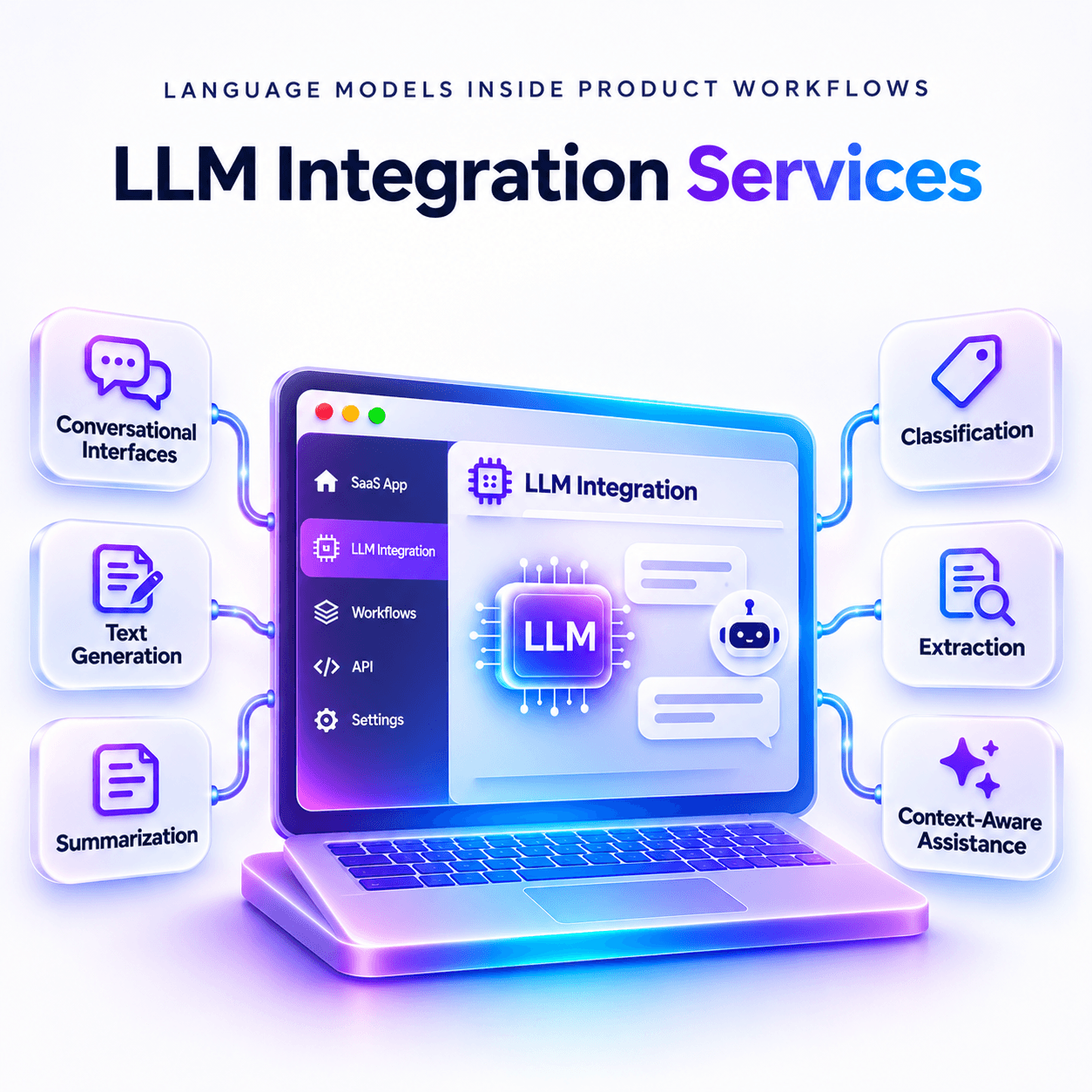
Language models inside product workflows

LLM Integration Services

We integrate large language models into SaaS applications for conversational interfaces, text generation, summarization, classification, extraction, and context-aware assistance.

LLM uses

  • Conversational interfaces
  • Text generation and summarization
  • Classification and extraction
  • Context-aware assistance

Platforms & Technologies

  • SharePoint
  • Confluence
  • Notion
  • Approved document collections
LLM integration services — THE TISA

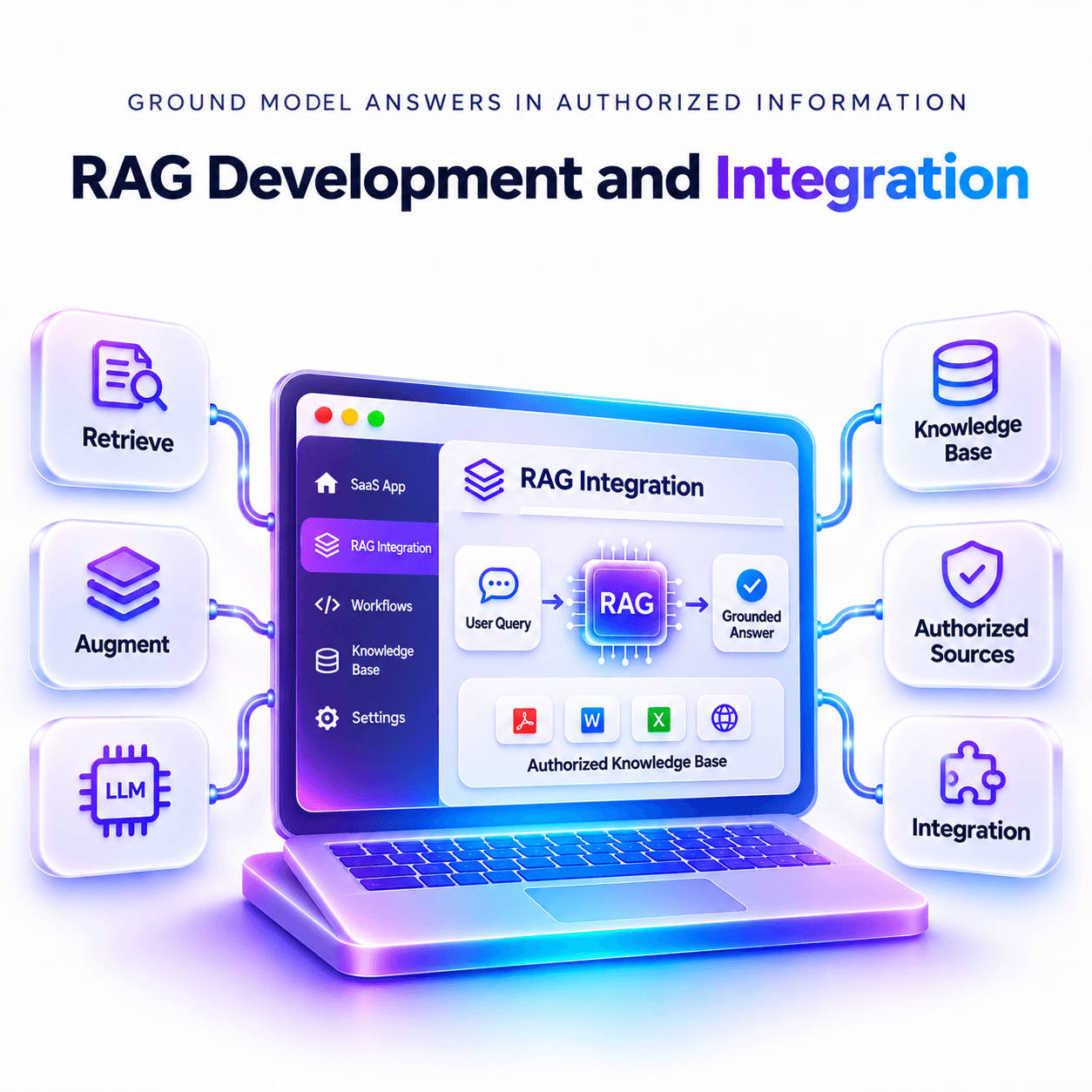
Ground model answers in authorized information

RAG Development and Integration

We implement Retrieval-Augmented Generation pipelines that connect language models to relevant business information. Depending on the use case, this can include document ingestion, chunking, embeddings, vector search, retrieval, context construction, and response generation.

RAG pipeline

  • Document ingestion and chunking
  • Embeddings and vector search
  • Retrieval and context construction
  • Response generation from authorized information
RAG development and integration — THE TISA

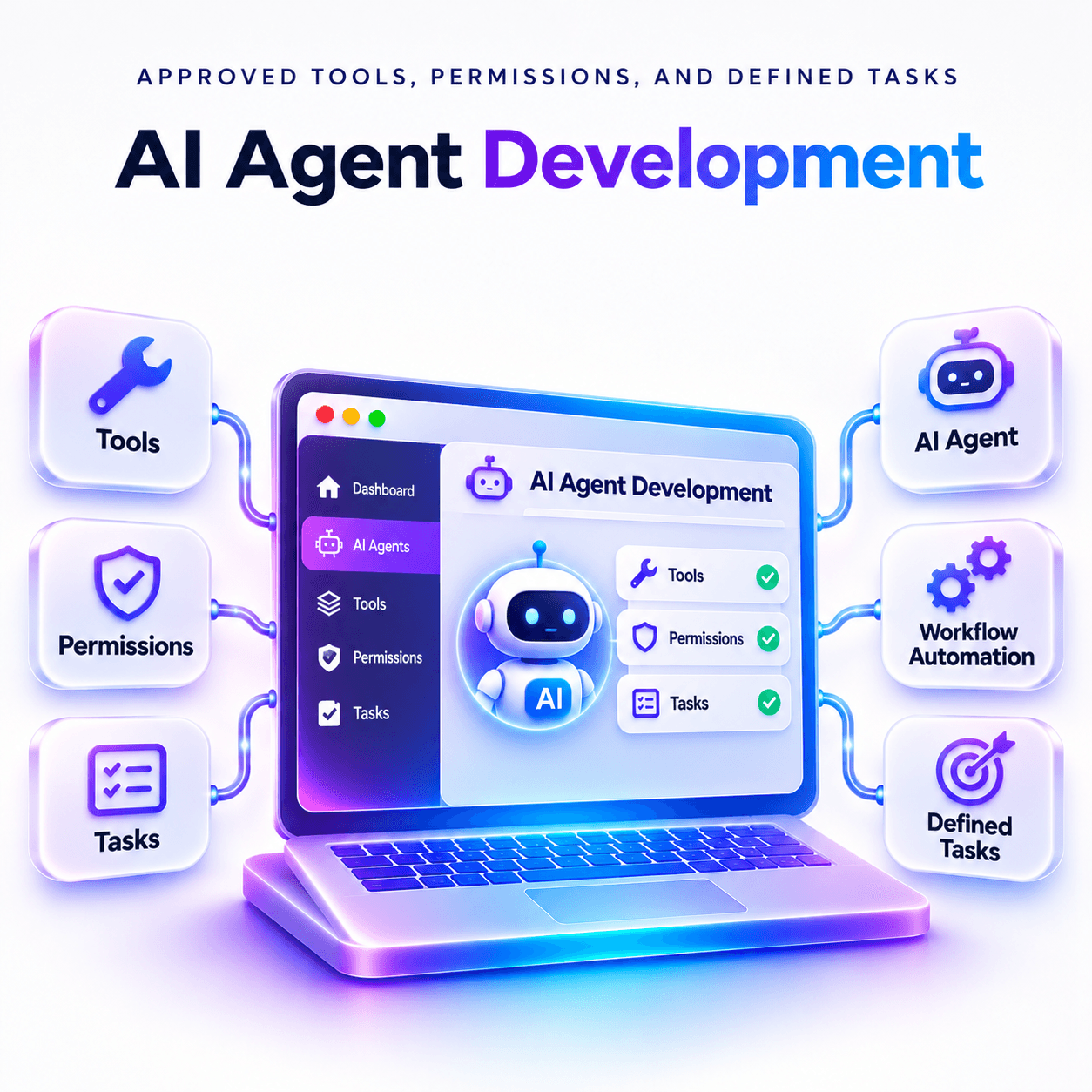
Approved tools, permissions, and defined tasks

AI Agent Development

We develop AI agents that can interpret requests, use approved tools, interact with application services, and complete defined tasks under appropriate permissions and controls.

Agent controls

  • Interpret a request
  • Use approved tools
  • Interact with application services
  • Complete a defined task under permissions and controls
AI agent development — THE TISA

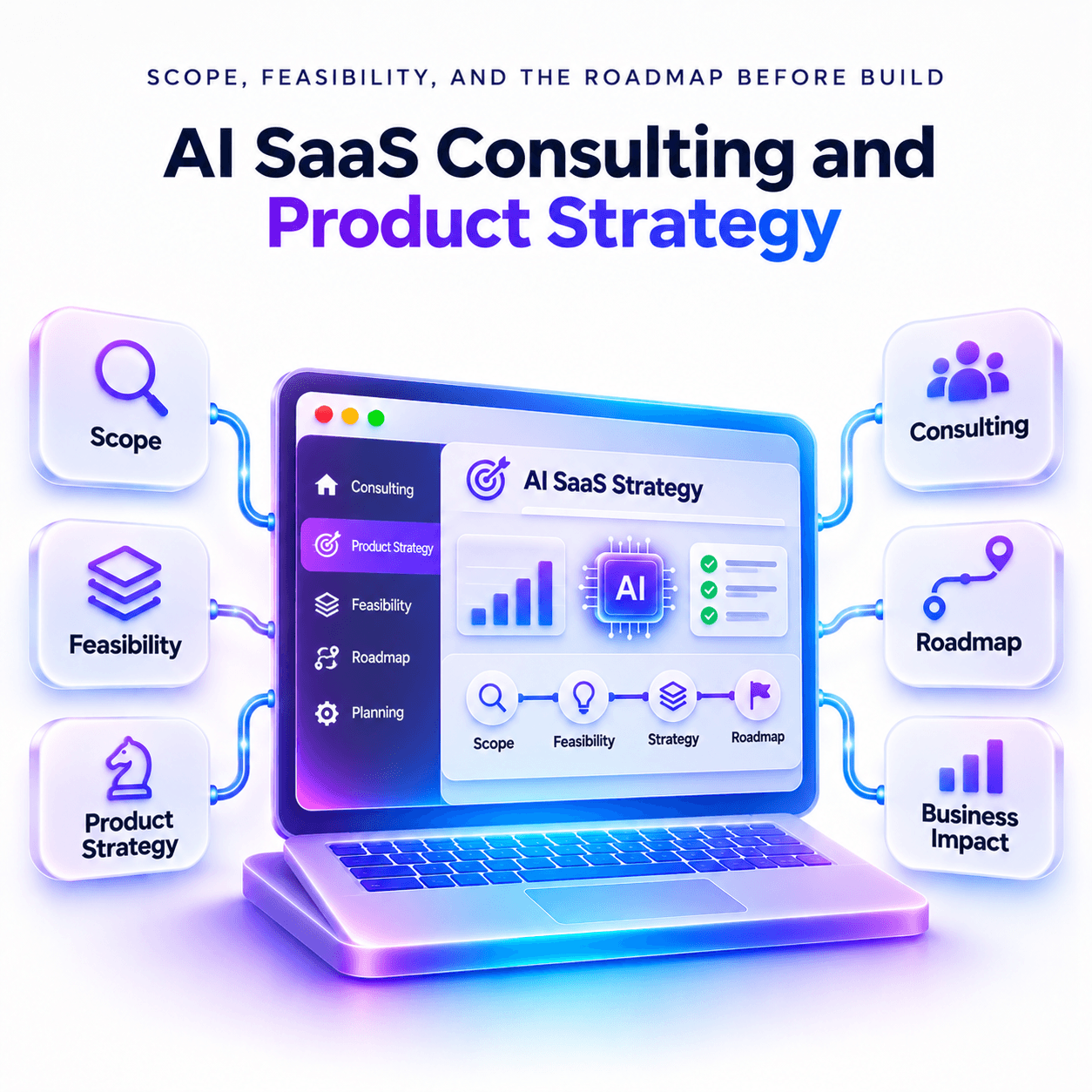
Scope, feasibility, and the roadmap before build

AI SaaS Consulting and Product Strategy

We help define the product scope, technical feasibility, AI use cases, architecture requirements, and development roadmap before implementation begins. Consulting can cover product discovery, AI use-case identification, model and provider evaluation, architecture planning, MVP prioritization, and development estimates.

Consulting can cover

  • SaaS product discovery and requirement analysis
  • AI use-case identification
  • Technical feasibility assessment
  • AI model and provider evaluation
  • SaaS architecture planning
  • MVP feature prioritization
  • Product roadmap and development estimates
AI SaaS consulting and product strategy — THE TISA

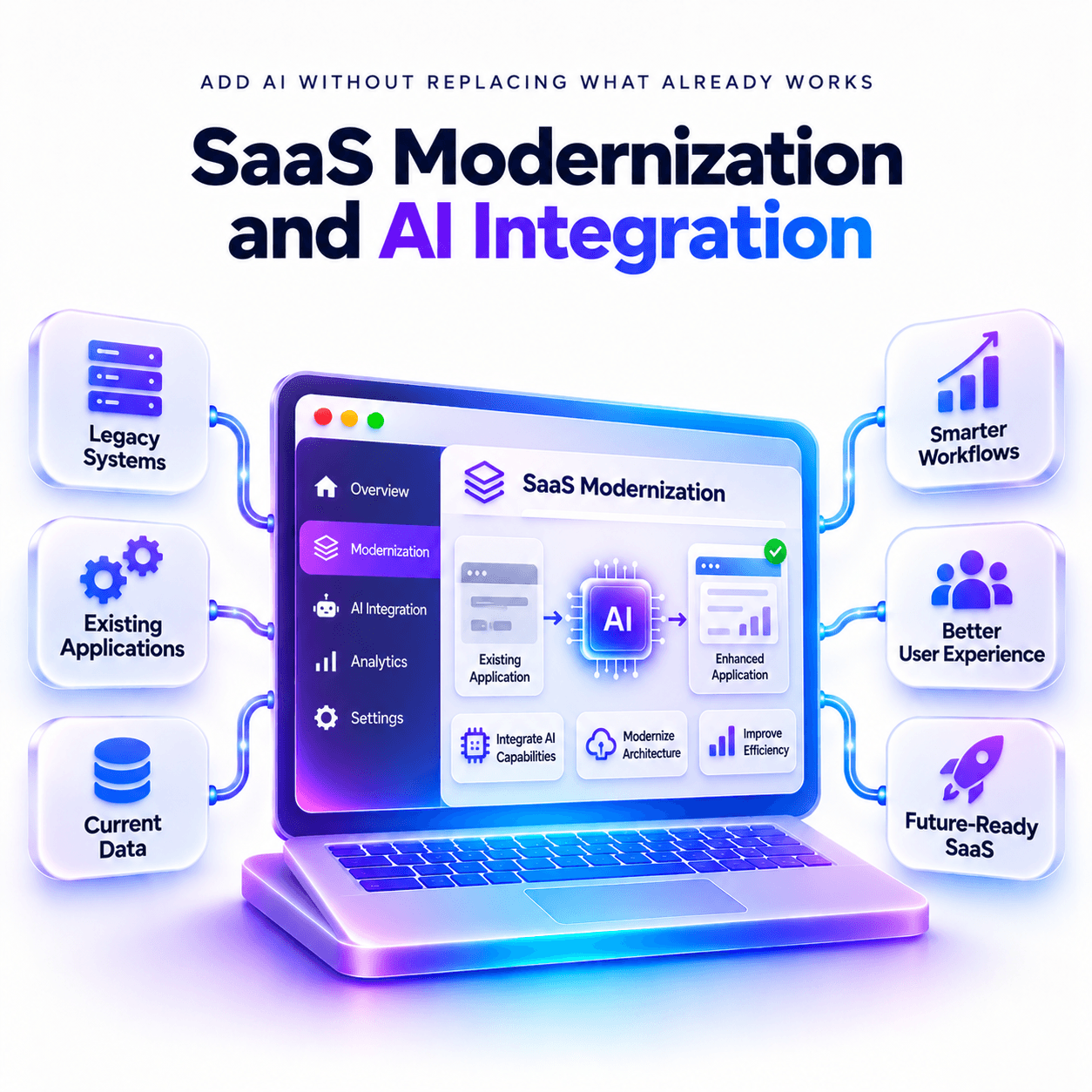
Add AI without replacing what already works

SaaS Modernization and AI Integration

For existing SaaS platforms, we assess where AI can improve the product without unnecessarily replacing established systems. This may involve API integration, workflow redesign, data preparation, model integration, and application modernization.

Modernization work

  • API integration
  • Workflow redesign
  • Data preparation
  • Model integration and application modernization

Platforms & Technologies

  • Salesforce
  • SAP
  • Oracle NetSuite
  • Microsoft Dynamics
  • SharePoint
  • Notion
  • Google Drive
  • SQL databases
  • Cloud storage
SaaS modernization and AI integration — THE TISA

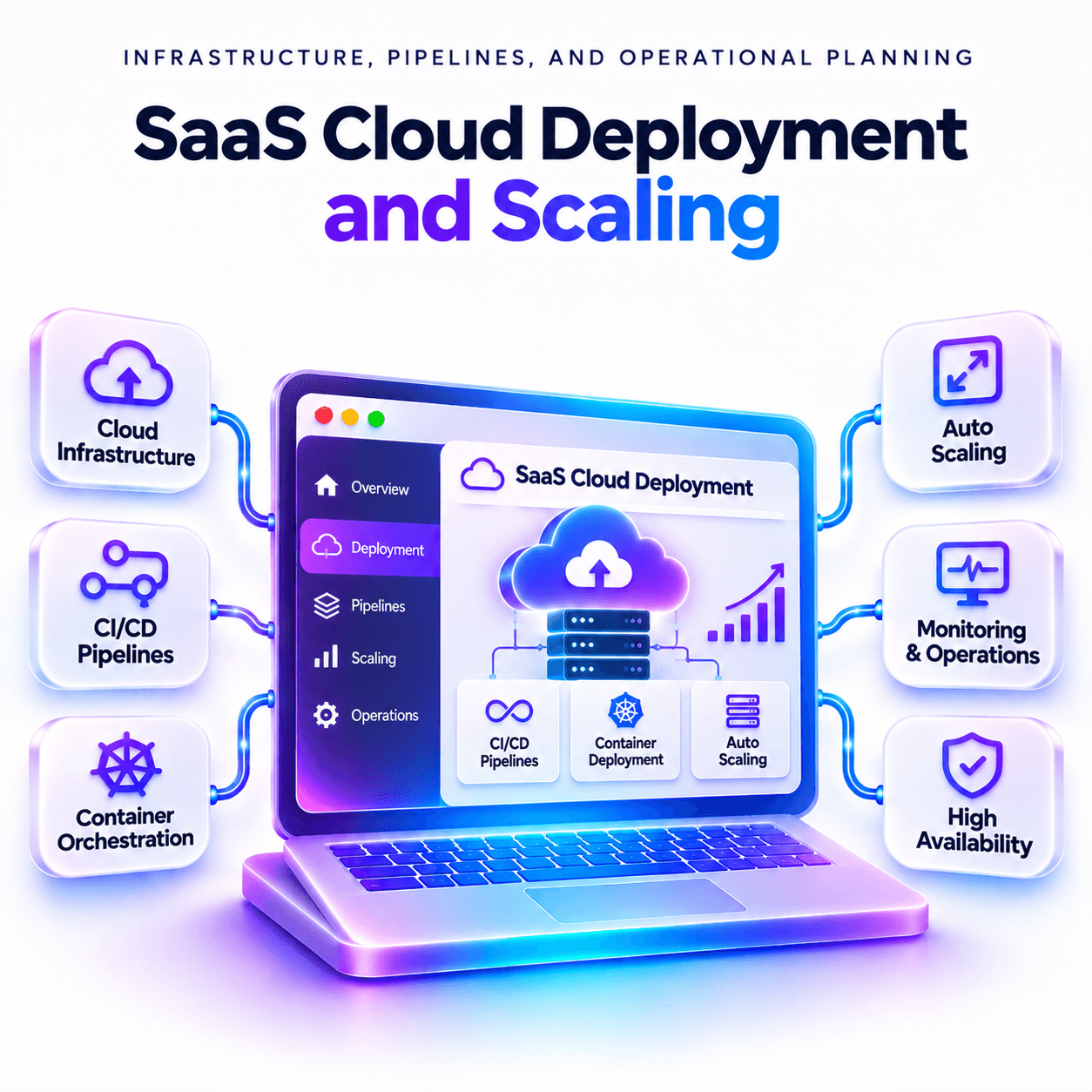
Infrastructure, pipelines, and operational planning

SaaS Cloud Deployment and Scaling

We prepare SaaS applications for production through cloud infrastructure, deployment pipelines, monitoring, performance optimization, and operational planning.

Production readiness

  • Cloud infrastructure
  • Deployment pipelines
  • Monitoring
  • Performance optimization and operational planning

Platforms & Technologies

  • Pinecone
  • Weaviate
  • Milvus
  • Qdrant
  • pgvector
  • FAISS
SaaS cloud deployment and scaling — THE TISA
SAAS ARCHITECTURE & ENGINEERING

Building Scalable Multi-Tenant SaaS Architecture
for AI Applications

A multi-tenant SaaS application must support multiple customers within a shared software platform while maintaining appropriate boundaries between their users, data, configurations, and resources. AI adds retrieval scope, model access, usage measurement, and protection of sensitive information.

How a tenant request is scoped

This is THE TISA’s approach to a multi-tenant AI request. It is an engineering diagram of the path, not a diagram from a client deliverable.

  1. 01

    Tenant authentication

  2. 02

    Application APIs

  3. 03

    Tenant-scoped data

  4. 04

    Retrieval services

  5. 05

    Model orchestration

  6. 06

    Monitoring

Architecture decisions that matter
Architecture decisionWhat it affects
Tenant isolation strategyData boundaries and security
Database designScalability and maintenance
Model provider strategyAI capabilities, cost, and reliability
RAG access controlsData retrieval permissions
API architectureIntegrations and product extensibility
Usage meteringPricing and cost management
ObservabilityTroubleshooting and optimization

Compare the options

Architecture Comparison

Compare suitability, risk, and operating overhead before deciding how much autonomy your workflow needs.

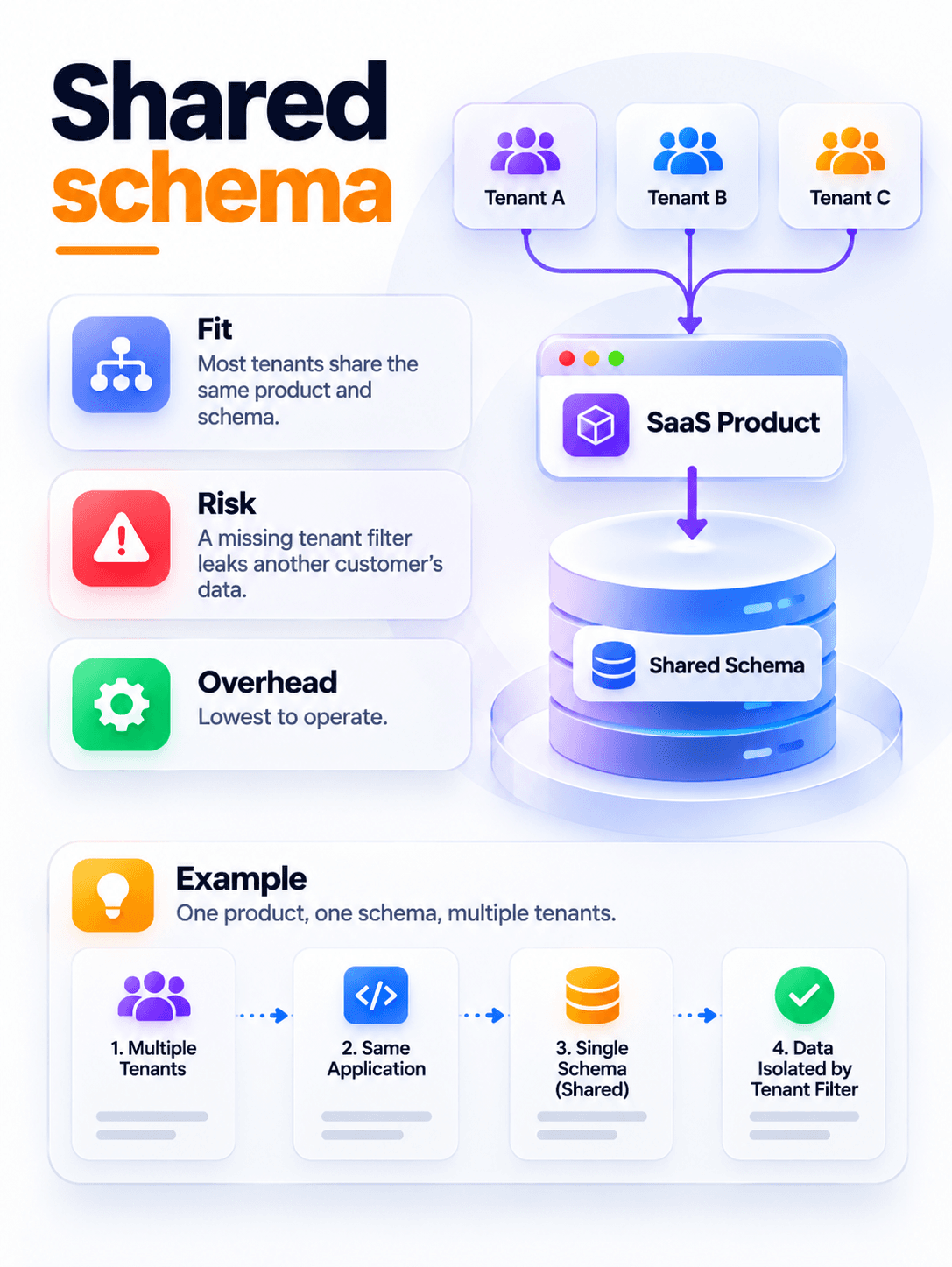
Shared schema: one product and one schema, with tenant data isolated by a tenant filter

Shared schema

When it fits

Most tenants share the same product and schema

Main risk

A missing tenant filter leaks another customer’s data

Operating overhead

Lowest to operate

Example

One database, a tenant id on every row

Architecture reference: 01

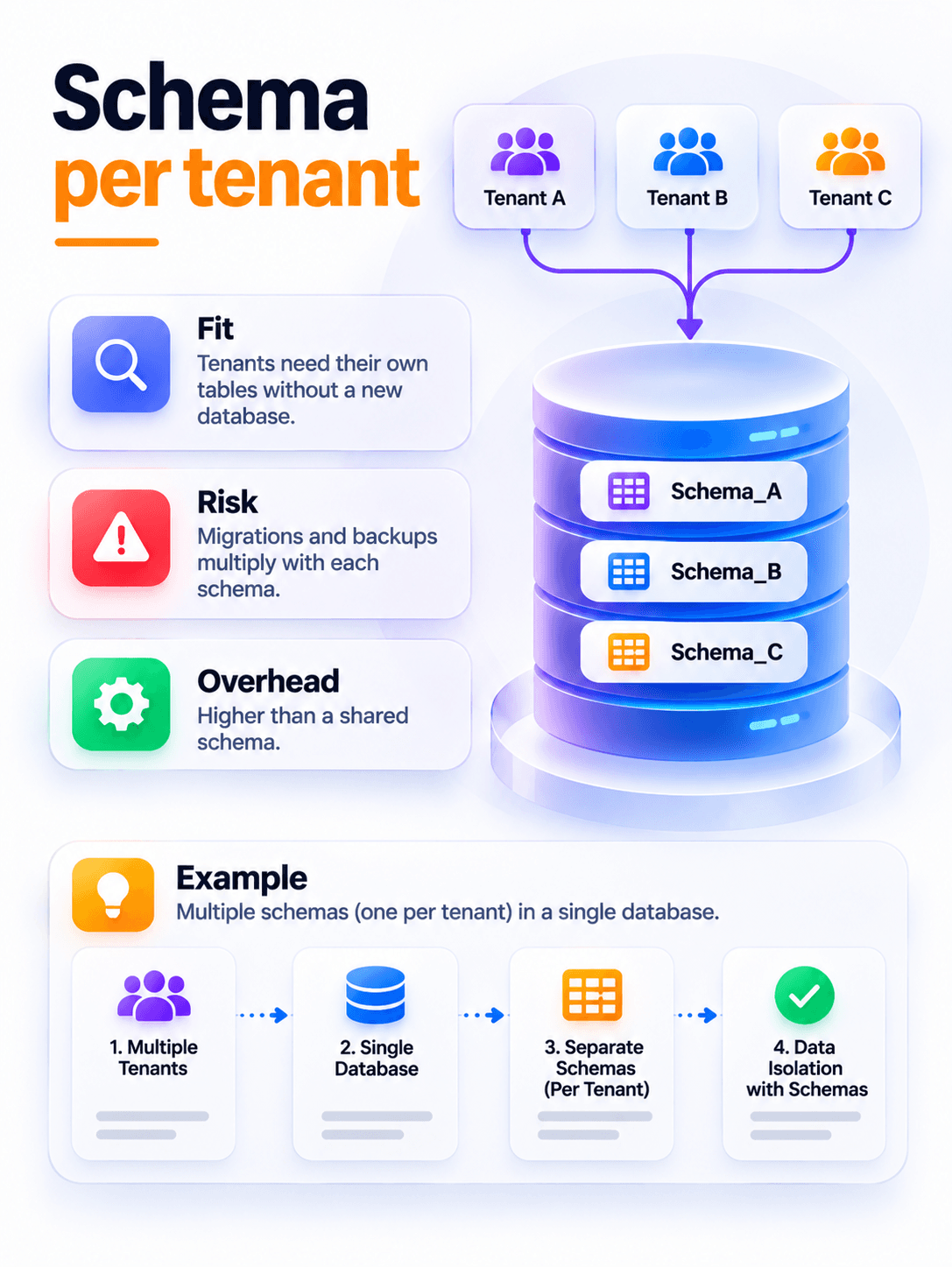
Schema per tenant: separate schemas for each tenant inside one database

Schema per tenant

When it fits

Tenants need their own tables without a new database

Main risk

Migrations and backups multiply with each schema

Operating overhead

Higher than a shared schema

Example

A schema per customer inside one cluster

Architecture reference: 02

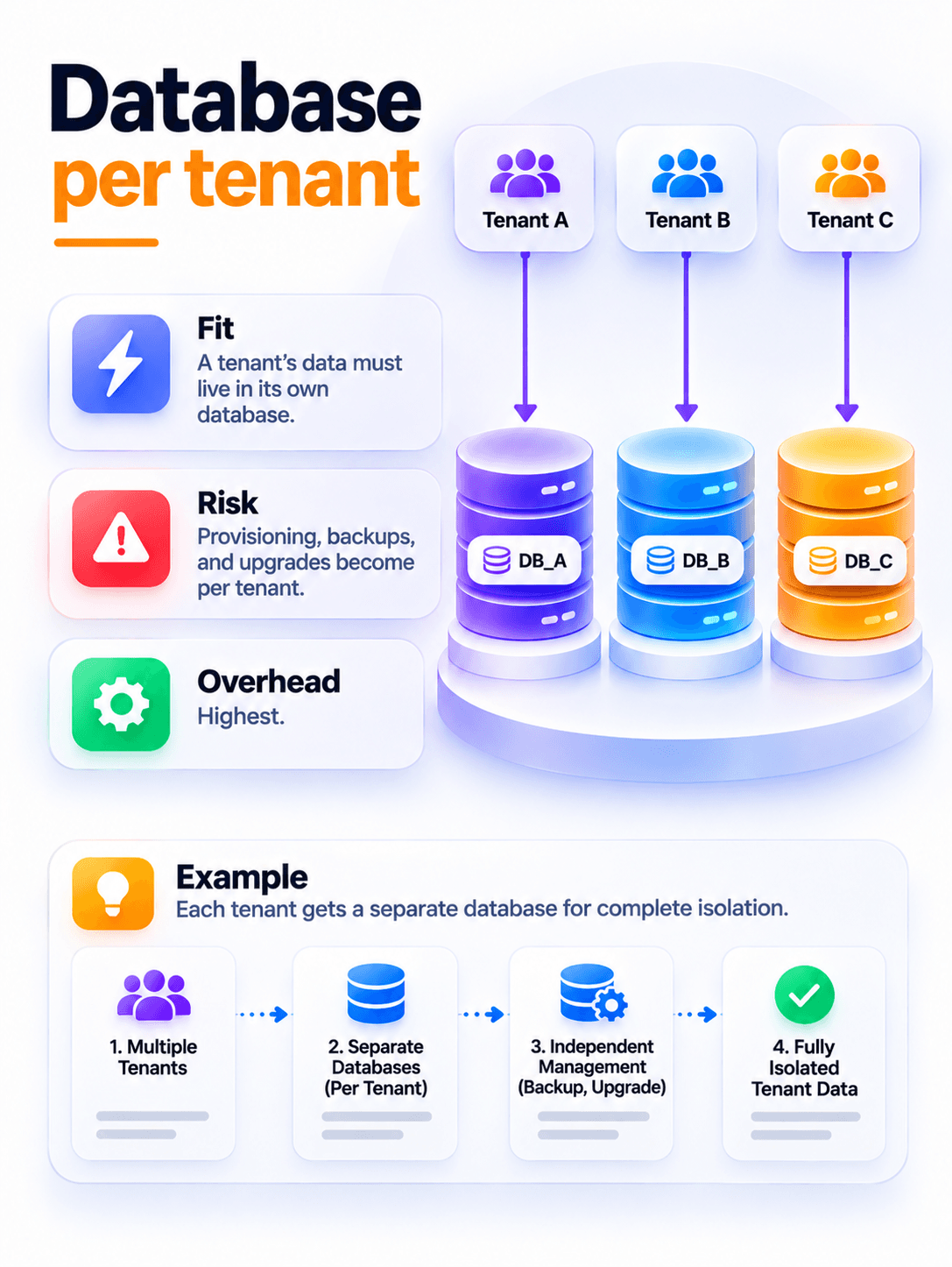
Database per tenant: each tenant has its own database

Database per tenant

When it fits

A tenant’s data must live in its own database

Main risk

Provisioning, backups, and upgrades become per tenant

Operating overhead

Highest

Example

A dedicated database for a regulated customer

Architecture reference: 03

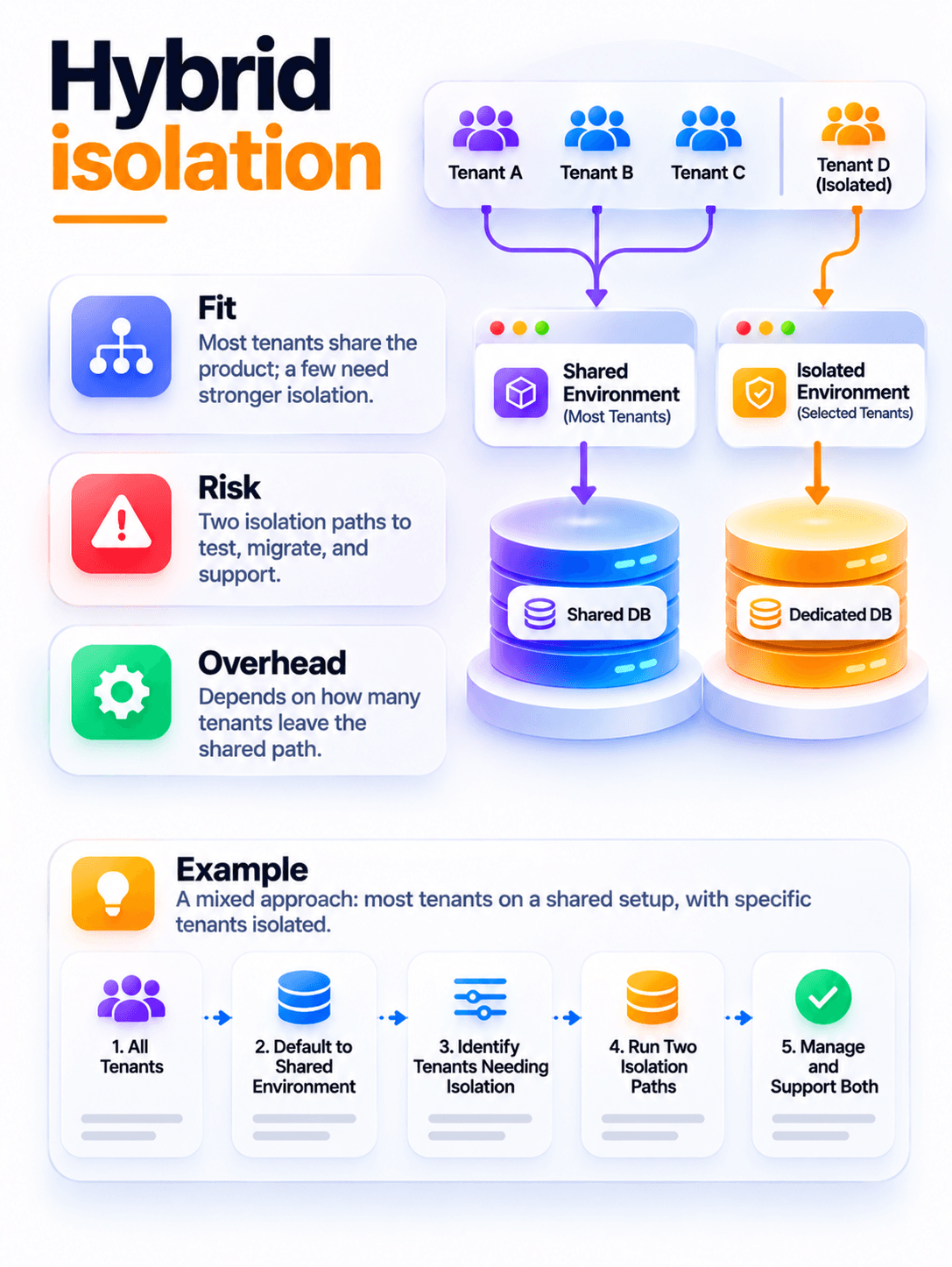
Hybrid isolation: most tenants share one environment, and selected tenants use a dedicated database

Hybrid isolation

When it fits

Most tenants share the product; a few need stronger isolation

Main risk

Two isolation paths to test, migrate, and support

Operating overhead

Depends on how many tenants leave the shared path

Example

Shared schema, with a dedicated database for named accounts

Architecture reference: 04

Architecture selection

Choose the tenancy model for your product.

Compare isolation, operating cost, and how much a single tenant is allowed to customize before the shared product becomes a set of one-off deployments.

Architecture decision guide

Key considerations
DECISION 01

When a shared schema is enough

Choose rules-based execution when the inputs, conditions, and required actions are predictable. An approved invoice-routing rule does not automatically need a language model. Neither does a reliable nightly data synchronization.

Adding model judgment to a stable process can introduce unnecessary uncertainty, latency, and evaluation work. The better design may be a conventional workflow with a small AI component for interpreting unstructured inputs.

Architecture decision guide01 / 05
DECISION 02

When each tenant needs its own schema

If your team needs to locate information, compare documents, or answer questions from approved sources, a retrieval application may satisfy the requirement.

A knowledge assistant does not need permission to update business records simply because it can explain them.

Our AI integration services cover the systems a tenant workflow has to read or update.

Architecture decision guide02 / 05
DECISION 03

When a tenant needs its own database

A single agent can fit a bounded task where the next action depends on information discovered during execution. The available tools should remain limited, and the system needs a clear completion condition.

We define step limits, timeouts, clarification behavior, and escalation rules. These prevent an unsuccessful task from turning into an open-ended sequence of retries.

Architecture decision guide03 / 05
DECISION 04

When isolation should be mixed

Separate agents should have distinct responsibilities that improve review, specialization, or permission boundaries. More agents are not evidence of a better architecture.

Each handoff needs a defined output, a receiving role, and a rule for resolving disagreement. Shared memory and context also require controls so one agent does not expose information another should not access.

Architecture decision guide04 / 05
DECISION 05

When not to split tenants yet

Do not proceed when the task lacks a measurable outcome, access cannot be granted safely, the workflow changes without an owner, or human review would exceed the effort being saved.

Our build-versus-buy framework can help assess whether custom development, an existing product, or a smaller automation is the more practical investment.

Architecture decision guide05 / 05
Recommended approach

Start with the problem. Choose the simplest solution.

Define the desired outcome, available data, permitted actions, failure conditions, and human oversight. Then select the architecture that meets those needs without adding unnecessary complexity.

Discuss your architecture
AI ENGINEERING CAPABILITIES

Integrating Practical AI Capabilities
Into SaaS Products

AI functionality should be selected according to the problem the product needs to solve. The right technology depends on the available data, user workflow, accuracy requirements, latency, and cost constraints. Not every capability belongs in every SaaS product.

Core technology layers

Selected for your project. No fixed technology bundle.

Large Language Model Integration

Integrate LLMs into SaaS products for natural-language interaction, content generation, summarization, classification, information extraction, and context-aware assistance.

  • OpenAI
  • Anthropic
  • Google Gemini

What drives the choice

The model follows the workflow, accuracy need, latency, and cost.

Retrieval-Augmented Generation (RAG)

Connect language models to private or domain-specific information through document processing, embeddings, retrieval, and grounded response generation.

  • PostgreSQL
  • pgvector
  • Document ingestion

What drives the choice

Use RAG when the answer has to come from the product’s own information.

AI Agent Development

Develop agents that can interpret goals, select approved tools, interact with APIs, and execute defined workflows with validation and permission controls.

  • LangChain
  • LangGraph
  • Application APIs

What drives the choice

An agent is appropriate when the product must take a defined action, not only answer.

Semantic Search

Enable users to search information based on meaning and context rather than relying exclusively on exact keyword matching.

  • Embeddings
  • PostgreSQL
  • Filters

What drives the choice

Keyword search can still be the right choice for exact identifiers.

AI Copilots and Assistants

Build in-product AI assistants that help users understand data, navigate workflows, draft content, and complete supported tasks.

  • LLM APIs
  • Product permissions
  • Review steps

What drives the choice

The assistant stays inside the screens and data the user already has.

Predictive Analytics and Machine Learning

Integrate machine learning for forecasting, classification, anomaly detection, recommendation, and other uses where historical data can support useful predictions.

  • Python
  • PostgreSQL
  • Historical records

What drives the choice

Predictions need enough relevant history. They are not added when that data is not available.

Document Intelligence

Build document processing workflows for extraction, classification, summarization, validation, and structured data generation.

  • Document parsing
  • Validation rules
  • Review queues

What drives the choice

Extraction is checked against the source document before it becomes a record.

Voice AI Integration

Add speech recognition, conversational voice interfaces, transcription, and voice-enabled workflows where they improve the product experience.

  • Speech recognition
  • Transcription
  • Product workflows

What drives the choice

Voice is used when it improves the workflow. It is not a default feature.

Validate the stack on your knowledge

A focused pilot informs the final architecture.

Test the shortlisted components against your documents, questions, access rules, and expected usage. Use the findings to confirm the architecture and document tradeoffs, licensing, deployment costs, and maintenance responsibilities.

Discuss the product architecture
INDUSTRIES WE SUPPORT

AI SaaS Development for
Industry-Specific Business Workflows

Different industries have different operational requirements, data structures, regulatory considerations, and user expectations. AI SaaS products should be engineered around these differences.

  • Develop healthcare-oriented software for administrative workflows, document processing, knowledge access, and operational assistance. Clinical use cases require appropriate validation, privacy safeguards, and regulatory review.

    Knowledge sources

    • Administrative records
    • Documents
    • Knowledge sources

    Example applications

    • Document processing
    • Operational assistance
    • Knowledge access

    Implementation considerations

    Clinical use requires validation, privacy safeguards, and regulatory review.

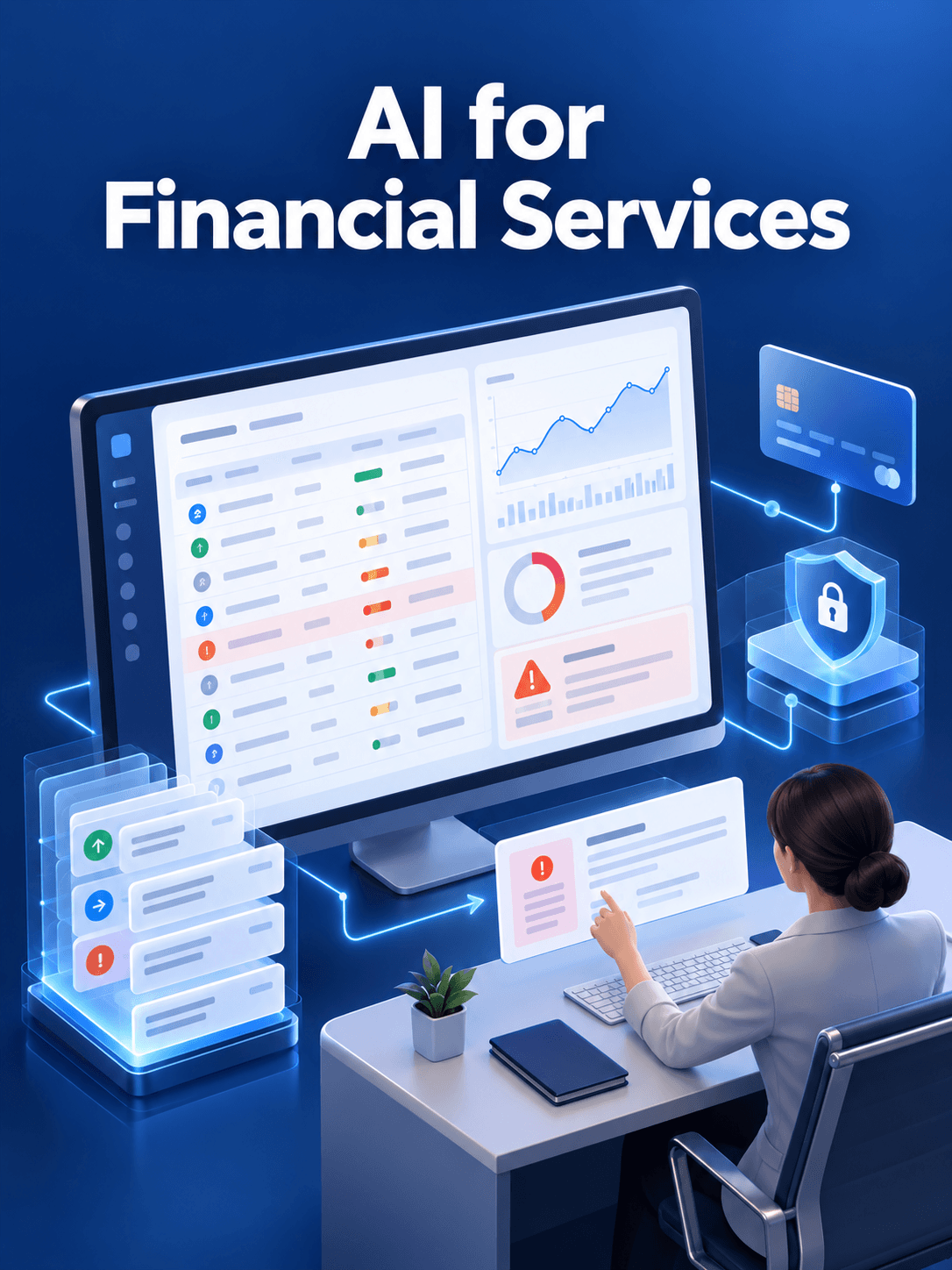
  • Build financial software with AI-assisted document processing, risk analysis workflows, transaction insights, customer support, and financial information retrieval.

    Knowledge sources

    • Financial documents
    • Transactions
    • Support knowledge

    Example applications

    • Document processing
    • Transaction insights
    • Customer support

    Implementation considerations

    Financial workflows need access controls matched to the sensitivity of the records.

  • Develop logistics platforms that support shipment visibility, document processing, operational reporting, demand insights, and workflow coordination.

    Knowledge sources

    • Shipments
    • Documents
    • Operational reports

    Example applications

    • Shipment visibility
    • Document processing
    • Workflow coordination

    Implementation considerations

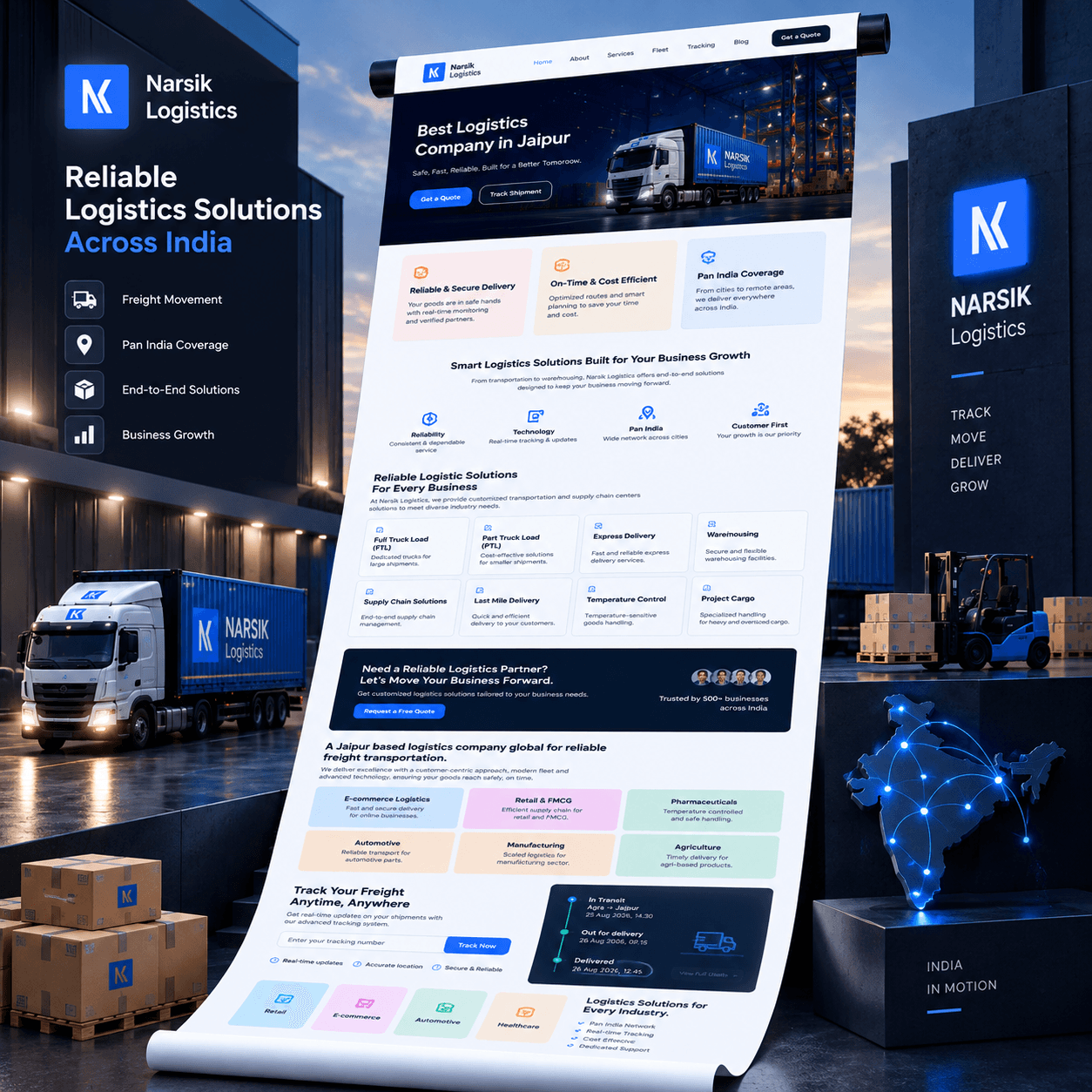
    Narsik Logistics is a freight booking platform and is not presented as an AI product.

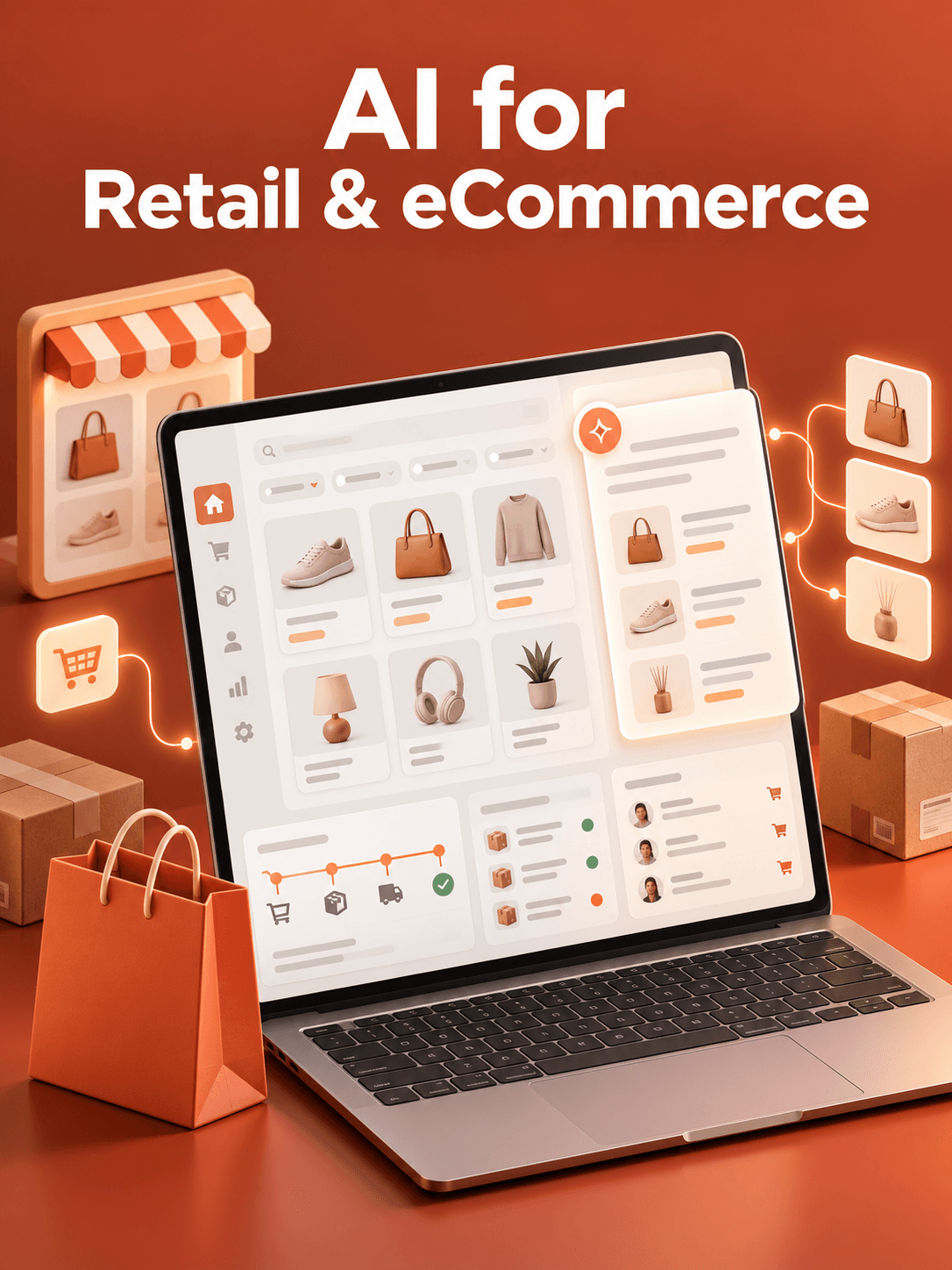
  • Create applications for product discovery, customer support, catalog intelligence, personalization, and inventory-related workflows.

    Knowledge sources

    • Catalog
    • Support
    • Inventory workflows

    Example applications

    • Product discovery
    • Customer support
    • Catalog intelligence

    Implementation considerations

    Personalization depends on the product data the application is allowed to use.

  • Build intelligent learning platforms, educational assistants, knowledge systems, and administrative applications.

    Knowledge sources

    • Course material
    • Student records
    • Administration

    Example applications

    • Learning workflows
    • Knowledge access
    • Administrative applications

    Implementation considerations

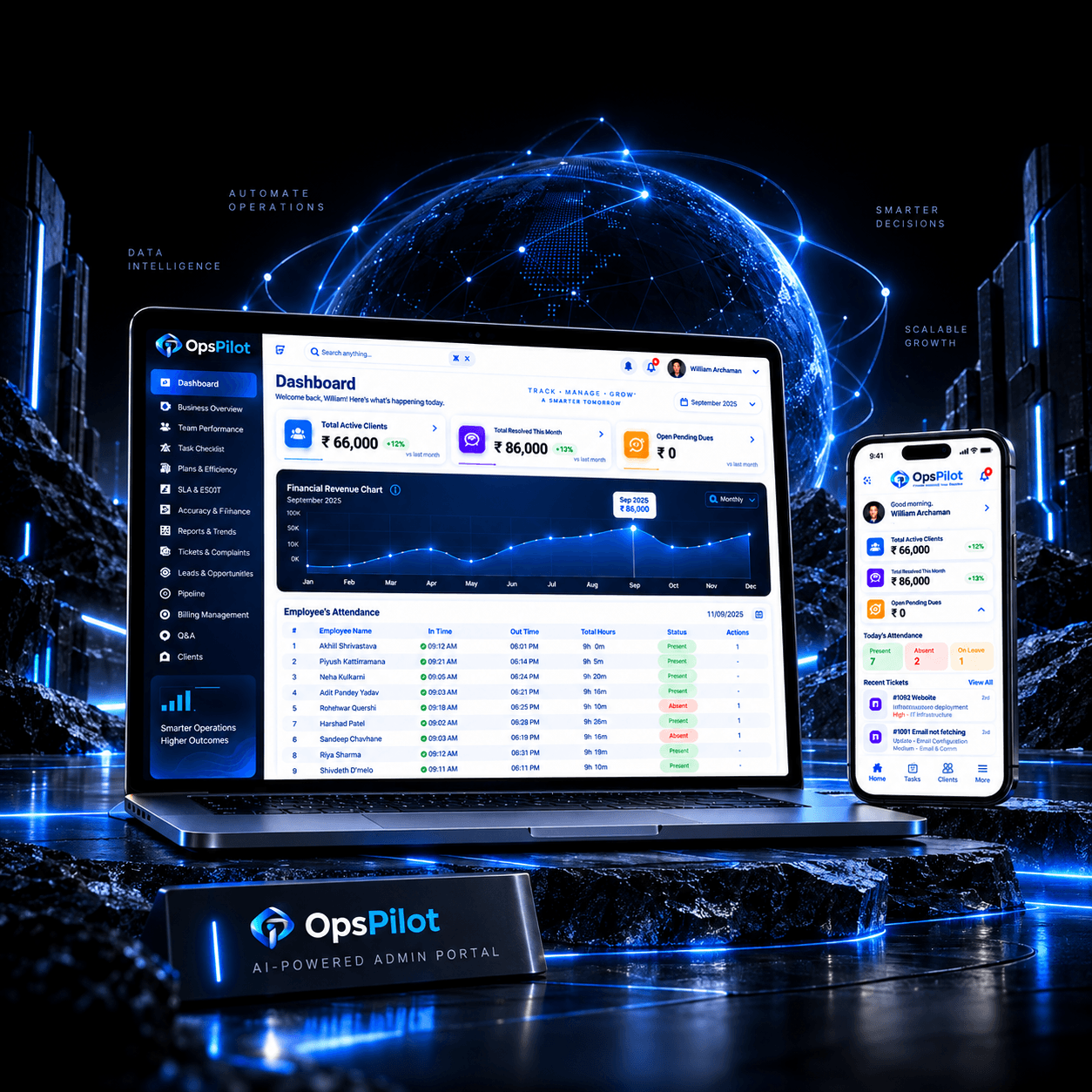
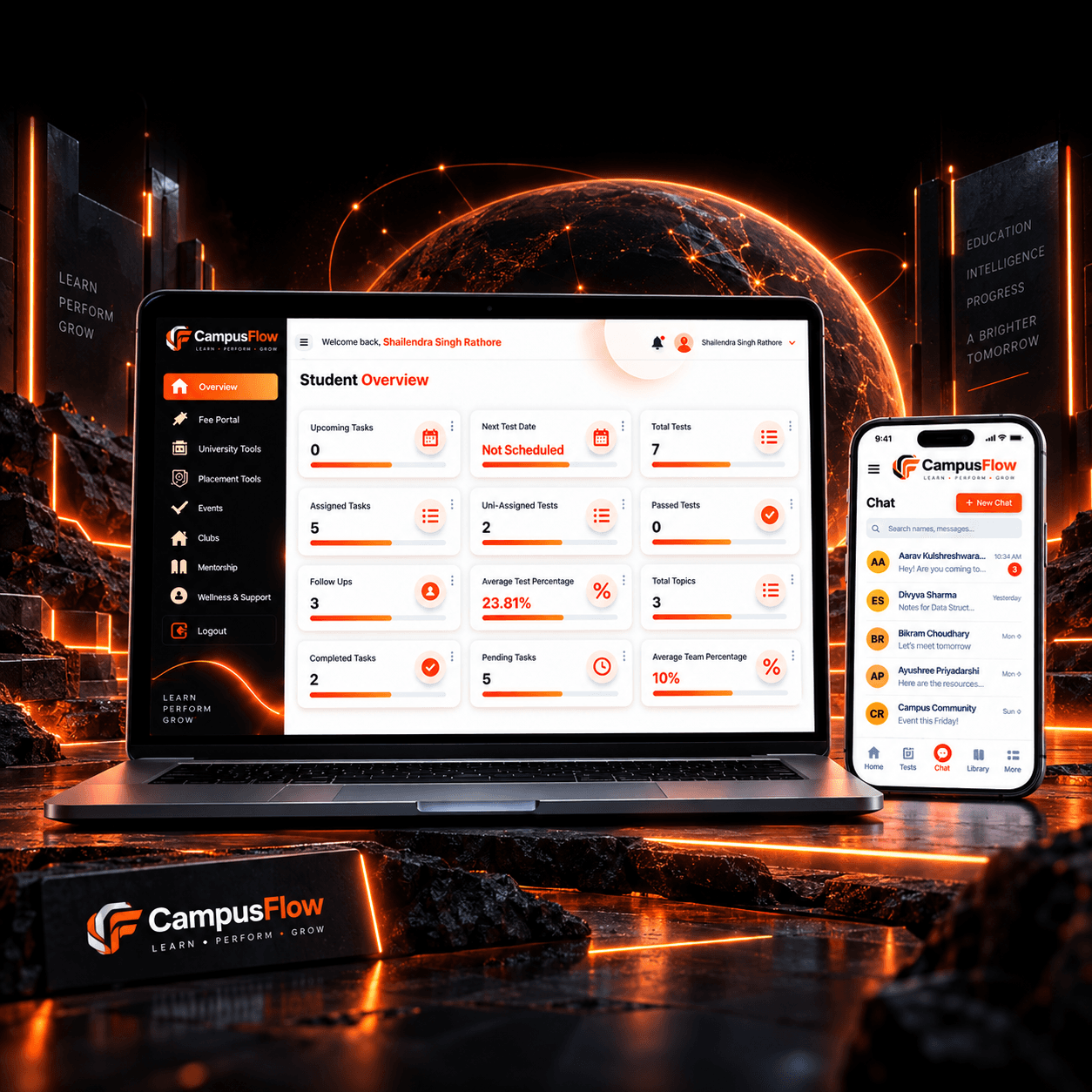
    Campus Flow includes course-material Q&A and reviewed exam feedback. OpsPilot uses OpenAI for management summaries.

  • Develop recruitment support, employee self-service, HR knowledge assistants, and workforce workflow applications.

    Knowledge sources

    • Employee records
    • Recruitment workflows
    • HR knowledge

    Example applications

    • Recruitment support
    • Employee self-service
    • Knowledge assistants

    Implementation considerations

    PeopleCore includes attendance, leave, batch access, and AI-supported summaries. It is not a complete HRMS.

  • Build software for production reporting, document intelligence, quality workflows, operational analytics, and equipment-related insights.

    Knowledge sources

    • Production reports
    • Quality records
    • Equipment information

    Example applications

    • Production reporting
    • Quality workflows
    • Operational analytics

    Implementation considerations

    Insights follow the operational data the product is given.

OUR ENGINEERING PROCESS

From SaaS Product Discovery to Production-Ready AI Software

Developing an AI SaaS platform requires a structured process that connects business requirements with software architecture, AI implementation, testing, and ongoing operations.

Scope starts with one tenant workflow and the data it is allowed to use. That boundary is what later features are tested against.

Agreed before implementation

Pilot scope, source access, acceptance criteria, deployment responsibilities, and the people who will review the results.

  1. Product Discovery and Requirements

    We understand the intended users, business model, workflows, product objectives, and technical constraints. We identify where AI can provide measurable product value.

    Deliverable: Product requirements, use-case definition, initial scope, and technical considerations.

  2. Technical Feasibility and AI Evaluation

    We assess the suitability of AI models, data sources, external services, integration requirements, and expected operational constraints.

    Deliverable: AI feasibility assessment, model options, integration considerations, and MVP priorities.

  3. SaaS Architecture and UX Planning

    We define the application structure, tenant model, database design, APIs, user permissions, interface flows, and infrastructure approach.

    Deliverable: Architecture design, database model, API plan, and interface specifications.

  4. Core SaaS Application Development

    We develop the product foundation, including authentication, user management, tenant management, dashboards, business workflows, backend services, and integrations.

    Deliverable: Functional SaaS application foundation.

  5. AI Model and Feature Integration

    We integrate selected AI capabilities, such as LLMs, RAG, semantic search, agents, or predictive models, into the relevant product workflows.

    Deliverable: Integrated AI features, model orchestration, retrieval workflows, and relevant evaluation mechanisms.

  6. Testing and Security Validation

    We test application functionality, tenant isolation, access control, API behavior, AI output quality, error handling, and performance.

    Deliverable: Test results, identified issues, and remediation work.

  7. Deployment and Production Readiness

    We prepare the application for deployment, configure infrastructure, establish monitoring, and verify production workflows.

    Deliverable: Deployment-ready application and operational configuration.

  8. Optimization and Product Evolution

    After launch, the platform can be improved based on usage patterns, feedback, system performance, AI evaluation, and changing product requirements.

    Deliverable: Prioritized improvements and an ongoing optimization roadmap.

SECURITY BY DESIGN

Secure AI SaaS Development With
Data Protection and Governance in Mind

AI SaaS applications can process customer records, business documents, conversations, and other sensitive information. THE TISA considers application security, tenant boundaries, AI-specific risks, and data governance when engineering these platforms. SOC 2, ISO/IEC 27001, GDPR, HIPAA, and the NIST AI Risk Management Framework are considerations. They are not claims that THE TISA or a delivered application is certified or compliant by default.

Tenant Data Isolation

Connect enterprise authentication with retrieval permissions so the application searches only the knowledge each user is authorized to access. Define document, record, and tenant boundaries before retrieved passages reach the language model.

Implementation scope may include

  • Single sign-on integration
  • Role-based access controls
  • Document-level permissions
  • Tenant isolation
  • Scoped service accounts
  • Access-boundary testing

Preserve source-system access boundaries as teams search shared enterprise knowledge.

Data Privacy & Model Handling

Map how documents, retrieved passages, prompts, and responses move through your SaaS product. Assess hosting, model providers, encryption, and retention settings against the sensitivity of your information and your data handling requirements.

Implementation scope may include

  • Encryption in transit and at rest
  • Model provider data-flow review
  • Sensitive data minimization
  • Secrets and key management
  • Retention configuration
  • Data residency assessment

Document where business information is processed, stored, retained, and shared.

Secure Ingestion & Knowledge Updates

Define which sources can enter the retrieval pipeline and retain metadata that connects indexed content to its origin. Account for document revisions, access changes, and deletions across source connectors, vector indexes, and relevant caches.

Implementation scope may include

  • Approved source connections
  • Ingestion validation
  • Source provenance and metadata
  • Permission synchronization
  • Index deletion workflows
  • Content update monitoring

Reduce exposure to unapproved, outdated, or revoked content as source systems change.

Prompt Injection & Application Protection

Treat user input and retrieved documents as untrusted content. Test attempts to override instructions, expose confidential information, or trigger unauthorized actions. Enforce tool permissions and business authorization in application code rather than relying on model instructions alone.

Implementation scope may include

  • Prompt injection testing
  • Retrieved content boundaries
  • Input and output validation
  • Scoped API and tool access
  • Rate and resource limits
  • Sensitive-action approvals

Limit what malicious content or unexpected model behavior can access or change.

Security Testing & Audit Monitoring

Test access boundaries before release and monitor the deployed application for failures and suspicious activity. Define useful audit events while limiting sensitive information in prompts, responses, retrieval traces, and operational logs.

Implementation scope may include

  • Cross-tenant access testing
  • Unauthorized query test cases
  • Sensitive log redaction
  • Security event monitoring
  • Audit access and retention
  • Incident response runbooks

Support investigation with relevant evidence, clear ownership, and documented response procedures.

AI Governance & Human Oversight

Document the application's intended use, review requirements, and change approval process. Work with security and compliance stakeholders to translate applicable policies into implementation tasks, test cases, and review evidence.

Implementation scope may include

  • Use and access policies
  • Human review and escalation
  • Model change reviews
  • Documented risk assessments
  • Vendor and deployment reviews
  • Control ownership and handoff

Keep accountability clear as models, knowledge sources, permissions, and requirements evolve.

Security Guidance & Review Deliverables

Define security controls around your data, user permissions, integrations, and hosting requirements. Use established guidance to structure threat assessments, application testing, and AI governance reviews.

Evidence for your technical review

Depending on the agreed scope, deliverables may include data-flow diagrams, an access-control matrix, security test findings, and operational runbooks.

For more about our approach, explore THE TISA’s security practices.

Plan security into the product

Review your knowledge sources, access permissions, model data flows, and hosting requirements with our team. Define the controls, security tests, and operational responsibilities needed for your implementation.

  • Permission-aware retrieval
  • Data handling and hosting
  • Security testing and oversight
Discuss security and governance
TECHNOLOGY AND INFRASTRUCTURE

Technologies We Use to Engineer
AI-Powered SaaS Applications

The technology stack for an AI SaaS product should be selected according to product complexity, team capabilities, integration requirements, expected traffic, and long-term maintenance needs. The list below is limited to technologies used in THE TISA product work.

  • Frontend and backend development

    The web app, admin console, and APIs tenants call. The framework has to carry tenant context on every request before any AI feature is added.

    Next.js
    React
    TypeScript
    Node.js
    NestJS
    Python

    FastAPI

  • Data storage

    Where customer records live, and how a query is forced to one tenant. The store follows the isolation model chosen for the product.

    PostgreSQL
    MySQL
    MongoDB
    Redis
    Prisma
    Supabase
  • AI and LLM providers

    Model calls, agents, and prompts that run inside a tenant’s permission boundary. The provider can change without rewriting the application around it.

    OpenAI
    Claude
    Gemini
    LangChain
    LangGraph
  • Vector databases and data storage

    Tenant-scoped search when the product answers from that customer’s content. Indexes are filtered before a passage is sent to a model.

    PostgreSQL
    MongoDB
    Redis
  • Cloud and DevOps

    Where the product runs, how it is released, and how a bad deploy is rolled back without mixing tenant data.

    AWS
    Azure
    Docker
    Kubernetes
    GitHub
    CircleCI
  • Billing and identity

    Who can sign in, which plan they are on, and what that plan is allowed to call.

    Stripe
    Auth0
    Node.js
    PostgreSQL
  • APIs and integrations

    The customer systems the product reads or writes. Each connection has an owner, a scope, and a failure mode.

    GraphQL
    Node.js
    Python
    PostgreSQL
    Redis
  • Monitoring and AI observability

    Evaluate retrieval relevance, answer support, and citation correctness against representative questions. Track regressions alongside application errors, response latency, and usage cost. Configure diagnostic access and retention so traces remain useful without unnecessarily exposing sensitive business information.

    LangSmith
    Langfuse
    OpenTelemetry
    Prometheus
    Grafana
    Datadog
    Sentry
PROJECT PLANNING

How Much Does
AI SaaS Development Cost?

The cost of developing an AI SaaS product depends on its feature scope, application complexity, AI requirements, data architecture, integrations, security needs, and deployment environment. A project assessment is how a realistic estimate is established. This page does not publish a fixed price or a guaranteed timeline.

What determines your project cost

Product scope

The effort required to prepare enterprise knowledge depends on its condition and structure. Scanned PDFs, complex tables, duplicate files, and inconsistent metadata can require additional processing before retrieval is useful.

  • Document formats and extraction quality
  • OCR, tables, and layout requirements
  • Content volume and update frequency

SaaS architecture

A focused document assistant has a different scope from a multilingual SaaS product that combines sources. Retrieval tuning, reranking, citations, and evaluation requirements influence development effort.

  • Question complexity and source coverage
  • Hybrid search and reranking needs
  • Answer quality and response-time targets

AI complexity

Each connection adds work around authentication, data mapping, synchronization, and error handling. Existing APIs and reliable source metadata can simplify integration; custom connectors require more development.

  • Number and readiness of source APIs
  • Permission and content synchronization
  • Embedded interfaces and live data queries

Data and security requirements

Document permissions, tenant separation, sensitive information, and deployment policies shape the architecture. Include implementation and validation effort for these controls when planning the project budget.

  • Document and tenant access controls
  • Data handling and retention requirements
  • Security testing and review evidence

Infrastructure

Operating cost depends on actual usage, retrieved context size, model selection, and infrastructure. Private networking, availability requirements, and peak request volumes can change the deployment budget.

  • Requests, context size, and model usage
  • Embedding, storage, and search resources
  • Hosting, availability, and recovery needs

Ongoing operations

A production AI system needs review as documents, models, and application behavior change. Budget for regression testing, ingestion monitoring, issue resolution, and the responsibilities retained by your team.

  • Test coverage and human review effort
  • Monitoring and content maintenance
  • Support scope and release frequency

Typical project planning stages

The budget includes the initial implementation and the cost of running it. Review both together, including model usage, infrastructure, content updates, and human review.

Planning stage

Discovery

Define product requirements.

  • Users, workflows, and the first product scope

Estimate basis: Agreed scope, source readiness, integrations, and acceptance criteria.

Planning stage

MVP

Validate core product functionality.

  • A limited feature set and the AI capability needed to test it

Estimate basis: Expected usage, service pricing, maintenance needs, and support coverage.

Planning stage

Product development

Build the full SaaS platform.

  • Application, tenancy, and the workflows beyond the first release

Estimate basis: Expected usage, service pricing, maintenance needs, and support coverage.

Planning stage

AI integration

Implement selected AI capabilities.

  • The models, retrieval, or agents chosen for the product

Estimate basis: Expected usage, service pricing, maintenance needs, and support coverage.

Planning stage

Production launch

Deploy and validate the application.

  • Infrastructure, monitoring, and a production check of the workflows

Estimate basis: Expected usage, service pricing, maintenance needs, and support coverage.

Planning stage

Optimization

Improve performance and product functionality.

  • Changes based on usage, feedback, and evaluation after launch

Estimate basis: Expected usage, service pricing, maintenance needs, and support coverage.

Get an AI SaaS Development Estimate

Share your use case, source systems, and deployment requirements. We use discovery findings to define the proposed scope, dependencies, cost assumptions, and responsibilities before preparing a tailored proposal.

Get an AI SaaS Development Estimate

Helpful inputs for an estimate

  • Priority use case and user workflow
  • Representative documents and source systems
  • Expected users and request volume
  • Access rules and hosting requirements
  • Quality targets and support expectations
WHY THE TISA

Choose an AI SaaS Development Partner
That Understands Both AI and Software Engineering

An AI SaaS development company should be able to explain more than which AI models and frameworks it uses. THE TISA approaches AI SaaS development through software product engineering, AI integration, application architecture, and cloud deployment.

  • Product-focused engineering

    We approach development around product requirements, user workflows, business objectives, and long-term maintainability.

    What you can review

    Requirements, user journeys, and the architecture written for that product.

  • AI integrated into application workflows

    We focus on connecting AI capabilities to useful product functionality rather than adding AI features without a defined purpose.

    What you can review

    The workflow the feature supports, and the cases where AI is not the right tool.

  • Architecture built around product requirements

    We consider tenant management, data isolation, APIs, integrations, performance, and infrastructure when designing the platform.

    What you can review

    The isolation model, API boundaries, and the reason each was selected.

  • Development from MVP to enterprise requirements

    We support product development across discovery, MVP implementation, feature expansion, integrations, and production readiness.

    What you can review

    A first release that can be extended without treating the MVP as the final architecture.

  • Security and operational considerations

    We consider access control, data handling, AI-specific risks, monitoring, and deployment requirements as part of the engineering process.

    What you can review

    Access rules, data-handling choices, and the monitoring planned for launch.

  • Clear technical communication

    We make architecture decisions, implementation scope, technical dependencies, and project deliverables understandable throughout the development process.

    What you can review

    Written scope, dependencies, and the deliverable for each stage.

Know what the engagement includes

A proposal should make the delivery scope and your team’s responsibilities easy to assess. Confirm these details before implementation begins.

  • Scope, assumptions, and exclusions documented
  • Acceptance criteria agreed before release
  • Architecture and cost tradeoffs explained
  • Deployment and maintenance ownership defined

Discuss the decisions behind the product

Bring your use case, sample content, and deployment requirements. We’ll discuss retrieval scope, evaluation priorities, and the dependencies that shape implementation.

Learn more about working with THE TISA
Discuss your AI SaaS product
AI SAAS DEVELOPMENT FAQS

Frequently Asked Questions
About AI SaaS Development

Cost, timeline, tenancy, and what happens to customer data when a model is involved. These are the questions teams ask before commissioning an AI SaaS product.

An AI SaaS development company builds cloud-based software products that incorporate artificial intelligence into their features and workflows. This can include LLM-powered applications, AI assistants, RAG systems, intelligent automation, predictive analytics, and AI agents within subscription-based software platforms. THE TISA’s related work includes AI agent development services and custom software development.

THE TISA provides AI SaaS consulting, custom SaaS product development, MVP development, multi-tenant architecture, LLM integration, RAG development, AI agent development, workflow automation, SaaS modernization, and cloud deployment. See AI integration services and AI workflow automation.

The cost depends on product scope, architecture, AI capabilities, integrations, data requirements, security, and infrastructure. An application with a basic AI assistant will have different development requirements from an enterprise platform with multi-tenant architecture and complex AI workflows. A project assessment is the best way to establish a realistic estimate. Review the planning factors.

The development timeline depends on the number of features, product complexity, data readiness, integrations, and testing requirements. A focused MVP generally requires less work than a complete enterprise SaaS platform. The timeline should be established after product discovery and technical assessment. The engineering process is where that assessment is organized.

Yes. Custom AI SaaS development can cover product discovery, UX design, application architecture, frontend and backend engineering, database development, AI integration, testing, and cloud deployment.

Multi-tenant architecture allows multiple customer organizations to use a shared software platform while maintaining appropriate separation of their data, users, permissions, and configurations. The isolation approach can use shared databases, separate schemas, dedicated databases, or a hybrid model. The architecture section describes those choices.

Yes. LLMs from providers such as OpenAI, Anthropic, and Google can be integrated into existing applications for conversational interfaces, content generation, summarization, extraction, and other supported workflows. The appropriate model and integration approach depend on the application’s requirements.

Retrieval-Augmented Generation (RAG) connects a language model to relevant external or private information. It retrieves relevant context from authorized data sources and provides that context to the model to help generate more grounded responses. RAG development covers that work when retrieval is the core of the product.

A chatbot primarily interacts with users through conversation. An AI agent can additionally use approved tools, access permitted systems, and execute defined actions to complete tasks. Agents require additional safeguards around permissions, validation, and action execution.

Data protection involves tenant-aware access controls, appropriate database isolation, secure APIs, controlled retrieval, encryption, and careful handling of information sent to AI model providers. The implementation should be based on the product’s sensitivity and security requirements. Company practices are described on the security and privacy pages.

Yes. AI capabilities can be introduced into existing SaaS products through APIs, LLM integrations, RAG pipelines, semantic search, agents, and workflow automation. The existing architecture and data readiness should be assessed before selecting an implementation approach.

Depending on the product, technologies may include React, Next.js, TypeScript, Node.js, Python, PostgreSQL, vector databases, LLM APIs, AI orchestration frameworks, and cloud platforms such as AWS, Azure, and Google Cloud. The technology section lists what this page covers.

Yes. An AI SaaS MVP can focus on a small set of core workflows and selected AI capabilities to validate the product concept. The architecture should also account for likely future requirements without overengineering the initial release.

Not always. A vector database can be useful for semantic search and RAG applications, but the right storage approach depends on the data, retrieval requirements, scale, and existing database capabilities. Some products can use vector search extensions in an existing database.

Evaluate a company’s relevant product experience, architecture knowledge, AI integration capabilities, security practices, engineering process, communication, and ability to demonstrate completed work. Ask how it handles tenant isolation, AI evaluation, data privacy, model costs, and production deployment. Published examples are linked from AI-powered product development case studies.

Have an AI SaaS idea? Let’s engineer it into a scalable product.

Whether you are launching a new SaaS business, developing an AI-powered MVP, or adding intelligent capabilities to an existing platform, THE TISA can help you plan and engineer the product.

Discuss your product requirements, AI use cases, architecture, and development goals with our team. Start with Start Your AI SaaS Project or Talk to Our Development Team.

Each project is counted once. These groups add up to 50. 19 are published as case studies.

12AI Integrations
10Workflow Automation
8AI Agents
6Web Platforms
5Mobile Apps
5SaaS Products
4Generative AI
30+Team

Share your scope

Tell us about the workflow or product. A solutions architect replies within one business day.

6 + 9 =