Build With The TISA
⌘ K ✕

AI Sales Agent

Qualify, score, and follow up with leads automatically.

AI Customer Support Agent

24/7 autonomous support with deep knowledge retrieval.

Enterprise Knowledge Copilot

Unified AI interface for all company documentation.

AI Workflow Engine

Orchestrate complex business logic with multi-agent flows.

AI Operations Dashboard

Real-time monitoring for your entire AI fleet.

Lead Intelligence System

Deep research and enrichment for every inbound lead.

Finance Review Agent

Automated auditing and expense categorization.

Custom AI Product

Bespoke AI systems built for your specific requirements.
AI Product Studio

Let's Design Your AI Advantage

2 + 8 =

Let's Design Your AI Advantage

6 + 5 =
Last Updated: September 23, 2026

How to Build an AI-Powered SaaS Product in 2026: Complete Development Guide

Divyanshi Sain

24 min read

Quick Summary

Key highlights at a glance.

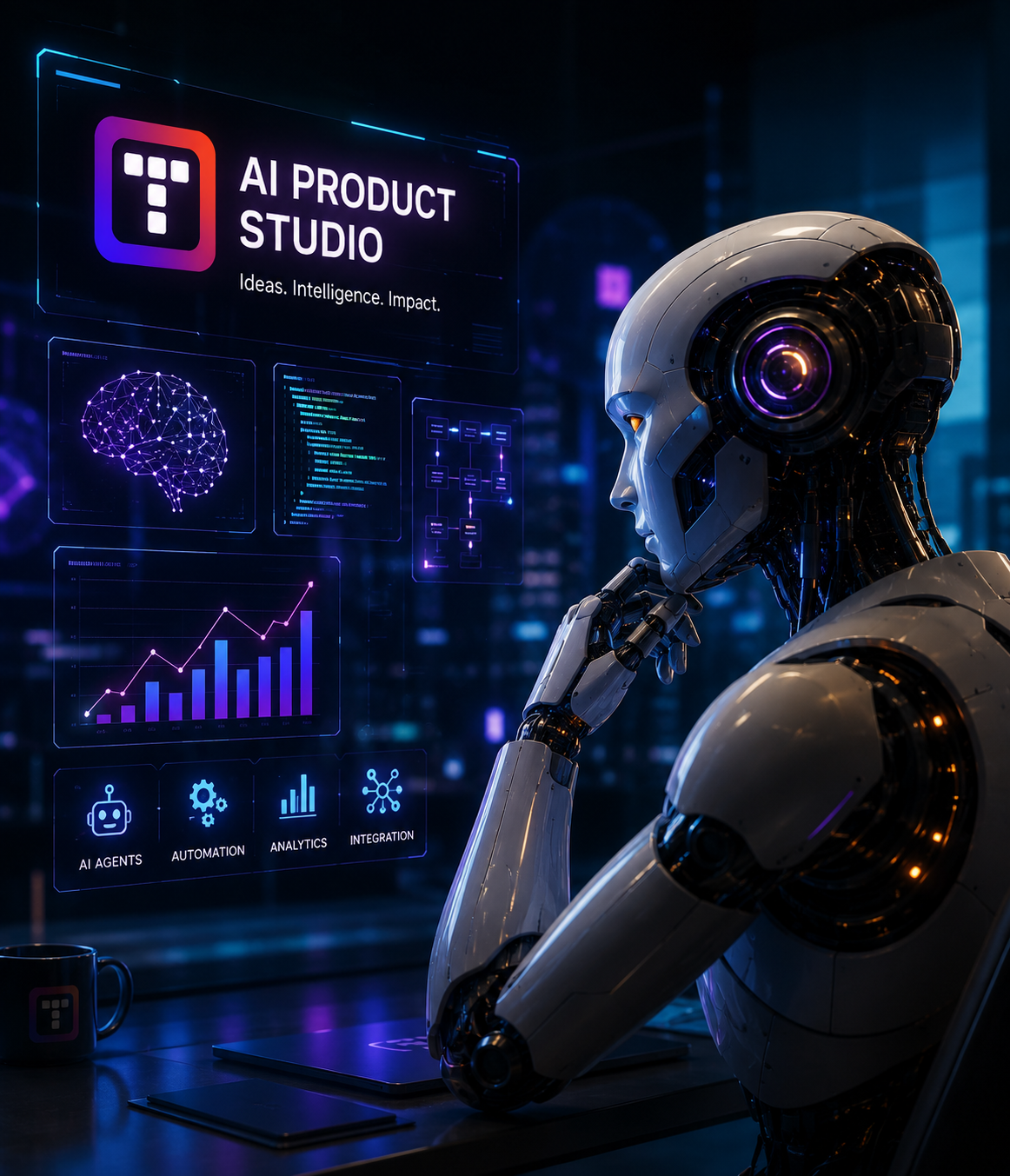
How to build an AI-powered SaaS product in 2026 with AI engine, cloud infrastructure, analytics, database, and security

Quick Summary

Key highlights at a glance.

If you plan to build an AI-powered SaaS product in 2026, the traditional SaaS playbook will only take you so far. Traditional software follows predictable rules. AI-powered products work differently because they must handle probabilistic outputs, hallucinations, model latency, retrieval pipelines, changing API costs, data privacy, and new security risks.

The market opportunity continues to grow quickly. The global AI Software as a Service market reached $131.73 billion in 2025 and could reach $673.1 billion by 2030, growing at a 38.6% CAGR, according to The Business Research Company. Gartner also predicted that more than 80% of enterprises would use generative AI APIs or models or deploy GenAI-enabled applications by 2026, compared with less than 5% in 2023.

However, adoption alone does not make an AI product successful. McKinsey reported that more than 88% of organizations were using AI in at least one business function by late 2025, but many companies still struggled to turn AI adoption into measurable business value. This makes reliability, cost control, security, user experience, and business fit more important than simply adding an AI feature.

This complete guide explains how to build an AI-powered SaaS product in 2026, from validating the idea and defining the MVP to designing the architecture, choosing AI models, implementing RAG and AI agents, securing and testing the product, deploying it, controlling costs, and scaling it in production.

What is an AI-Powered SaaS Product?

An AI-powered SaaS product is cloud-based, subscription software where artificial intelligence plays an important role in the core workflow. AI helps the product understand data, generate content, make predictions, answer questions, or automate tasks that traditional rule-based software cannot handle as effectively.

It is also important to understand the difference between AI-native SaaS and AI-enabled SaaS.

AI-native SaaS is built around AI from the beginning, with AI handling a core part of the product’s main workflow. Without AI, the product would lose much of its primary value and functionality.

AI-enabled SaaS starts as a traditional SaaS product and adds AI features to improve existing workflows, such as AI-assisted drafting, recommendations, or anomaly detection.

Both approaches can work well. The right choice depends on whether you are building a new product around AI or improving an existing SaaS platform. This decision also affects architecture, testing, security, and cost planning.

Traditional SaaS vs. AI SaaS: Quick Comparison

Traditional SaaS products rely on predefined rules and workflows. They process user actions in a predictable way and usually run on standard application infrastructure such as databases, servers, and caching systems.

AI SaaS adds intelligent models to these workflows, which changes how the product handles data, generates outputs, and operates in production.

Dimension Traditional SaaS AI SaaS
Core logic Rule-based and predictable Model-driven and probabilistic
User experience Consistent outputs Outputs may vary for the same input
Data requirements Mainly structured data Structured and unstructured data
Infrastructure App servers, databases, and cache Adds model APIs, vector databases, and AI processing
Development Feature-based testing and deployment Requires AI output evaluation and model or prompt improvements
Cost structure Mostly predictable infrastructure costs Includes variable inference and API costs
Monitoring Uptime, latency, and errors Also tracks output quality and hallucinations

For businesses, this difference affects more than technology. It changes how teams plan pricing, quality assurance, infrastructure, and operating costs, so AI-specific requirements need to become part of the product strategy from the beginning.

What Can AI Actually Do Inside a SaaS Product?

AI helps SaaS products understand information, automate work, and support faster decisions. The most useful applications usually fall into a few clear areas:

  • Assist users in everyday work through copilots and assistants that draft responses, suggest next steps, and speed up routine tasks.
  • Improve search and knowledge access by letting users ask questions in natural language and get answers from documents, product data, or business knowledge.
  • Process and analyze data by extracting information from invoices, contracts, claims, and other unstructured files, then turning that data into useful insights.
  • Support predictions and personalization by identifying patterns that help predict churn, detect fraud, score leads, forecast demand, or recommend relevant content and actions.
  • Automate workflows through AI agents that complete multi-step tasks using tools, APIs, and connected business systems.
  • Improve support and content workflows by answering common questions, summarizing conversations, and creating first drafts for human review.

AI works best when the task involves language, large amounts of information, pattern recognition, or complex workflows. Traditional software logic works better when the task follows fixed rules and requires exact, repeatable results.

Start With the Business Problem and Validate Your AI SaaS Idea

One of the biggest mistakes in AI SaaS development is choosing an AI model before confirming that customers actually need the solution. Start with the business problem and validate the idea before you invest in full development.

Define the customer pain point clearly. Identify who faces the problem, how often it occurs, and how they solve it today.

Talk to potential customers and check whether they would pay for a better solution. Ask about their current costs, budget, and buying intent instead of relying only on general interest.

Study existing competitors and find a clear reason why customers would choose your product. This advantage could come from a better workflow, industry focus, stronger integration, or lower cost.

Check whether you can access the data your AI feature needs, then test whether available AI models can meet the required accuracy, speed, privacy, and reliability.

Finally, build a simple proof of concept before developing the full Minimum Viable Product (MVP). Test it with real users, collect feedback, and confirm that the idea delivers enough value to move forward.

How to Define the Right AI SaaS MVP

Once you validate the problem, define the smallest Minimum Viable Product (MVP) that can prove both customer value and AI feasibility.

First, define the core workflow. Focus on the one task the AI must perform well enough to deliver clear value to users.

Next, separate essential features from optional ones. Include basics such as authentication, the core AI workflow, and account management. Leave advanced analytics, collaboration, and enterprise features for later stages.

Then, test the AI model on the actual use case. Use real or representative data to check whether the model can meet your required quality, speed, and cost.

After that, define measurable success criteria. Track metrics such as accuracy, task completion rate, time saved, and user satisfaction. Add a simple feedback loop so users can rate AI outputs and support future improvements.

Finally, add basic guardrails. Limit AI access, control usage costs, and prevent unsafe outputs from affecting users or sensitive data.

Keep the MVP focused. Prove that the core workflow works and delivers value before investing in advanced features or scale-ready architecture.

How to Design the User Experience Around AI

AI-powered SaaS UX should make AI interactions simple, clear, and easy to control. While designing the experience, focus on the following areas:

  • Keep users in control by letting them review, edit, regenerate, or approve AI-generated outputs.
  • Manage uncertainty clearly by showing when the AI cannot provide a reliable answer.
  • Handle response delays with loading states, streaming responses, or progress indicators.
  • Show sources when needed so users can verify answers based on documents or business data.
  • Add human review for sensitive actions such as payments, record updates, or important communications.
  • Handle failures clearly by showing useful error messages and giving users a clear next step when the AI cannot complete a task.
  • Use the right interface instead of adding chat everywhere. Inline suggestions or one-click actions may work better.
  • Collect user feedback to track output quality and improve the AI experience over time.

How to Design an AI SaaS Architecture and Choose the Right Tech Stack

There is no single tech stack that works for every AI SaaS product. Before development starts, define your expected user load, AI use cases, data requirements, security needs, compliance requirements, team expertise, and budget. These factors will guide the architecture and technology choices.

Step 1: Build the application layer.

Use React, Next.js, or Vue for the frontend and Python, Node.js, Go, or Java for the backend and APIs. This layer handles the user interface, business logic, authentication, permissions, and communication with AI services.

Step 2: Set up the data and retrieval layer.

Use PostgreSQL or MySQL for structured application data and Amazon S3 or Google Cloud Storage for files and documents. If the product needs semantic search or Retrieval-Augmented Generation (RAG), use pgvector, Pinecone, Qdrant, or Weaviate for embeddings and retrieval.

Step 3: Connect the AI model layer.

Integrate commercial model APIs, self-hosted models, or a combination of both. Keep the model layer separate from the core application so you can switch providers or route requests between models when needed.

Step 4: Manage performance and production operations.

Use Redis, RabbitMQ, or cloud queues for caching and long-running AI tasks. Add monitoring to track latency, token usage, errors, costs, and AI output quality in production.

Step 5: Design multi-tenant cloud infrastructure.

Choose a pool, silo, or hybrid model based on cost, security, and compliance needs. Shared infrastructure lowers costs, while dedicated resources provide stronger isolation for enterprise customers. The AWS Well-Architected SaaS Lens explains these tenant isolation models in more detail. Deploy the product on AWS, Google Cloud, or Azure based on your team expertise, scalability needs, and compliance requirements.

A well-designed AI SaaS architecture should connect the frontend, backend, data layer, AI models, and business logic efficiently while maintaining strong security, reliable performance, and controlled operating costs.

Choosing the Right AI Model for Your SaaS Product

The best AI model depends on what your SaaS product actually needs to do. Match the model to the task instead of using the most powerful option for every feature.

SaaS Use Case Best Model Type Why It Fits
Customer support, writing assistants, and general Q&A Commercial LLM APIs Strong language understanding and fast integration
Private-data or compliance-focused SaaS Open-weight or privately hosted models More control over data, deployment, and privacy
Classification, extraction, tagging, and simple automation Smaller AI models Faster and cheaper for narrow tasks
Complex analysis, planning, and multi-step workflows Larger reasoning models Better at handling difficult reasoning tasks
Document, image, audio, or screenshot-based SaaS Multimodal models Can process multiple input types alongside text
Fraud scoring, churn prediction, and demand forecasting Specialized ML models More efficient for structured prediction tasks

For products with different levels of task complexity, use model routing. Send routine requests to smaller, cheaper models and use larger models only when the task needs stronger reasoning or higher output quality.

The right model should give users the required quality while keeping response time, privacy, and inference costs under control.

Building RAG for Private Business Data in AI SaaS Products

Retrieval-Augmented Generation (RAG) helps an AI SaaS product answer questions using private business data such as documents, policies, contracts, or internal knowledge. A clear retrieval pipeline prepares this data and sends the most relevant context to the AI model.

1. Collect and prepare the data.
Bring data from relevant sources, extract clean text, and divide it into meaningful chunks that the system can search efficiently.

2. Create and store embeddings.
Convert each chunk into embeddings and store them in a vector database such as Pinecone, Qdrant, Weaviate, or pgvector.

3. Retrieve the most relevant information.
When a user asks a question, search the vector database for the most relevant content and send that context to the AI model.

4. Protect private business data.
Apply tenant-level filters, permissions, and role-based access so users only retrieve information they are authorized to see.

5. Generate grounded answers.
Combine the retrieved context with the user’s question and clear instructions. Add citations or source references when users need to verify the answer.

6. Monitor and update the RAG system.
Track retrieval quality and refresh embeddings when source documents change so the system continues to use accurate and current information.

RAG works best when an AI SaaS product needs answers from private or frequently changing data. For simple tasks without external knowledge, a direct model call is faster and easier.

When and How to Use AI Agents in SaaS Products

Use AI agents when a SaaS workflow involves multiple steps, decisions, and actions across different tools or systems. A standard LLM usually returns one response, while an AI agent can plan the task, call APIs, use business data, and decide what to do next based on each result.

AI agents work best for tasks where one action depends on another. For example, an agent can research a lead, update CRM data, draft an outreach message, and schedule a follow-up as part of one connected workflow.

To use AI agents effectively, define the task clearly, give the agent only the tools and permissions it needs, and add human approval before sensitive actions such as sending important emails, changing customer records, or processing payments. Track each step and add failure handling so the workflow can recover when an API or tool fails.

For fixed and predictable tasks, traditional automation is usually the better choice. Use AI agents when the workflow genuinely needs reasoning, tool use, and decisions across multiple steps.

Authentication, User Roles, Security, and Data Privacy

AI SaaS products often handle sensitive customer data, private documents, and AI-generated outputs, so teams need to protect more than just user login. Build security around access, permissions, stored data, APIs, and third-party integrations from the beginning.

Focus on four core areas:

1. Authentication and User Access

Use secure authentication methods such as OAuth 2.0, Multi-Factor Authentication (MFA), and Single Sign-On (SSO). Enterprise customers may also require SAML-based SSO.

Verify every user before granting access and block unauthorized login attempts with strong authentication controls.

2. User Roles and Tenant Isolation

Use Role-Based Access Control (RBAC) to define what admins, team members, and other users can view or change.

  • Give each role only the permissions it needs.
  • Enforce permissions at the API and database level.
  • Keep each customer’s data separate in a multi-tenant SaaS environment.
  • Apply the same access rules when AI systems retrieve private business data.

3. Data Security and Privacy

Protect customer data during storage and transfer. Encrypt sensitive information and store API keys, passwords, and credentials in secure secrets-management tools.

Define clear retention policies for AI prompts, responses, uploaded files, and user data. Give customers control over data deletion and logging when required.

4. API Security, Monitoring, and Compliance

Protect every API with authentication, input validation, and rate limits. Give third-party integrations and AI providers only the minimum access they need.

Maintain audit logs to track sensitive actions and data access. Review frameworks such as the NIST AI Risk Management Framework early so you can include security and compliance requirements in the product design from the start.

How to Prevent Prompt Injection, Data Leakage, and AI Abuse

AI SaaS products face security risks that traditional applications do not handle on their own. Teams need to protect model inputs, private data, connected tools, and AI-generated outputs throughout the workflow.

Prevent prompt injection and unsafe content. Treat user inputs, uploaded files, emails, and retrieved documents as untrusted data. Separate system instructions from external content, validate inputs, and isolate risky file processing. The OWASP Top 10 for LLM Applications provides useful guidance on prompt injection and other major LLM security risks.

Protect data and limit permissions. Apply tenant-aware retrieval, role-based access, and least-privilege controls so users and AI agents can access only the data and tools required for their tasks. Add human approval before sensitive or irreversible actions.

Validate outputs before action. Never pass model-generated code, queries, or commands directly into another system. Validate and sanitize outputs before execution, storage, or use in downstream workflows.

Control abuse and monitor activity. Use rate limits, usage caps, content controls, and security logs to reduce automated misuse, unexpected AI costs, and suspicious behavior.

These safeguards reduce the risk of prompt attacks, data leakage, unsafe agent actions, and AI abuse without adding unnecessary complexity to the product.

Testing AI Outputs and Improving Reliability

AI systems can produce different results for the same input, so teams need AI-specific evaluation along with standard software testing.

Build eval datasets and track the right metrics. Use representative test cases with known good outputs, then measure each feature with relevant metrics such as extraction accuracy, resolution rate, or retrieval relevance.

Test hallucinations and RAG quality together. Check whether the model makes unsupported claims and whether the retrieval system selects the correct source information.

Validate structured outputs before use. Confirm that JSON, form data, or other machine-readable responses follow the expected format before another system processes them.

Run regression and adversarial testing. Recheck important use cases after prompt, model, or retrieval changes, and test edge cases, ambiguous inputs, and attack attempts.

Combine human review with fallback handling. Review a sample of outputs manually and define what the product should do when the AI returns a low-confidence, incomplete, or unusable result.

Treat AI evaluation as an ongoing process. Regular testing helps maintain reliability as models, prompts, data, and user behavior change.

AI SaaS Deployment, MLOps, LLMOps, and Production Monitoring

Deploying an AI SaaS product requires standard DevOps practices plus AI-specific monitoring, version control, and quality management.

Manage deployments and versions together. Track code, model versions, prompts, and retrieval settings through CI/CD so teams can test changes and quickly roll back if quality drops.

Monitor performance, routing, and cost. Track latency, token usage, failures, model routing, and spending by tenant, feature, or model to identify performance or cost issues early.

Trace workflows and use feedback. Follow requests across retrieval, prompt construction, model calls, and tool use to find delays or failures. Feed real user feedback back into evaluation datasets to improve AI quality over time.

Use the right operational approach. DevOps manages code and infrastructure, MLOps manages trained models and datasets, while LLMOps focuses on prompts, LLM versions, retrieval pipelines, and AI evaluation.

For most AI SaaS products using commercial LLM APIs, strong LLMOps and production monitoring help maintain reliable performance, consistent quality, and controlled costs.

How to Scale an AI SaaS Product

Scaling an AI SaaS product means supporting more users and workloads without losing speed, reliability, or cost efficiency. Focus on the areas that become bottlenecks as usage grows.

Step 1: Increase application capacity.
Add more servers or instances as traffic grows so the product can handle more requests without slowing down.

Step 2: Reduce unnecessary AI calls.
Cache repeated responses and use background jobs for long-running tasks such as document processing or agent workflows.

Step 3: Handle model limits and failures.
Use retry logic, backoff strategies, and fallback models to keep the product running during provider rate limits or outages.

Step 4: Optimize databases and high-volume workloads.
Batch similar requests when possible and use connection pooling, read replicas, or sharding as data and traffic increase.

Step 5: Monitor vector search and tenant usage.
Track retrieval performance as embedding data grows and monitor customer-level usage so heavy workloads do not affect other users.

Step 6: Control costs as usage grows.
Track model usage, infrastructure spending, and expensive workflows so higher traffic does not reduce margins.

Step 7: Scale only when real usage demands it.
Use production data to identify actual bottlenecks before adding more infrastructure or complexity.

AI SaaS Pricing, Billing, Usage, and Cost Management

AI SaaS pricing needs to balance predictable customer bills with the variable cost of running AI models. A clear pricing strategy should cover four areas.

1. AI SaaS Pricing Models

AI SaaS companies can use flat subscriptions, per-seat pricing, usage-based pricing, credit-based pricing, tiered plans, or hybrid models. A hybrid model often works well because it combines a fixed base price with included AI usage and charges customers only when they exceed that limit.

2. AI-Specific Cost Structure

AI costs increase as customers use more model calls, tokens, storage, compute, or agent workflows. Multi-step agents can cost more because one task may trigger several model and tool calls. Teams should identify these variable costs before setting final prices.

3. Choosing the Right Pricing Model

Choose pricing based on customer usage and product economics. Do not rely only on user count because one heavy user may consume much more AI capacity than several light users. Compare normal and high-usage scenarios, then set pricing that stays clear for customers and protects business margins.

4. Usage and Cost Management

Track token usage, API calls, storage, compute, and AI spending by tenant, feature, and model. This helps teams identify expensive workflows, control overuse, and adjust pricing or usage limits before costs reduce profitability.

Regular usage and margin tracking helps keep the pricing model sustainable as the product grows.

AI SaaS Development Cost and Timeline in 2026

The cost and timeline of an AI SaaS product depend on its scope, AI complexity, integrations, security requirements, and infrastructure. A focused MVP with one core workflow will require less time and budget than an enterprise platform with multiple AI features and compliance needs.

Product scope and AI complexity have the biggest impact. Features such as RAG, vector search, model routing, AI agents, multiple user roles, and complex workflows increase both development effort and ongoing operating costs.

Integrations and security requirements can also extend the project. Connecting CRMs, payment systems, internal databases, or handling sensitive business data requires additional engineering, testing, and security controls.

A typical development process includes discovery and validation, UX and architecture planning, core development, AI integration, testing, deployment, and post-launch improvements.

The best way to estimate both cost and timeline is to define a focused MVP first and plan additional features in later phases.

AI SaaS Development Team: Roles and Expertise You Need

Building an AI SaaS product requires more than software development alone. You need the right mix of product, design, engineering, AI, cloud, testing, and security expertise to take the product from planning to production.

The exact team structure depends on the product stage and complexity, but most AI SaaS projects involve the following roles:

Product and Design

  • Product Manager defines the product scope, priorities, and customer needs.
  • UI/UX Designer creates simple workflows and clear AI interactions.

Engineering

  • Frontend Engineer builds the user interface and manages AI responses.
  • Backend Engineer handles APIs, databases, business logic, authentication, and integrations.
  • AI/LLM Engineer manages model selection, prompt engineering, RAG, and AI evaluation.

Infrastructure and Quality

  • DevOps/Cloud Engineer manages infrastructure, deployment, CI/CD, and production monitoring.
  • QA Engineer tests application functionality and AI output reliability.

Specialized Support

  • Security Expert handles tenant isolation, access control, prompt injection risks, and enterprise security requirements.
  • Data Engineer manages data ingestion, cleaning, and complex RAG pipelines.

For an early-stage MVP, one experienced engineer may cover multiple technical responsibilities. As the product grows, dedicated specialists become more important for AI quality, security, data, and production operations. 

The right approach is to start with a lean core team and add specialized expertise as the product becomes more complex.

From Idea to Launch: Complete AI SaaS Development Roadmap

After validating the idea, move the product through a clear development process that balances speed, quality, and practical business needs.

1. Plan the product and architecture. Define the MVP scope, core workflows, tech stack, data model, multi-tenancy approach, security needs, and AI integration strategy before full development begins.

2. Build the MVP. Develop the essential features around one core workflow. Keep the first version focused so you can test real customer value without adding unnecessary complexity.

3. Integrate and evaluate the AI. Connect the selected model, add RAG or AI agents where needed, refine prompts, and test outputs with real or representative use cases.

4. Secure the application. Add authentication, user permissions, tenant isolation, data protection, and safeguards for AI-specific risks before launch.

5. Deploy and monitor the product. Launch the application and track system performance, AI output quality, errors, usage, and operational costs.

6. Improve based on real usage. Collect customer feedback and product data, fix weak areas, refine workflows, and improve AI performance as usage grows.

Teams may handle some stages at the same time, especially testing and architecture decisions. The goal is to move from a validated idea to a reliable product in a structured way and keep improving it as real customer usage grows.

Common AI SaaS Myths, Mistakes, and Best Practices

Building an AI-powered product requires more than adding AI features. Teams also need to avoid common assumptions, reduce unnecessary development mistakes, and make better product decisions from the beginning.

Common Myths

  • You need to train a model from scratch. Most products can start with commercial APIs or open-weight models.
  • AI agents are best for every workflow. Predictable tasks often work better with standard automation.
  • AI outputs are always reliable. Important workflows still need validation and review.

Common Mistakes

  • Choosing a model before validating the problem can lead to a product that solves the wrong need.
  • Overbuilding the MVP increases development time and cost before demand is proven.
  • Ignoring AI usage costs can make model calls, storage, and agent workflows expensive over time.
  • Skipping regular evaluation can allow quality issues and regressions to go unnoticed.
  • Using sensitive data without proper controls can create privacy, security, and compliance risks.

Best Practices

Start with a clearly validated customer problem and keep the MVP focused on one core workflow. Choose the AI model based on the required quality, speed, privacy, and cost. Test outputs regularly, protect sensitive data with strong access controls, and scale the product only when real usage shows a clear need.

How to Choose the Right AI SaaS Development Partner

A strong AI SaaS development partner should understand more than model integration. The team should know how AI connects with product architecture, security, user workflows, and long-term scalability.

When comparing partners, focus on these areas:

  • AI expertise: Check whether the team has practical experience with model selection, prompt engineering, RAG, AI agents, and output evaluation.
  • Full-stack capability: The partner should understand frontend, backend, databases, APIs, cloud infrastructure, and AI integration as one connected system.
  • SaaS architecture: Look for experience with multi-tenancy, tenant isolation, scalability, and secure data access.
  • Security and reliability: Ask how the team handles prompt injection, data leakage, access control, testing, and production monitoring.
  • Product thinking: A good partner should help keep the Minimum Viable Product (MVP) focused, avoid unnecessary features, and build around real customer needs.
  • Clear communication: You should have visibility into timelines, progress, technical decisions, and expected AI usage costs.
  • Post-launch support: AI products need ongoing monitoring, evaluation, maintenance, and improvement after launch.

The right partner should help build a product that performs reliably in production, not just a demo that looks impressive.

THE TISA supports businesses throughout the AI SaaS development journey by combining product strategy, full-stack engineering, AI implementation, and production support. This helps teams move from early planning to launch and continuous improvement with better coordination.

Conclusion

Building an AI-powered SaaS product in 2026 requires a product mindset that goes beyond simply adding AI to software. The strongest products stay focused on real customer value and make technology decisions based on what the product actually needs, not on what is currently popular.

The work also continues after launch. Teams learn from real usage, refine the product, and adjust their decisions as customer needs, AI capabilities, and operating conditions change. This makes long-term success less about building everything at once and more about creating a product that can evolve without losing reliability, usability, or business value.

Frequently Asked Questions

Q1. Do I need to build my own AI model for an AI SaaS product?

Ans. No. Most products can start with commercial APIs or open-weight models. Custom training becomes useful only when existing models cannot meet specific quality, privacy, or performance needs.

Q2. How can I tell if my SaaS idea really needs AI?

Ans. AI works best for tasks involving language, unstructured data, pattern recognition, or flexible outputs. If the workflow follows fixed rules and needs exact results every time, traditional software may be a better choice.

Q3. Can I add AI to an existing SaaS product?

Ans. Yes. You can start by adding AI to one useful workflow and test how users respond before expanding it across the product.

Q4. Does every AI SaaS product need a chatbot?

Ans. No. The interface should match the task. Smart search, recommendations, autofill, summaries, or one-click actions may provide a better experience than chat.

Q5. How can I avoid relying on one AI model provider?

Ans. Keep the model layer separate from the main application. This makes it easier to switch providers, use different models for different tasks, or add a fallback option when needed.

Q6. What should I focus on after launching an AI SaaS product?

Ans. Track real usage, review AI performance, fix weak workflows, and collect user feedback. Use these insights to improve the product gradually instead of making changes based only on assumptions.

Divyanshi Sain

"Divyanshi Sain is a tech writer at THE TISA with a strong eye for SEO. With 4+ years of experience, she creates clear, engaging content that breaks down complex tech topics and helps readers find exactly what they're looking for."

Scroll to Top
The TISA
Hi there! 👋
How can we help you today?
now