Build With The TISA
⌘ K ✕

AI Sales Agent

Qualify, score, and follow up with leads automatically.

AI Customer Support Agent

24/7 autonomous support with deep knowledge retrieval.

Enterprise Knowledge Copilot

Unified AI interface for all company documentation.

AI Workflow Engine

Orchestrate complex business logic with multi-agent flows.

AI Operations Dashboard

Real-time monitoring for your entire AI fleet.

Lead Intelligence System

Deep research and enrichment for every inbound lead.

Finance Review Agent

Automated auditing and expense categorization.

Custom AI Product

Bespoke AI systems built for your specific requirements.
AI Product Studio

Let's Design Your AI Advantage

2 + 8 =

Let's Design Your AI Advantage

6 + 5 =
Last Updated: September 23, 2026

AI Integration Services Explained: Connecting AI to Your Existing Tech Stack

Divyanshi Sain

16 min read

Quick Summary

Key highlights at a glance.

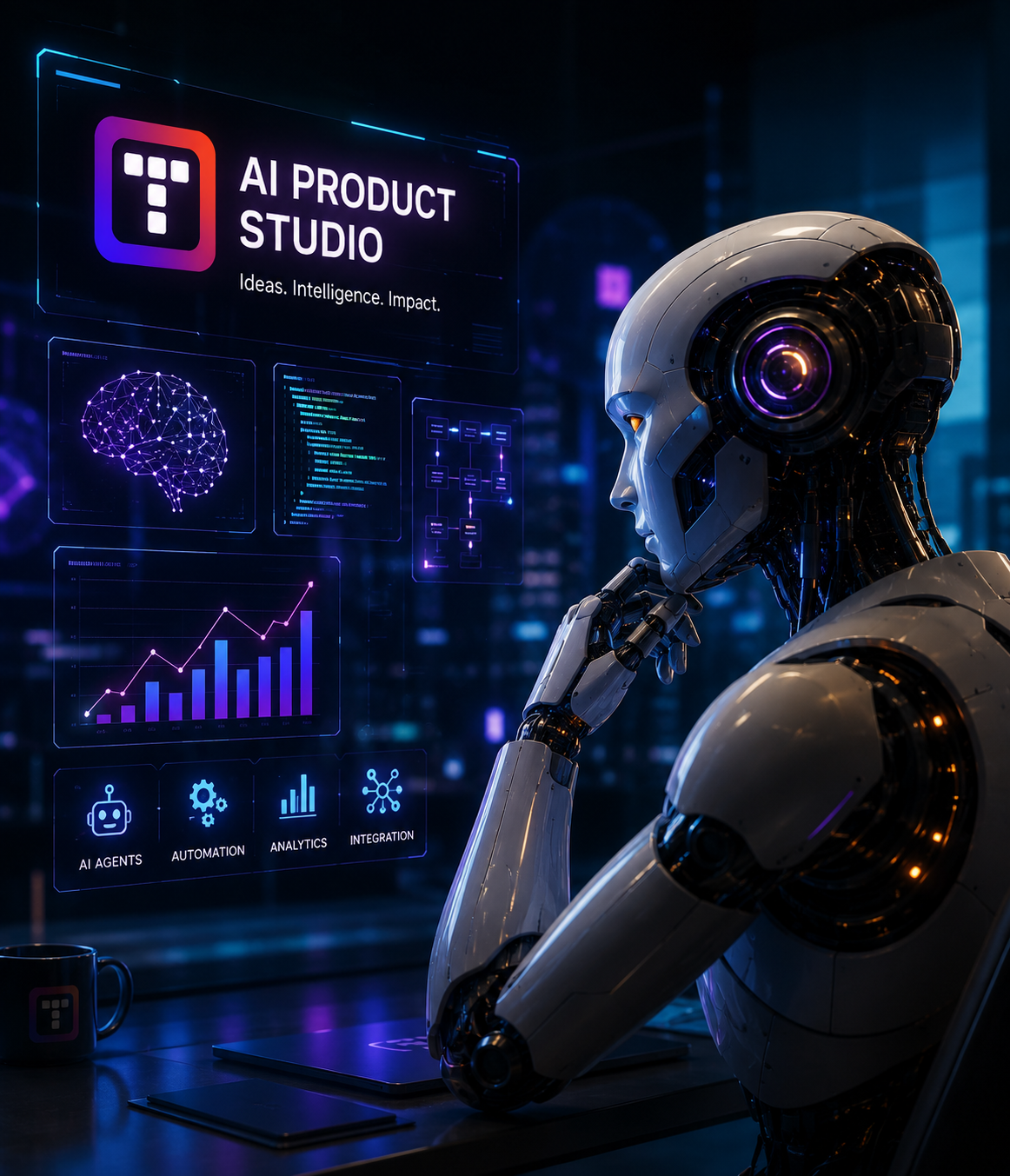
AI Integration Services connecting AI with existing business tech stacks, APIs, cloud platforms, CRM, ERP, databases and automation tools by THE TISA.

Quick Summary

Key highlights at a glance.

Most companies evaluating AI are not starting from zero. They already run a CRM, billing system, support platform, internal knowledge base, and customer-facing product. The question is rarely whether to use AI. It is whether AI can fit into what already exists without breaking it and whether the investment justifies the budget.

Adoption is real but uneven. The U.S. Census Bureau’s Business Trends and Outlook Survey found that 19.8% of American businesses used AI in a business function as of May 2026, while 37% of firms with at least 250 employees did. As adoption grows, many larger companies are connecting AI to systems they already own rather than replacing them.

That is where AI integration services come in. Instead of building a new AI product from scratch, integration connects AI capabilities to existing applications, data, APIs, and workflows so teams can use them within familiar tools.

AI Integration Services: What it is and Why it Matters

AI integration services connect AI capabilities to the systems businesses already use. They bring AI into existing applications, business data, APIs, workflows, and infrastructure. The process includes reviewing the current setup, preparing data, building connections, managing permissions, deploying AI features, and monitoring performance.

AI Integration vs. AI Development: AI integration adds AI to existing systems and workflows. AI development builds a new AI product, capability, or model. Businesses usually choose integration when they already have working systems. They choose development for unique use cases or when model performance creates a competitive advantage.

What AI Integration Is Not: AI integration does more than add a chatbot or connect an API. It makes AI work reliably within existing workflows while managing permissions, security, and performance. It does not usually require replacing existing systems, building an AI agent, or training a custom model.

Why AI Integration Matters in 2026: Businesses are adopting AI but still need to connect it to their existing systems and workflows. Stanford HAI’s 2026 AI Index Report found that 70% of organizations use generative AI in at least one function, while AI agent deployment remains limited. This gap makes AI integration increasingly important. Grand View Research values the AI integration platform market at $11.2 billion in 2026, up from $8.3 billion in 2025.

Why Do Businesses Integrate AI Into Existing Systems?

Businesses integrate AI to make it useful within the workflows their teams already follow. For example, AI that extracts information from documents delivers more value when it sends that data directly into the systems employees already use. Lower AI costs are also making integration more practical for businesses.

Key Business Outcomes: AI can reduce repetitive manual work, make internal knowledge easier to search, help teams create drafts and summaries, process documents, and provide first-pass analysis for human review. However, businesses should not expect results from simply adding AI to an existing process. McKinsey’s State of AI 2026 survey found that 88% of organizations use AI in at least one function, but only 37% reported any EBIT impact. Real business value often requires improving the workflow around AI, not just adding the technology.

When AI Is Not the Right Choice: Businesses should avoid AI when a simple rule-based solution can solve the problem faster and at a lower cost. AI may also not be suitable when data is unreliable, wrong outputs create serious legal or safety risks, human review is not practical, or the process changes too frequently. It also makes sense to fix underlying architecture issues first and define clear, measurable goals before investing in AI integration.

What Are the Different Ways to Integrate AI?

Businesses integrate AI in different ways based on the task, available data, and system requirements. The four main approaches include API integration, RAG, fine-tuning, and custom model development. Each approach comes with different costs, complexity levels, and maintenance needs.

1. API Integration

API integration allows an existing application to communicate with a hosted AI model. The application sends a request to the model and receives a response. This approach works well for summarization, classification, drafting, translation, and other general tasks that do not require proprietary business information.

For many businesses, API integration provides the simplest and fastest way to get started.

2. RAG (Retrieval-Augmented Generation)

RAG gives an AI model access to relevant business information before it generates a response. The system retrieves relevant content from documents or knowledge sources and passes it to the model with the request.

This approach works well for internal knowledge assistants, policy lookup, and product information. AWS Prescriptive Guidance recommends RAG for answering questions based on custom documents because teams can add new information without retraining the model. However, businesses may not need RAG when a knowledge base is small and stable or when a direct database query can return the information faster.

3. Fine-Tuning

Fine-tuning further trains an existing model for a specific task, output format, or style. Teams can use it when prompting alone does not produce consistent results.

Most projects do not require fine-tuning. AWS notes that fine-tuning takes longer and does not work well for information that changes frequently. In many cases, better retrieval or prompt design can solve the underlying problem.

4. Custom Model Development

Custom model development involves building a model for a highly specialized use case. Businesses may choose this approach when the model itself forms part of the product or when existing models cannot meet specific technical or deployment requirements.

However, most businesses need significant data, machine learning expertise, and ongoing maintenance to build and manage a custom model.

Comparison: Time, Cost, and Complexity

Method Best For Complexity Time Cost Data Needed Maintenance
API Integration General AI tasks Low Shortest Lower Minimal Low
RAG Business knowledge and documents Medium Moderate Moderate Accessible documents Medium
Fine-Tuning Consistent outputs and specific tasks Medium–High Longer Higher Curated examples Higher
Custom Model Highly specialized requirements High Longest Highest Large datasets Highest

Businesses can also combine these approaches when needed. API integration handles general AI tasks, RAG provides access to current business information, fine-tuning helps maintain consistent outputs, and custom models support highly specialized requirements.

How Do You Safely Connect AI to an Existing Tech Stack?

Connecting AI to an existing tech stack requires more than adding a model to an application. The existing systems, data, and workflows need to support the integration. A small pilot helps identify issues early before the feature reaches more users.

Step 1: Review the Existing Setup

Start by reviewing the applications, databases, APIs, cloud setup, authentication, third-party tools, and legacy systems already in use. Check where the required data is stored, who can access it, and whether any systems have technical limitations. Missing APIs or restricted data access can create problems before the AI integration begins.

Step 2: Identify Where AI Should Connect

Once the existing setup is clear, decide where AI fits into the system. It can connect to the interface, backend, workflow, or data layer. A good starting point is a task that happens regularly, follows a clear process, and involves enough manual work to make the integration worthwhile.

Step 3: Choose the Integration Method and Model

The selected workflow helps determine the right integration method and model. Some tasks need access to current business data, while others require structured responses or specialized knowledge. Compare models based on task performance, cost, response time, data handling, and hosting requirements. A simple task does not always need a large model.

Step 4: Protect the Core System

After choosing the approach, keep AI functionality separate from core business logic. A separate service or API layer makes it easier to update models or fix issues without affecting the main application. For legacy systems, read-only access, middleware, separate data stores, or scheduled exports can provide the required data without changing the entire system.

Step 5: Test the Integration on a Small Scale

With the connection in place, test one workflow with a limited set of users. Use actual inputs, including incomplete or unexpected cases, and define what a successful result looks like. Review the outputs with people who understand the workflow before expanding the feature.

Step 6: Prepare for Failures and Production

Before moving to production, decide how the system should respond when the AI service fails. Depending on the workflow, it can return to a manual process, send the task for human review, or use a cached result. Add authentication, rate limits, timeouts, retry handling, error logs, and cost controls. Feature flags also make it possible to turn off the AI feature when needed.

Step 7: Monitor Performance After Deployment

After deployment, track output quality, response time, cost, failures, and user feedback. Model updates and changes in business data can affect results over time, so regular monitoring helps identify issues before they affect more users.

Which Tools and Platforms Do You Need for AI Integration?

AI integration uses both platforms and tools for different parts of the system. Platforms provide AI models and services, while tools connect them with data, workflows, infrastructure, and monitoring. The project requirements determine which options the integration actually needs.

LLM Providers and APIs: LLM platforms provide AI models, and APIs connect those models to existing applications. Compare providers based on performance, cost, response time, data policies, and availability. Keep the setup flexible so teams can change providers when needed.

Frameworks and Orchestration Tools: These tools manage prompts, model calls, retrieval, and multi-step workflows. They support complex integrations but can add unnecessary complexity to a simple API connection.

Vector Databases and Data Tools: Vector search helps users find information through natural language queries. Traditional databases usually handle searches based on IDs, dates, or specific field values faster and at a lower cost.

Deployment and Infrastructure: Most integrations can run in an existing cloud environment. Keep AI services separate from core services and use different credentials for development, staging, and production.

Monitoring Tools: Teams can track cost, response time, errors, output quality, and user feedback. Regular monitoring also helps control costs as usage increases.

AI Integration Cost and Timeline: What to Expect

AI integration costs and timelines depend on the type of integration and the existing technical setup. A simple API integration usually requires less time and budget, while RAG adds data preparation and retrieval work. Fine-tuning requires curated training data and evaluation, while custom model development needs more data, expertise, infrastructure, and time.

The final cost and timeline can also change based on:

  • Existing system complexity: Older or complex systems often need more integration work.
  • Data quality and access: Scattered or difficult-to-access data requires additional preparation.
  • Available APIs: Missing or limited APIs can increase both development time and cost.
  • Number of connected systems: More systems require more coordination and testing.
  • Security and compliance: Reviews and approvals can extend the project timeline.
  • Testing requirements: Complex workflows need broader testing before deployment.
  • Expected usage and maintenance: Higher usage increases API, infrastructure, and storage costs, while monitoring and provider updates add to ongoing expenses.

Data access, legacy systems, security approvals, and changing requirements often affect the project timeline more than the AI model itself. A technical assessment helps identify these factors early and gives businesses a more realistic estimate of both cost and delivery time.

Real Examples of AI Integration by Industry

AI integration looks different across industries because businesses use it to support different systems and daily tasks. The examples below show common use cases rather than specific client projects.

Retail and E-commerce: Businesses use AI for natural-language product search, order support, supplier data processing, and review summaries.

Healthcare: AI can support administrative work such as clinical documentation, prior authorization paperwork, policy lookup, and scheduling. These systems support staff and require careful handling of protected health information rather than making clinical decisions.

Finance and Banking: Teams use AI to analyze loan files and contracts, search compliance information, and support internal workflows. Human review remains important for regulated decisions such as credit determinations.

Manufacturing: AI can help teams search maintenance manuals and technical documents, support quality workflows, and analyze incident reports.

Logistics and Supply Chain: Common uses include processing shipping documents, handling delayed freight, and supporting dispatch and planning decisions.

Customer Support: Businesses often start with ticket summaries, reply suggestions, automatic routing, and knowledge retrieval during customer conversations. Agent-assist systems can be easier to implement than fully automated customer-facing bots because human agents can review the output.

Common Mistakes in AI Integration

These mistakes can create unnecessary technical, cost, and maintenance challenges during AI integration.

  • Starting without a clear problem or proper system review: Define the business problem first, then review existing systems, APIs, and data quality before selecting the technology.
  • Embedding AI directly into core systems: Keep AI separate so a failing feature can be disabled or changed without affecting the entire application.
  • Using fine-tuning before simpler options: Prompting or retrieval can often solve the problem with less cost and effort.
  • Skipping evaluation or trusting every output: Measure output quality, test updates, and add human review based on the impact of an incorrect result.
  • Ignoring long-term costs and ownership: Usage costs can grow over time, providers and models can change, and every AI feature needs clear maintenance ownership and a plan for switching vendors if needed.

How Do You Keep AI Integration Secure and Compliant?

AI security and compliance depend on the data the system can access, who can use it, how information moves between systems, and how outputs are handled.

  1. Follow relevant regulations: Requirements depend on the data and users involved. HIPAA may apply to protected health information in the U.S., while GDPR and the EU AI Act can apply to businesses serving EU users. The DPDP Act may also apply to Indian personal data or India-based processing. As reported in the Digital Omnibus on AI, high-risk obligations for Annex III systems were deferred from August 2026 to December 2027, while most transparency requirements remained on their original timeline. Specific requirements should be confirmed with legal counsel.
  2. Protect data and control access: Encrypt data in transit and at rest, use role-based access, and limit permissions so the system only accesses authorized information. Redact sensitive fields before sending data to external providers, review vendor data retention and training policies, and maintain audit logs where required.
  3. Review outputs and maintain accountability: AI can produce confident but incorrect results. Keep human review for decisions involving hiring, lending, or service eligibility, document how AI output was used, and review production outputs regularly. Retrieval-based systems can also provide source references that help users verify answers.

Should You Build In-House or Hire an AI Integration Company?

The decision depends on your team’s capacity, the expertise required, your project timeline, and how much long-term ownership you want to keep internally.

  • Build in-house when your team has the required capacity and AI will remain a long-term part of your product or business systems.
  • Hire an AI integration company when your internal team is focused on other priorities, lacks the required experience, or needs to complete the project within a specific timeline.
  • Use a hybrid approach when you want external expertise for the initial integration while keeping your internal team involved and preparing them to take ownership over time.

Each approach has different strengths and limitations. The table below provides a clear comparison to help you understand the differences.

Factor In-House AI Integration Company Hybrid
Control Highest Shared High
Upfront cost High Moderate Moderate
Speed to start Slower Faster Faster
AI expertise Depends on your team Available immediately Combined
System knowledge Deep Built during discovery Deep plus external expertise
Long-term ownership Internal Requires handover Internal after transfer
Scalability Depends on team capacity Flexible Flexible

If you decide to hire an external company, review how the team approaches your existing systems before choosing a partner. AI expertise alone is not enough because most integrations also involve backend development, APIs, and data engineering. Check how the team handles security, permissions, data requirements, output testing, code ownership, and post-launch maintenance. A reliable partner should also be honest when AI is not the right solution for a particular problem.

How THE TISA Helps Businesses Integrate AI Into Existing Systems

Businesses looking for the best AI integration service company need more than a team that can connect an AI model to existing software. THE TISA focuses on understanding how the current system works and finding practical ways to add AI without unnecessarily changing established workflows.

Start with the actual business problem: THE TISA reviews the existing software, data, APIs, and workflows before recommending an approach. The team identifies where AI can add value and where another solution may work better. If AI integration is not the right approach for a specific business problem, THE TISA communicates that honestly instead of recommending AI where it does not add meaningful value.

Integrate AI into the systems you already use: Rather than treating AI as a separate feature, THE TISA connects it with existing applications, backend services, databases, and business workflows. Depending on the requirement, this can include LLM integration, RAG, workflow automation, APIs, or AI agents.

Build for real-world use: THE TISA focuses on making the integration work reliably within the existing environment. The process covers testing, security, access controls, deployment, monitoring, and ongoing improvements to support changing business needs and usage.

THE TISA combines AI expertise with full-stack development to help businesses build AI integrations that work with their existing software and support real business requirements.

Conclusion

Successful AI integration is not about choosing the most advanced model. It is about solving a real business problem and making AI work effectively with your existing systems and workflows. The best results come from choosing the right approach, testing it with real use cases, and measuring its impact over time. Your existing tech stack is not an obstacle. It can provide a strong foundation for AI integration when businesses build on what already works and add AI where it delivers clear value.

Frequently Asked Questions

Q1. Do I need AI expertise within my company to integrate AI?
Ans. No. Your internal team should understand the business and existing systems, while an experienced AI development or integration team can handle the technical implementation.

Q2. Can AI integration work with legacy software?
Ans. Yes. Even older systems can often connect with AI through APIs, middleware, databases, or other integration layers. The available options depend on the existing architecture.

Q3. What happens if the AI service goes down?
Ans. A well-designed integration should handle failures without affecting the entire application. Businesses can use fallback options, error handling, and separate AI services to reduce disruption.

Q4. Can we start with one AI feature and expand later?
Ans. Yes. Many businesses begin with one specific use case, evaluate its results, and add more AI capabilities based on business needs.

Q5. Who owns the AI integration code after development?
Ans. This depends on the development agreement. Businesses should clarify code ownership, documentation, access, and handover requirements before starting the project.

Divyanshi Sain

"Divyanshi Sain is a tech writer at THE TISA with a strong eye for SEO. With 4+ years of experience, she creates clear, engaging content that breaks down complex tech topics and helps readers find exactly what they're looking for."

Scroll to Top
The TISA
Hi there! 👋
How can we help you today?
now