
Around 85% of registered users
Multilingual RAG and Conversational AI
NovaMind AI
Multilingual RAG Voice and Text Assistant
NovaMind AI supports voice and text conversations in English, Hindi, and Hinglish. It detects each message’s language, retrieves answers from business documents using hybrid keyword and vector search, cites its sources, and hands off to a person when the evidence is weak.
USAMarket
5 Months (February–June 2024)Timeline
4 MembersProject Team
Artificial IntelligenceIndustry
Executive Summary
NovaMind AI
- Client
- Albert Joe
- Market
- USA
- Industry
- Artificial Intelligence
- Timeline
- 5 Months (February–June 2024)
- Team
- Project Team - 4 Members
- Services
- AI Agent Development, Generative AI Development, RAG Development Services, AI Application Development
- Technology
- Next.js, Express.js, REST APIs, MongoDB Atlas
- Primary Outcome
- Around 85% of registered users Monthly Active User Rate
Verified project metrics
Project Outcomes
From June 2024 through August 2026, NovaMind recorded 2,000+ conversations. Approximately 50% were non-English or mixed-language, 40% used voice, 55% of users returned in two or more separate weeks, and the monthly active-user rate was approximately 85%. These usage and reliability figures are distinct from answer accuracy. Retrieval hit rate, groundedness, correct refusals, language match, and resolution without a human are being benchmarked.
Reporting period: June 2024–August 2026. Active users means registered users with at least one conversation in a month; returning users means activity in two or more separate weeks. Speech-to-text success means transcripts accepted without retyping or retrying. AI request success means a response without an error, not a correct answer. API latency covers non-AI endpoints. Availability was monitored with UptimeRobot. Answer-quality benchmarking is in progress.
- Around 97% AI Request Success Rate (Not Answer Accuracy).
- 300–500 milliseconds Non-AI API Response Time.
- Around 99.5% Platform Uptime.
Project Overview
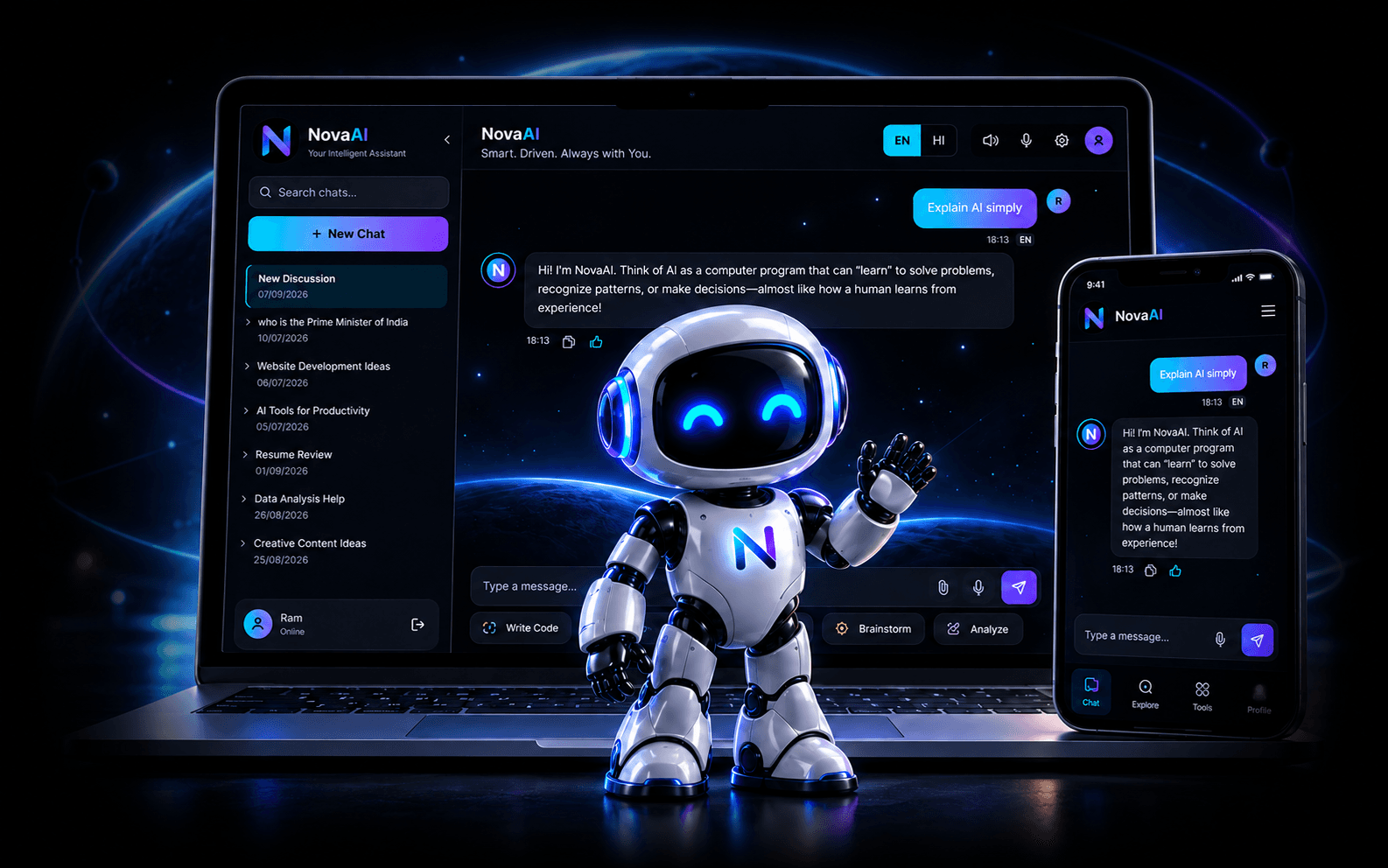
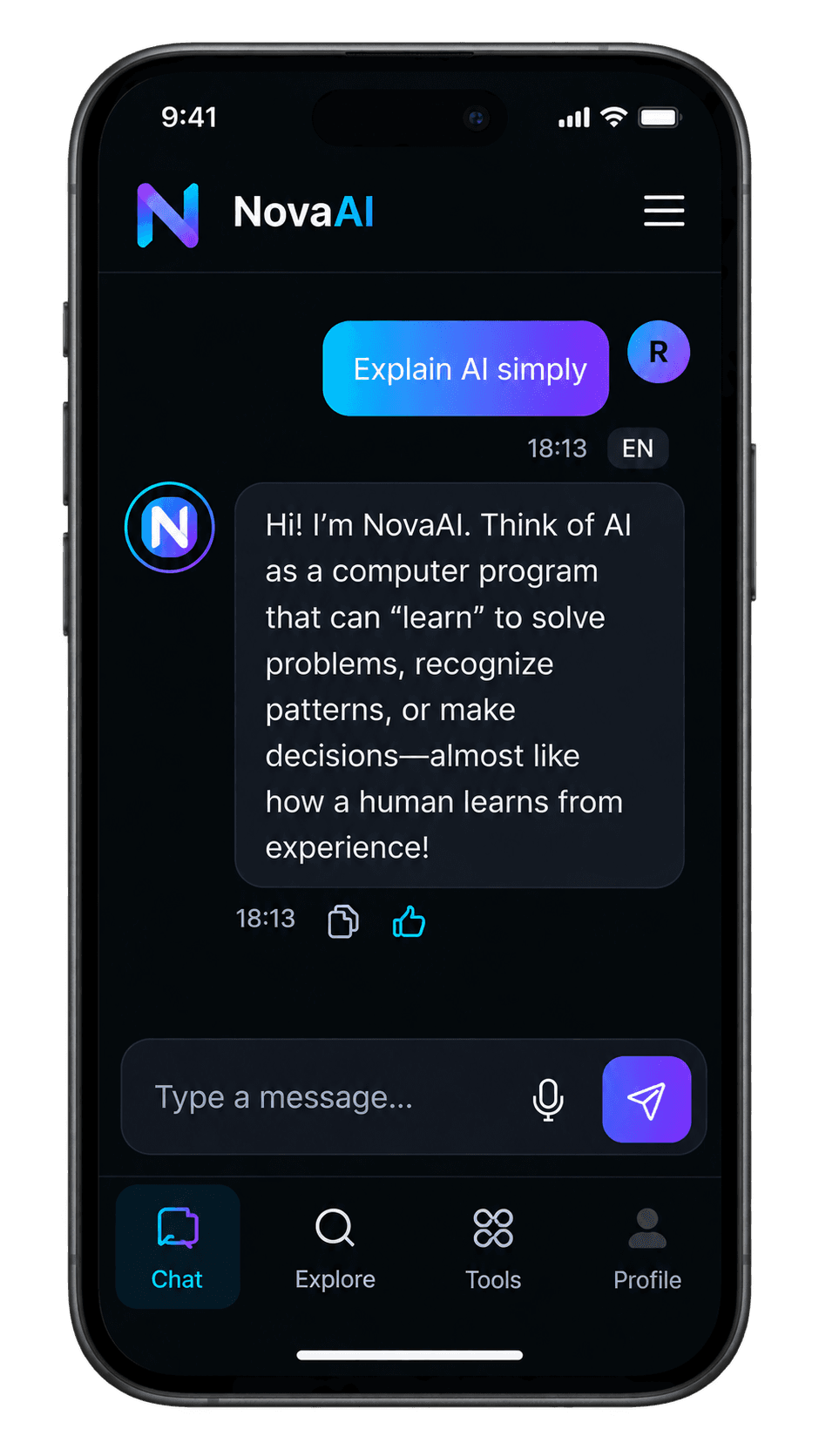
NovaMind AI is a multilingual voice and text assistant built for customer support and internal knowledge. Users can switch between English, Hindi, and Hinglish during the same conversation.
THE TISA developed the platform for Albert Joe, Founder of NovaMind AI, with a four-person team. The discovery-to-launch timeline ran from February to June 2024.
The application connects per-tenant business knowledge, hybrid retrieval in Elasticsearch, source citations, approved API actions, and human handoff. Conversation history and voice processing are part of the same application.
From June 2024 through August 2026, the platform recorded 2,000+ conversations, approximately 50% non-English or mixed-language use, approximately 40% voice use, and approximately 99.5% uptime. Answer-quality benchmarks are in progress.
What We Built
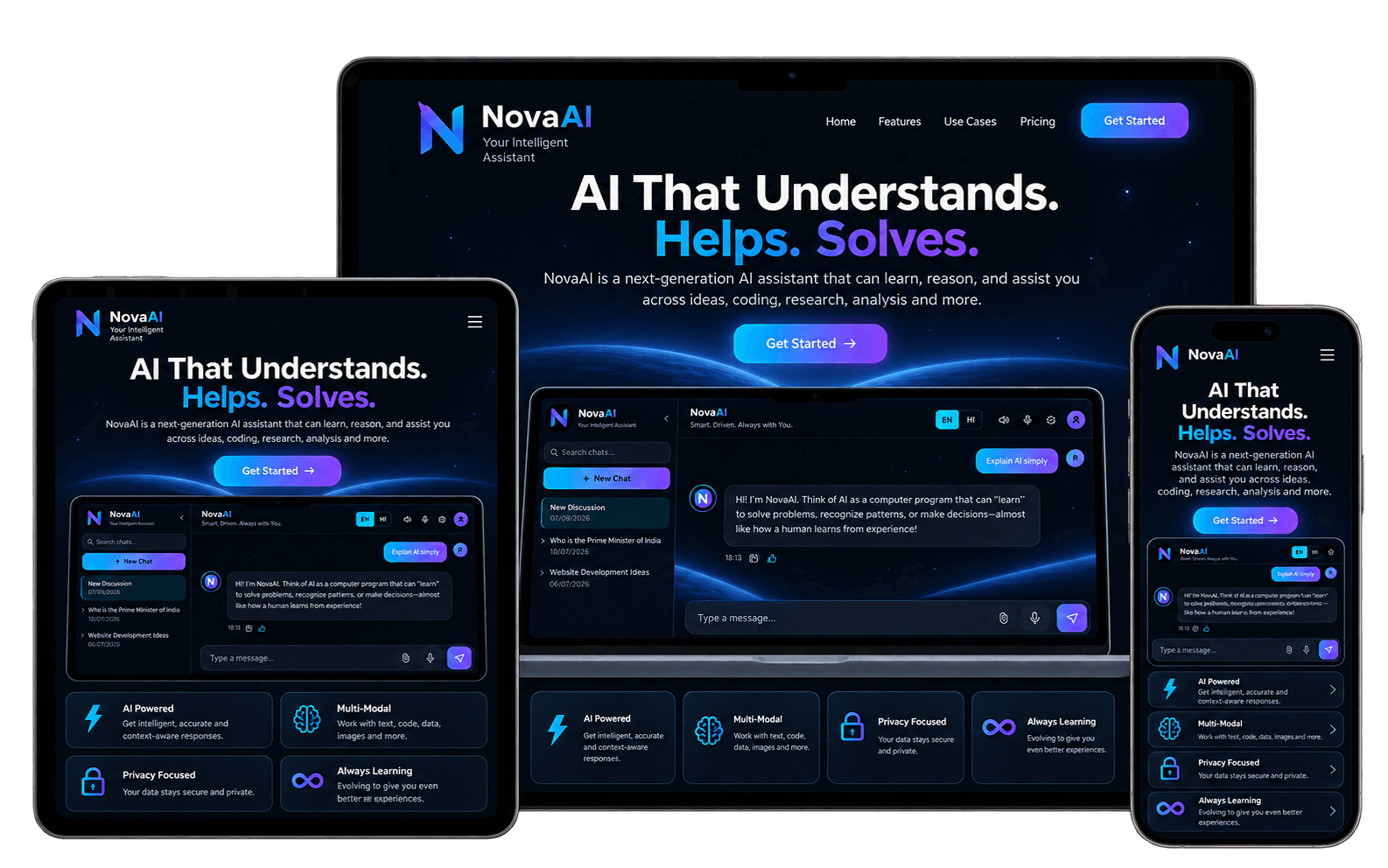
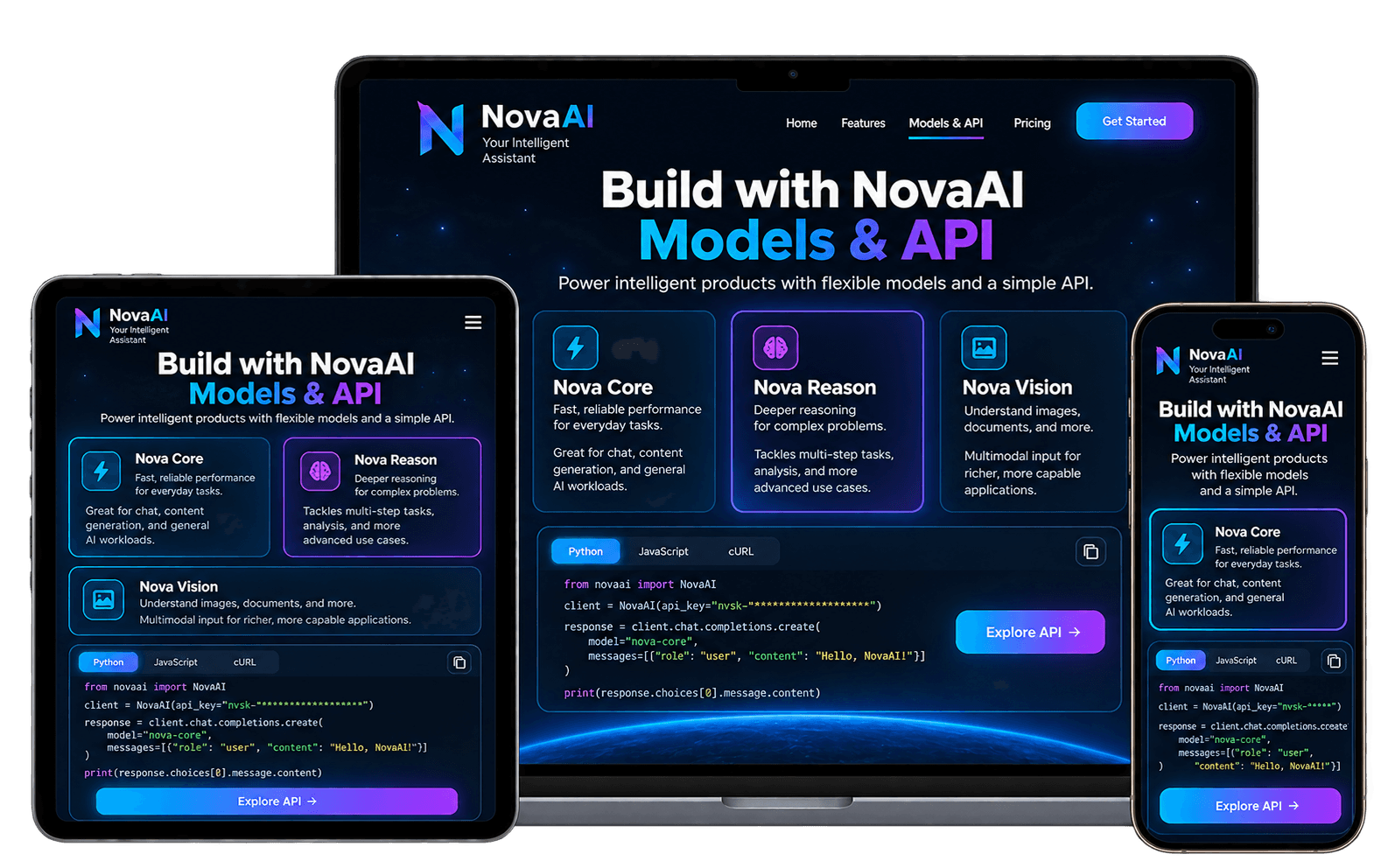
We built a complete multilingual RAG application with Next.js voice and text controls, authentication, sessions, conversation history, streamed replies, and responsive layouts. The knowledge layer includes per-tenant document collections, hybrid keyword and vector retrieval in Elasticsearch, source citations, re-indexing when documents change, and an admin upload and test flow. LangChain coordinates prompts and memory, LlamaIndex supports indexing and citation mapping, LangGraph coordinates approved API actions and human handoff, and LangSmith supports tracing and evaluation. OpenAI GPT-4o handles generation, with Claude available as an alternate path for long-context answers.
Client Background
Albert Joe, Founder of NovaMind AI, needed an assistant that could support users who switch languages, mix languages within a message, and alternate between voice and text. The assistant needed to answer from the business’s actual policies and procedures, retain relevant context for follow-up questions, and pass unresolved requests to a person with the conversation context.
Project Scope
We worked on the complete project, from planning and design to deployment, including:
- Requirement gathering
- Conversation and user-flow planning
- Voice, text, and multilingual interaction planning
- UI/UX design
- Frontend development
- Backend and REST API development
- User authentication
- MongoDB Atlas setup
- OpenAI, RAG, and LangChain implementation
- Python-based AI processing
- Conversation memory
- Speech-to-text and text-to-speech setup
- Real-time response streaming
- Performance optimisation
- Security implementation
- Cross-browser and device testing
- VPS configuration, deployment, and live review
Target Audience
NovaMind AI is built for businesses that want to use AI for customer support or daily internal work. The main users include:
- Product teams
- Customer support teams
- Operations teams
- Service-based businesses
- SaaS companies
- Enterprises
- Businesses serving English, Hindi, and Hinglish-speaking users
Objectives
The main objectives were to:
- 01Create an AI platform for voice and text conversations
- 02Support conversation in English, Hindi, and Hinglish
- 03Identify the user’s language automatically
- 04Allow users to switch languages during a conversation
- 05Give answers based on previous messages
- 06Save and manage conversation history
- 07Find useful information from connected business data
- 08Provide fast, real-time responses
- 09Avoid repeated or unrelated answers
- 10Protect user accounts and conversation data
- 11Support future integrations and new AI features
Business Challenge
Before development, we looked at the main problems users face when talking to AI in different languages.
- 01Basic chatbots often struggle when users switch between languages. Sometimes, users have to select a language manually or repeat their message.
- 02Voice conversations were also more complex. The system had to convert speech into text, understand the language and question, and then give the reply in voice.
- 03The platform also needed to remember earlier messages so users could ask follow-up questions without repeating the same details.
- 04The main challenge was to bring language detection, voice support, conversation memory, and useful AI responses into one simple platform.
Our Solution
We developed a multilingual AI platform for voice and text conversations.
- Detect the language of each message, including mixed-language and Roman-script Hindi input.
- Retrieve from the asking customer’s own knowledge base using hybrid keyword and vector search in Elasticsearch.
- Rank the search results and provide the top five passages as evidence for answer generation.
- Generate answers from retrieved passages and map citations back to their source documents.
- Re-index updated business documents and allow administrators to test questions before publishing knowledge changes.
- Store conversation history in MongoDB Atlas and send only relevant recent turns with each new question; Redis caches session context.
- Stream text over WebSockets and provide speech input and spoken replies within the same conversation workflow.
- Run approved business API calls through the backend, enforce permissions, and request user confirmation before changing data.
- Hand off unsupported or out-of-scope requests to a person with the transcript and retrieved passages.
Before → After
How Conversations Changed
How Conversations Changed
Before
Users mainly depended on text-based chatbots
After
Users can communicate through voice or text
Before
Language had to be selected manually
After
The system detects English, Hindi, Hinglish, and Roman Hindi automatically
Before
Language changes could interrupt the conversation
After
Users can switch languages during the same conversation
Before
Follow-up questions often lost earlier details
After
Previous messages help continue the conversation
Before
Answers mainly depended on general AI knowledge
After
The system uses connected business information when needed
Before
Users had to wait for the complete response
After
Answers appear on the screen in real time
Before
Voice processing required separate tools
After
Voice input, AI response, and playback work in one flow
Before
Earlier discussions were difficult to continue
After
Conversation history is saved across sessions
Delivery ownership
THE TISA's Role
Product Strategy
Discovery
UX/UI Design
AI Architecture
Backend Engineering
Frontend Engineering
Mobile Development
Integrations
QA
Key Features
The platform includes the following features:
03Voice and Text Conversations
01
Voice and Text Conversations
- Chat through voice or text
- Switch between speaking and typing
- Receive replies in text or voice
- Support English, Hindi, and Hinglish
- Detect the user’s language automatically
- Understand Roman Hindi and mixed-language messages
- Support language switching during conversations
- Per-message detection for English, Hindi, and Hinglish
- Voice and text conversations with speech-to-text and spoken replies
- Relevant conversation context for follow-up questions
- Approved business API actions with permissions and confirmation before changes
- Human handoff with the transcript and retrieved passages
- Tracing of refusals, handoffs, tool calls, and retrieval behavior
- Real-time text streaming over WebSockets
- Save previous conversations
- Continue earlier discussions using relevant recent turns
- Cache session context in Redis
- Secure registration and login
- Manage user sessions and logout
- Offer Starter, Pro, and Enterprise plans
- RAG over FAQs, SOPs, product sheets, and policy documents with source citations
- Per-tenant knowledge bases with tenant filters applied before search scoring
- Hybrid BM25 keyword and vector search in Elasticsearch
- Merged ranking that supplies the top five passages to the generation step
- Re-indexing when business documents change
- Admin upload and test flow before publishing knowledge changes
- Simple chat interface
- Clear listening, loading, and processing states
- Responsive design across devices
- Clear error and retry options
Development Process
Mapped user languages, voice and text interactions, and questions requiring documents versus live business data. Audited FAQs, SOPs, and policies for gaps and outdated versions.
Prepared heading-aware chunks with tenant, document-version, and language metadata. Built hybrid keyword and vector retrieval in Elasticsearch and the administrator test flow.
Connected the Next.js interface, Express APIs, Python AI processing, conversation storage, grounded prompts, citations, model routing, approved API actions, and human handoff.
Implemented tenant filters, server-side credentials, audit logging, permission checks, and confirmation for changes. Tested cross-language questions, browser and device behavior, and failed-request recovery.
Deployed using an Ubuntu VPS, Nginx, and PM2, with LangSmith tracing and UptimeRobot availability monitoring. The discovery-to-launch project ran from February to June 2024.
Technical Challenges
Technology Stack
- Next.js
- Express.js
- REST APIs
- MongoDB Atlas
- OpenAI GPT-4o
- Claude
- Hugging Face
- LangChain
- LangGraph
- LlamaIndex
- LangSmith
- Python
- JWT Authentication
- WebSockets
- Redis
- Elasticsearch
- PostgreSQL
- Ubuntu VPS
- Nginx
- PM2
- SSL
- GitHub
Why These Technologies?
- Next.js. To develop a fast and responsive conversational interface
- Express.js. To build backend APIs for users, conversations, and AI requests
- MongoDB. To store users, conversation history, sessions, and flexible message data
- OpenAI GPT-4o. To generate responses from retrieved business passages in the user’s language
- LangChain. To manage prompts, memory, tools, and RAG workflows
- Python. To run AI processing, document preparation, and language services
- WebSockets. To support real-time communication and response updates
- JWT Authentication. To protect user accounts and active sessions
- Nginx. To manage secure requests and route traffic to the application
- PM2. To monitor backend processes and restart services when required
- SSL. To protect communication through HTTPS
- Claude. To provide an alternate model path for long-context business answers and safer refusals
- Hugging Face. To support language detection and speech-related models where needed
- LangGraph. To coordinate multi-step agent flows, tool calls, and handoff decisions
- LlamaIndex. To support document indexing and citation mapping
- LangSmith. To trace retrieval and answers and support the answer-quality benchmark in progress
- Redis. To cache session context for follow-up requests
- Elasticsearch. To combine BM25 keyword search and vector retrieval with tenant filtering
- PostgreSQL. To store structured tenant metadata and vector-backed retrieval where required
Design Decisions
The platform was designed to keep voice and text conversations simple and easy to follow. Important decisions included:
- Conversation-focused interface
- Voice and text controls in one place
- Clear user and AI messages
- Easy access to previous conversations
- Visible listening and processing states
- Automatic language detection
- Real-time response display
- Simple login and account flow
- Responsive layouts across devices
- Clear error and retry messages
- Only essential controls in the chat area
- Easy voice playback for generated responses
SEO and Indexing
NovaMind AI includes a public website and private user conversation pages. SEO work focused on the public website, while private account and conversation pages were kept out of search results. The work included:
- Clear page titles
- Proper page headings
- Relevant AI platform keywords
- Multilingual AI-related content
- Voice assistant-related content
- Clean page URLs
- Meta descriptions
- Mobile-friendly layouts
- Image optimisation
- Fast public-page loading
- Restricted indexing for private pages
- Clear feature and technology sections
Performance Optimisation
The implementation coordinates conversation context, response streaming, voice processing, and error recovery. Non-AI endpoint response time is reported separately from answer quality and complete voice-response latency.
- Stream responses over WebSockets as tokens arrive
- Send relevant recent conversation turns instead of the complete history
- Cache session context in Redis
- Show listening, processing, and speaking states
- Provide clear error messages and retry options
- Use responsive layouts across devices
- Trace retrieval and AI requests in LangSmith
- Operate application services on an Ubuntu VPS with Nginx and PM2
Security
Tenant filtering runs inside retrieval before scoring. Application controls protect accounts and private conversations, while backend code enforces permissions and confirms actions that change data. No SOC 2, HIPAA, or other certification is claimed for NovaMind.
- Tenant filtering before keyword or vector search scoring
- Password hashing and JWT sessions
- Protected APIs and conversation records
- Input validation, request sanitization, and rate limiting
- CORS configuration for browser requests
- Server-side model API keys
- HTTPS and secure MongoDB Atlas connections
- Only the question, relevant turns, and retrieved passages sent to model providers
- User confirmation before actions that change business records
- Refusals, handoffs, and tool calls logged for audit
- Data residency, retention, and deletion governed by the client agreement
Architecture Diagram
Results
For Users
- 01Users can speak or type in English, Hindi, and Hinglish, switch language during a conversation, and ask follow-up questions with relevant context. Answers include business-source citations, and unresolved requests can be handed to a person with the transcript.
For the Client
- 01The client received a multilingual RAG application connecting customer-specific knowledge, approved API actions, voice and text interactions, and human handoff. The four-person project ran from February to June 2024.
Project Showcase
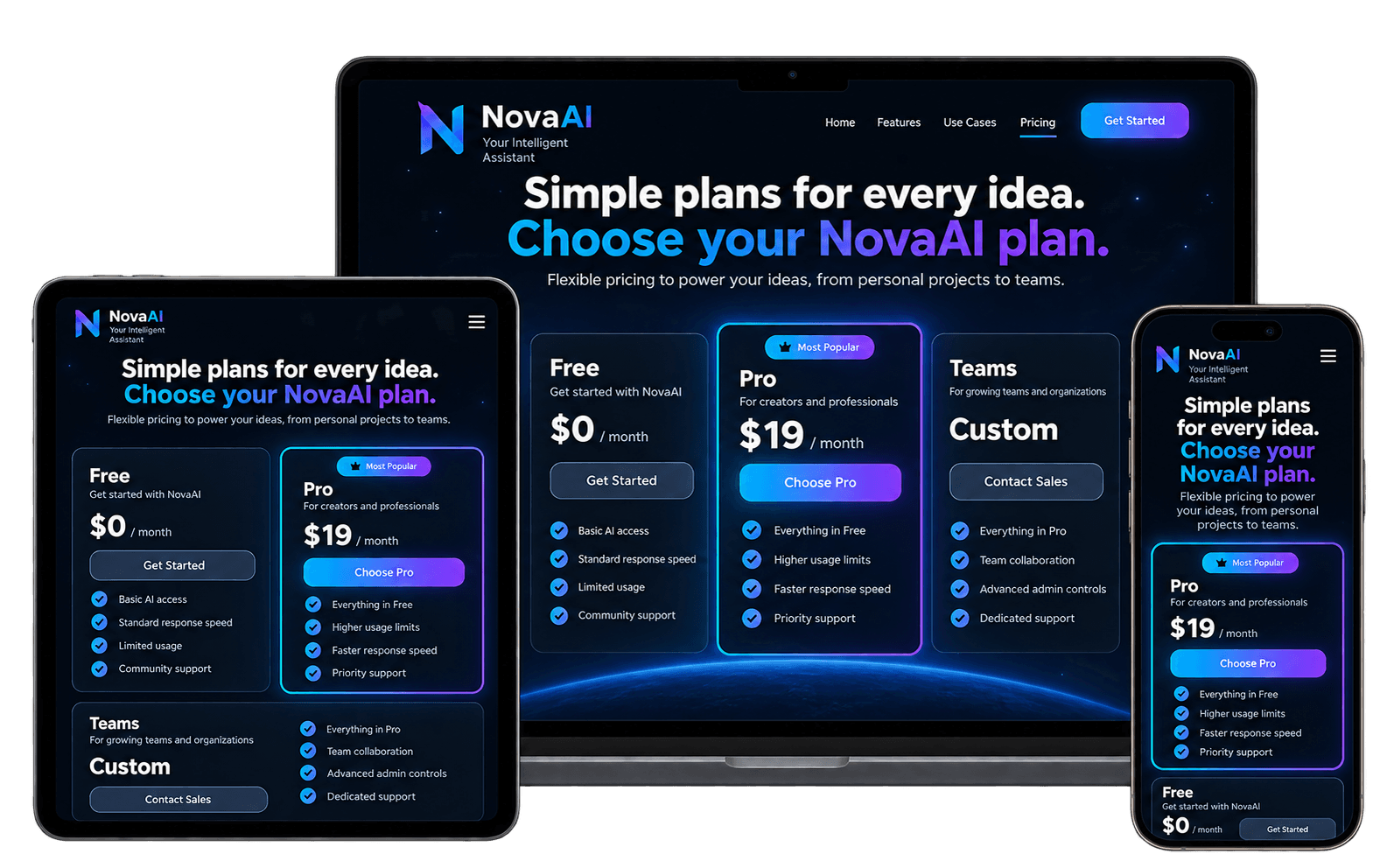
Visual Identity
Visual Identity
NNovaMind AI
InterAa
NovaMind AI
Color
- #7C3AED01Primary Purple124 58 237
- #8B5CF602Bright Violet139 92 246
- #05081603Dark Background5 8 22
- #0F172A04Secondary Background15 23 42
- #11182705Card Background17 24 39
- #FFFFFF06White255 255 255
- #E2E8F007Light Text226 232 240
- #94A3B808Secondary Text148 163 184
- #3B82F609Blue Accent59 130 246
Type
- 01 · Primary4 weights
Inter
ABCDEFGHIJKLMNOPQRSTUVWXYZ
abcdefghijklmnopqrstuvwxyz
0123456789- Regular
- Medium
- Semibold
- Bold
Client Testimonial
We wanted an AI platform where users could speak or type in English, Hindi, and Hinglish without selecting a language each time. Team TISA understood this requirement clearly and developed NovaMind AI around the way our users communicate. Users can switch languages, use voice, and continue conversations without interruption. We are impressed with the final platform and satisfied with how the team managed the development process.
Albert JoeFounder, NovaMind AI
Future Scalability
Planned capabilities, distinct from the current implementation:
- 01
Additional Indian and international languages
- 02
WhatsApp, Slack, and Microsoft Teams channels
- 03
CRM write-back with approval workflows
- 04
Team accounts with role-based access
- 05
Analytics dashboards for retrieval quality and containment rate
Lessons Learned
While building NovaMind AI, we learned that:
- 01
Start with clean, current, well-structured business documents
- 02
Use hybrid search for both exact identifiers and paraphrases
- 03
Test in the languages and mixed-language patterns customers actually use
- 04
Apply tenant isolation during retrieval, not only in the interface
- 05
Design human handoff with the transcript and retrieved passages
- 06
Send relevant recent turns rather than the entire conversation history
- 07
Record a business baseline and start evaluation before launch
- 08
Keep API request success separate from factual answer accuracy
Conclusion
NovaMind AI connects multilingual voice and text conversations to business knowledge through tenant-scoped hybrid retrieval, source citations, contextual follow-ups, approved API actions, and human handoff. For a similar assistant, begin with a review of documents, languages, data rules, required systems, and the business outcome to measure. Explore THE TISA’s RAG development services or discuss your project through https://www.thetisa.com/get-in-touch.
Building Something Similar?
Talk with THE TISA about the architecture, timeline, team, and technology required for your project.