






Retrieval-Augmented Generation

RAG Development Services

Your business knowledge.
Answers your teams can verify.

THE TISA builds custom RAG applications that connect AI to your documents, knowledge bases, and business systems-helping users find relevant information and trace answers back to their sources.

Find THE TISA on

Explore Our Work

CampusFlowEZSKUGroup Hotel IndexLockYantraNarsik LogisticsOpsPilotRatiwalSpeakify

AI Applications.
Engineering in Practice.

Explore selected AI development case studies covering business requirements, architecture decisions, integrations, and delivered features. See how THE TISA approaches knowledge retrieval, document processing, and AI-assisted workflows, with project-specific implementation details and reported results.

Enterprise RAG Development
Services We Offer

We build intelligent, production-grade AI chatbots grounded in your actual business data. These aren't generic chat interfaces. We engineer systems that understand your industry, integrate with your databases, and deliver consistent answers across every customer interaction.

Knowledge assistants built around your workflows

Custom RAG Application Development

Develop custom retrieval-augmented generation applications that connect language models to approved business knowledge. THE TISA builds knowledge assistants and research tools around defined user questions, source material, and access requirements. Development covers document retrieval, context selection, model integration, source citations, and feedback collection. Representative test questions help evaluate whether responses are supported by the retrieved evidence, with clear handling for missing information and conflicting sources. Content freshness depends on the agreed synchronization process, with scoped API queries used where live business data is required.

Application Capabilities

  • Custom knowledge assistants and research tools
  • Retrieval and answer-generation pipelines
  • Source citations and supporting passage views
  • User feedback and answer review workflows
  • Missing-evidence responses and escalation
  • Application evaluation and deployment documentation
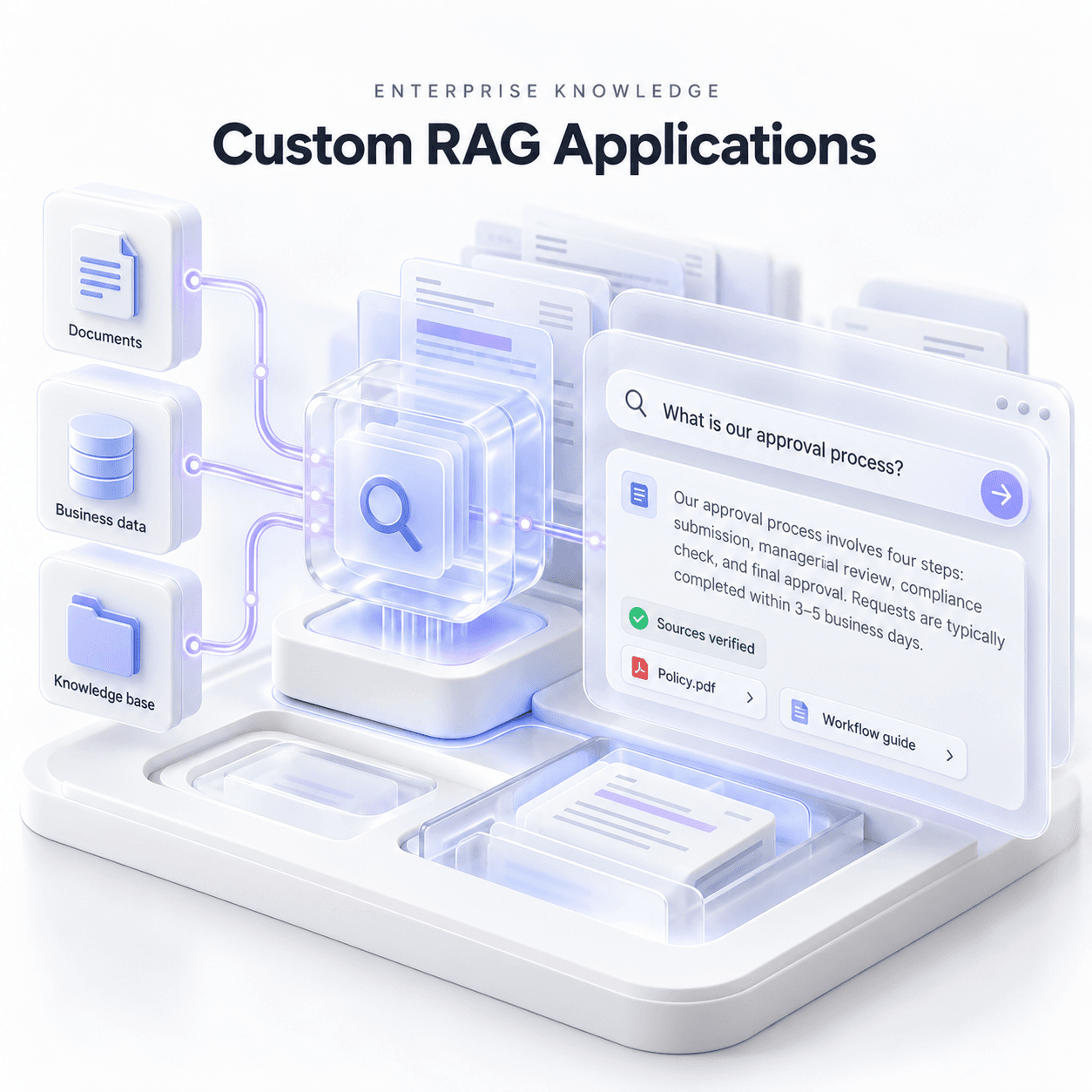
Custom RAG application development illustration — THE TISA

Conversational access to approved company knowledge

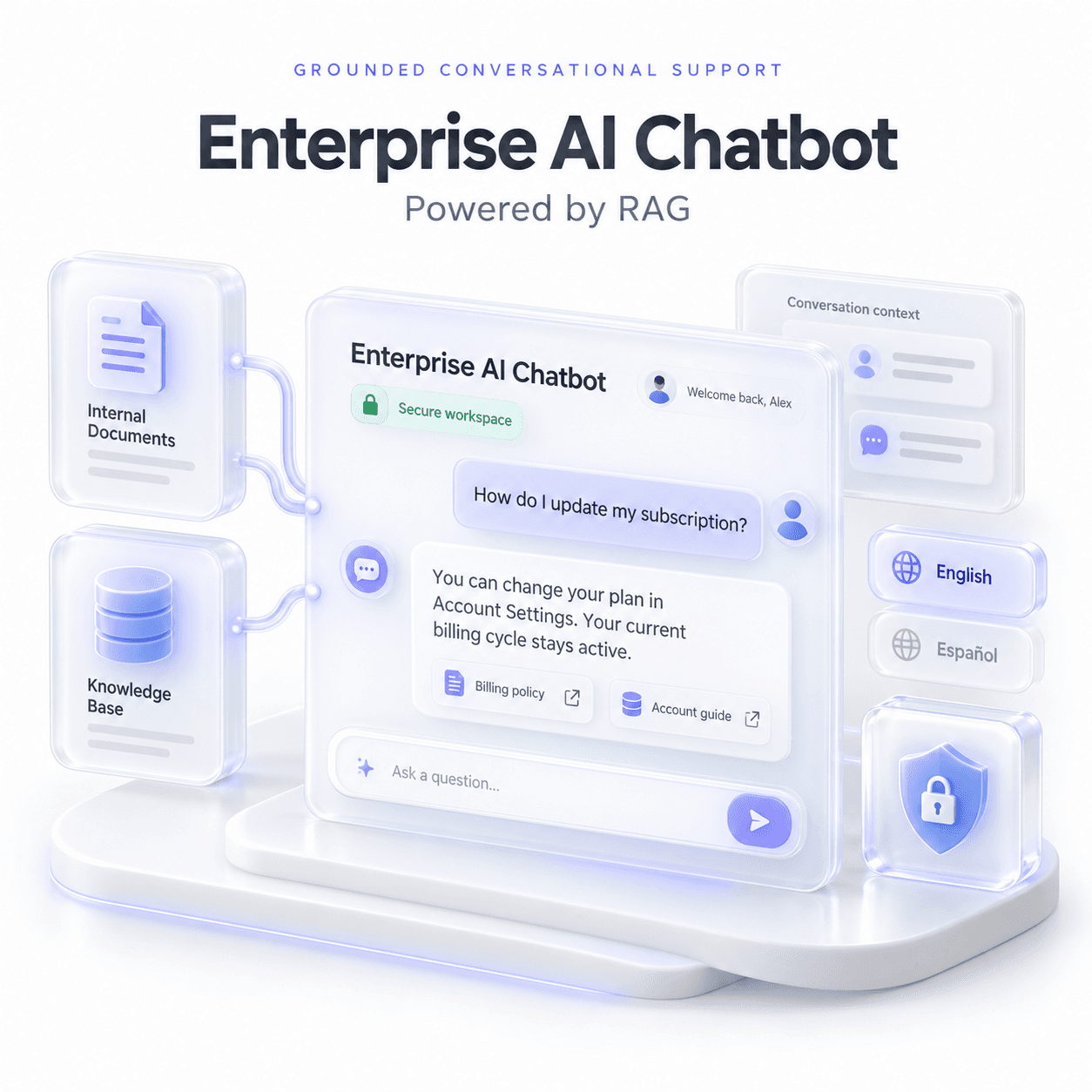
Enterprise AI Chatbot Development with RAG

Build enterprise RAG chatbots for customer support, employee assistance, and product guidance using the information your organization approves. Conversational design covers follow-up questions, relevant conversation context, and links to supporting documentation. Define when the chatbot should ask for clarification, acknowledge insufficient evidence, or transfer a request to a person. Integration can include authentication, scoped customer context, and existing support workflows. Evaluate answer support and task completion using representative conversations, with separate testing for each supported language rather than assuming consistent performance across languages.

Chatbot Capabilities

  • Customer support and employee assistance
  • Follow-up questions and conversation context
  • Answers linked to approved source material
  • Authenticated and permission-aware access
  • Human handoff and clarification workflows
  • Multilingual configuration and language-specific testing
Enterprise RAG chatbot development illustration — THE TISA

Organized documentation with a defined content lifecycle

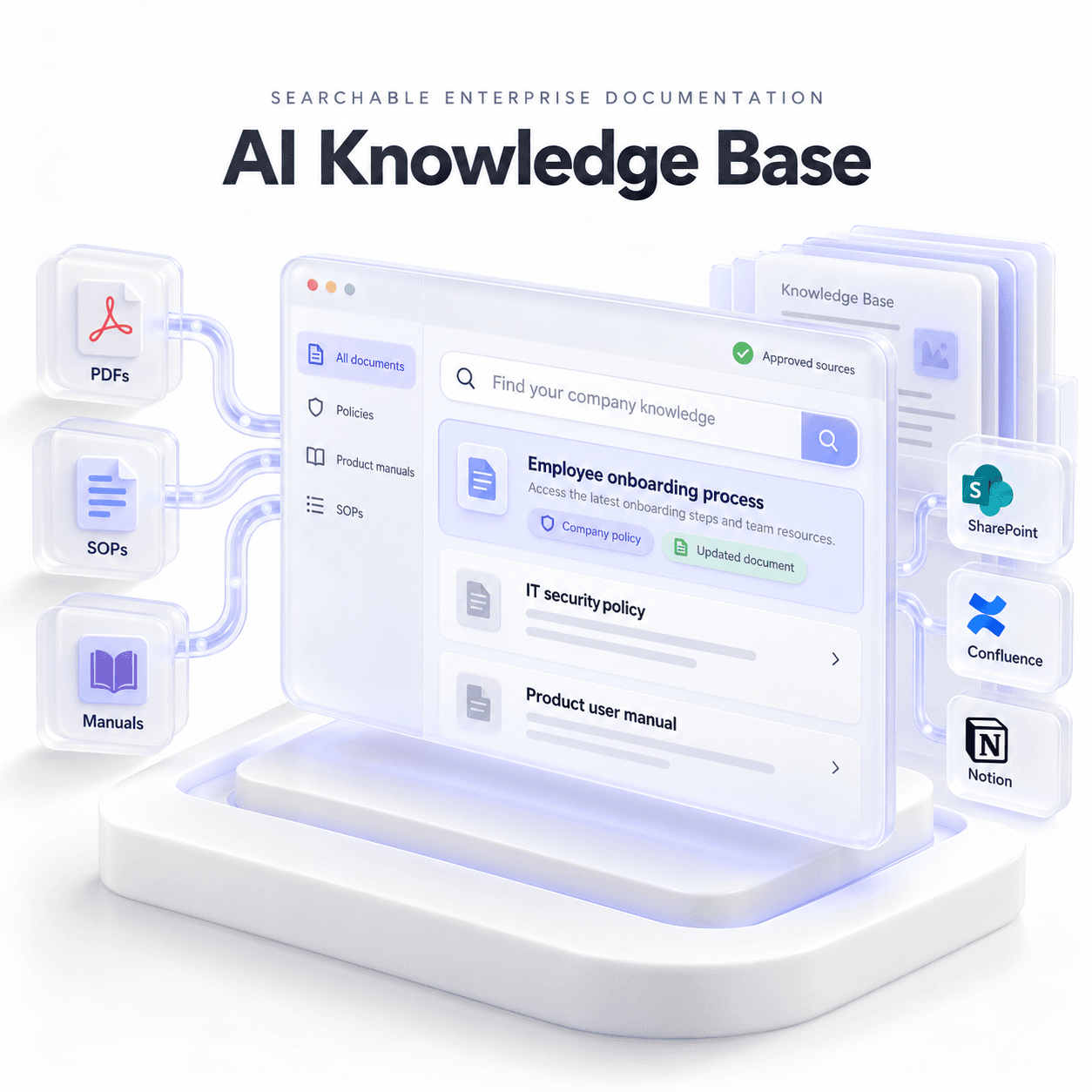
AI Knowledge Base Development

Create an AI knowledge base that makes approved documentation searchable while preserving the structure and ownership of the underlying content. Assess PDFs, SOPs, manuals, and internal articles to define parsing, chunking, metadata, and indexing rules. Source references help users inspect supporting passages, while version handling and synchronization account for updated or retired documents. Establish content owners and review procedures so the knowledge collection remains maintainable. Test common employee questions against reference material to identify extraction problems, missing guidance, and retrieval gaps before rollout.

Knowledge Base Scope

  • Document inventory and content readiness assessment
  • Parsing, OCR, and extraction validation
  • Chunking, metadata, and source references
  • Version, duplicate, and deletion handling
  • Content ownership and review procedures
  • Retrieval tests using representative employee questions

Platforms & Technologies

  • SharePoint
  • Confluence
  • Notion
  • Approved document collections
AI knowledge base development illustration — THE TISA

Hybrid retrieval across distributed business information

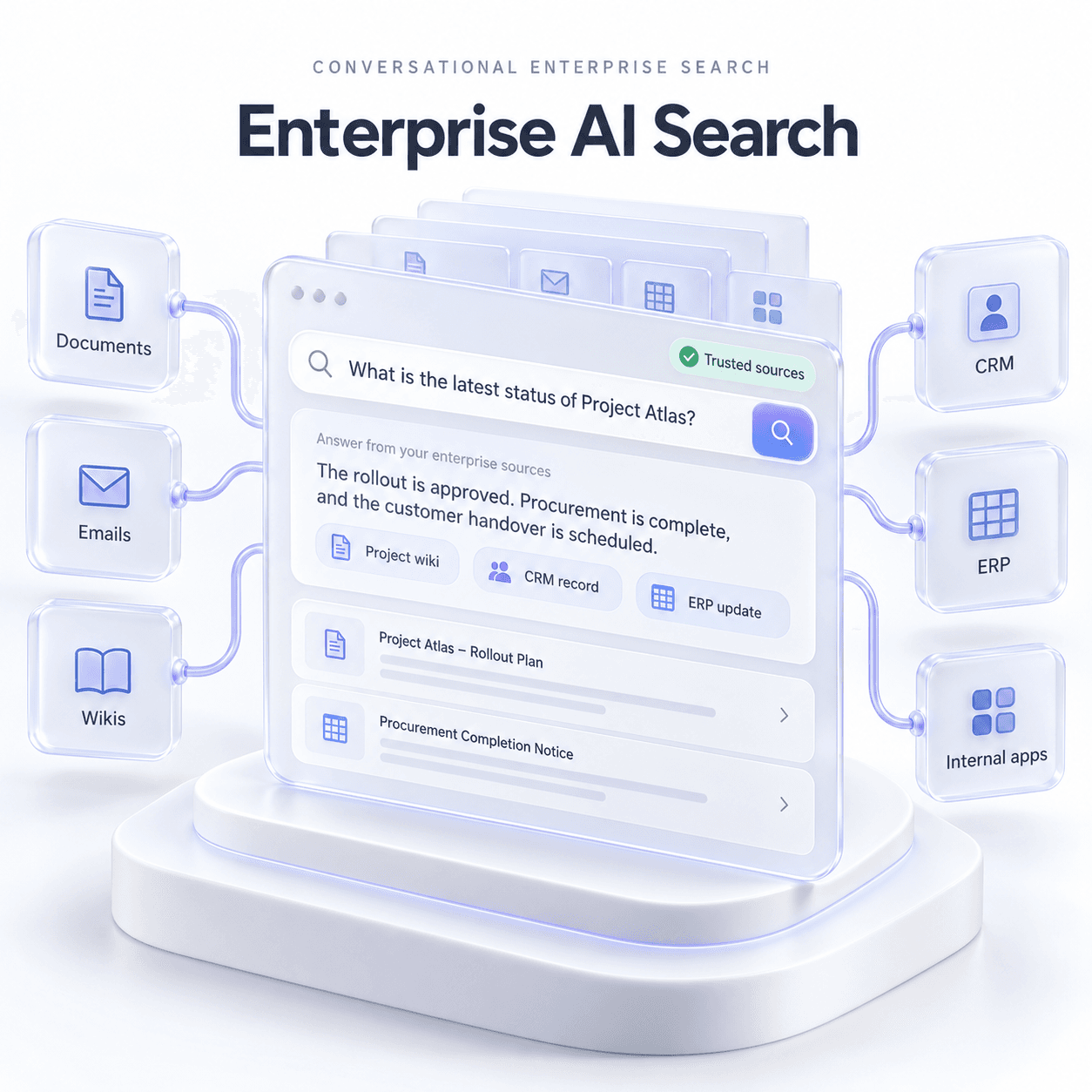
Enterprise AI Search Platforms

Develop enterprise AI search that combines natural-language questions with the retrieval methods suited to your content. Compare keyword, vector, and hybrid search so exact product identifiers, document titles, and conceptual questions can be handled appropriately. Configure metadata filters, ranking, and optional reranking using a representative query set. Search results can show supporting passages, document details, and generated summaries where useful. Permission filters restrict retrieval to authorized content, while relevance, coverage, and latency testing help determine whether the search experience meets the agreed requirements.

Search Capabilities

  • Keyword, vector, and hybrid retrieval
  • Natural-language queries and exact-match lookups
  • Metadata filters and scoped search
  • Ranking, reranking, and result previews
  • Permission-aware results and source links
  • Search relevance and latency benchmarks
Enterprise AI search platform illustration — THE TISA

Coordinated retrieval and research with defined controls

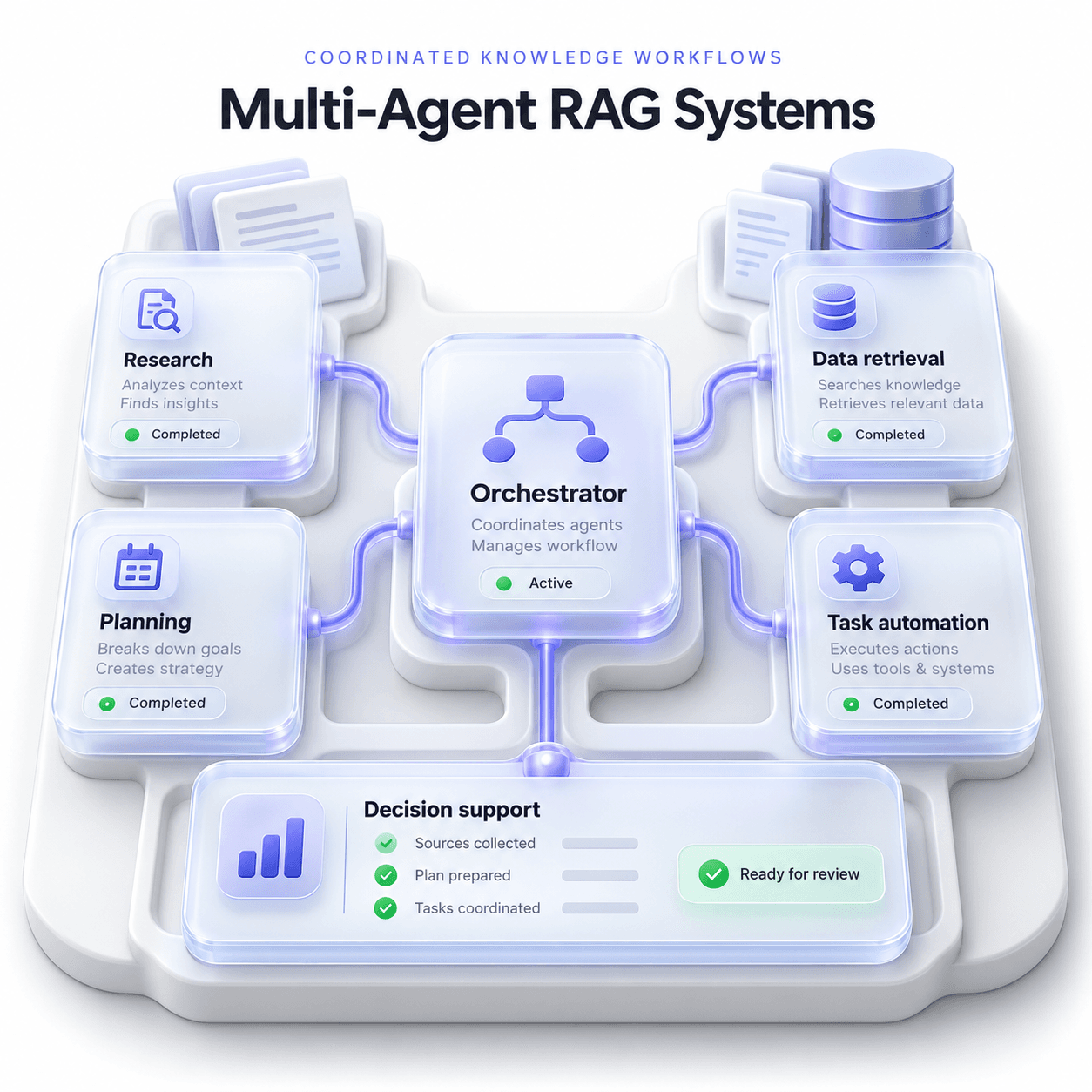
Multi-Agent RAG Systems

Design multi-agent RAG workflows when a task benefits from separate retrieval, research, comparison, or review responsibilities. Define each agent’s tools, information access, handoff rules, and completion criteria before introducing orchestration. Suitable workflows may include gathering evidence from multiple sources, comparing findings, and preparing a response for review. Start with a simpler pipeline where it meets the requirement, since additional agents introduce latency, cost, and debugging complexity. Apply execution limits, traceable intermediate results, and human approval for consequential actions.

Workflow Capabilities

  • Task routing and specialist retrieval agents
  • Multi-source research and evidence comparison
  • Scoped tools and agent access boundaries
  • Traceable handoffs and intermediate outputs
  • Execution limits, retries, and failure handling
  • Human review and action approval checkpoints
Multi-agent RAG systems illustration — THE TISA

Extraction, classification, and document-grounded analysis

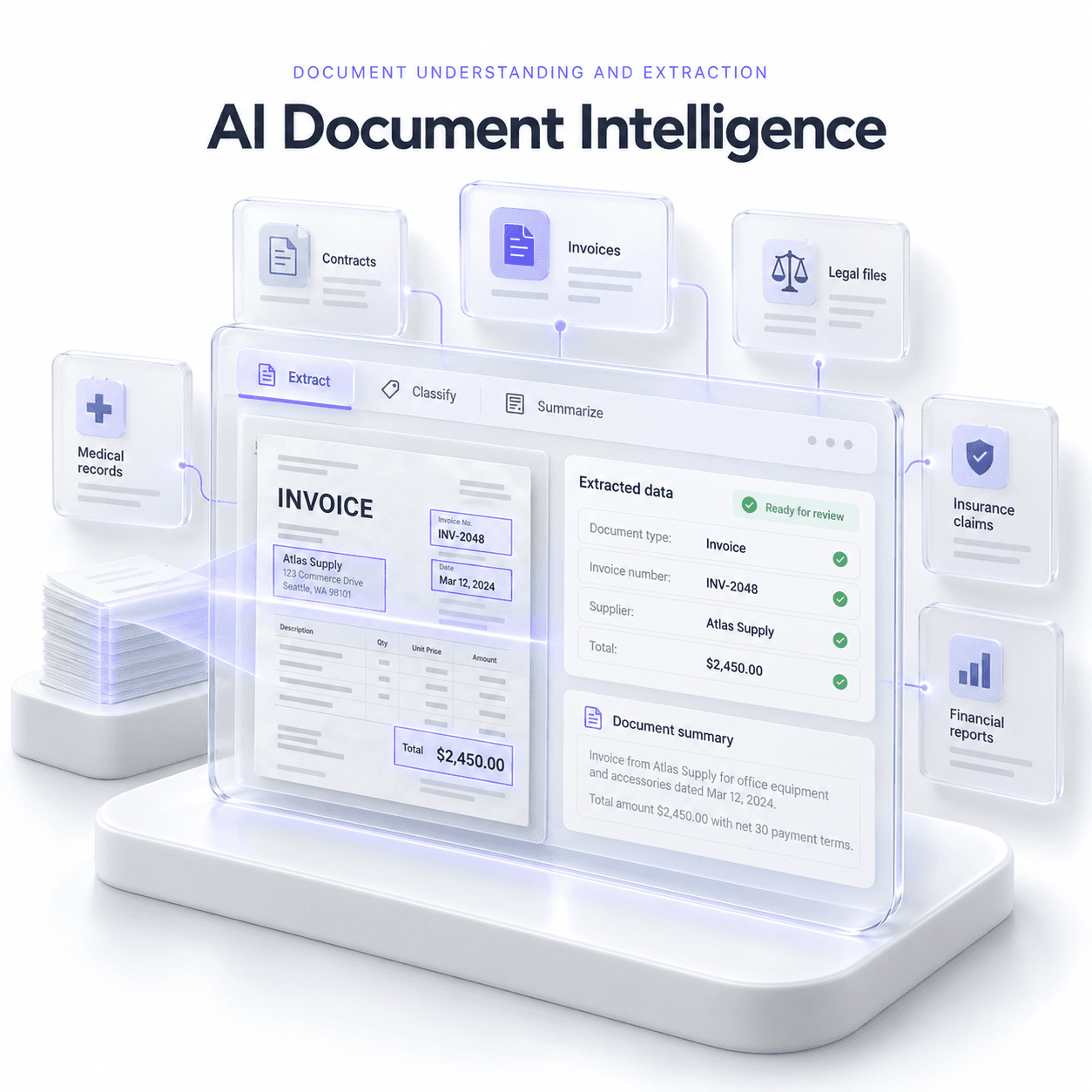
AI Document Intelligence Solutions

Build document intelligence workflows that classify files, extract defined fields, and summarize relevant content for review. Combine document parsing and structured extraction with RAG where users need to ask questions across files and inspect supporting passages. Assess scanned pages, tables, and complex layouts using representative samples before defining coverage. Validate extracted values against schemas or business rules and route exceptions to reviewers. For sensitive legal, medical, or financial material, agree on access, retention, and review requirements; generated summaries support qualified review rather than replace professional judgment.

Document Processing Capabilities

  • Document classification and routing
  • OCR and layout-aware content extraction
  • Structured field extraction and schema validation
  • Source-linked summaries and cross-document questions
  • Business-rule checks and exception queues
  • Human review and correction tracking
AI document intelligence illustration — THE TISA

Connected retrieval across approved business systems

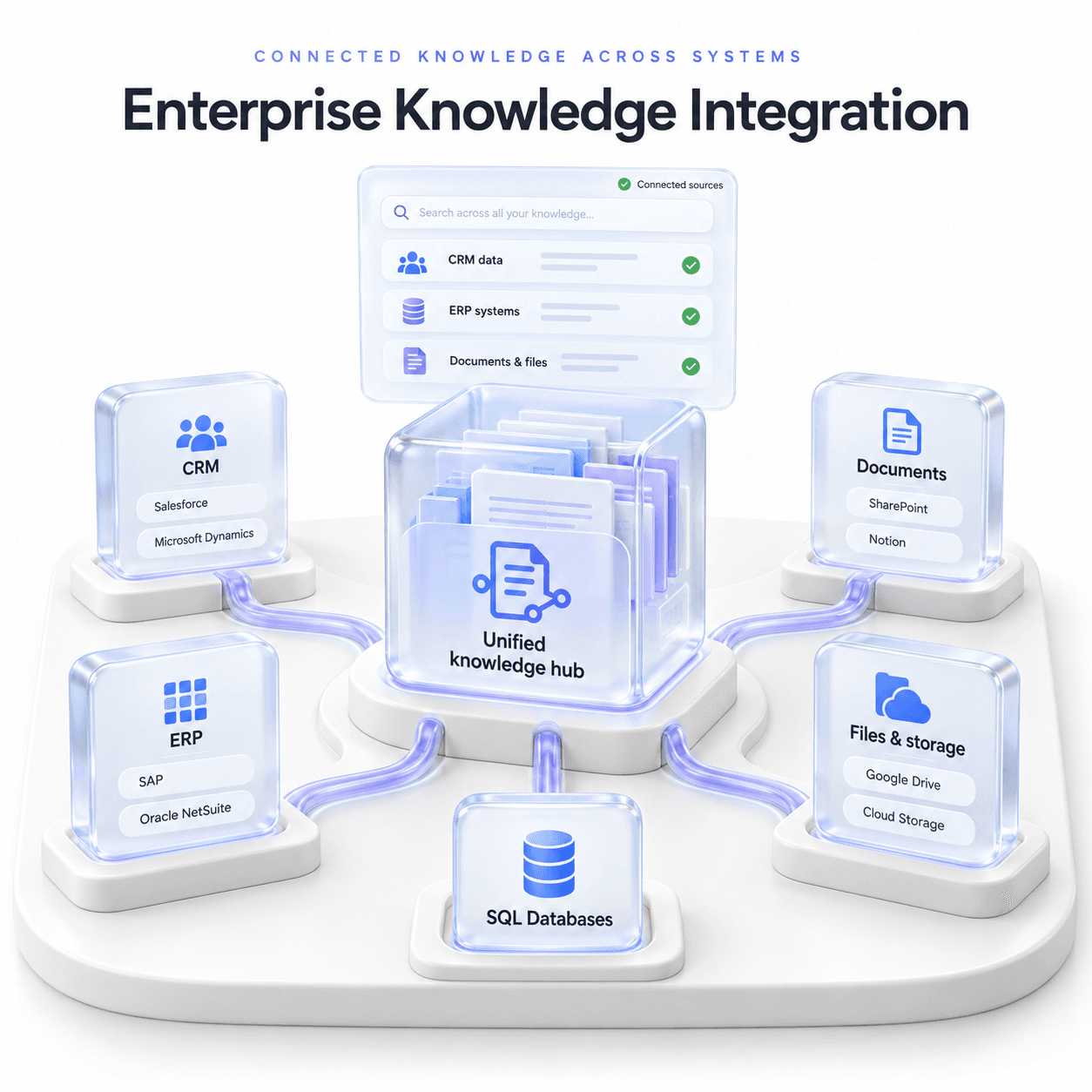
Multi-Source Enterprise Knowledge Integration

Connect selected repositories and business applications to a shared retrieval experience without assuming all information must move into one central store. Assess connector availability, API permissions, source ownership, and update requirements for each system. Preserve source identity and access metadata during ingestion, with synchronization that accounts for changes and deleted records. Combine indexed knowledge with scoped API queries when answers require current business values. Integration scope includes failure reporting, request limits, and access testing so each connection has a defined operating boundary.

Integration Capabilities

  • Source connector and API access assessment
  • Content synchronization and update scheduling
  • Source identity and permission metadata mapping
  • Scoped queries for current business records
  • Retry handling and synchronization monitoring
  • Cross-system retrieval and access-boundary testing

Platforms & Technologies

  • Salesforce
  • SAP
  • Oracle NetSuite
  • Microsoft Dynamics
  • SharePoint
  • Notion
  • Google Drive
  • SQL databases
  • Cloud storage
Enterprise knowledge integration illustration — THE TISA

Vector indexing and search infrastructure for RAG

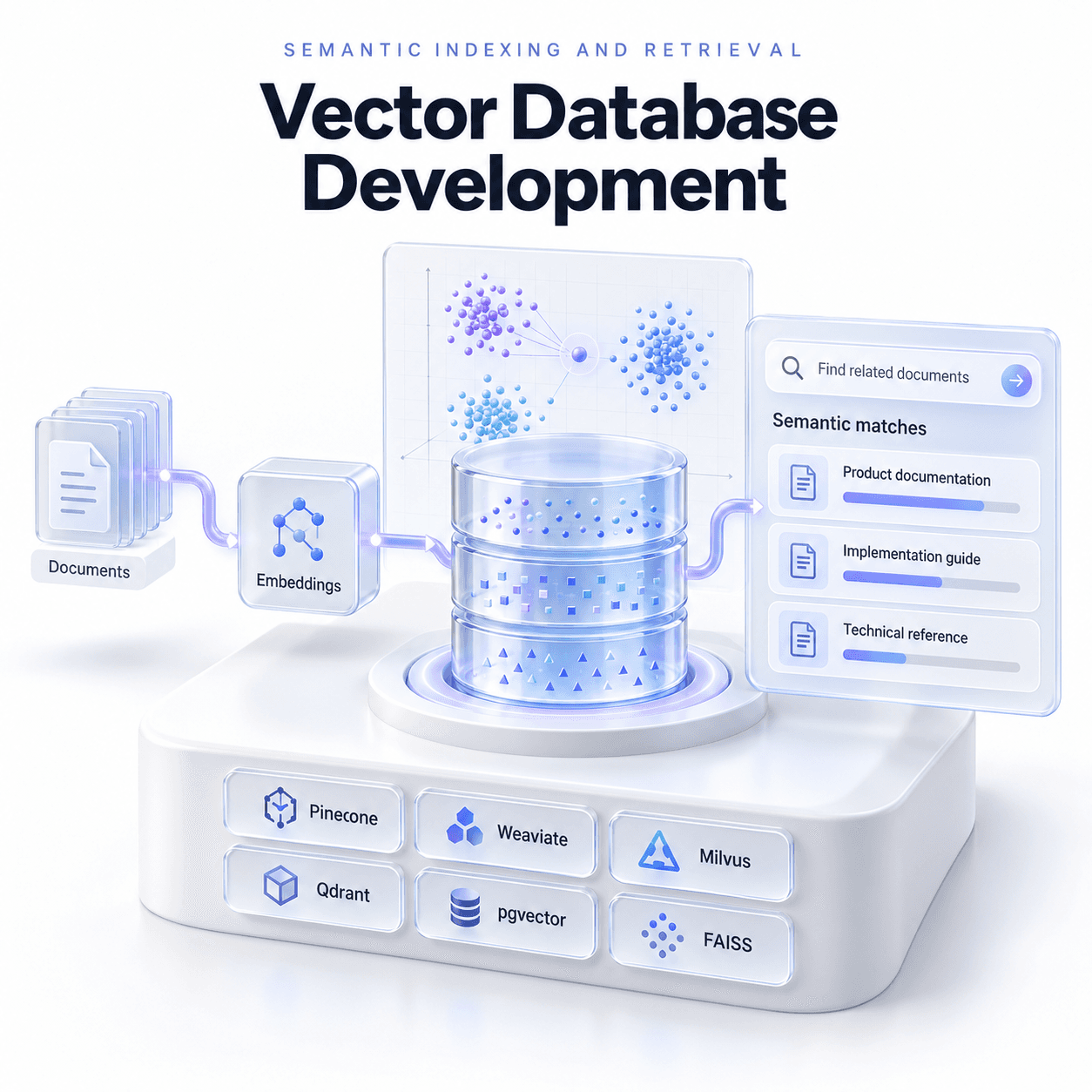
Vector Database Development

Design and configure vector search infrastructure around your content volume, metadata filters, query workload, and deployment requirements. Compare vector databases, database extensions, and search libraries rather than treating them as interchangeable. Implementation covers embedding compatibility, index configuration, document updates, and retrieval integration. Benchmark relevance, latency, memory usage, and infrastructure cost using representative data and concurrent requests. Plan reindexing, backup, and recovery procedures for the selected technology, with performance targets established through testing rather than unsupported document-scale claims.

Vector Search Engineering

  • Vector store selection and architecture assessment
  • Embedding compatibility and index configuration
  • Metadata filtering and retrieval integration
  • Batch ingestion, updates, and reindexing
  • Relevance, load, latency, and cost benchmarks
  • Technology-specific backup and recovery planning

Platforms & Technologies

  • Pinecone
  • Weaviate
  • Milvus
  • Qdrant
  • pgvector
  • FAISS
Vector database development illustration — THE TISA

Bring your business knowledge
into the conversation.

Connect documents, internal knowledge bases, CRM platforms, and business systems to your RAG application. Explore how each source supports relevant answers, with practical considerations for access permissions, content updates, and source traceability.

01 / 06

Documents & policies

RAG document search for PDFs, manuals and SOPs

Make policies, product manuals, SOPs, and business documents accessible through natural-language search. Document-based RAG retrieves relevant passages to help employees understand procedures, locate requirements, and review exceptions, with references to the original files. Implementation includes assessing document layouts, extracting text, and organizing content into searchable sections while preserving useful context.

Information to retrieve

  • Policy clauses, eligibility rules, and exceptions
  • Product specifications and troubleshooting instructions
  • Operating procedures and compliance guidance

Implementation consideration

Scanned PDFs may require OCR, while tables and complex layouts need additional parsing. Version metadata, section references, and retrieval testing help assess whether answers use the appropriate document and passage.

Documents & policies RAG knowledge source — THE TISA

02 / 06

Knowledge repositories

Enterprise knowledge search across internal wikis

Connect internal wikis and knowledge bases to help employees find guidance across SharePoint, Confluence, Notion, and other repositories. An enterprise RAG application can retrieve relevant pages, combine supporting passages, and link answers to their sources. Repository integration considers page structure, content ownership, and access permissions so teams can search distributed knowledge through a shared interface.

Information to retrieve

  • Team documentation and technical reference pages
  • Employee onboarding and troubleshooting guides
  • Published knowledge articles and internal FAQs

Implementation consideration

Permission-aware retrieval requires mapping source access rules to application users. Synchronization should account for edited pages, deleted content, and permission changes, with retrieval checks against representative employee questions.

Knowledge repositories RAG knowledge source — THE TISA

03 / 06

CRM & support knowledge

Customer context for sales and support assistants

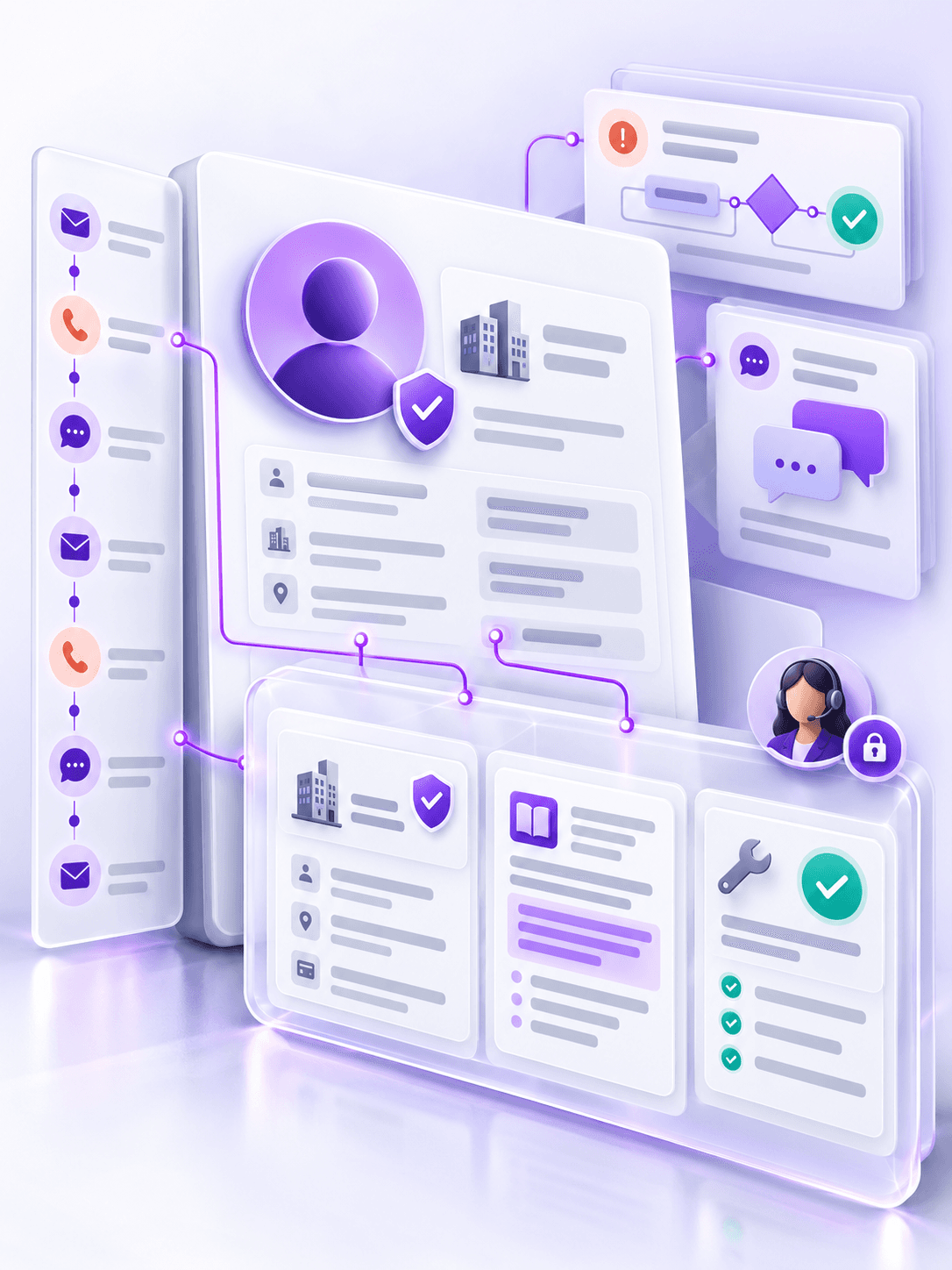
Help authorized sales and support teams retrieve account context, approved support articles, and relevant historical resolutions from CRM and service systems. A RAG-powered support assistant can bring supporting information into a response draft or internal search result, with links back to the underlying records. The scope should distinguish reusable support knowledge from sensitive customer information and outdated case notes.

Information to retrieve

  • Account details available to the requesting user
  • Approved support guidance and documented resolutions
  • Relevant case history and customer interaction records

Implementation consideration

Apply record-level and field-level access rules before information reaches the model. Minimize personal data, check whether historical resolutions remain applicable, and use scoped API queries when current account or case status is required.

CRM & support knowledge RAG knowledge source — THE TISA

04 / 06

ERP & business systems

Operational knowledge with business-system context

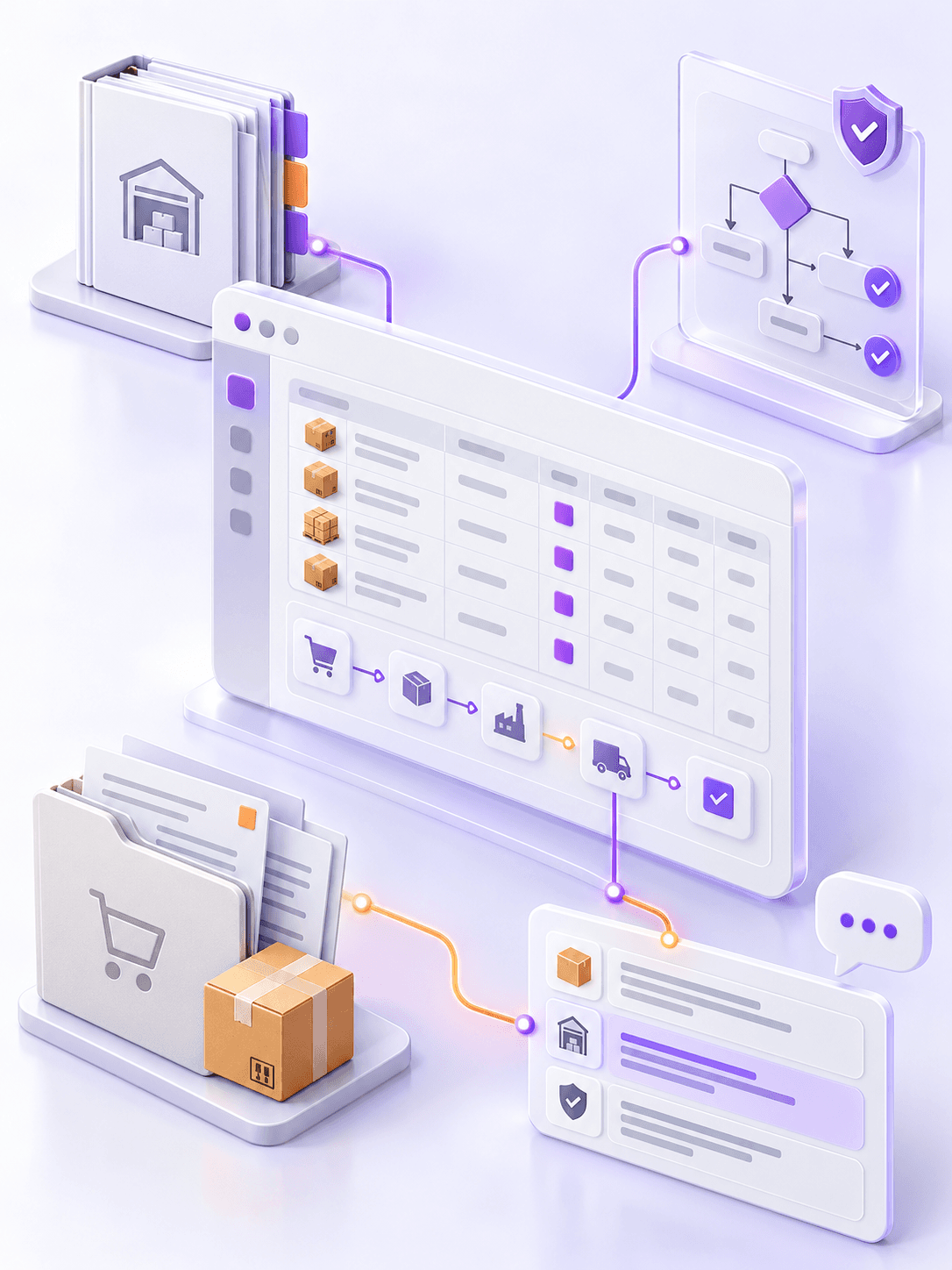
Connect process documentation, business rules, and selected ERP records to help operations, procurement, and finance teams investigate everyday questions. Retrieval-augmented generation can surface the guidance behind purchasing procedures, approval requirements, and operational workflows. When a question also depends on a changing business value, a scoped system query can provide current data alongside the retrieved explanation.

Information to retrieve

  • Operational reference records and process definitions
  • Procurement procedures and approval documentation
  • Business rules and exception-handling guidance

Implementation consideration

An indexed document should not be treated as the live source for inventory, balances, or transaction status. Define authoritative systems, access scopes, and freshness requirements; actions that modify records need separate authorization and validation.

ERP & business systems RAG knowledge source — THE TISA

05 / 06

Enterprise databases

Structured data retrieval alongside document search

Combine document retrieval with controlled database access when a business question needs both written guidance and structured records. A hybrid RAG application can use searchable text for explanations and validated queries for product details, service records, or current figures. The retrieval approach depends on the question, data structure, and level of precision required rather than treating every database record as a document.

Information to retrieve

  • Business entities and their relevant relationships
  • Product, service, and structured reference records
  • Current values supplied through approved queries

Implementation consideration

Use read-only credentials, allowlisted views or scoped APIs, and query validation. Exact counts, totals, and calculations should come from database operations, with access checks and query limits applied before execution.

Enterprise databases RAG knowledge source — THE TISA

06 / 06

Cloud file storage

Permission-aware search across shared business files

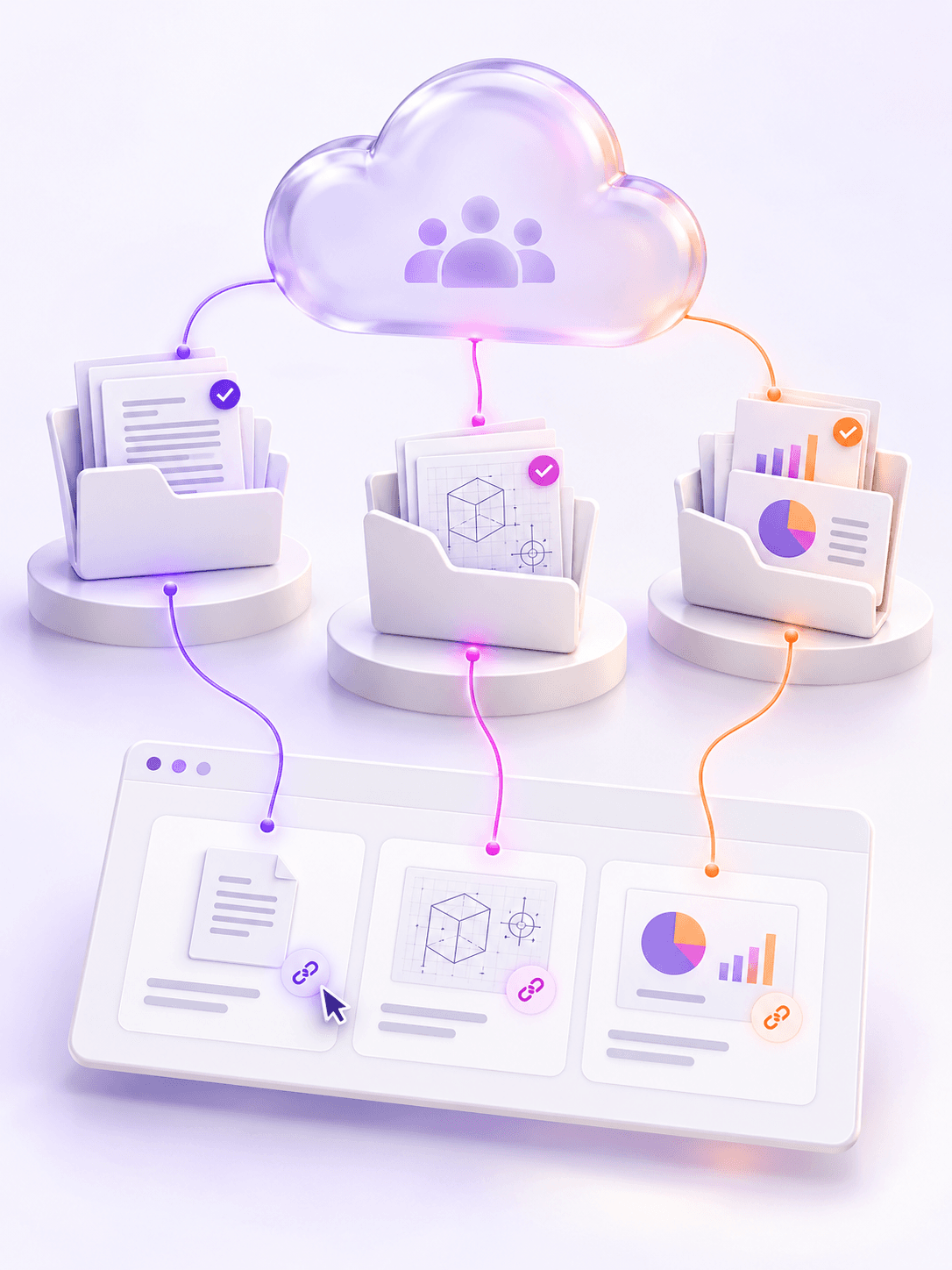
Make approved files in Google Drive, OneDrive, and Amazon S3 discoverable through a RAG-based search experience. Employees can locate project references, reports, and presentations using questions rather than remembering filenames or folder paths. Cloud storage integration covers file discovery, content extraction, and synchronization, with source links that let users open the supporting document in its original location.

Information to retrieve

  • Shared documents and departmental reference files
  • Project documentation and delivery materials
  • Approved reports, presentations, and archived guidance

Implementation consideration

Track file versions, duplicates, deletions, and access changes throughout synchronization. Define supported formats and indexing frequency, and expose source dates where they help users judge whether a retrieved document is still relevant.

Cloud file storage RAG knowledge source — THE TISA

Platforms shown are examples. Connector availability, API access, permissions, and synchronization requirements are assessed for each project.

From source material to a useful answer

Retrieval supplies relevant evidence. The model uses that context to compose its response.

  1. 01

    Prepare

    Parse and organize approved content.

  2. 02

    Retrieve

    Find passages relevant to the question.

  3. 03

    Respond

    Generate an answer with source references.

From Discovery to Deployment

Our RAG Development Process

Our retrieval-augmented generation development process moves from source assessment to a tested application and operational handoff. Each stage produces a defined output, giving your team a clear basis for reviewing progress and approving the next step.

Evaluation starts with representative user questions during discovery. Those questions guide retrieval design, application testing, and release decisions as the system takes shape.

Agreed before implementation

Pilot scope, source access, acceptance criteria, deployment responsibilities, and the people who will review the results.

  1. Discovery & RAG Architecture

    Define the business workflow, intended users, and questions the application needs to answer. Assess whether retrieval-augmented generation is appropriate, then agree on access boundaries, hosting requirements, and integration dependencies. Establish a pilot scope with acceptance criteria for answer quality, response time, and operating cost before selecting the technical architecture.

    Deliverable: Agreed project scope, architecture outline, acceptance criteria, and phased delivery roadmap

  2. Knowledge Audit & Data Readiness

    Review representative documents, knowledge repositories, and business systems to identify what should support retrieval. Assess extraction quality, conflicting versions, duplicate content, and missing information. Document source ownership, permissions, update frequency, and deletion requirements. Build an initial set of user questions and reference evidence with your reviewers to guide development and testing.

    Deliverable: Source inventory, data readiness findings, permission requirements, and baseline evaluation questions

  3. Document Ingestion & Indexing

    Configure document parsing, OCR where needed, and chunking that preserves useful section context. Attach source references, version details, and access metadata before generating embeddings and building the search index. Validate extraction and retrieval on sample content, then implement scheduled or event-driven updates, duplicate handling, and deletion processing according to the agreed source requirements.

    Deliverable: Validated ingestion pipeline, searchable index, and documented synchronization and failure-handling procedures

  4. Retrieval & Application Development

    Compare keyword, vector, and hybrid retrieval against the baseline questions, adding reranking where testing supports it. Connect selected evidence to the language model and build the chat or search interface with citations, clarification prompts, and insufficient-evidence responses. Integrate authentication and permission filtering, with scoped API queries where answers require live records or exact calculations.

    Deliverable: Integrated RAG application in a test environment with retrieval configuration, source references, and user review controls

  5. RAG Evaluation & Release Review

    Evaluate retrieval relevance and coverage separately from answer support and citation correctness. Test missing answers, conflicting sources, unauthorized requests, and instructions embedded in retrieved content. Measure response latency and request cost under representative usage. Review findings with the designated stakeholders, resolve release blockers, and document known limitations against the agreed acceptance criteria.

    Deliverable: Evaluation report, regression test suite, documented limitations, and release decision

  6. Deployment & Operational Handoff

    Deploy the approved application to the agreed environment with monitoring for ingestion health, errors, latency, and usage costs. Configure diagnostic access and retention settings, document rollback procedures, and assign responsibility for content and system maintenance. Establish a review process for user feedback and repeat evaluation before releasing material changes to models, prompts, or retrieval settings.

    Deliverable: Production deployment, monitoring configuration, operating runbooks, and maintenance ownership

Enterprise RAG Security
& AI Governance

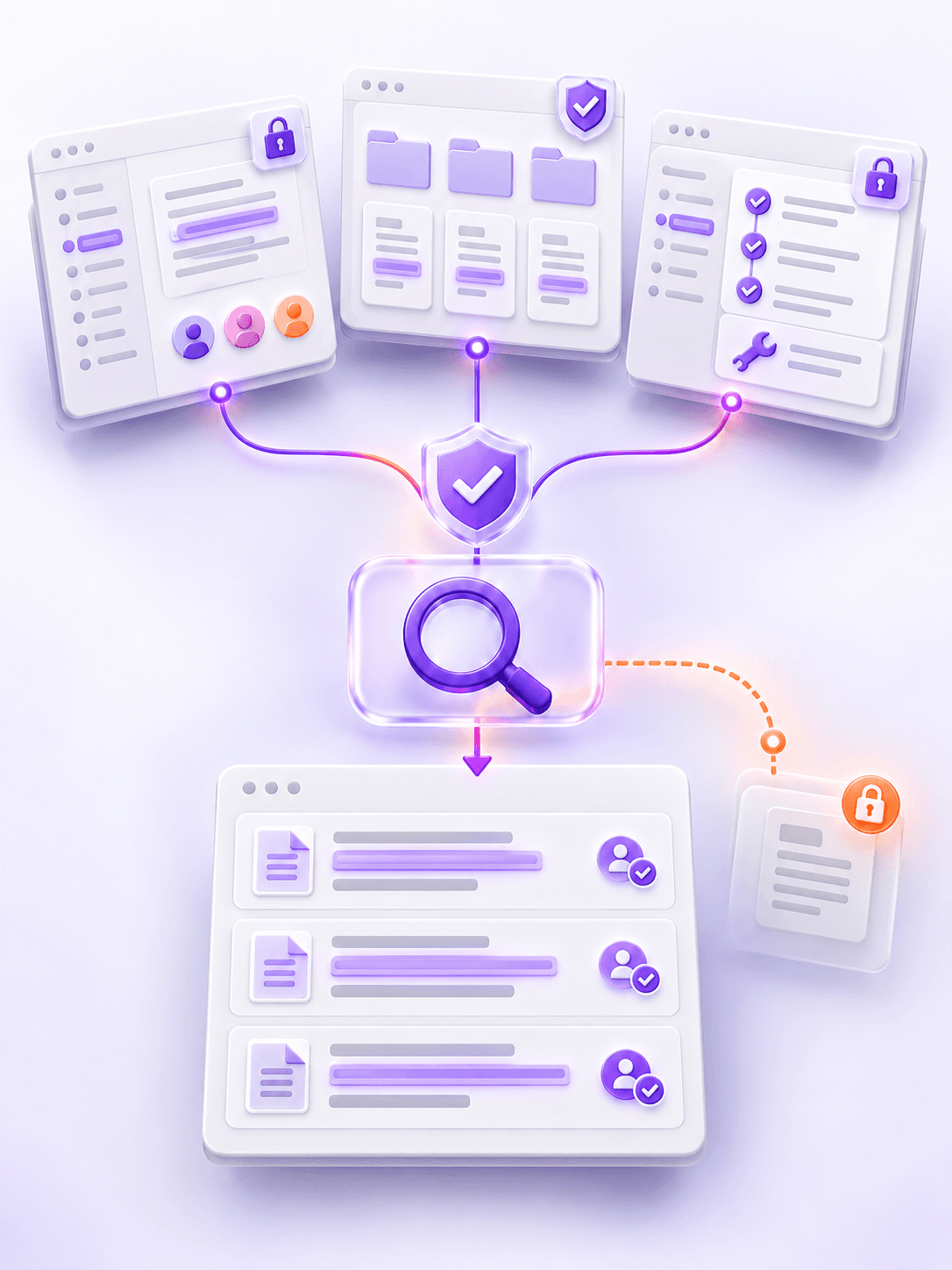
Protect business knowledge across document ingestion, retrieval, model requests, and application access. Our enterprise RAG development approach covers permission-aware search, data privacy, prompt injection testing, and audit controls, with requirements defined around your users, source systems, and deployment environment.

Identity & Permission-Aware Retrieval

Connect enterprise authentication with retrieval permissions so the application searches only the knowledge each user is authorized to access. Define document, record, and tenant boundaries before retrieved passages reach the language model.

Implementation scope may include

  • Single sign-on integration
  • Role-based access controls
  • Document-level permissions
  • Tenant isolation
  • Scoped service accounts
  • Access-boundary testing

Preserve source-system access boundaries as teams search shared enterprise knowledge.

Data Privacy & Model Handling

Map how documents, retrieved passages, prompts, and responses move through your RAG application. Assess hosting, model providers, encryption, and retention settings against the sensitivity of your information and your data handling requirements.

Implementation scope may include

  • Encryption in transit and at rest
  • Model provider data-flow review
  • Sensitive data minimization
  • Secrets and key management
  • Retention configuration
  • Data residency assessment

Document where business information is processed, stored, retained, and shared.

Secure Ingestion & Knowledge Updates

Define which sources can enter the retrieval pipeline and retain metadata that connects indexed content to its origin. Account for document revisions, access changes, and deletions across source connectors, vector indexes, and relevant caches.

Implementation scope may include

  • Approved source connections
  • Ingestion validation
  • Source provenance and metadata
  • Permission synchronization
  • Index deletion workflows
  • Content update monitoring

Reduce exposure to unapproved, outdated, or revoked content as source systems change.

Prompt Injection & Application Protection

Treat user input and retrieved documents as untrusted content. Test attempts to override instructions, expose confidential information, or trigger unauthorized actions. Enforce tool permissions and business authorization in application code rather than relying on model instructions alone.

Implementation scope may include

  • Prompt injection testing
  • Retrieved content boundaries
  • Input and output validation
  • Scoped API and tool access
  • Rate and resource limits
  • Sensitive-action approvals

Limit what malicious content or unexpected model behavior can access or change.

Security Testing & Audit Monitoring

Test access boundaries before release and monitor the deployed application for failures and suspicious activity. Define useful audit events while limiting sensitive information in prompts, responses, retrieval traces, and operational logs.

Implementation scope may include

  • Cross-tenant access testing
  • Unauthorized query test cases
  • Sensitive log redaction
  • Security event monitoring
  • Audit access and retention
  • Incident response runbooks

Support investigation with relevant evidence, clear ownership, and documented response procedures.

AI Governance & Human Oversight

Document the application's intended use, review requirements, and change approval process. Work with security and compliance stakeholders to translate applicable policies into implementation tasks, test cases, and review evidence.

Implementation scope may include

  • Use and access policies
  • Human review and escalation
  • Model change reviews
  • Documented risk assessments
  • Vendor and deployment reviews
  • Control ownership and handoff

Keep accountability clear as models, knowledge sources, permissions, and requirements evolve.

Security Guidance & Review Deliverables

Define RAG security controls around your data, user permissions, integrations, and hosting requirements. Use established guidance to structure threat assessments, application testing, and AI governance reviews.

Evidence for your technical review

Depending on the agreed scope, deliverables may include data-flow diagrams, an access-control matrix, security test findings, and operational runbooks.

For more about our approach, explore THE TISA’s security practices.

Plan security into your RAG application

Review your knowledge sources, access permissions, model data flows, and hosting requirements with our team. Define the controls, security tests, and operational responsibilities needed for your implementation.

  • Permission-aware retrieval
  • Data handling and hosting
  • Security testing and oversight
Discuss Your RAG Security

Enterprise RAG Architecture
& Technology Stack

We select the RAG technology stack around your document formats, access requirements, query workload, and deployment environment. Compare ingestion tools, embedding models, search indexes, vector stores, and language models against retrieval quality, latency, and operating cost—with evaluation and monitoring built into the architecture.

  • Large Language Models

    Generate answers and summaries using retrieved business context. Compare models against representative questions, instruction following, citation handling, latency, and request cost. Model selection also considers hosting requirements and how information is processed and retained.

    GPT
    Claude
    Gemini
    Llama
    Mistral
    DeepSeek
    GPT
    Claude
    Gemini
    Llama
    Mistral
    DeepSeek
  • Embedding Models

    Represent document passages and user queries for semantic search. Evaluate embedding choices against your terminology, document structure, and supported languages. Compare retrieval relevance, processing cost, and reindexing requirements before selecting a model.

    OpenAI
    Azure OpenAI
    Vertex AI
    Hugging Face
    Ollama
    PyTorch
    OpenAI
    Azure OpenAI
    Vertex AI
    Hugging Face
    Ollama
    PyTorch
  • RAG Frameworks & Model Tooling

    Coordinate ingestion, retrieval, context preparation, and model requests within the application. Select frameworks and model tooling according to workflow complexity, integration needs, debugging visibility, and maintenance requirements, with explicit handling for retries and failed requests.

    LangChain
    LangGraph
    LlamaIndex
    CrewAI
    Hugging Face
    OpenAI Agents SDK
    LangChain
    LangGraph
    LlamaIndex
    CrewAI
    Hugging Face
    OpenAI Agents SDK
  • Vector Stores & Search Engines

    Index document representations and metadata to support keyword, vector, or hybrid retrieval. Assess filtering, update handling, ranking, and concurrent query performance using representative data. Compare managed services and database extensions against deployment constraints and operating cost.

    pgvector
    Redis
    Elasticsearch
    MongoDB
    Supabase
    Neo4j
    pgvector
    Redis
    Elasticsearch
    MongoDB
    Supabase
    Neo4j
  • Cloud Platforms & Managed AI Services

    Host RAG applications and supporting services in the agreed deployment environment. Assess managed AI services and customer-controlled infrastructure against data location, network access, workload, and operational responsibilities. Document external model requests and recovery requirements during architecture planning.

    Microsoft Azure
    AWS
    Google Cloud
    Azure OpenAI
    Vertex AI
    Amazon Bedrock
    Microsoft Azure
    AWS
    Google Cloud
    Azure OpenAI
    Vertex AI
    Amazon Bedrock
  • Enterprise Knowledge Systems

    Connect approved repositories and business applications to the retrieval layer. Assess API availability, source permissions, document ownership, and synchronization requirements for each connection. Preserve source references and access metadata, with defined handling for updates and deleted content.

    SharePoint
    Confluence
    Salesforce
    Notion
    Google Drive
    Microsoft Dynamics
    SharePoint
    Confluence
    Salesforce
    Notion
    Google Drive
    Microsoft Dynamics
  • Application Development & API Tooling

    Embed RAG search and conversational features into portals, SaaS products, and internal tools. Build scoped interfaces with authentication, request validation, and error handling. Document and test APIs, using controlled business-system queries when answers require current records or exact calculations.

    REST APIs
    GraphQL
    Swagger
    Postman
    Socket.io
    Node.js
    Python
    TypeScript
    REST APIs
    GraphQL
    Swagger
    Postman
    Socket.io
    Node.js
    Python
    TypeScript
  • Evaluation & Operational Monitoring

    Evaluate retrieval relevance, answer support, and citation correctness against representative questions. Track regressions alongside application errors, response latency, and usage cost. Configure diagnostic access and retention so traces remain useful without unnecessarily exposing sensitive business information.

    LangSmith
    Langfuse
    OpenTelemetry
    Prometheus
    Grafana
    Datadog
    Sentry
    LangSmith
    Langfuse
    OpenTelemetry
    Prometheus
    Grafana
    Datadog
    Sentry

Your RAG Technology Stack,
Built Around Your Requirements

Select language models, embeddings, vector databases, and deployment tools around the work your RAG application needs to perform. We compare components using your documents and representative questions, balancing retrieval quality, data handling, response time, and operating cost.

Core technology layers

Selected for your project. No fixed technology bundle.

Language Models

Generate answers from retrieved business knowledge. Compare models on your questions, source material, and response requirements, including when evidence is missing or conflicting.

  • OpenAI GPT
  • Anthropic Claude
  • Google Gemini
  • Meta Llama
  • Mistral
  • Qwen

What drives the choice

Answer quality, data handling, context capacity, latency, and cost.

Embeddings & Reranking

Represent questions and document passages for semantic search, then assess reranking to improve evidence selection. Test relevance against your terminology and supported languages.

  • OpenAI embeddings
  • Cohere Embed
  • Sentence Transformers
  • Vertex AI embeddings
  • Reranking models

What drives the choice

Retrieval relevance, language coverage, processing time, and reindexing effort.

Vector Databases & Search

Index document representations and source metadata for retrieval. Combine vector and keyword search where useful, with filtering designed around your content and access requirements.

  • Pinecone
  • Weaviate
  • Qdrant
  • Milvus
  • PostgreSQL + pgvector
  • Elasticsearch

What drives the choice

Filtering, update frequency, query volume, hosting, and operational effort.

RAG Frameworks & Services

Connect retrieval, context preparation, model requests, and application logic. Choose frameworks or custom services according to workflow complexity and the control your team needs.

  • LangChain
  • LangGraph
  • LlamaIndex
  • Haystack
  • Python
  • TypeScript

What drives the choice

Workflow control, debugging, integrations, dependencies, and maintainability.

Evaluation & Observability

Inspect retrieved evidence, review answer support, and trace application behavior. Track regressions, errors, response time, and usage cost as models and knowledge sources change.

  • LangSmith
  • OpenTelemetry
  • Prometheus
  • Grafana
  • Custom evaluation suites

What drives the choice

Evaluation coverage, trace visibility, sensitive logging, and review workflows.

Cloud & Deployment

Host the RAG application around your data boundaries and operating requirements. Assess managed services and containerized deployments against workload, recovery, and maintenance needs.

  • Microsoft Azure
  • Amazon Web Services
  • Google Cloud
  • Docker
  • Kubernetes
  • Infrastructure as code

What drives the choice

Data location, network controls, reliability, infrastructure cost, and ownership.

Validate the stack on your knowledge

A focused pilot informs the final architecture.

Test the shortlisted components against your documents, questions, access rules, and expected usage. Use the findings to confirm the architecture and document tradeoffs, licensing, deployment costs, and maintenance responsibilities.

Discuss your RAG architecture

Industry-Specific
RAG Solutions

Explore how industry-specific RAG solutions support knowledge search, document research, and customer service across healthcare, financial services, legal, manufacturing, retail, and other sectors. THE TISA designs enterprise knowledge assistants around the terminology, source material, and workflows your teams use. Each implementation considers document versions, access permissions, data freshness, and integration with existing business systems. We define retrieval scope, source citation requirements, and human review checkpoints around the intended use, then evaluate the application with representative industry questions and agreed acceptance criteria.

  • Build healthcare knowledge assistants that help authorized staff locate approved clinical guidance, administrative policies, and operational procedures. RAG can retrieve relevant passages from the selected document collection and link responses to their sources. Define the intended users and distinguish administrative assistance from clinical decision support, with qualified review for information that could affect patient care.

    Care coordinator reviewing a patient intake queue on a tablet in a clinic — THE TISA

    Knowledge sources

    • Approved clinical guidelines
    • Hospital policies and procedures
    • Patient education materials
    • Authorized EHR extracts where in scope

    Example applications

    • Staff search for current care protocols and escalation procedures
    • Administrative assistants for scheduling and service guidance
    • Source-linked retrieval of approved patient education materials

    Implementation considerations

    Define PHI access, permitted model data flows, retention, and clinical review requirements. Test document currency and unsupported-answer handling before introducing patient-facing or clinical workflows.

  • Develop financial services RAG applications that help support, operations, and compliance teams find product rules, onboarding requirements, and internal procedures. Connect questions to the relevant policy sections and supporting documentation. Use scoped business-system queries when a response depends on current account information, transaction details, or calculations rather than treating indexed documents as live financial records.

    Finance operations analyst reviewing payment exceptions on two monitors — THE TISA

    Knowledge sources

    • Product terms and fee schedules
    • Onboarding and verification procedures
    • Internal compliance documentation
    • Authorized customer service records

    Example applications

    • Support assistants for product eligibility and account procedures
    • Policy search for onboarding and verification teams
    • Source-linked research across approved regulatory collections

    Implementation considerations

    Apply account-level access controls and distinguish general product information from personalized financial guidance. Require appropriate review for regulated outputs and verify time-sensitive rules against authoritative sources.

  • Create RAG-powered technical assistants that connect developer documentation, API references, release notes, and support knowledge. Help users investigate implementation questions and locate relevant examples with links to the applicable product version. Define how the assistant distinguishes public documentation from internal engineering information and customer-specific records.

    Product team reviewing a release plan on a large screen — THE TISA

    Knowledge sources

    • Developer documentation and API references
    • Release notes and migration guides
    • Support articles and troubleshooting records
    • Approved internal engineering documentation

    Example applications

    • Developer assistants for API usage and integration questions
    • Technical support search with version-specific references
    • Internal product knowledge assistants for support and engineering

    Implementation considerations

    Enforce tenant isolation and separate public, internal, and customer-specific content. Review generated code examples and prevent credentials or sensitive configuration from entering retrieved context.

  • Build retail RAG assistants that help customer service and merchandising teams retrieve product information, returns guidance, and approved service policies. Link answers to the catalog entries or documents used, and distinguish descriptive product knowledge from changing stock, pricing, and order information. Current commercial details can be supplied through scoped queries to the relevant systems.

    Warehouse associate scanning an order for shipment — THE TISA

    Knowledge sources

    • Approved product specifications
    • Returns and shipping policies
    • Customer support knowledge bases
    • Catalog and order APIs where in scope

    Example applications

    • Product support grounded in specifications and care instructions
    • Returns guidance based on applicable policy versions
    • Internal search for merchandising and store procedures

    Implementation considerations

    Use authoritative systems for current prices, inventory, and order status. Preserve customer access boundaries and validate product claims before publishing generated content.

  • Develop manufacturing knowledge assistants that retrieve technical documentation for operators, maintenance teams, and engineers. Connect equipment questions to the relevant manuals, approved SOPs, and service records. Asset identifiers, plant location, and document revision metadata help narrow retrieval to the equipment and procedure involved, while source links let staff inspect the complete instruction.

    Production supervisor checking work-order status on a rugged tablet beside a machining line — THE TISA

    Knowledge sources

    • Equipment and engineering manuals
    • Approved operating procedures
    • Maintenance and service documentation
    • Quality and inspection instructions

    Example applications

    • Equipment documentation search by asset or model identifier

    • Maintenance guidance retrieval from approved service material
    • Quality procedure assistants for inspection and troubleshooting

    Implementation considerations

    Verify asset applicability and approved document revisions. Keep the assistant separate from equipment control and require established safety procedures and qualified authorization for operational actions.

  • Develop logistics RAG applications that retrieve operating procedures, shipping documentation, and vendor requirements for exception handling. Help operations teams connect a question to the relevant shipment, contract, or process reference. Combine document retrieval with scoped operational queries when the answer depends on current shipment events, inventory levels, or delivery status.

    Dispatcher monitoring shipment exceptions on a multi-screen workstation — THE TISA

    Knowledge sources

    • Shipping and customs documentation
    • Vendor contracts and service agreements
    • Warehouse and transport procedures
    • Shipment and inventory APIs where in scope

    Example applications

    • Exception-handling assistants for logistics coordinators
    • Vendor requirement and shipping document search
    • Warehouse procedure retrieval by facility or process

    Implementation considerations

    Validate shipment and vendor identifiers before retrieving records. Keep live status separate from historical documentation and require authorization for changes to routing, orders, or inventory.

  • Develop real estate knowledge assistants that help authorized teams find property documentation, transaction requirements, and approved listing information. Retrieve supporting material from the selected repositories and distinguish archived documents from current property records. Agents and operations staff can inspect source passages before responding to inquiries or preparing transaction-related material.

    Property manager reviewing maintenance requests on a tablet in an apartment lobby — THE TISA

    Knowledge sources

    • Approved listing information
    • Property and transaction documents
    • Contract templates and process guides
    • Authorized CRM and inquiry records

    Example applications

    • Property document search for agents and transaction coordinators
    • Internal assistants for transaction checklists and procedures
    • Inquiry preparation using approved property information

    Implementation considerations

    Confirm availability, pricing, and property details in current systems of record. Protect client information and require review of contractual statements and externally published claims.

  • Build education knowledge assistants around approved course materials, institutional policies, and administrative guidance. Help faculty, staff, and student support teams locate relevant information with references to the applicable academic year or course version. Define audience-specific access so public admissions information remains separate from restricted student or staff records.

    Instructor reviewing student feedback on a laptop in a classroom — THE TISA

    Knowledge sources

    • Approved learning management content
    • Academic and institutional policies
    • Admissions and enrollment guidance
    • Faculty and administrative documentation

    Example applications

    • Admissions assistants grounded in published requirements
    • Faculty and staff search for institutional procedures
    • Course material assistants limited to approved learning resources

    Implementation considerations

    Define student-record access, retention, and content ownership. Verify deadlines and eligibility requirements against current guidance, with escalation for individual academic or admissions decisions.

  • Build media knowledge assistants that help editorial and production teams search approved research, asset metadata, brand guidance, and rights documentation. Retrieve source material for briefs, production questions, and content checks while preserving provenance. Rights-related answers should identify the underlying agreement and its relevant restrictions rather than infer permission from an asset’s availability.

    Video editor reviewing footage and metadata in an edit suite — THE TISA

    Knowledge sources

    • Approved editorial research collections
    • Asset metadata and production documentation
    • Rights and licensing records
    • Brand and editorial style guides

    Example applications

    • Editorial research with links to supporting sources
    • Production knowledge search across briefs and documentation
    • Retrieval of licensing terms for rights-team review

    Implementation considerations

    Preserve licensing restrictions, embargoes, and confidential production boundaries. Rights clearance and editorial approval remain separate decisions before publication or distribution.

  • Create public-service knowledge assistants that retrieve approved policies, application guidance, and service procedures. Staff-facing search can support case preparation, while citizen-facing assistants can explain published requirements with source links. Separate general guidance from individual eligibility determinations and identify the authority, jurisdiction, and effective date behind each response.

    Caseworker helping a resident complete an online application at a service counter — THE TISA

    Knowledge sources

    • Published service and eligibility guidance
    • Policy and regulatory repositories
    • Approved forms and application instructions
    • Authorized internal casework procedures

    Example applications

    • Citizen guidance for forms and application requirements
    • Internal policy search for public-service staff
    • Source-linked retrieval of regulatory and procedural information

    Implementation considerations

    Assess information classification, accessibility, retention, and procurement requirements. Provide escalation for individual determinations and test whether citations point to current, applicable guidance.

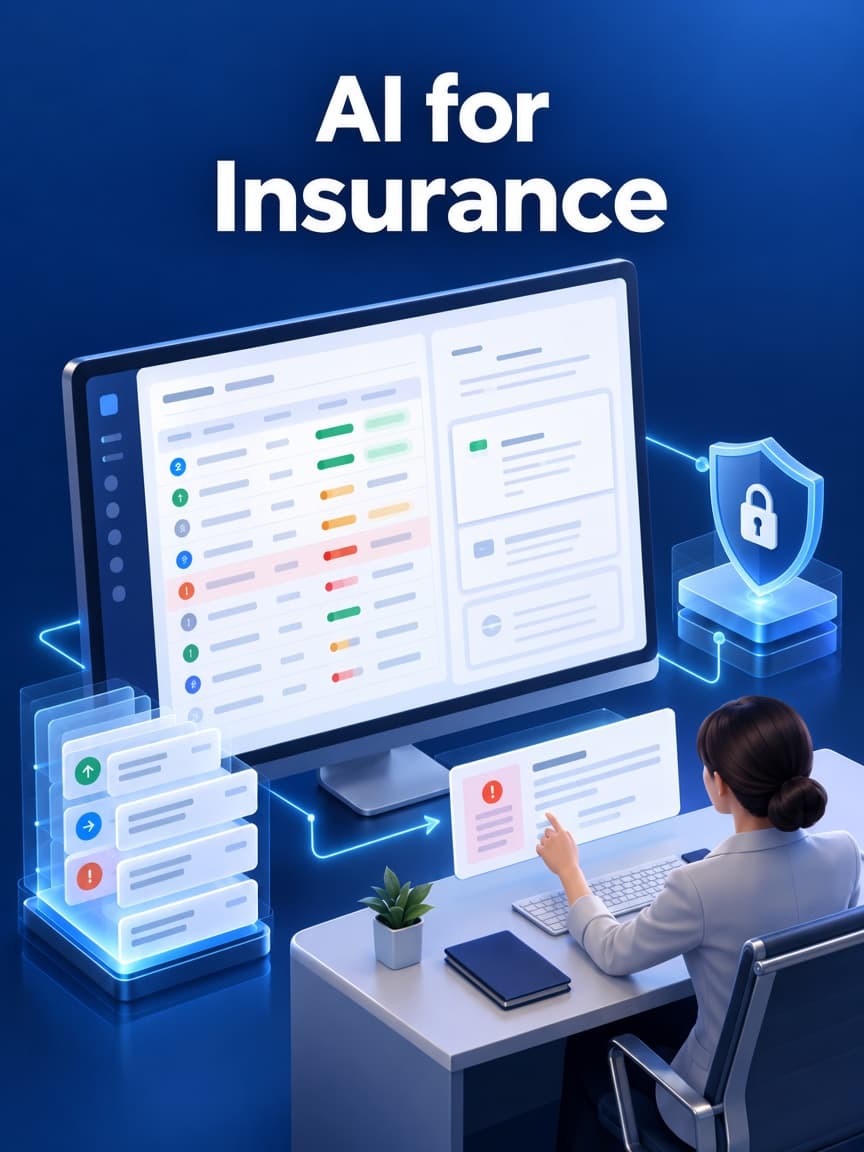
  • Create insurance knowledge assistants that retrieve relevant policy language, endorsements, claims procedures, and underwriting guidance. Help authorized teams compare supporting passages and identify the documents that apply to a question. Retrieval should account for product, jurisdiction, policy version, and effective date so a response does not combine terms from unrelated coverage documents.

    Claims adjuster reviewing photos and documents for a property claim — THE TISA

    Knowledge sources

    • Policy wording and endorsements
    • Claims handling procedures
    • Underwriting manuals
    • Authorized claim and policy records

    Example applications

    • Claims support search with references to applicable procedures
    • Agent assistants for policy wording and product questions
    • Underwriting research across approved guidelines

    Implementation considerations

    Preserve claim-level permissions and policy-version metadata. Coverage interpretations, underwriting decisions, and claim determinations need the review and authorization defined by the insurer.

  • Develop hospitality RAG assistants that retrieve property information, service procedures, and booking policies for guest support and internal operations. Help teams answer questions about facilities, cancellation rules, and approved service guidance with references to the relevant source. Use booking-system queries for current rates, availability, reservation details, and other information that changes during the day.

    Front desk agent checking in a guest with a tablet in a hotel lobby — THE TISA

    Knowledge sources

    • Property and destination knowledge bases
    • Booking and cancellation policies
    • Guest service and operations manuals
    • Reservation APIs where in scope

    Example applications

    • Guest support for property facilities and published policies
    • Staff assistants for service and escalation procedures
    • Reservation-policy lookup using applicable booking terms

    Implementation considerations

    Apply reservation-level access controls and verify current commercial details. Booking changes, refunds, and commitments require the permissions and confirmation steps defined by the business.

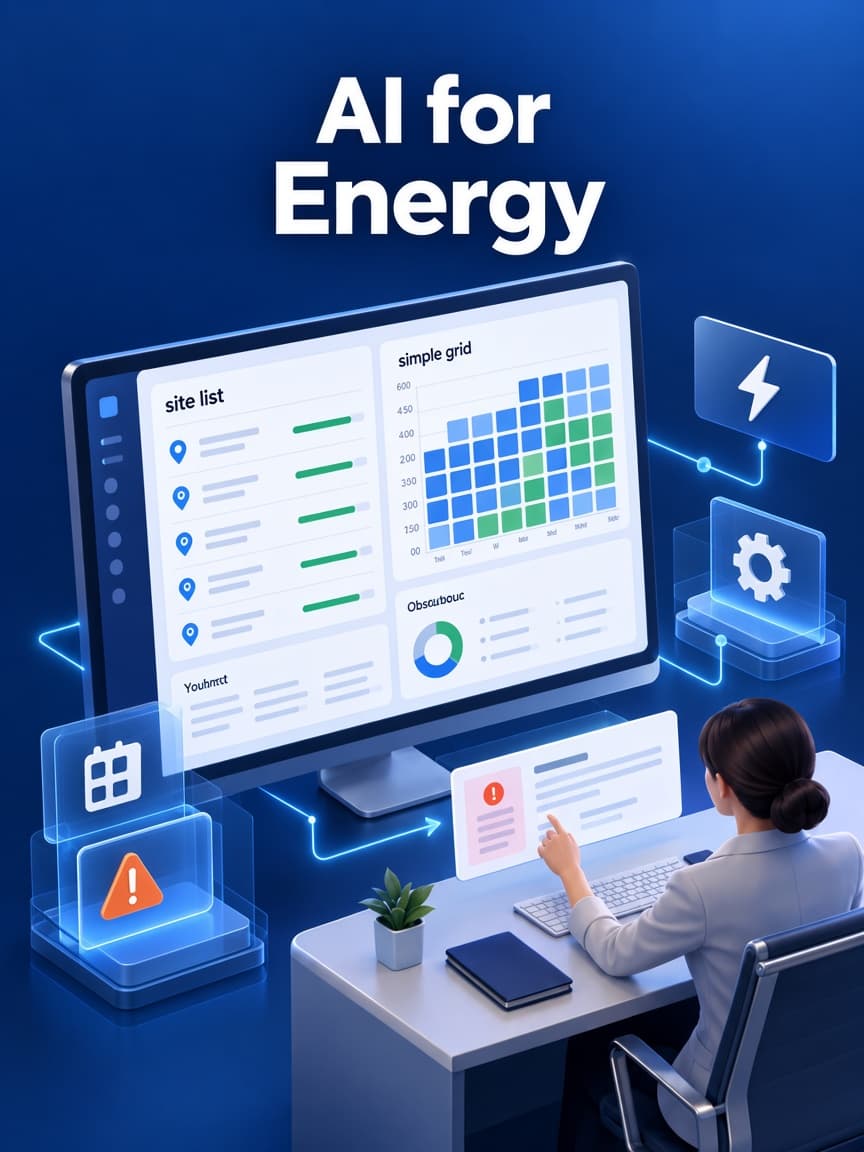
  • Build energy and utility knowledge assistants for authorized access to asset documentation, inspection material, and approved maintenance procedures. Narrow retrieval using asset identifiers, site information, and document revisions so staff can inspect guidance relevant to the task. Source-linked responses can support preparation and research while established engineering and safety processes govern field execution.

    Field technician inspecting electrical equipment with a rugged tablet — THE TISA

    Knowledge sources

    • Asset and engineering documentation
    • Inspection and maintenance records
    • Approved safety procedures
    • Field service and operational manuals

    Example applications

    • Asset documentation search for field and office teams
    • Inspection preparation using approved reference material
    • Maintenance procedure retrieval by asset and revision

    Implementation considerations

    Separate knowledge assistance from critical infrastructure control. Verify document approval, asset applicability, and revision status, with qualified review for safety-sensitive work.

  • Create professional services knowledge assistants that help teams locate approved engagement material, delivery methods, and proposal references. Retrieve reusable content with its source and context so staff can assess whether it applies to a new assignment. Organize access around client and engagement boundaries, and distinguish approved reusable knowledge from confidential or outdated project material.

    Project lead reviewing resource plan and milestones with a client on a video call — THE TISA

    Knowledge sources

    • Approved engagement documentation

    • Proposal and credential libraries
    • Delivery methods and internal playbooks
    • Reviewed research and project references

    Example applications

    • Proposal research using approved credentials and service material
    • Engagement-specific search across project documentation
    • Internal assistants for delivery methods and onboarding

    Implementation considerations

    Preserve client confidentiality and engagement-level access. Review relevance, factual claims, and reuse permissions before incorporating retrieved material into external deliverables.

Business Outcomes Powered by
RAG

Measure the business value of enterprise RAG applications across knowledge search, customer support, and document research. Assess retrieval relevance, answer accuracy, and citation quality using representative tasks and subject-matter review. Compare completion time, correction rates, and cost per completed task against your current workflow, including human verification and ongoing maintenance.

01

Less Time Finding Information

Bring relevant passages from approved documents into a shared search experience. Help employees investigate questions across repositories while keeping supporting sources available for review.

What to measure

  • Time to a correctly resolved question
  • Searches needed per completed task
  • Time spent checking source material
  • Questions left unresolved
02

Answers That Are Easier to Review

Source references help reviewers inspect the evidence behind an answer. Evaluate whether each citation supports the response and whether the underlying document applies to the question.

What to measure

  • Reviewer acceptance rate
  • Citation correctness
  • Unsupported statements identified
  • Corrections required before use
03

Better-Supported Service Responses

Give support agents relevant guidance and documented resolutions while they prepare a reply. Evaluate the complete service task, including review, corrections, and escalation.

What to measure

  • Time to an approved response
  • Response correction rate
  • Repeat contacts for the same issue
  • Resolution and escalation quality
04

More Accessible Team Knowledge

Help employees locate onboarding instructions and procedural guidance. Review unanswered questions to identify missing documentation and points where colleague assistance is still needed.

What to measure

  • Documented task completion rate
  • Requests for colleague assistance
  • Time to complete onboarding tasks
  • Knowledge gaps reported
05

Less Repetitive Document Lookup

Surface relevant clauses and passages across a defined document collection. Reviewers can inspect the findings, compare conflicting material, and approve the final interpretation.

What to measure

  • Time to an accepted finding
  • Coverage of required evidence
  • Relevant passages missed
  • Review effort per document task
06

Clearer Operating Cost

Assess RAG operating cost across retrieval, ingestion, infrastructure, maintenance, and human review. Relate spending to successfully completed work rather than model usage alone.

What to measure

  • Cost per completed task
  • Human review and correction effort
  • Cost of failed or repeated requests
  • Ongoing maintenance expenditure

RAG Development Cost
& Investment Planning

Plan your RAG development budget around the application you need to deliver. Content preparation, retrieval complexity, integrations, security, and hosting all influence cost. Separate implementation effort from ongoing model, infrastructure, and maintenance expenses to understand the full investment.

What determines your project cost

Content & Data Preparation

The effort required to prepare enterprise knowledge depends on its condition and structure. Scanned PDFs, complex tables, duplicate files, and inconsistent metadata can require additional processing before retrieval is useful.

  • Document formats and extraction quality
  • OCR, tables, and layout requirements
  • Content volume and update frequency

Search & Answer Requirements

A focused document assistant has a different scope from a multilingual RAG application that combines sources. Retrieval tuning, reranking, citations, and evaluation requirements influence development effort.

  • Question complexity and source coverage
  • Hybrid search and reranking needs
  • Answer quality and response-time targets

Source & Application Integrations

Each connection adds work around authentication, data mapping, synchronization, and error handling. Existing APIs and reliable source metadata can simplify integration; custom connectors require more development.

  • Number and readiness of source APIs
  • Permission and content synchronization
  • Embedded interfaces and live data queries

Security & Access Boundaries

Document permissions, tenant separation, sensitive information, and deployment policies shape the architecture. Include implementation and validation effort for these controls when planning the project budget.

  • Document and tenant access controls
  • Data handling and retention requirements
  • Security testing and review evidence

Hosting & Usage

Operating cost depends on actual usage, retrieved context size, model selection, and infrastructure. Private networking, availability requirements, and peak request volumes can change the deployment budget.

  • Requests, context size, and model usage
  • Embedding, storage, and search resources
  • Hosting, availability, and recovery needs

Evaluation & Ongoing Support

A production RAG system needs review as documents, models, and application behavior change. Budget for regression testing, ingestion monitoring, issue resolution, and the responsibilities retained by your team.

  • Test coverage and human review effort
  • Monitoring and content maintenance
  • Support scope and release frequency

Plan for launch.Account for what follows.

Your RAG budget includes the initial implementation and the cost of running it. Review both together, including model usage, infrastructure, content updates, and human review.

Build & release

Implementation Budget

The work required to design, build, validate, and release the agreed application.

  • Discovery, source assessment, and architecture
  • Ingestion pipelines and retrieval configuration
  • Application interfaces and system integrations
  • Evaluation, security testing, and deployment
  • Documentation and technical handoff
Estimate basis: Agreed scope, source readiness, integrations, and acceptance criteria.

Run & maintain

Ongoing Operating Budget

The resources and responsibilities needed to keep the application useful after launch.

  • Model requests and embedding updates
  • Search infrastructure, storage, and hosting
  • Content synchronization and monitoring
  • Answer review and regression testing
  • Maintenance and agreed support coverage

Estimate basis: Expected usage, service pricing, maintenance needs, and support coverage.

Get a scoped RAG development estimate

Share your use case, source systems, and deployment requirements. We use discovery findings to define the proposed scope, dependencies, cost assumptions, and responsibilities before preparing a tailored proposal.

Discuss Your RAG Project

Helpful inputs for an estimate

  • Priority use case and user workflow
  • Representative documents and source systems
  • Expected users and request volume
  • Access rules and hosting requirements
  • Quality targets and support expectations

Why Choose THE TISA
for RAG Development

Choosing a RAG development company means evaluating how the team scopes your application, tests retrieval quality, and prepares it for operation. Our approach connects technical decisions to your business workflow, with reviewable evidence, documented tradeoffs, and clear delivery responsibilities.

  • A Defined Problem Before a Build

    We start with the questions your users need answered, the sources available, and the workflow the application should support. This establishes where RAG fits and which requirements need a different technical approach.

    What you can review

    A focused scope with source boundaries, user workflows, and acceptance criteria.

  • Retrieval Tested on Your Content

    Document formats, terminology, and source quality influence retrieval. We use representative content to assess parsing, chunking, search, and evidence selection before expanding the knowledge collection.

    What you can review

    Sample questions and retrieval findings that inform implementation choices.

  • Quality You Can Inspect

    We evaluate retrieval and generated answers separately. Reviews include source support, citation usefulness, missing evidence, and access-sensitive questions so a fluent response is not mistaken for a correct one.

    What you can review

    Agreed evaluation cases, documented findings, and release acceptance checks.

  • Architecture With Clear Tradeoffs

    We compare models, search infrastructure, and deployment options against your requirements. Recommendations account for response time, data handling, maintenance, and operating cost rather than a fixed technology bundle.

    What you can review

    An architecture recommendation with assumptions, dependencies, and alternatives.

  • Built Around Your Existing Systems

    We plan source connections, identity integration, and application interfaces around the systems your teams use. Content updates, permission changes, and integration failures are part of the implementation scope.

    What you can review

    Defined integration boundaries, synchronization behavior, and error handling.

  • Clear Ownership After Launch

    We define how the application will be monitored, updated, and maintained. Handoff covers configuration, operating procedures, and responsibilities, with ongoing support specified according to the agreed engagement.

    What you can review

    Technical documentation, operational runbooks, and an agreed support scope.

Know what the engagement includes

A proposal should make the delivery scope and your team’s responsibilities easy to assess. Confirm these details before implementation begins.

  • Scope, assumptions, and exclusions documented
  • Acceptance criteria agreed before release
  • Architecture and cost tradeoffs explained
  • Deployment and maintenance ownership defined

Discuss the decisions behind your RAG project

Bring your use case, sample content, and deployment requirements. We’ll discuss retrieval scope, evaluation priorities, and the dependencies that shape implementation.

Learn more about working with THE TISA
Discuss Your RAG Project

RAG Development
Questions, Answered

Explore common questions about RAG development costs, implementation timelines, knowledge sources, and deployment options. Learn how retrieval-augmented generation supports source-backed answers, how it differs from fine-tuning, and what to consider for data privacy, evaluation, and ongoing maintenance.

Retrieval-augmented generation (RAG) combines search with a language model. Before generating an answer, the application retrieves relevant content from selected sources, such as policies, manuals, or support articles. A chatbot is an interface and can itself use RAG. The main distinction is whether responses use retrieved business information or rely primarily on the model's existing knowledge. See how this fits AI application development and our RAG services.

RAG development cost depends on source readiness, document processing, retrieval complexity, integrations, access controls, and deployment requirements. A focused knowledge assistant requires a different scope from a multilingual application spanning several business systems. Budget separately for implementation and ongoing model usage, search infrastructure, hosting, evaluation, and maintenance. Review the cost drivers, then get in touch for a tailored estimate after we review your requirements and representative content.

The timeline depends on the agreed scope, source access, content quality, integrations, and acceptance criteria. A focused pilot can validate retrieval and answer quality before a broader production rollout. Custom connectors, complex documents, permission synchronization, and security reviews add work. Our RAG development process establishes proposed milestones, dependencies, and delivery schedule during discovery.

Yes. An internal RAG assistant can help employees find policies, onboarding instructions, product documentation, and troubleshooting guidance. It can provide supporting passages and source references so users can review the evidence. Retrieval should enforce each user's access permissions, and the application should explain when the available sources cannot support an answer. Related builds include AI agent development and AI workflow automation.

RAG applications can retrieve information from PDFs, manuals, internal wikis, shared storage, and selected business records. Connections may include SharePoint, Confluence, Notion, Google Drive, CRM platforms, and databases, depending on API access and permissions. Explore how we connect business knowledge. Broader system work is covered under AI integration services and software development.

No. RAG can reduce unsupported responses by supplying relevant evidence, but retrieval can miss information and a model can misinterpret the passages it receives. Source quality, retrieval testing, citation checks, and insufficient-evidence responses help manage these risks. Important decisions may still require human review, particularly when sources are incomplete, outdated, or conflicting. That grounding pattern is also used in generative AI development. See how we evaluate outcomes.

RAG is useful when answers need information from external sources that must remain searchable, traceable, or regularly updated. Fine-tuning adjusts a model's behavior for tasks such as formatting, terminology, or specialized response patterns. The approaches can be combined. The choice should follow evaluation of your task, available data, quality requirements, and maintenance budget. Compare options with generative AI development and discuss scope via get in touch.

There is no single best model for every RAG application. Candidates can include GPT, Claude, Gemini, Llama, Mistral, and other models suited to the deployment. Compare them using representative questions and retrieved passages, including missing-answer cases. Assess answer support, instruction following, context capacity, language coverage, response time, data handling, and cost. See how we select a RAG technology stack.

Using RAG does not itself require training a foundation model on your documents. However, retrieved passages may be sent to the selected model provider during answer generation. Training use, retention, logging, and processing location depend on the service, configuration, and contractual terms. These settings should be reviewed before connecting confidential information; private hosting also requires appropriate infrastructure and operational controls. Read our privacy policy and security pages.

A RAG application should enforce document, record, and tenant permissions before content reaches the model. Protection also involves authentication, scoped credentials, encryption, sensitive-data handling, and controlled logging. Permission changes and deletions need to propagate to indexes and relevant caches. Review our RAG security practices and the broader controls on security.

Yes, with suitable language models, embeddings, and search configuration. An application can retrieve and answer in the same language or support cross-language retrieval where required. Quality should be tested separately for each supported language, including specialist terminology, source coverage, citations, and responses to questions the documents cannot answer. Get in touch to scope a multilingual knowledge assistant, or browse industry RAG solutions.

Evaluation checks retrieval relevance, answer support, citation accuracy, and handling of questions without sufficient evidence. Operational monitoring covers ingestion failures, application errors, latency, and usage cost. Maintenance includes source updates, permission synchronization, and regression testing when models or retrieval settings change. Review responsibilities and ongoing support are defined in the agreed project scope. See business outcomes, why teams choose THE TISA, and case studies.

Schedule Your Free RAG Strategy Consultation

Your business already has valuable knowledge stored across documents, databases, CRMs, knowledge bases, and internal systems. The next step is making that knowledge instantly accessible through secure, accurate, and scalable RAG AI Development. Our AI consultants will work closely with your leadership and technical teams to understand your business goals, evaluate your existing infrastructure, and create a tailored implementation roadmap that aligns with your long-term AI strategy.

18+AI Agents
24+Workflow Automation
35+AI Integrations
12+SaaS Products
16+Generative AI
40+Mobile Apps
45+Web Platforms
25+Cloud Delivery
98%Client Retention

Share your scope

Tell us about the workflow or product. A solutions architect replies within one business day.

5 + 8 =